
Guide to Emergency Water Extraction: Cleanup & Drying
Guide to Emergency Water Extraction
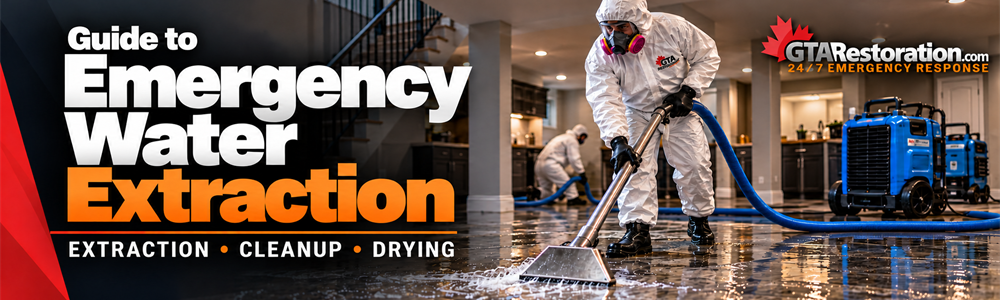
This guide to emergency water extraction explains what to do when water spreads through your property. A burst pipe, failed appliance or basement flood can soak floors and walls. First, keep clear of hazards. Then, arrange water removal and drying before the damage spreads.
GTA Restoration helps homes and businesses across Toronto and the GTA with water damage cleanup. We assess wet areas, remove standing water and plan the next steps based on what we find.
When Do You Need Emergency Water Removal?
Call for help when water keeps rising, reaches several rooms or soaks walls and floors. Also, seek help with sewage or water from an unknown source. Clear water can still contain harmful waste, so appearance alone does not show whether it is safe.
A small, clean spill on a sealed hard floor may only need prompt mopping and drying. However, water beneath flooring or inside walls needs a closer check. Our flooded basement cleanup service addresses water in finished rooms and hidden spaces.
Five Steps in Emergency Water Extraction
1. Check for Hazards
Stay out of standing water near outlets, wiring or electrical equipment. Do not cross a flooded room to reach the breaker panel. Instead, contact your utility or a licensed electrical contractor for help. Keep children and pets away, and avoid sagging ceilings or weak floors.
The City of Toronto’s basement flooding guidance explains local reporting steps and key safety precautions.
2. Find and Stop the Source
Next, shut off the water supply only if you can reach the valve safely. A plumber may need to fix a broken pipe. For rain or groundwater entry, crews must assess where water enters before choosing a solution.
Tell the team when you first noticed the leak. Also, point out past leaks and nearby wet rooms. These details help guide the inspection.
3. Remove Water With Extraction Equipment
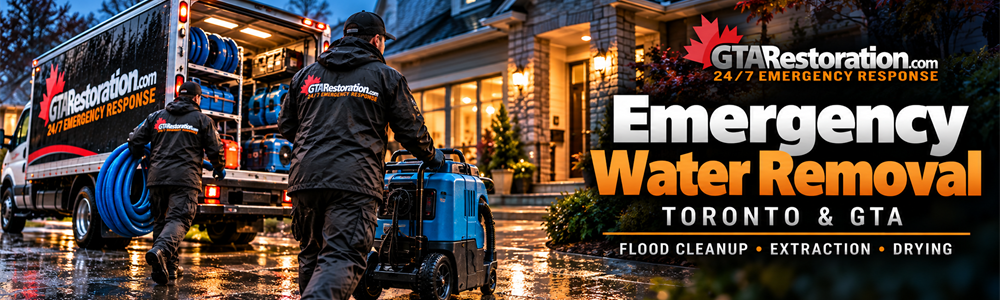
Once the area is safe, crews use pumps or water extractors to remove standing water. The equipment depends on water depth, access and the wet surfaces. For example, carpet tools can draw water from fibres before crews assess the underpad and floor below.
4. Assess Wet Materials
Next, the team checks what can stay and what needs removal. Sewage, swelling or lasting damage may rule out saving some materials. However, other items may remain after proper cleaning and drying. The aim is to protect sound materials while reaching trapped moisture.
5. Dry and Monitor After Water Extraction
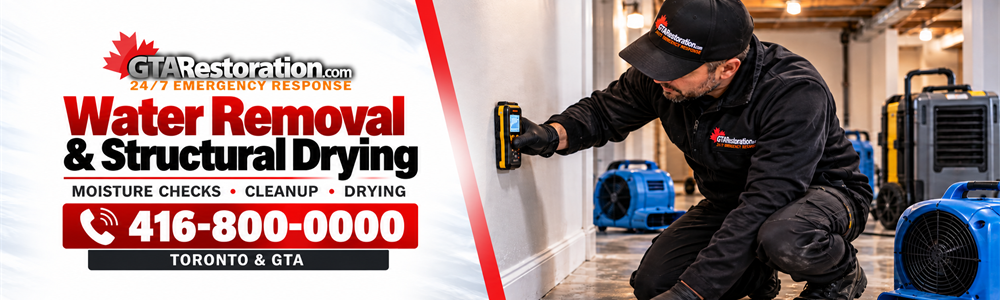
Removing puddles does not dry the whole room. Therefore, crews may use air movers and dehumidifiers to dry wet materials. They also take moisture readings to track progress. Our structural drying service helps address moisture within floors, walls and other building parts.
Prompt drying and leak repairs help reduce conditions that support mold. The EPA’s guide to moisture and mold explains why both steps matter.
How Long Does Emergency Water Removal Take?
The time depends on water volume, access and ongoing leaks. Drying usually continues after extraction ends. For this reason, crews should check materials rather than promise a fixed finish date. Before repairs begin, ask for drying results and a clear repair plan.
Ask which rooms you can use while work continues. Changes in materials, humidity or access can affect the plan. Also, report new leaks, fresh stains or musty odours during drying. These signs may mean crews need to check another area.
Need Emergency Water Extraction in Toronto?
Call GTA Restoration to discuss water removal, cleanup and drying for your property.
Learn More
Water Damage Restoration | Flooded Basement Cleanup | Structural Drying
For non-emergencies use our contact form
Emergency Water Extraction: 8 Useful Checks
A clear plan helps keep water extraction and cleanup on track. Use these checks when you speak with the crew.
1. Share the Leak History
First, explain when water appeared. Also, mention past leaks in the same room, even if the surface now looks dry.
2. Arrange Safe Crew Access
Share entry details and building rules. However, never enter an unsafe area just to clear a path.
3. Discuss Water Removal Access
Crews may need space for hoses and equipment. Therefore, tell them about stairs, lifts or narrow halls.
4. Flag Wet Belongings
Point out wet furniture, rugs and stored items. Then, ask which items need separate cleaning or specialist care.
5. Confirm the Cleanup Plan
Ask which rooms need work and why. Also, request a clear explanation of any planned material removal.
6. Check the Drying Setup
Keep drying equipment in place as the crew directs. If noise or access causes problems, contact the team before making changes.
7. Keep Water Cleanup Records
Save photos, invoices and work notes. These records help track the work; your insurer decides coverage under your policy.
8. Plan the Final Check
Finally, ask how crews will confirm drying progress. Agree on the next steps before closing walls or replacing flooring.
Need help planning water removal?
Talk with GTA Restoration about your property and the next steps.
Service Areas Across Canada
GTA Restoration serves communities across Canada, including Toronto and the GTA. U.S. locations are opening. Browse our Canadian service areas below, and contact us to confirm services and availability for your address.
Search
- Air Duct Cleaning Montreal
- Ajax Asbestos Removal
- Ajax Mold Removal
- Ajax Water Damage
- Asbestos Removal Calgary
- Asbestos Removal Edmonton
- Asbestos Removal Fort Saskatchewan
- Asbestos Removal Gloucester
- Asbestos Removal Grimsby
- Asbestos Removal Hamilton
- Asbestos Removal Kanata
- Asbestos Removal Kitchener
- Asbestos Removal Laval
- Asbestos Removal Lincoln
- Asbestos Removal Montreal
- Asbestos Removal Nepean
- Asbestos Removal Niagara Falls
- Asbestos Removal Orleans
- Asbestos Removal Ottawa
- Asbestos Removal Sherwood Park
- Asbestos Removal Spruce Grove
- Asbestos Removal St Catharines
- Asbestos Removal St-Albert
- Asbestos Removal Thorold
- Asbestos Testing Hamilton
- Asbestos Testing Montreal
- Asbestos Testing Petersburg
- Aurora Mold Removal
- Aurora Water Damage
- Beaconsfield Asbestos Removal
- Brampton Asbestos Removal
- Brampton Mold Removal
- Brampton Water Damage
- Burlington Asbestos Removal
- Burlington Mold Removal
- Burlington Water Damage
- Burst Pipe Montreal Frozen Pipe
- Burst Pipe Repair Edmonton
- Burst Pipe Repair Ottawa
- Caledon Mold Removal
- Caledon Water Damage
- Calgary Mold Removal
- Calgary Water Damage
- Cambridge Mold Removal
- Cambridge Water Damage
- Clarington Mold Removal
- Concord Mold Removal
- Concord Water Damage
- Cooksville Mold Removal
- Edmonton Water Damage
- Emergency Roofing Vancouver
- Etobicoke Asbestos Removal
- Etobicoke Mold Removal
- Etobicoke Water Damage
- Fire Damage Grimsby
- Fire Damage Lincoln
- Fire Damage Niagara Falls
- Fire Restoration Fort McMurray
- Fire Damage Restoration Thorold
- Fire Damage St Catharines
- Flood Cleanup Grimsby
- Flood Cleanup Lincoln
- Flood Cleanup Niagara Falls
- Flood Cleanup St Catharines
- Flood Cleanup Thorold
- London Mold Removal
- London Water Damage
- Markham Asbestos Removal
- Markham Mold Removal
- Markham Water Damage
- Mississauga Asbestos Testing
- Mississauga Mold Removal
- Mississauga Water Damage
- Mold Inspection Removal Kitchener
- Mold Remediation Montreal
- Mold Removal & Inspection LaSalle
- Mold Removal Anjou
- Mold Removal Boucherville
- Mold Removal Brossard
- Mold Removal Burnaby
- Mold Removal Chambly
- Mold Removal Chateauguay
- Mold Removal Chomedey
- Mold Removal Coquitlam
- Mold Removal Dollard Des Ormeaux
- Mold Removal Dorval
- Mold Removal Edmonton
- Mold Removal Fort Saskatchewan
- Mold Removal Gloucester
- Mold Removal Grimsby
- Mold Removal Hamilton Inspection
- Mold Removal Ile Bizard
- Mold Removal in Osgoode
- Mold Removal Beaconsfield
- Mold Removal Kahnawake
- Mold Removal Kanata
- Mold Removal Kirkland
- Mold Removal Laval
- Mold Removal Lincoln
- Mold Removal Longueuil
- Mold Removal Montreal East
- Mold Removal Mount Royal
- Mold Removal Nepean
- Mold Removal New Westminster
- Mold Removal Niagara Falls
- Mold Removal Orleans
- Mold Removal Ottawa
- Mold Removal Cumberland
- Mold Remediation Hampstead
- Mold Removal Remediation Roxboro
- Mold Removal Richmond BC
- Mold Removal Rideau Lakes
- Mold Removal Rockcliffe Park
- Mold Removal Saint Hubert
- Mold Removal Saint Laurent
- Mold Removal Sherwood Park
- Mold Removal Spruce Grove
- Mold Removal St Catharines
- Mold Removal Ste Dorothee
- Mold Removal St۔ Albert
- Mold Removal Surrey
- Mold Removal Thorold
- Mold Removal Vancouver
- Mold Removal Vanier
- Mold Removal Westmount
- Montreal Biohazard Cleanup
- Montreal Emergency Plumber
- Montreal Fire Restoration
- Montreal Flood Cleanup
- Montreal Odor Removal
- Montreal Roofing Emergency
- Montreal Sewer Backup Cleanup
- Montreal Water Leak Detection
- Montréal Asbestos Removal
- Montréal Emergency Plumbing
- Montréal Mold Removal
- Montréal Pipe Burst Emergency
- Montréal Water Damage
- Newmarket Mold Removal
- Newmarket Water Damage
- North York Mold Removal
- Oakville Mold Removal
- Oakville Water Damage
- Oshawa Mold Removal
- Oshawa Water Damage
- Ottawa Air Duct Cleaning
- Pickering Mold Removal
- Pickering Water Damage
- Red Deer Water Damage
- RedDeer Mold Removal
- Richmond Hill Mold Removal
- Richmond Hill Water Damage
- Roof Repair Lincoln
- Roof Repair Niagara Falls
- Roof Repair St Catharines
- Scarborough Asbestos Removal
- Scarborough Mold Removal
- Scarborough Water Damage
- Sewage Cleanup Edmonton
- Sewer Backup Lincoln
- Sewer Backup Niagara Falls
- Sewer Backup Ottawa
- Sewer Backup St Catharines
- Thornhill Mold Removal
- Toronto & GTA Asbestos Removal
- Toronto & GTA Mold Removal
- Toronto Air Duct Cleaning
- Toronto Water Damage
- Unionville Mold Removal
- Unionville Water Damage
- Vancouver Asbestos Removal
- Vancouver Biohazard Cleanup
- Vancouver Emergency Plumber
- Vancouver Emergency Plumbing
- Vancouver Fire Restoration
- Vancouver Flood Cleanup
- Vancouver Mold Removal
- Vancouver Odor Removal
- Vancouver Pipe Burst Emergency
- Vancouver Sewer Backup Cleanup
- Vancouver Water Damage
- Vancouver Water Leak Detection
- Vaughan Mold Removal
- Vaughan Water Damage
- Vermiculite Removal Ottawa
- Water Damage Grimsby
- Water Damage Kanata
- Water Damage Kitchener
- Water Damage Lincoln
- Water Damage Longueuil
- Water Damage Nepean
- Water Damage Niagara Falls
- Water Damage Orleans
- Water Damage Ottawa
- Water Damage Repair Montreal
- Water Damage Laval Montreal
- Water Damage Restoration Thorold
- Sewage Backup Cleanup Montreal
- Water Damage St Catharines
- Water Damage Vancouver
- Water Flood Damage Repair Hamilton
- Flood Damage Repair Hampstead
- Whitby Water Damage
- Woodbridge Asbestos Removal
- Woodbridge Mold Removal
- Woodbridge Water Damage
- Restoration Equipment Rental
Emergency Water Extraction FAQs
What does water extraction remove?
It removes standing water and excess water from wet surfaces. However, walls and floors may still need further drying.
Should I wait for water to drain?
No. Arrange help promptly, especially if water keeps spreading. First, stay clear of electrical hazards and unsafe rooms.
Can a household fan dry everything?
No. Fans cannot remove standing water. Also, hidden moisture may need extraction, dehumidifiers and checks with moisture meters.
Does every wet carpet need replacement?
No. The water source and carpet condition matter. However, sewage or damage may mean crews must remove it. Check the underpad and floor as well.
Is sewage cleanup different?
Yes. Sewage needs special handling and cleaning. Therefore, keep people and pets away and arrange professional help.
When can repairs start?
Once crews address the source, complete cleanup and confirm suitable moisture levels, they can plan repairs.
Direct Billing & Insurance Claims
Ask your insurer about coverage, deductibles and the records it needs.

In-House Financing Available
Financing up to 24 months. No interest. No money down. Ask us about the terms.
Learn more ↴ 
RELATED ARTICLES
 Facebook
 Instagram
 LinkedIn
 X / Twitter
 YouTube


