
Emergency? 24-Hours
416-800-0000
Emergency? 24-Hours
416-800-0000GTA Restoration provides water damage restoration in North York for homes, condos and businesses after leaks, floods and plumbing failures. Our team can assess wet areas, remove standing water and plan drying and repairs. First, we check the source and the state of the rooms.
For 24/7 emergency water damage help, call 416-800-0000. Tell us where water is coming in and which rooms are wet. We can discuss access and when a crew can visit.
Whether you need flooded basement cleanup or help after a pipe leak, the work should follow the actual damage. A small puddle does not always show how far moisture has travelled.
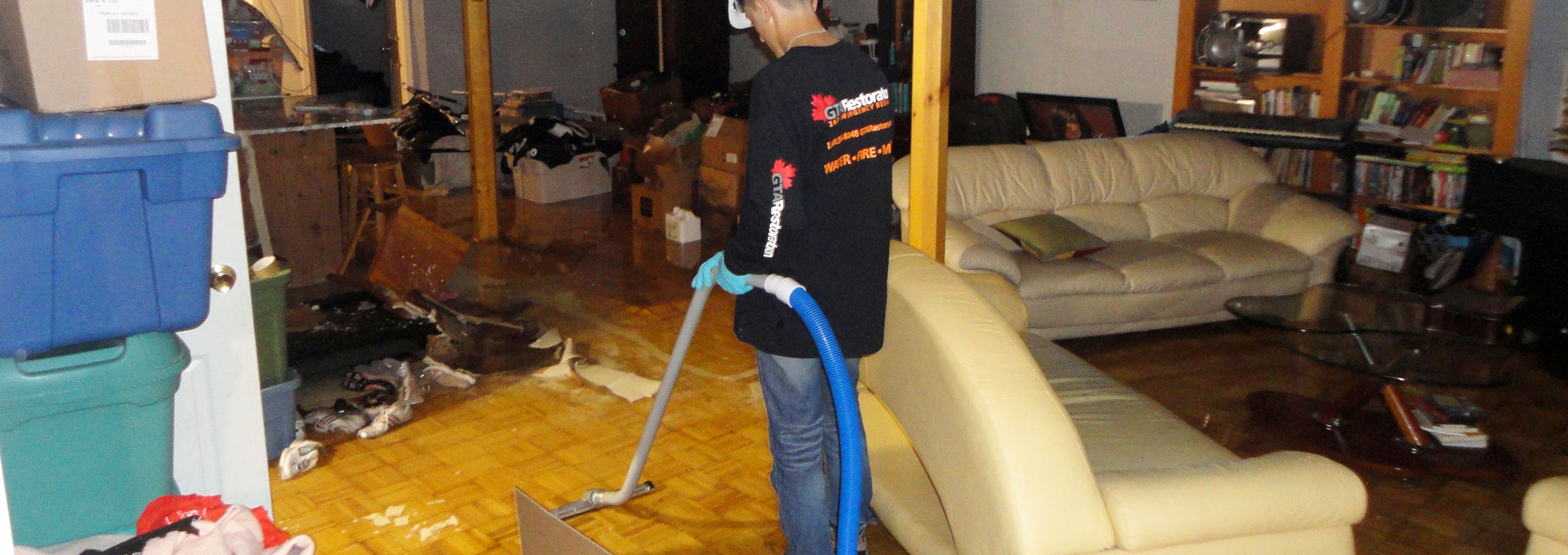
Keep people away from water near outlets, appliances and electrical panels. Do not cross a flooded room to reach a switch. Instead, contact the power company and an electrical contractor if wiring may be wet. Leave the building if you smell gas, and call the gas provider from a safe place.
If you can reach a shutoff valve safely, stop the flow to a leaking fixture. However, avoid touching damaged equipment or opening a wet ceiling. Keep children and pets outside the work area. Safe access comes before cleanup.
North York residents can report basement flooding to Toronto 311. The City of Toronto’s basement flooding guidance explains common causes and what to report. The City checks its systems. Repairs to your own pipes may need a separate visit, so keep a record of each call.
A supply pipe, appliance hose, drain or exterior leak can leave similar wet patches. Therefore, we start by asking what happened before the water appeared. Explain whether it followed heavy rain, a plumbing problem or work elsewhere in the building.
Our team checks wet areas it can reach and asks about past leaks. Moisture readings and the pattern of damage help guide the next steps. If the source is unclear, more checks may be needed before anyone opens a wall. A damp patch alone cannot prove which pipe or building detail failed.
For an active plumbing fault, arrange the repair alongside cleanup. Our emergency plumbing service can discuss the problem and access needs. Stopping the leak and drying the building are separate parts of the job; one does not replace the other.
North York homes do not all dry at the same rate. The amount of water matters, but so do the materials and where water has spread. For example, wet insulation behind a wall needs a different response from a small spill on a hard surface.
Before setting out a plan, the team considers:
Ask what the planned work includes. Also, ask which areas still need checking. A written scope and estimate should describe what is included. If more damage appears, discuss it before adding repairs to the agreed work.
Water removal is the first stage of many restoration jobs. Next, the team checks damp materials and plans drying or removal. Our water damage restoration services cover these steps for homes and business spaces.
Once the area is safe, crews choose tools to remove the water. They also consider how to move equipment through the property without spreading dirt into clean rooms. In a condo, this may require lift access. The building manager can help arrange it.
Sewage backup cleanup needs added precautions. Keep people away from affected rooms and explain the source when calling. Carpet cleaning or placing fans beside dirty materials cannot replace a safe cleanup plan.
A floor can look dry while the layers beneath it remain wet. Likewise, moisture may collect behind skirting boards or within a ceiling. The team checks areas it can reach and keeps a record. Touch alone is not a sound way to judge dryness.
Crews may use air movers and dehumidifiers to dry materials they can keep. Meanwhile, repeat moisture readings help track progress and guide changes to the drying setup. Some finishes or insulation may be too damaged or dirty to keep. Ask which materials the team expects to retain and why.
Before new finishes cover an affected area, review the source repair and drying findings. Painting over a stain cannot solve an active leak. Similarly, replacing flooring without checking the layers beneath it may leave part of the problem in place.
Our structural drying service explains options for affected floors, walls and other spaces. However, the right method depends on the property. Discuss any access openings, removal work and finish repairs as part of the agreed scope.
Report the loss promptly and ask your insurer what records it needs. From a safe location, photograph affected rooms and belongings before cleanup changes the scene. Also, keep estimates, invoices and messages about the work together.
GTA Restoration can record our work and share those details. Your insurer decides coverage and claim payments. Confirm your deductible, policy limits and any approval requirements directly with the insurer. A quote for repairs does not mean a claim will be paid.
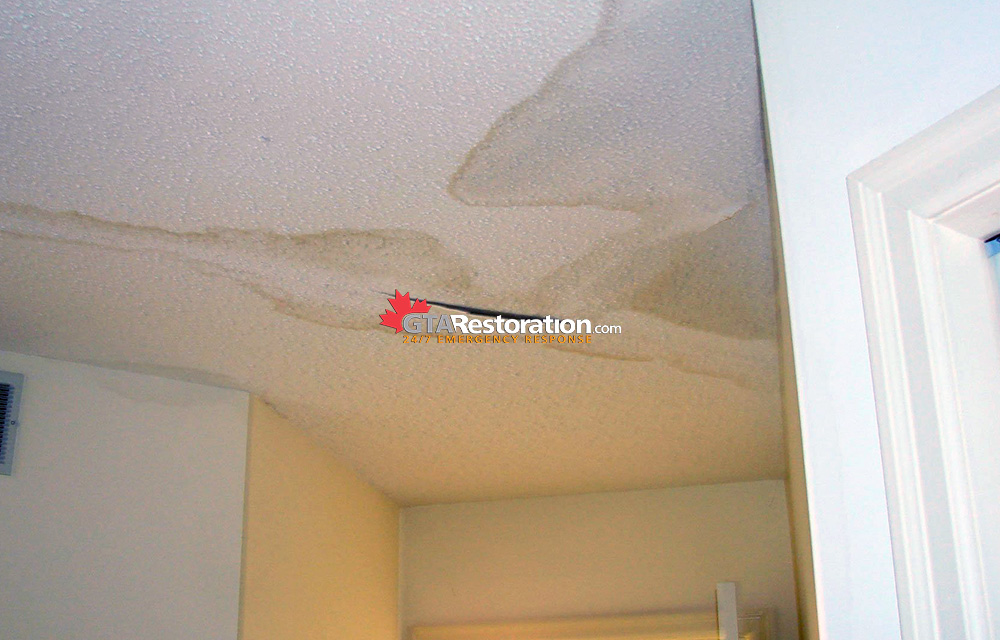 Watch for fresh staining, peeling paint, soft finishes or flooring that changes shape. These signs deserve a closer look, especially if they return after a repair. However, a stain alone does not tell you whether the material is still wet.
A musty smell or visible mould also needs a closer look. Address the moisture source as well as the damaged material. Avoid sanding, painting over or disturbing suspect growth while you wait for advice. Tell the team about previous leaks and any areas that remain damp.
Keep notes about when the signs appear. For instance, a ceiling mark after a shower suggests a different pattern from water after rainfall. These notes help the team trace the source. You do not need to open the building yourself.
When you call, have the address and a few details ready. Tell us which floor is wet. In a rented home or condo, notify the landlord or building manager too. Shared shutoffs, nearby units and access rules can affect how work starts.
Finally, discuss water removal, drying checks and the repair scope before work begins. Our North York water damage restoration team can explain the next steps and answer questions about the site check.
Contact GTA Restoration for 24/7 help with leaks, flood cleanup and drying.
For non-emergencies use our contact form
GTA Restoration helps property owners plan water damage cleanup and drying in North York. First, tell us the source and which rooms are wet. Then, our team can discuss safe access, a site check and the next steps.
Standing water can spread into nearby rooms and finishes. Therefore, crews check the area before choosing tools to remove the water. Removing visible water starts the process, but wet building materials still need checking.
Basement water may come from plumbing, drainage or rain entering the building. Note when it appeared and where it collected. These details help the team find the cause and plan cleanup.
Stop a leaking fixture’s supply only when you can reach the valve safely. Next, arrange the source repair. Drying after a pipe leak is a separate step that should cover the affected materials.
Water may remain beneath flooring or behind finishes after a surface dries. For this reason, crews check areas they can reach. They also discuss any openings needed to check further. Avoid covering a damp area.
Equipment needs can change as materials dry. Meanwhile, moisture readings help the team review progress. Ask how the findings affect equipment use and when the area can move to the repair stage.
Keep occupants away from sewage-affected rooms and report the source when calling. Cleaning and material removal depend on the conditions. Fans or a surface wipe cannot replace a safe cleanup plan.
Notify building management or the landlord when water affects a unit. Shared plumbing or nearby suites may also need checks. Early contact helps arrange safe access and building permissions for the proposed work.
Check what the quote covers before work starts. For example, water removal, drying and finish repairs may be separate parts of the job. Ask for an explanation and approval request if the scope changes.
Keep photos, estimates and receipts together. Our team can share records of our work. However, coverage and payments remain your insurer’s decision; discuss policy questions with its claims team.
Watch repaired rooms for returning stains, smells or dampness. If the signs return, arrange another check. Addressing the water source and remaining moisture matters more than hiding marks with new paint.
Call GTA Restoration to explain the damage and arrange the next steps.
Service Areas Across Canada
GTA Restoration serves communities across Canada, including Toronto and the GTA. U.S. locations are opening. Browse our Canadian service areas below, and contact us to confirm services and availability for your address.
Search
Keep clear of wet electrical equipment and unsafe rooms. Stop the source only if you can reach the valve safely, then arrange help. When calling, describe where the water is spreading and whether it may contain sewage. Do not enter a hazardous area to take photos.
Timing depends on the materials, moisture and access. Repeat readings help guide the drying plan and any changes in equipment use. Ask how the crew will check progress and what must happen before repairs start. A phone description alone cannot establish a reliable finish date.
Yes. A dry-looking surface does not show the condition of every layer below it. Water may remain beneath flooring or behind finishes. Tell the crew about the source and how long the area was wet. They can explain the checks and any further access needed.
Notify building management as well as the restoration team. Shared plumbing, nearby suites and common areas may need checks. Confirm who can approve access and how the crew should enter. Keep the manager informed about active leaks and the proposed work, especially when other units may be affected.
Your insurer decides coverage based on the policy and loss. Keep photos, estimates and receipts, and ask about limits, your deductible and approval requirements. GTA Restoration can provide records of our work. A cleanup quote or a contractor's involvement does not guarantee payment of a claim.
Direct Billing & Insurance Claims
Ask your insurer about coverage, deductibles and the records it needs.

In-House Financing Available
Financing up to 24 months. No interest. No money down. Ask us about the terms.
Learn more ↴ 
RELATED ARTICLES





Call Us 416-800-0000
Emergency? 24/7 Restoration Help
We cover all GTA 24/7.
Head Office:
250 Consumers Rd,
#10
Toronto, ON
M2J 4V6,
Open 24 hours
Downtown Office:
1 Toronto St,
#10
Toronto, ON
M5W 1A1,
Open 24 hours
For non-emergencies use our contact form
Not sure what you need?
Call us today to find the best product for your situation.
Head Office:
101 Lebovic Ave,
Unit #10
Scarborough,
ON, M1L 4T7
Hours
24-Hours Open
Downtown Office:
250 Yonge Street,
Unit #1A
Toronto,
ON, M5B 2L7
Hours
24-Hours Open
Water Damage Restoration in North York
Get a quote today



You must be logged in to post a comment.