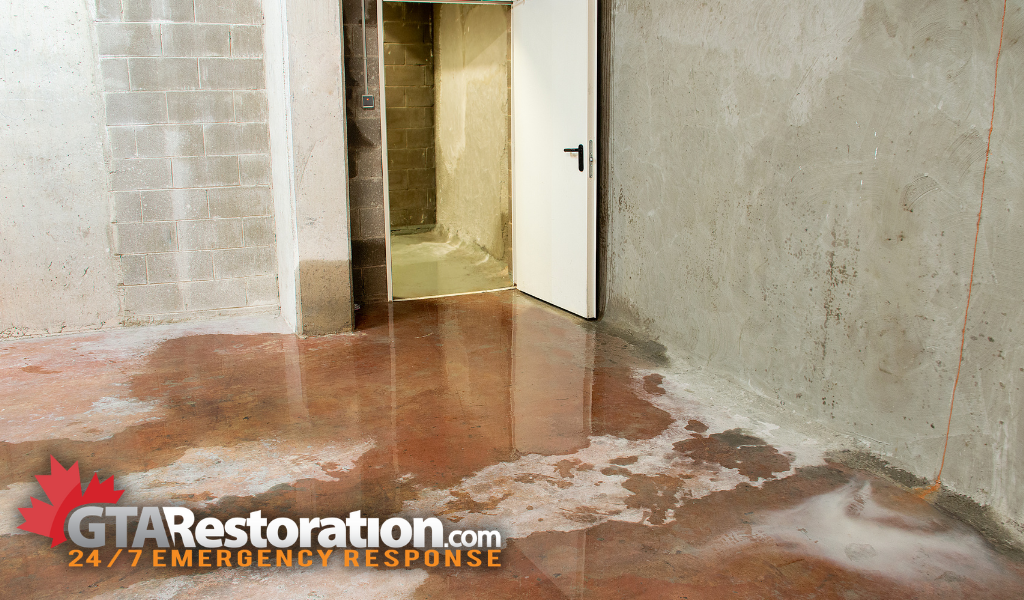
If you discover emergency flooding in basement areas of your home, focus on safety before trying to remove water or save belongings. Floodwater may contact electrical systems, contain sewage or other contaminants, damage building materials, and spread into hidden areas beneath flooring or behind walls.
The right response depends on the source and severity of the water. A small plumbing leak requires a different approach from a sewage backup, major stormwater intrusion, or deep standing water. This guide explains what to do first, what to avoid, and when professional water damage restoration may be necessary.
Basement flooding may require professional water extraction, drying, and restoration.
Emergency Flooding in Basement: Key Takeaways
Keep people and pets away from standing water until you understand the electrical and contamination risks.
Do not enter deep water to reach an electrical panel.
Stop the water source only when you can do so safely.
Treat sewage-contaminated water as a serious health and cleanup concern.
Photograph visible damage before major cleanup when conditions allow.
Remove standing water and begin drying as soon as practical.
Use moisture readings to determine whether structural materials are drying properly.
Remove materials that cannot be safely or effectively cleaned and dried.
Contact your insurer promptly, but remember that coverage depends on your policy and the cause of loss.
Put Safety First During Basement Flooding
A flooded basement can create electrical, structural, contamination, and slip hazards. Do not walk into standing water simply to inspect the damage.
Health Canada advises homeowners to avoid electrical shock during flood cleanup. If you can safely reach the breaker panel without entering water, shut off power to the flooded area. If the panel is inside the flooded space or you are uncertain about the electrical risk, stay out and contact the appropriate utility or qualified electrical professional.
Stay Out When Electrical Hazards May Be Present
Standing water may contact outlets, appliances, extension cords, wiring, electrical panels, or other energized equipment. Never assume the area is safe because lights appear to be off.
Keep occupants away until the electrical condition has been evaluated when necessary.
Leave the Property if You Smell Gas
If you smell gas or suspect a gas leak, leave the affected area and contact the gas utility or emergency services from a safe location. Do not operate switches or equipment that could create a spark.
Stop the Water Source When It Is Safe
Once immediate hazards are under control, determine whether you can stop the source of the water.
Burst Pipe or Plumbing Failure
If a supply pipe has failed and you can safely access the main water shutoff, turn it off. A plumber may then need to repair the failed pipe or fixture.
Stormwater or Foundation Entry
Heavy rainfall can overwhelm exterior drainage, enter through foundation cracks, window wells, doors, or other openings, or exceed the capacity of a sump pump.
In these cases, you may not be able to stop the incoming water until rainfall subsides or exterior drainage conditions improve.
Sewer Backup
Water entering through a floor drain, toilet, or other sewer connection may contain sewage. Avoid direct contact and keep occupants and pets away from the affected area.
For sewage cleanup, professional containment, removal, cleaning, and disposal may be appropriate because contamination can affect flooring, drywall, insulation, contents, and other porous materials.
Identify the Cause of Emergency Flooding in Basement Areas
Knowing where the water came from helps determine the cleanup scope. Common causes include:
Heavy rainfall
Foundation seepage
Failed sump pumps
Blocked or overwhelmed drains
Sewer backups
Burst water lines
Failed water heaters
Leaking appliances
Plumbing fixture failures
Water entering from an upper floor
The source also affects the level of contamination and which materials can remain. Instead of relying only on simple “clean, gray, or black” labels, restoration professionals evaluate the source, exposure conditions, time, affected materials, and contamination risks.
When conditions are safe, take photographs and video before major removal begins. Record the water level, damaged walls, flooring, contents, appliances, mechanical equipment, and the suspected source.
Documentation can help explain the loss to your insurer, property manager, contractor, or other parties involved in the claim.
Keep Important Records
Save restoration invoices, plumbing reports, moisture readings, drying logs, photographs, disposal records, and repair estimates where applicable.
These records may support an insurance claim, although the insurer determines coverage according to the policy, cause, limits, exclusions, and deductible.
Remove Standing Water as Soon as Practical
Once the area is safe, standing water should be removed promptly. Small amounts of water may sometimes be manageable with suitable equipment, but extensive flooding often requires professional extraction.
Truck-mounted or portable extraction equipment can remove large volumes of water much faster than ordinary household tools.
Do Not Use Ordinary Household Vacuums
Never use a standard household vacuum to collect floodwater. Use equipment designed for wet extraction and only where electrical conditions allow safe operation.
Deep or Contaminated Water Needs Extra Caution
If the basement contains deep standing water, sewage, or uncertain electrical conditions, stay out and arrange professional assistance instead of entering the area yourself.
Standing water and wet materials require prompt attention and proper drying.
Protect Contents When Conditions Are Safe
Move unaffected items away from wet areas when you can do so safely. Prioritize important documents, photographs, electronics, valuables, and items sitting directly on the basement floor.
Do not plug in or test wet electronics. An appropriate technician should evaluate equipment that contacted water before anyone powers it on again.
Some Materials May Not Be Salvageable
Floodwater can heavily affect carpet, underlay, upholstered furniture, mattresses, drywall, insulation, particleboard, cardboard, and other porous materials.
Health Canada notes that some flood-damaged porous materials cannot be properly cleaned and may need disposal. The water source and extent of saturation should guide that decision.
Contact Your Insurance Company
Notify your insurance provider promptly after significant basement flooding. Explain what happened, identify the suspected source if known, and ask what documentation they need.
Do not assume every type of basement flooding has the same coverage. Sewer backup, overland flooding, plumbing failures, seepage, and gradual leaks may receive different treatment under different policies.
Emergency Work May Need to Start Before Claim Review
Some water losses require immediate action to protect the property. Ask the insurer how they want emergency mitigation documented and retain invoices, photographs, moisture records, and other job information.
Professional Water Damage Assessment
Professional restoration technicians can assess the visible water damage and investigate areas that may remain wet after surface water disappears.
Moisture meters can help evaluate drywall, framing, flooring, and other materials. Thermal imaging may also identify temperature patterns that deserve closer investigation, although thermal cameras do not directly measure moisture.
Hidden Moisture Can Extend Beyond the Visible Flood Line
Water can move beneath flooring, behind baseboards, inside wall cavities, under cabinets, and into insulation. Therefore, the visible water line does not always show the full affected area.
A restoration plan should reflect moisture measurements and actual material conditions.
Structural Drying After Emergency Basement Flooding
After extraction, technicians begin drying materials that can remain in place. The equipment used depends on the water source, building materials, temperature, humidity, and contamination conditions.
Air Movers & Dehumidifiers
Air movers can increase evaporation from suitable wet surfaces, while dehumidifiers remove moisture from the air. However, technicians should not automatically place fans in sewage-contaminated areas before establishing appropriate controls because moving air can spread contaminated particles.
Monitor Moisture Levels
Drying should rely on moisture readings rather than appearance alone. A wall or floor may feel dry at the surface while retaining moisture internally.
Technicians can monitor conditions throughout the job and adjust equipment as needed.
Mold Prevention After Basement Flooding
Prompt water removal and drying can reduce the chance of mold developing after a flood. Health Canada advises property owners to address moisture problems quickly and dry affected materials as soon as practical.
That does not mean mold always begins at exactly 24 or 48 hours. Growth depends on moisture, temperature, materials, previous conditions, and other factors.
Remove Materials That Cannot Be Properly Dried
Saturated drywall, insulation, carpet underlay, particleboard, and other porous materials may require removal depending on the water source and condition.
Antimicrobial Treatment Is Not Automatic
Some projects may use cleaning agents, disinfectants, or antimicrobial products when appropriate. However, chemicals do not replace extraction, physical cleaning, removal of unsalvageable materials, and proper drying.
Health Canada also advises against routine bleach use for household mold cleanup.
Health Considerations After a Flooding in Basement Emergency
Floodwater can contain bacteria, sewage, chemicals, debris, and other contaminants. Avoid direct contact whenever contamination is known or suspected.
Health Canada recommends appropriate protection during flood cleanup and advises extra caution with sewage-contaminated water.
Watch for Serious Symptoms
Anyone who develops significant breathing difficulty, severe dizziness, confusion, or another urgent medical problem should seek appropriate medical help.
For less urgent health concerns following exposure to contaminated water or damp indoor conditions, speak with a healthcare professional.
Never Run Fuel-Burning Equipment Indoors
Do not operate gasoline-, propane-, or kerosene-powered pumps, heaters, or generators indoors or in poorly ventilated spaces. Carbon monoxide can build up quickly and can be fatal.
Cleaning & Removing Flood-Damaged Materials
After extraction, the restoration team determines what can be cleaned and what needs removal.
Porous Materials
Depending on the source and duration of exposure, technicians may remove affected drywall, insulation, carpet, underlay, particleboard, and other porous materials that cannot be adequately cleaned or dried.
Hard Surfaces
Salvageable hard surfaces can receive appropriate cleaning based on the contamination conditions.
Do not mix cleaning chemicals. Always follow product labels and ventilation requirements.
Restoration & Repairs After Basement Flooding
Reconstruction can begin after mitigation, necessary cleaning, and drying are complete. The repair scope depends on what the water damaged and what technicians had to remove.
Repairs may include drywall, insulation, flooring, baseboards, paint, cabinetry, and other finishes.
Drying Comes Before Reconstruction
Do not close damp wall cavities or cover wet materials with new finishes. Moisture measurements should confirm suitable drying conditions first.
Prevent Future Emergency Flooding in Basement Areas
Once the immediate loss is under control, investigate why the basement flooded and reduce the chance of another event.
Maintain the Sump Pump
Test the sump pump periodically and consider a properly sized backup system for power outages or pump failure.
Improve Exterior Drainage
Keep gutters and downspouts clear and direct roof runoff away from the foundation. Correct grading problems where soil slopes toward the home.
Consider a Backwater Valve
A properly installed backwater valve may help reduce sewer backup risk in suitable properties. A qualified plumbing professional can determine whether the building and local system support installation.
Address Foundation Water Entry
Foundation cracks, failed window wells, seepage, and drainage problems may require waterproofing or drainage repairs.
Install Water Alarms
Water sensors near sump pits, water heaters, mechanical equipment, and other vulnerable areas can provide early warning when a leak or flood begins.
Emergency Flooding in Basement: What to Do Checklist
Keep people and pets away from standing water.
Assess electrical and gas hazards before entering.
Stop the water source when you can do so safely.
Call a plumber, utility, emergency service, or restoration company when appropriate.
Photograph the damage before major cleanup.
Notify your insurer.
Remove standing water after the area is safe.
Evaluate contaminated and porous materials.
Begin controlled structural drying.
Monitor moisture until affected materials reach suitable drying goals.
Complete necessary cleaning and repairs.
Correct the condition that caused the flood.
Emergency Flooding in Basement: Final Summary
An emergency flooding in basement situation requires a safe, organized response. Electrical hazards, contaminated water, hidden moisture, and wet building materials can make a seemingly simple cleanup more complicated than it first appears.
Start by keeping people away from hazards and stopping the water source when safe. Next, document the loss, remove standing water, evaluate affected materials, and begin appropriate drying.
Finally, address the cause of the flood. Sump-pump improvements, drainage corrections, plumbing repairs, waterproofing, backwater protection, and water sensors can all help reduce future risk depending on the source.
Emergency Flooding in Basement: Frequently Asked Questions
Should I enter a flooded basement?
Not when standing water may contact electrical systems, sewage is present, or other hazards remain uncertain. Stay out until you can confirm safe conditions.
Should I shut off the electricity?
Only if you can reach the breaker panel safely without entering water. If the panel is inside the flooded area or access is unsafe, contact the utility or a qualified electrical professional.
Can I use fans immediately after a basement flood?
Not always. Air movement can help dry suitable materials, but technicians should first consider electrical safety and contamination. Sewage-contaminated areas may require containment and material removal before aggressive air movement.
Does mold automatically start after 24 hours?
No. There is no exact universal starting time. However, prolonged dampness increases mold risk, so prompt extraction and drying remain important.
Does every wet drywall panel need removal?
No. The decision depends on contamination, material condition, saturation, drying potential, and the water source. Sewage-contaminated or badly damaged porous materials are more likely to require removal.
Will insurance cover basement flooding?
Coverage depends on the cause and the individual policy. Sewer backup, overland water, plumbing failures, seepage, and gradual leakage can have different coverage requirements.
Basement Flooding Emergency?
GTA Restoration provides 24/7 emergency water extraction, structural drying, sewage cleanup, and water damage restoration throughout Toronto and the GTA.
Removing visible water is only the beginning. Successful recovery also requires checking wet building materials, controlling contamination, completing structural drying, and correcting the source of the flood.
Inspect for Hidden Moisture
Water can remain beneath flooring, inside drywall, behind baseboards, and around framing after the surface appears dry. Moisture meters can help confirm which materials remain affected.
Thermal imaging may help identify temperature patterns worth investigating, but it does not directly measure moisture.
Remove Materials That Cannot Be Restored
Flood-damaged drywall, insulation, carpet underlay, particleboard, and other porous materials may require removal depending on contamination and condition.
Do not assume every material needs demolition. The water source, exposure, material type, and drying potential should determine the scope.
Control Mold Risk After Basement Flooding
Prompt cleanup and drying can reduce mold risk. Health Canada notes that homes and furnishings are less likely to develop mould when they dry within 48 hours.
Rather than relying on a fixed mold-growth deadline, focus on removing standing water, correcting the moisture source, and monitoring drying progress.
Use Cleaning Products Carefully
Disinfectants or antimicrobial products may be appropriate for some contaminated-water projects, but they do not replace physical cleaning, removal of unsalvageable materials, or structural drying.
Work With Your Insurance Provider
Send your insurer photographs, emergency invoices, moisture records, plumbing reports, and estimates when requested.
Coverage depends on the policy and cause of loss, so avoid assuming that every basement flood or sewer backup receives the same coverage.
Reduce the Risk of Another Basement Flood
Maintain the sump pump and consider backup power
Keep gutters and downspouts clear
Direct roof water away from the foundation
Investigate cracks and foundation seepage
Ask a plumber whether a backwater valve is suitable
Install water sensors near vulnerable areas
Store important belongings above floor level
Flooded Basement in Toronto or GTA?
GTA Restoration provides emergency basement water extraction and structural drying 24/7.
GTA Restoration offers local flood & water damage repair, mold removal/remediation, asbestos removal/abatement, fire/smoke damage repair services and much more.
Emergency Flooding in Basement: Quick Action Guide
If your basement floods, focus on safety before cleanup. Standing water can create electrical hazards and may contain sewage or other contaminants.
Immediate Flood Response
Keep everyone out: Do not enter standing water when electrical or contamination hazards may exist.
Stop the source: Shut off the water supply when you can safely reach it.
Document damage: Take photographs and video before major cleanup begins.
Call for help: Contact the appropriate plumber, utility, insurer, or restoration company.
Extract water: Remove standing water after the area is safe.
Check materials: Evaluate drywall, flooring, insulation, and contents for contamination and saturation.
Begin drying: Use professional drying equipment according to site conditions.
Monitor moisture: Confirm progress with moisture readings instead of appearance alone.
Prevent Another Basement Flood
Maintain sump pumps, improve exterior drainage, repair leaks and foundation problems, consider backwater protection where suitable, and install water sensors in vulnerable areas.
Basement Flooding Emergency?
For 24/7 water extraction and restoration throughout Toronto and the GTA, call GTA Restoration at 416-800-0000.