Avoid Mold in Toronto | 5 Homeowner Prevention Tips
5 Ways to Avoid Mold in Toronto
Knowing how to avoid mold in Toronto starts with controlling moisture. Toronto homes deal with humid summers, cold winters, condensation, plumbing leaks, basement dampness, roof leaks, and other water problems that can lead to mold.
Homeowners can lower the risk by controlling indoor humidity, fixing leaks quickly, improving airflow, reducing winter condensation, and checking damp areas often. These five simple steps can help protect homes throughout Toronto and the GTA.

Avoid Mold in Toronto: Key Takeaways
- Keep indoor humidity between about 30% and 50%.
- Fix plumbing, roof, foundation, and appliance leaks quickly.
- Use bathroom and kitchen exhaust fans to remove moisture.
- Watch for condensation on windows, walls, and pipes during winter.
- Check basements, bathrooms, kitchens, attics, and plumbing areas often.
- Dry wet building materials as soon as possible.
- Call a professional when mold is widespread, keeps returning, or the moisture source is hard to find.
1. Control Humidity to Avoid Mold in Toronto
Indoor humidity plays a major role in mold growth. Health Canada and Toronto Public Health recommend keeping indoor humidity between about 30% and 50%. A small humidity meter can help you check levels in basements, bedrooms, bathrooms, and other damp areas.
During humid summer weather, use air conditioning or a dehumidifier when needed. Basements may need extra moisture control because cooler surfaces can collect condensation.
Use Exhaust Fans in Humid Rooms
Run bathroom fans while showering and leave them on for a short time afterward. Likewise, use a kitchen exhaust fan while cooking to remove extra moisture.
Make sure these fans vent outdoors instead of into an attic, ceiling space, or another closed area.
Watch for Condensation
Water that often forms on windows, pipes, walls, or other cold surfaces may mean indoor humidity is too high.
Lowering humidity and improving airflow can help keep these surfaces dry and reduce mold risk.
2. Fix Water Problems Quickly
One of the best ways to avoid mold in Toronto is to fix water problems as soon as possible. Plumbing leaks, roof leaks, appliance failures, foundation seepage, and overflowing fixtures can wet drywall, insulation, flooring, cabinets, and other materials.
Check visible plumbing and appliance connections from time to time. Look for stains, dampness, rust, peeling paint, swollen materials, or other signs of water.
Check Basements & Foundations
Toronto basements may become damp because of foundation cracks, poor drainage, grading problems, or heavy rain. Keep eavestroughs and downspouts clear and direct rainwater away from the foundation.
If your basement stays damp, find and fix the source instead of relying only on a dehumidifier.
Act Quickly After Water Damage
If water enters the home, remove standing water and begin drying wet materials as soon as you can. Health Canada recommends fixing leaks and damp conditions quickly because moisture helps mold grow.
For more information, read our guide on how fast to deal with water damage.
3. Improve Airflow to Avoid Mold in Toronto
Good airflow helps remove moisture from showering, cooking, laundry, and cleaning. Poor airflow can allow damp air to build up in bathrooms, kitchens, basements, closets, and other closed spaces.
Use Kitchen & Bathroom Fans
Turn on exhaust fans when cooking or bathing. Also check outdoor vent covers to make sure they are clear and working properly.
On dry days, opening windows can also bring fresh air into the home when outdoor conditions are suitable.
Consider a Better Ventilation System
Some older or tightly sealed homes may benefit from improved ventilation. An HRV or ERV can bring in fresh air while helping reduce heat loss.
An HVAC professional can check your home and tell you whether a ventilation upgrade would help.
4. Reduce Winter Condensation & Mold
Toronto winters can create condensation when warm indoor air touches cold windows, pipes, exterior walls, or poorly insulated surfaces. If those areas stay wet, mold may begin to grow.
Lower Humidity During Cold Weather
Indoor humidity may need to stay lower when outdoor temperatures drop. Watch for water forming on windows or exterior walls and lower the humidity if needed.
Health Canada recommends keeping humidity below 50% and often closer to 30% during colder weather, depending on the home and outdoor temperature.
Improve Insulation & Seal Air Leaks
Better insulation and air sealing can reduce cold surfaces where condensation forms. Check weatherstripping around doors and windows, attic insulation, and cold-water pipes where moisture appears often.
At the same time, make sure the home still has enough fresh-air movement. Good moisture control depends on both insulation and ventilation.
5. Use Regular Maintenance to Avoid Mold in Toronto
Regular maintenance can help you find moisture problems before mold spreads. Pay close attention to basements, bathrooms, kitchens, attics, laundry rooms, windows, and plumbing areas.
Check High-Risk Areas
Look for stains, discoloration, condensation, damaged caulking, peeling paint, swollen materials, or musty smells. These signs may point to a moisture problem.
Also check the roof, eavestroughs, downspouts, appliance hoses, plumbing connections, and outside drainage.
Keep Storage Areas Dry
Avoid placing cardboard, paper, fabrics, or other moisture-sensitive items directly on basement floors or against damp walls.
Keeping storage areas dry and less crowded also makes leaks and dampness easier to spot.
Warning Signs of Mold & Moisture
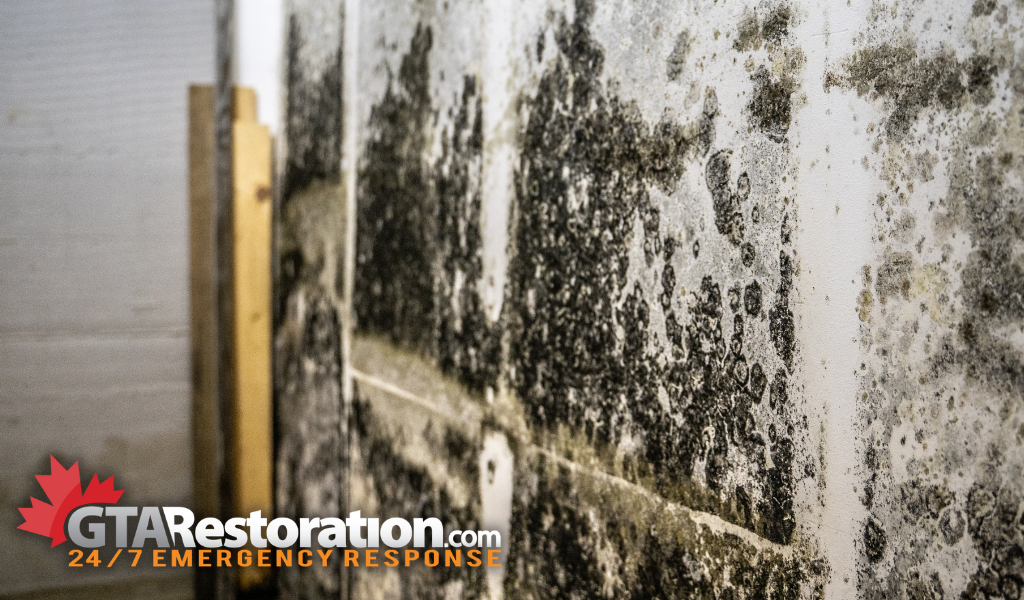
Early warning signs include visible mold, musty smells, water stains, condensation, peeling paint, damaged drywall, and damp flooring.
A musty smell does not always prove mold is present, but it can point to extra moisture or hidden growth that needs checking.
Check Beyond the Surface
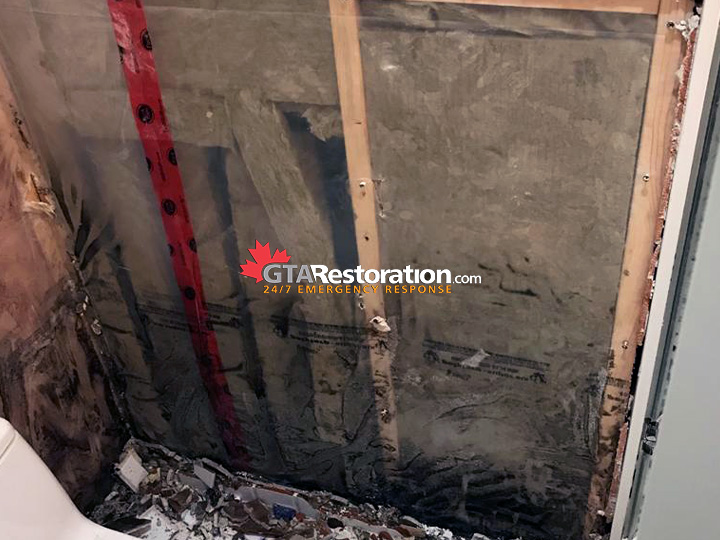
Water can travel behind walls, beneath floors, above ceilings, and into insulation. As a result, the visible stain or mold patch may be only part of the problem.
If moisture appears without an obvious cause, a professional check and moisture testing can help find the source.
When to Call a Mold Professional in Toronto
Small mold areas can sometimes be cleaned safely with the right precautions. Larger or recurring areas may point to a bigger moisture problem.
Toronto Public Health recommends professional help when mold covers about 4 square metres or more. Health Canada also suggests professional help when mold is widespread or keeps returning after cleaning.
Professional Help May Be Needed When:
- Mold covers a large area.
- Growth keeps returning after cleaning.
- You cannot find the moisture source.
- Water has reached hidden walls, floors, or ceilings.
- Sewage or dirty water caused the problem.
- Walls or other materials must be opened to reach the mold.
GTA Restoration provides mold removal and remediation for homes and businesses throughout Toronto and the GTA.
Avoid Mold in Toronto Commercial Properties
Business owners, landlords, and property managers also need good moisture control. Commercial buildings can develop mold around plumbing, washrooms, kitchens, mechanical rooms, storage areas, roofs, and exterior walls.
Ask tenants, staff, and maintenance teams to report leaks, water stains, condensation, or musty smells quickly. Early reporting makes it easier to fix the problem before damage spreads.
Commercial Mold Prevention
Check roofs, plumbing, HVAC equipment, washrooms, outside drainage, and areas with past water problems on a regular basis.
Keeping clear records of leaks and water damage can also help property managers spot repeat problems.
Safe Mold Cleaning & Prevention
Mold prevention should focus on moisture control first. Health Canada recommends cleaning small and medium mold areas with water and dish soap while using proper protection. Bleach is usually not needed for normal household mold cleanup.
Do Not Rely on Home Remedies Alone
Vinegar, baking soda, tea tree oil, and other household products are often promoted as mold treatments. However, they should not replace fixing the moisture source and using proper cleaning methods.
Indoor plants are also not a reliable way to prevent mold. In fact, too many plants can add moisture to indoor air.
Fix the Moisture Source First
Whether mold appears in a basement, bathroom, attic, wall, or commercial building, the moisture source must be fixed. Otherwise, mold may return after cleaning.
For more information, review Health Canada’s mold and moisture guidance.
Final Tips to Avoid Mold in Toronto
To avoid mold in Toronto, control indoor humidity, fix water problems quickly, improve airflow, reduce winter condensation, and check damp areas often.
The goal is not only to clean visible mold. More importantly, remove the damp conditions that allow it to grow.
With regular maintenance and quick action after leaks, Toronto homeowners can reduce the chance of mold returning.
Avoid Mold in Toronto: Frequently Asked Questions
What humidity level helps prevent mold?
Keep indoor humidity between about 30% and 50%. During very cold weather, you may need to keep it closer to the lower end of that range.
Why does mold keep coming back?
Recurring mold often means the moisture source still exists. Check for leaks, condensation, high humidity, or poor airflow.
Should I use bleach to clean mold?
Health Canada says bleach is usually not needed for normal household mold cleanup. Water and dish soap may be enough for smaller areas when proper precautions are used.
When should I call a mold remediation company?
Consider professional help when mold covers a large area, keeps returning, involves dirty water, or requires opening walls or other building materials.
Can winter condensation cause mold?
Yes. Water that often forms on cold windows, walls, pipes, or other surfaces can create damp conditions that support mold growth.
Concerned About Mold in Your Toronto Property?
GTA Restoration provides mold inspection, moisture checks, removal, and remediation throughout Toronto and the GTA.
Call GTA Restoration at 416-800-0000.
Learn More on Related Resources ↴
House Winter Water Damage and how to Prevent it | How to Prevent Frozen Pipes Burst in the Winter | Avoid mold growth with proper bathroom ventilation | How to Prevent Burst Pipes from Freezing Winter? | What to Do After Basement Flooding Fast
For non-emergencies use our contact form
Mold Health & Property Concerns
Indoor mold can irritate the eyes, nose, and throat. It may also cause coughing, wheezing, or breathing problems, especially for people with asthma or other breathing conditions.
The most important step is fixing the moisture source. Without that repair, mold can return after cleaning.
Reduce the Risk of Mold Returning
Fix leaks, control humidity, use exhaust fans, and dry wet materials quickly. In commercial buildings, staff and tenants should report leaks, stains, condensation, and musty smells as soon as possible.
Know When to Get Help
Large or recurring mold problems may need professional inspection and remediation, especially when water has reached hidden building materials.
Need Mold Assistance?
GTA Restoration provides mold inspection and remediation throughout Toronto and the GTA.
Call 416-800-0000.
Service Areas Across Canada
GTA Restoration serves communities across Canada, including Toronto and the GTA. U.S. locations are opening. Browse our Canadian service areas below, and contact us to confirm services and availability for your address.
Search
- Air Duct Cleaning Montreal
- Ajax Asbestos Removal
- Ajax Mold Removal
- Ajax Water Damage
- Asbestos Removal Calgary
- Asbestos Removal Edmonton
- Asbestos Removal Fort Saskatchewan
- Asbestos Removal Gloucester
- Asbestos Removal Grimsby
- Asbestos Removal Hamilton
- Asbestos Removal Kanata
- Asbestos Removal Kitchener
- Asbestos Removal Laval
- Asbestos Removal Lincoln
- Asbestos Removal Montreal
- Asbestos Removal Nepean
- Asbestos Removal Niagara Falls
- Asbestos Removal Orleans
- Asbestos Removal Ottawa
- Asbestos Removal Sherwood Park
- Asbestos Removal Spruce Grove
- Asbestos Removal St Catharines
- Asbestos Removal St-Albert
- Asbestos Removal Thorold
- Asbestos Testing Hamilton
- Asbestos Testing Montreal
- Asbestos Testing Petersburg
- Aurora Mold Removal
- Aurora Water Damage
- Beaconsfield Asbestos Removal
- Brampton Asbestos Removal
- Brampton Mold Removal
- Brampton Water Damage
- Burlington Asbestos Removal
- Burlington Mold Removal
- Burlington Water Damage
- Burst Pipe Montreal Frozen Pipe
- Burst Pipe Repair Edmonton
- Burst Pipe Repair Ottawa
- Caledon Mold Removal
- Caledon Water Damage
- Calgary Mold Removal
- Calgary Water Damage
- Cambridge Mold Removal
- Cambridge Water Damage
- Clarington Mold Removal
- Concord Mold Removal
- Concord Water Damage
- Cooksville Mold Removal
- Edmonton Water Damage
- Emergency Roofing Vancouver
- Etobicoke Asbestos Removal
- Etobicoke Mold Removal
- Etobicoke Water Damage
- Fire Damage Grimsby
- Fire Damage Lincoln
- Fire Damage Niagara Falls
- Fire Restoration Fort McMurray
- Fire Damage Restoration Thorold
- Fire Damage St Catharines
- Flood Cleanup Grimsby
- Flood Cleanup Lincoln
- Flood Cleanup Niagara Falls
- Flood Cleanup St Catharines
- Flood Cleanup Thorold
- London Mold Removal
- London Water Damage
- Markham Asbestos Removal
- Markham Mold Removal
- Markham Water Damage
- Mississauga Asbestos Testing
- Mississauga Mold Removal
- Mississauga Water Damage
- Mold Inspection Removal Kitchener
- Mold Remediation Montreal
- Mold Removal & Inspection LaSalle
- Mold Removal Anjou
- Mold Removal Boucherville
- Mold Removal Brossard
- Mold Removal Burnaby
- Mold Removal Chambly
- Mold Removal Chateauguay
- Mold Removal Chomedey
- Mold Removal Coquitlam
- Mold Removal Dollard Des Ormeaux
- Mold Removal Dorval
- Mold Removal Edmonton
- Mold Removal Fort Saskatchewan
- Mold Removal Gloucester
- Mold Removal Grimsby
- Mold Removal Hamilton Inspection
- Mold Removal Ile Bizard
- Mold Removal in Osgoode
- Mold Removal Beaconsfield
- Mold Removal Kahnawake
- Mold Removal Kanata
- Mold Removal Kirkland
- Mold Removal Laval
- Mold Removal Lincoln
- Mold Removal Longueuil
- Mold Removal Montreal East
- Mold Removal Mount Royal
- Mold Removal Nepean
- Mold Removal New Westminster
- Mold Removal Niagara Falls
- Mold Removal Orleans
- Mold Removal Ottawa
- Mold Removal Cumberland
- Mold Remediation Hampstead
- Mold Removal Remediation Roxboro
- Mold Removal Richmond BC
- Mold Removal Rideau Lakes
- Mold Removal Rockcliffe Park
- Mold Removal Saint Hubert
- Mold Removal Saint Laurent
- Mold Removal Sherwood Park
- Mold Removal Spruce Grove
- Mold Removal St Catharines
- Mold Removal Ste Dorothee
- Mold Removal St۔ Albert
- Mold Removal Surrey
- Mold Removal Thorold
- Mold Removal Vancouver
- Mold Removal Vanier
- Mold Removal Westmount
- Montreal Biohazard Cleanup
- Montreal Emergency Plumber
- Montreal Fire Restoration
- Montreal Flood Cleanup
- Montreal Odor Removal
- Montreal Roofing Emergency
- Montreal Sewer Backup Cleanup
- Montreal Water Leak Detection
- Montréal Asbestos Removal
- Montréal Emergency Plumbing
- Montréal Mold Removal
- Montréal Pipe Burst Emergency
- Montréal Water Damage
- Newmarket Mold Removal
- Newmarket Water Damage
- North York Mold Removal
- Oakville Mold Removal
- Oakville Water Damage
- Oshawa Mold Removal
- Oshawa Water Damage
- Ottawa Air Duct Cleaning
- Pickering Mold Removal
- Pickering Water Damage
- Red Deer Water Damage
- RedDeer Mold Removal
- Richmond Hill Mold Removal
- Richmond Hill Water Damage
- Roof Repair Lincoln
- Roof Repair Niagara Falls
- Roof Repair St Catharines
- Scarborough Asbestos Removal
- Scarborough Mold Removal
- Scarborough Water Damage
- Sewage Cleanup Edmonton
- Sewer Backup Lincoln
- Sewer Backup Niagara Falls
- Sewer Backup Ottawa
- Sewer Backup St Catharines
- Thornhill Mold Removal
- Toronto & GTA Asbestos Removal
- Toronto & GTA Mold Removal
- Toronto Air Duct Cleaning
- Toronto Water Damage
- Unionville Mold Removal
- Unionville Water Damage
- Vancouver Asbestos Removal
- Vancouver Biohazard Cleanup
- Vancouver Emergency Plumber
- Vancouver Emergency Plumbing
- Vancouver Fire Restoration
- Vancouver Flood Cleanup
- Vancouver Mold Removal
- Vancouver Odor Removal
- Vancouver Pipe Burst Emergency
- Vancouver Sewer Backup Cleanup
- Vancouver Water Damage
- Vancouver Water Leak Detection
- Vaughan Mold Removal
- Vaughan Water Damage
- Vermiculite Removal Ottawa
- Water Damage Grimsby
- Water Damage Kanata
- Water Damage Kitchener
- Water Damage Lincoln
- Water Damage Longueuil
- Water Damage Nepean
- Water Damage Niagara Falls
- Water Damage Orleans
- Water Damage Ottawa
- Water Damage Repair Montreal
- Water Damage Laval Montreal
- Water Damage Restoration Thorold
- Sewage Backup Cleanup Montreal
- Water Damage St Catharines
- Water Damage Vancouver
- Water Flood Damage Repair Hamilton
- Flood Damage Repair Hampstead
- Whitby Water Damage
- Woodbridge Asbestos Removal
- Woodbridge Mold Removal
- Woodbridge Water Damage
- Restoration Equipment Rental
Avoid Mold in Toronto | 5 Homeowner Prevention Tips!
Direct Billing & Insurance Claims
Ask your insurer about coverage, deductibles and the records it needs.

In-House Financing Available
Financing up to 24 months. No interest. No money down. Ask us about the terms.
Learn more ↴ 
RELATED ARTICLES
 Facebook
 Instagram
 LinkedIn
 X / Twitter
 YouTube