

Commercial Water Leak Detection Systems: A Buyer's Guide
Quick Summary Commercial water leak detection is essential for preventing costly damage and maintaining safety in business properties.
Commercial water leak detection watches for water where it should not be, then warns you or shuts the supply off before damage spreads. Most systems combine sensors, a monitoring panel or gateway, and alert software, and many add automatic shutoff valves and flow monitoring.
- Point sensors respond to standing water at one spot, while leak detection cable traces a whole pipe run.
- Place sensors first in mechanical rooms, washrooms, kitchens, server rooms, and where supply lines enter.
- An automatic shutoff valve closes the supply when a sensor trips, limiting water loss while the building is empty.
- Wireless sensors deploy faster but depend on battery upkeep and signal strength.
- Test sensors and shutoff valves on a regular schedule, and re-check placement after renovations.
Table of Contents
- How Commercial Water Leak Detection Systems Work
- Commercial Building Water Sensors: Types and Placement
- Water Leak Detection System with Automatic Shutoff
- Restoration Support
- Frequently Asked Questions
How Commercial Water Leak Detection Systems Work
A commercial water leak detection system watches for water where it should not be, then warns you or shuts the supply off before damage spreads. Sensors sit at vulnerable points, a panel collects signals, and alerts reach a phone, email, or building management system.
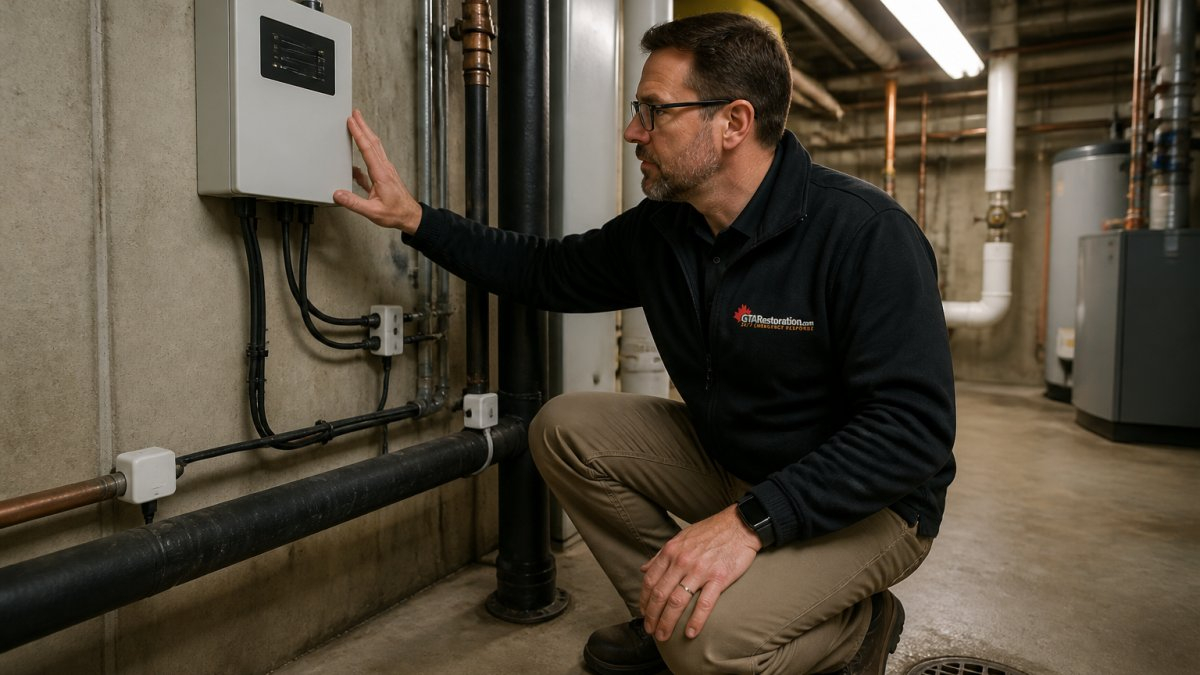
Detection methods differ in what they actually catch. Point sensors respond to standing water at one spot. Leak detection cable traces a whole run of pipe and can report roughly where along the cable moisture appeared. Acoustic systems listen for the sound of escaping water, and researchers publishing in Results in Engineering on AI-based acoustic leak detection have explored pairing that approach with cloud-based information management. Thermal imaging is another option. In practice, most commercial buildings combine two or more methods rather than relying on one.
Commercial Building Water Sensors: Types and Placement
Placement decides whether a system works. Start with vulnerable areas: mechanical rooms, boiler and pump rooms, washrooms, kitchens, laundry rooms, server rooms, and anywhere supply lines enter. Floor-level sensing matters most, because water pools low before it spreads. For pipe runs, leak detection cable gives continuous coverage. Wireless sensors cut disruption in finished spaces; wired units suit new construction and mechanical rooms.
Each detector protects a limited area, so map detection zones before ordering. If water loss happens first, stopping the leak and documenting damage for insurance is crucial. When damp conditions go unnoticed, mold remediation may be necessary.
Water Leak Detection System with Automatic Shutoff
An automatic shutoff valve turns detection into prevention. When a sensor trips, the valve closes the supply, capping the water that can escape while the building sits empty. If a valve fails or a pipe bursts, commercial emergency plumbing provides urgent help. Flow monitoring adds another layer, spotting a burst pipe by the surge in water use.
Valves need periodic testing, because a stuck valve gives false confidence. If a leak or shutoff failure causes damage, commercial water damage restoration handles extraction, drying and cleanup. A shutoff that closes during normal operations, such as a cooling system top-up, can cause its own problems, so set control logic carefully.
| Detection Method | Best For | Main Limitation |
|---|---|---|
| Point sensor | Mechanical rooms, under sinks | Covers one small spot |
| Leak detection cable | Long pipe runs | Higher material cost |
| Flow monitoring | Whole-building supply | Needs baseline data |
| Acoustic detection | Hidden pipe leaks | Background noise interferes |
Wired systems are reliable but disruptive to install; wireless ones deploy faster but depend on battery upkeep and signal strength. Ongoing maintenance decides long-term reliability.
Restoration Support
Detection prevents damage; it does not clean it up. Here is what matters after a leak.
Check the Alarm Path
Confirm alerts reach someone on call. An alarm nobody sees is useless.
Test Shutoff Valves
Exercise automatic valves on a schedule so they close when needed.
Inspect Sensor Placement
Renovations move equipment. Re-check coverage after any layout change.
Watch the Mechanical Room
Pump rooms and boiler rooms deserve the first sensors and the most attention.
Document the System
Keep a zone map so responders know where water entered.
Handle Water Damage Safely
Do not enter standing water near electrical equipment. Call qualified help.
Address Moisture Quickly
Damp materials support mold growth within days. Start drying promptly.
Review Insurance Coverage
The insurer decides what is covered. Keep records and photos ready.
If a leak has already caused damage, our team responds around the clock. Call Us: 416-800-0000
Frequently Asked Questions
What is the best water leak detection system for a commercial building?
There is no single best system. The right choice depends on building size, risk areas, and whether you need automatic shutoff. A system with zone-based sensors, real-time alerts, and a shutoff valve suits most commercial properties. Compare coverage and maintenance needs before buying.
Where should water leak sensors be installed in a commercial building?
Place sensors in mechanical rooms, near water heaters, under sinks, beside appliances, and along pipe runs in ceilings or floors. Vulnerable areas include washrooms, kitchens, and laundry rooms. Multiple detection zones improve coverage and help pinpoint leak location.
Can a commercial leak detection system automatically shut off the water?
Yes. A water leak detection system with automatic shutoff connects sensors to a valve that closes when a leak is detected. This limits water loss and damage prevention. Confirm the valve suits your pipe size and that manual override is available for maintenance.
How often should commercial water leak detection sensors be tested?
Test sensors and alarms at least quarterly, and check the shutoff valve annually. Follow the manufacturer’s schedule. Regular water leak detection system maintenance catches false alarms and dead batteries early, so the system works when a real pipe leak occurs.
Is wired or wireless water leak detection better for a commercial building?
Wired systems suit new builds and large facilities with stable power and cabling. Wireless systems install faster in older buildings and are easier to expand. Both can support remote monitoring and real-time alerts. Choose based on building age and sensor coverage needs.

For non-emergencies use our contact form
Commercial Water Leak Detection Systems: 11 Checks
Protect your building with commercial water leak detection systems. First, find the risks. Then, choose the right tools.
1. Check Water Leak Risks
First, find pipes and tanks that may leak. Also, check rooms below them.
2. Choose Commercial Leak Sensors
Water sensors can spot leaks on floors. However, they must be in the right place.
3. Check Water Flow Monitors
Flow tools track water use. As a result, odd flow may trigger an alert.
4. Review Water Shutoff Systems
Some valves can stop the flow. However, a plumber must check the setup.
5. Test Smart Water Leak Alerts
First, test the alarm. Then, check that staff get the alert.
Commercial Leak Detection and Building Safety
6. Check Sensor Signal Range
Large sites may have weak signals. Therefore, test each sensor where it will be used.
7. Protect Key Work Areas
Place sensors near rooms at risk. Also, check the floors above them.
8. Plan Water Leak System Care
Set dates for tests and battery checks. Then, keep a clear test log.
9. Review Commercial Water Alerts
Ask who gets each alarm. Also, set a clear plan for staff.
10. Check for Hidden Water
A leak may wet walls or floors. Therefore, check for damp spots after the source is fixed.
11. Get Commercial Water Leak Help
Ask about commercial water leak detection and cleanup. Then, plan any drying work.
Need help finding a commercial water leak?
Call GTA Restoration. Also, tell us where the water has spread.
Service Areas Across Canada
GTA Restoration serves communities across Canada, including Toronto and the GTA. U.S. locations are opening. Browse our Canadian service areas below, and contact us to confirm services and availability for your address.
Search
- Air Duct Cleaning Montreal
- Ajax Asbestos Removal
- Ajax Mold Removal
- Ajax Water Damage
- Asbestos Removal Calgary
- Asbestos Removal Edmonton
- Asbestos Removal Fort Saskatchewan
- Asbestos Removal Gloucester
- Asbestos Removal Grimsby
- Asbestos Removal Hamilton
- Asbestos Removal Kanata
- Asbestos Removal Kitchener
- Asbestos Removal Laval
- Asbestos Removal Lincoln
- Asbestos Removal Montreal
- Asbestos Removal Nepean
- Asbestos Removal Niagara Falls
- Asbestos Removal Orleans
- Asbestos Removal Ottawa
- Asbestos Removal Sherwood Park
- Asbestos Removal Spruce Grove
- Asbestos Removal St Catharines
- Asbestos Removal St-Albert
- Asbestos Removal Thorold
- Asbestos Testing Hamilton
- Asbestos Testing Montreal
- Asbestos Testing Petersburg
- Aurora Mold Removal
- Aurora Water Damage
- Beaconsfield Asbestos Removal
- Brampton Asbestos Removal
- Brampton Mold Removal
- Brampton Water Damage
- Burlington Asbestos Removal
- Burlington Mold Removal
- Burlington Water Damage
- Burst Pipe Montreal Frozen Pipe
- Burst Pipe Repair Edmonton
- Burst Pipe Repair Ottawa
- Caledon Mold Removal
- Caledon Water Damage
- Calgary Mold Removal
- Calgary Water Damage
- Cambridge Mold Removal
- Cambridge Water Damage
- Clarington Mold Removal
- Concord Mold Removal
- Concord Water Damage
- Cooksville Mold Removal
- Edmonton Water Damage
- Emergency Roofing Vancouver
- Etobicoke Asbestos Removal
- Etobicoke Mold Removal
- Etobicoke Water Damage
- Fire Damage Grimsby
- Fire Damage Lincoln
- Fire Damage Niagara Falls
- Fire Restoration Fort McMurray
- Fire Damage Restoration Thorold
- Fire Damage St Catharines
- Flood Cleanup Grimsby
- Flood Cleanup Lincoln
- Flood Cleanup Niagara Falls
- Flood Cleanup St Catharines
- Flood Cleanup Thorold
- London Mold Removal
- London Water Damage
- Markham Asbestos Removal
- Markham Mold Removal
- Markham Water Damage
- Mississauga Asbestos Testing
- Mississauga Mold Removal
- Mississauga Water Damage
- Mold Inspection Removal Kitchener
- Mold Remediation Montreal
- Mold Removal & Inspection LaSalle
- Mold Removal Anjou
- Mold Removal Boucherville
- Mold Removal Brossard
- Mold Removal Burnaby
- Mold Removal Chambly
- Mold Removal Chateauguay
- Mold Removal Chomedey
- Mold Removal Coquitlam
- Mold Removal Dollard Des Ormeaux
- Mold Removal Dorval
- Mold Removal Edmonton
- Mold Removal Fort Saskatchewan
- Mold Removal Gloucester
- Mold Removal Grimsby
- Mold Removal Hamilton Inspection
- Mold Removal Ile Bizard
- Mold Removal in Osgoode
- Mold Removal Beaconsfield
- Mold Removal Kahnawake
- Mold Removal Kanata
- Mold Removal Kirkland
- Mold Removal Laval
- Mold Removal Lincoln
- Mold Removal Longueuil
- Mold Removal Montreal East
- Mold Removal Mount Royal
- Mold Removal Nepean
- Mold Removal New Westminster
- Mold Removal Niagara Falls
- Mold Removal Orleans
- Mold Removal Ottawa
- Mold Removal Cumberland
- Mold Remediation Hampstead
- Mold Removal Remediation Roxboro
- Mold Removal Richmond BC
- Mold Removal Rideau Lakes
- Mold Removal Rockcliffe Park
- Mold Removal Saint Hubert
- Mold Removal Saint Laurent
- Mold Removal Sherwood Park
- Mold Removal Spruce Grove
- Mold Removal St Catharines
- Mold Removal Ste Dorothee
- Mold Removal St۔ Albert
- Mold Removal Surrey
- Mold Removal Thorold
- Mold Removal Vancouver
- Mold Removal Vanier
- Mold Removal Westmount
- Montreal Biohazard Cleanup
- Montreal Emergency Plumber
- Montreal Fire Restoration
- Montreal Flood Cleanup
- Montreal Odor Removal
- Montreal Roofing Emergency
- Montreal Sewer Backup Cleanup
- Montreal Water Leak Detection
- Montréal Asbestos Removal
- Montréal Emergency Plumbing
- Montréal Mold Removal
- Montréal Pipe Burst Emergency
- Montréal Water Damage
- Newmarket Mold Removal
- Newmarket Water Damage
- North York Mold Removal
- Oakville Mold Removal
- Oakville Water Damage
- Oshawa Mold Removal
- Oshawa Water Damage
- Ottawa Air Duct Cleaning
- Pickering Mold Removal
- Pickering Water Damage
- Red Deer Water Damage
- RedDeer Mold Removal
- Richmond Hill Mold Removal
- Richmond Hill Water Damage
- Roof Repair Lincoln
- Roof Repair Niagara Falls
- Roof Repair St Catharines
- Scarborough Asbestos Removal
- Scarborough Mold Removal
- Scarborough Water Damage
- Sewage Cleanup Edmonton
- Sewer Backup Lincoln
- Sewer Backup Niagara Falls
- Sewer Backup Ottawa
- Sewer Backup St Catharines
- Thornhill Mold Removal
- Toronto & GTA Asbestos Removal
- Toronto & GTA Mold Removal
- Toronto Air Duct Cleaning
- Toronto Water Damage
- Unionville Mold Removal
- Unionville Water Damage
- Vancouver Asbestos Removal
- Vancouver Biohazard Cleanup
- Vancouver Emergency Plumber
- Vancouver Emergency Plumbing
- Vancouver Fire Restoration
- Vancouver Flood Cleanup
- Vancouver Mold Removal
- Vancouver Odor Removal
- Vancouver Pipe Burst Emergency
- Vancouver Sewer Backup Cleanup
- Vancouver Water Damage
- Vancouver Water Leak Detection
- Vaughan Mold Removal
- Vaughan Water Damage
- Vermiculite Removal Ottawa
- Water Damage Grimsby
- Water Damage Kanata
- Water Damage Kitchener
- Water Damage Lincoln
- Water Damage Longueuil
- Water Damage Nepean
- Water Damage Niagara Falls
- Water Damage Orleans
- Water Damage Ottawa
- Water Damage Repair Montreal
- Water Damage Laval Montreal
- Water Damage Restoration Thorold
- Sewage Backup Cleanup Montreal
- Water Damage St Catharines
- Water Damage Vancouver
- Water Flood Damage Repair Hamilton
- Flood Damage Repair Hampstead
- Whitby Water Damage
- Woodbridge Asbestos Removal
- Woodbridge Mold Removal
- Woodbridge Water Damage
- Restoration Equipment Rental
Commercial Water Leak Detection FAQs
How do commercial water leak detection systems work?
Sensors can detect water or odd flow. Then, the system sends an alert.
Can a water leak system shut off the water?
Some can. However, automatic shutoff needs a suitable valve and the right setup.
Where should leak sensors be placed?
Place them near pipes, tanks, and other leak risks. Also, check rooms below.
Do water leak sensors stop all flood damage?
No. However, early alerts may help limit damage when staff act fast.
Learn more ↴ 
Latest Blog
Latest Articles
Direct Billing & Insurance Claims
Ask your insurer about coverage, deductibles and the records it needs.

In-House Financing Available
Financing up to 24 months. No interest. No money down. Ask us about the terms.
Certifications & Insurance
View our firm certification, technician qualifications and insurance documents.

IICRC Certified Firm
GTA Restoration Inc.
Firm number 199912
Valid through

Business Insurance
GTA Restoration Group Inc.
$5 million general liability per occurrence
$8 million contractors pollution per claim
–
IICRC Technician Qualifications
Richard Mark Provence · Registration 55726
Certificate expires
Water Damage Restoration · Fire & Smoke Restoration · Applied Microbial Remediation · Odor Control · Trauma & Crime Scene
View technician verification (PDF) — opens in a new tabInsurance is subject to policy terms, conditions and exclusions.
 Facebook
 Instagram
 LinkedIn
 X / Twitter
 YouTube


