Hailstorm Season in Canada | When & Where Hail Hits
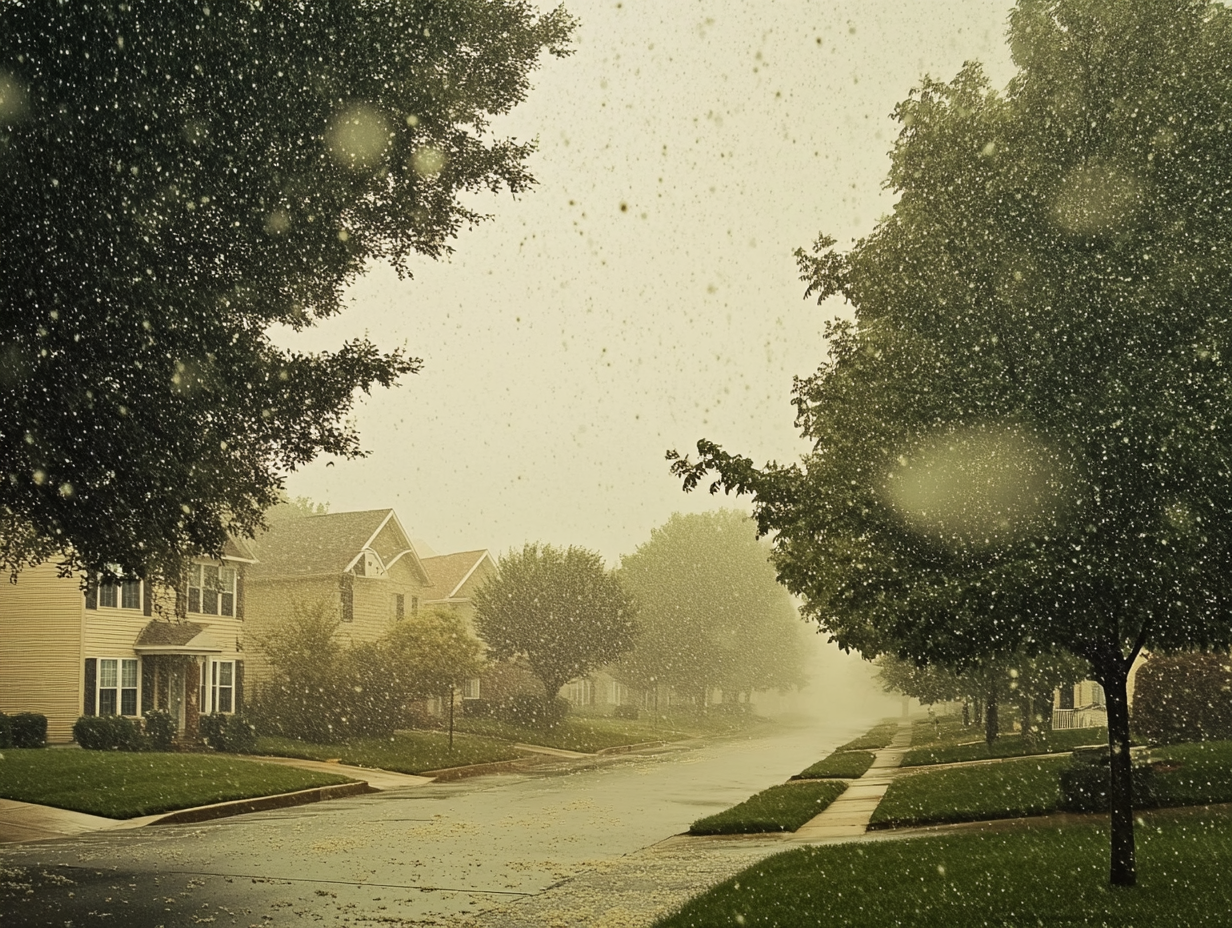
Understanding hailstorm season in Canada can help homeowners prepare for severe weather and reduce the risk of property damage. Hail can occur anywhere in the country, although some regions experience it more frequently than others. These storms are most common during the warmer months when thunderstorms develop strong updrafts capable of forming hail.
Knowing when hail is more likely, where the greatest risks occur, and what steps to take before a storm can help protect your home, vehicle, and family.
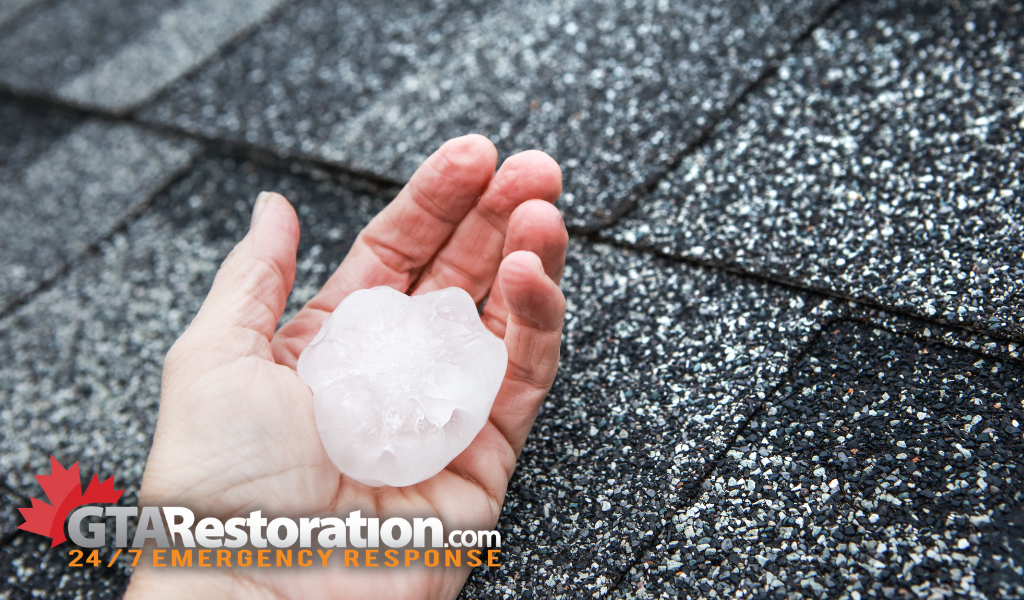
Large hailstones can damage roofing, siding, windows, and other exterior building materials.
Hailstorm Season in Canada: Key Takeaways
Hailstorms can occur anywhere in Canada.
Late spring through summer is the most common period for hail.
Parts of Alberta experience some of Canada’s most frequent and severe hailstorms.
Ontario can experience hail from May through October.
Strong thunderstorm updrafts help hailstones develop.
Large hail can damage roofs, siding, windows, vehicles, and outdoor property.
Official weather alerts provide important warning of severe thunderstorms.
Property owners should document visible damage after a storm when conditions are safe.
When Does Hailstorm Season in Canada Begin?
Hailstorm season in Canada generally occurs from late spring through summer. However, hail can develop outside the typical seasonal window whenever atmospheric conditions support strong thunderstorms.
Government of Canada guidance identifies late spring through summer as the most common period for hailstorms. In British Columbia, Saskatchewan, Manitoba, and Ontario, hail can occur from May through October.
Because severe weather can develop quickly, property owners should follow current forecasts and local warnings rather than relying only on calendar dates.
Typical Time of Day for Canadian Hailstorms
Afternoon thunderstorms frequently produce hail because daytime heating can contribute to unstable atmospheric conditions. Still, storms may develop at other times when the right combination of moisture, instability, and strong updrafts exists.
For that reason, monitor severe thunderstorm watches and warnings throughout the day when unstable weather is forecast.
Regional Hailstorm Season in Canada
Hail risk varies considerably across the country. Prairie regions experience some of Canada’s most frequent damaging hail, while Ontario and other provinces can also experience severe hailstorms during the warm season.
Alberta During Hailstorm Season in Canada
The Calgary-to-Red Deer region of Alberta is particularly well known for severe hail. Government guidance identifies this area as having some of the country’s most frequent and damaging hailstorms.
Weather patterns near the Rocky Mountains can support powerful thunderstorms capable of producing large hail during warmer months.
Ontario Hailstorm Season in Canada
Ontario experiences severe thunderstorms capable of producing hail, especially during the warmer part of the year. Southern Ontario is also one of Canada’s more thunderstorm-prone areas.
Within the Greater Toronto Area, individual storms may bring hail together with strong winds, lightning, and heavy rainfall. Local forecasts provide the best indication of immediate risk.
Prairie Hailstorms in Saskatchewan & Manitoba
Saskatchewan and Manitoba also face hail during the warm season. Agricultural areas can suffer crop losses, while larger hailstones may damage roofs, vehicles, windows, and exterior finishes.
Hail Risk in British Columbia & Eastern Canada
British Columbia can experience hail as well, although risk varies by location and weather pattern. Quebec, Atlantic Canada, and other areas are also capable of receiving hail during thunderstorms.
No Canadian region should therefore be considered completely free from hail risk.
How Hail Forms During Hailstorm Season in Canada
Hail develops inside thunderstorms with strong updrafts. Rising air carries water droplets into cold areas of the atmosphere, where those droplets freeze.
Additional layers of ice may form as the developing hailstone moves through the storm. Eventually, its weight exceeds the ability of the updraft to keep it suspended, causing the hailstone to fall.
Hailstones vary widely in size. Larger stones can cause serious damage to buildings, vehicles, crops, and outdoor property.
Why Some Canadian Hailstorms Cause More Damage
Several factors influence the amount of damage, including hailstone size, wind speed, storm intensity, construction materials, and exposure.
Large hail can crack roofing materials, damage siding, break glass, dent vehicles, and damage outdoor equipment. Heavy rainfall during the same storm may also contribute to drainage problems and localized flooding.
Protecting Your Home During Hailstorm Season in Canada
Preparing before severe weather arrives can reduce exposure to hail damage. Start by checking vulnerable exterior areas and follow local forecasts whenever thunderstorms are expected.
Roof Protection During Canadian Hail Season
Damaged or deteriorated roofing may be more vulnerable during severe weather. Periodically inspect accessible exterior areas and arrange professional assessment when you notice missing, cracked, loose, or worn materials.
Property owners in hail-prone areas may also consider impact-resistant roofing materials when replacement becomes necessary.
Drainage & Eavestrough Maintenance
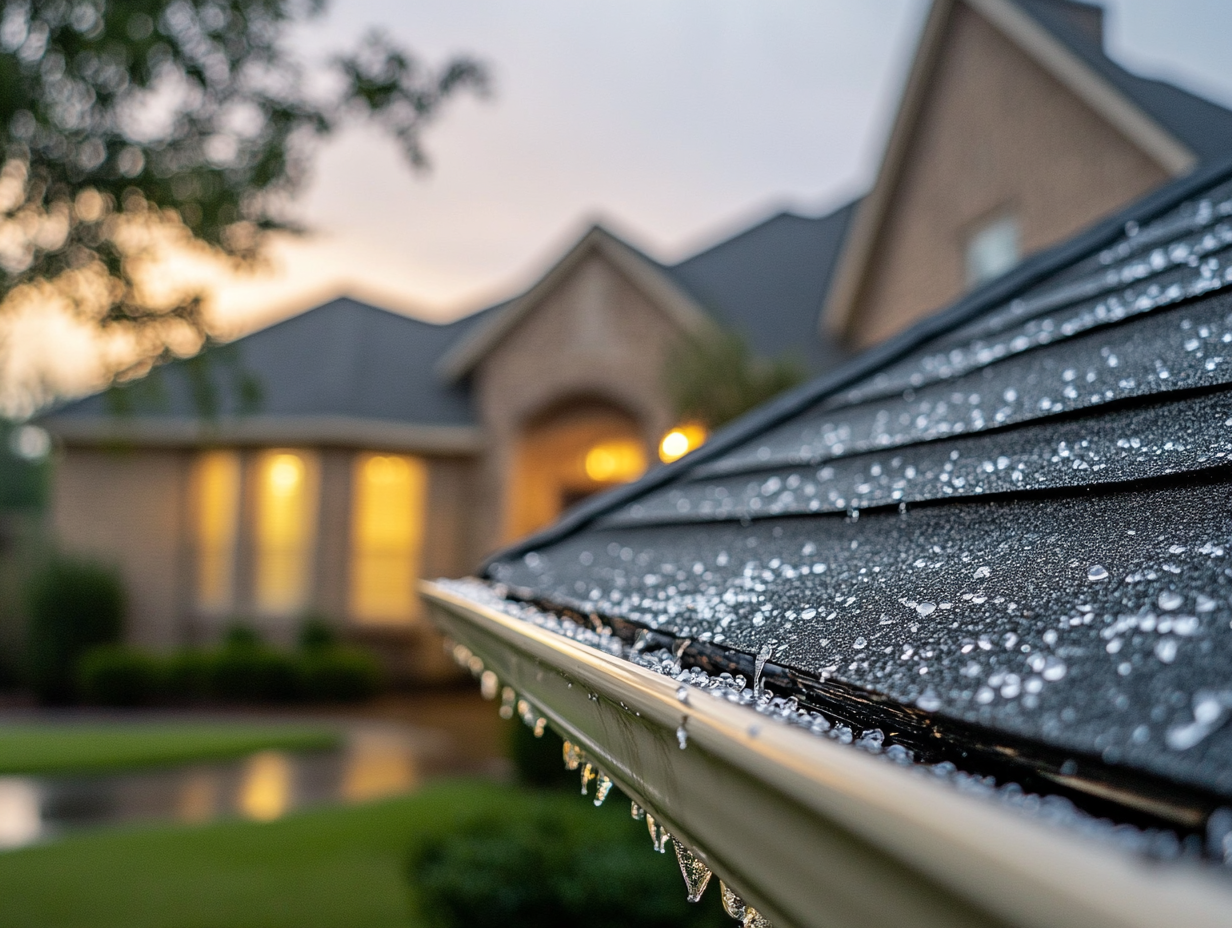
Hail often arrives with heavy rainfall. Clear eavestroughs and downspouts help move water away from the building and reduce drainage problems.
Blocked drainage can increase the chance of water collecting around the property during intense storms.
Protect Windows & Outdoor Property
Move or secure outdoor furniture, tools, and other exposed items when severe weather is forecast. Where appropriate, protective measures may also help reduce exposure around vulnerable windows and skylights.
Vehicle Safety During Hailstorm Season in Canada
Vehicles are particularly vulnerable to large hailstones. Whenever practical, move your car into a garage or another covered location before severe weather reaches the area.
If hail begins while you are driving, avoid sudden or unsafe manoeuvres while searching for shelter. Instead, move to a safe location away from active traffic when conditions allow and remain inside the vehicle.
Protecting Yourself Inside a Vehicle
Stay inside the vehicle during severe hail unless another immediate hazard makes remaining there unsafe. Keep away from damaged glass if hailstones begin cracking windows.
Once the storm passes, inspect the vehicle in a safe location and photograph any visible damage.
Emergency Preparedness for Hailstorm Season in Canada
Property protection matters, but personal safety always comes first. Severe thunderstorms can bring hail, lightning, strong winds, heavy rain, and other hazards at the same time.
Move Indoors Before the Storm Arrives
Seek shelter inside a secure building when severe weather approaches. Stay away from windows, glass doors, and skylights during the storm.
If thunder or lightning is present, remain indoors rather than going outside to protect a vehicle or other property.
Monitor Official Weather Alerts
Environment and Climate Change Canada provides watches, warnings, and weather alerts across the country. The WeatherCAN app can also provide local notifications.
Keep essential supplies available in case severe weather causes a power outage or other disruption. Your household plan should also account for pets and anyone who may need additional assistance during an emergency.
Climate Change & Hailstorm Season in Canada
The connection between climate change and severe hail in Canada remains an active area of research. Scientists do not currently have enough evidence to conclude that every region is experiencing the same historical trend.
Canada’s recent national climate assessment found insufficient evidence to determine a Canada-wide historical change in severe hail. Some research suggests possible regional differences, but confidence remains limited.
For immediate safety decisions, local forecasts and severe weather warnings remain more useful than assuming one national trend applies everywhere.
What to Do After a Hailstorm in Canada
Once the storm has passed and conditions are safe, inspect your property from the ground. Look for visible damage to roofing, siding, windows, exterior fixtures, vehicles, and other exposed areas.
Avoid climbing onto a wet or damaged roof. Instead, arrange a professional inspection if you suspect roofing damage.
Document Hail Damage
Photograph visible damage before major repairs or cleanup whenever practical. Keep photographs, estimates, invoices, and other records together if you plan to contact your insurance provider.
Coverage depends on your individual policy, deductible, limits, exclusions, and cause of loss. Your insurer or broker determines whether a claim qualifies for coverage.
Check for Water Intrusion After Hail
Hail can damage roofing, flashing, siding, windows, and skylights. As a result, water may enter during the storm or during later rainfall.
If water reaches the interior, address the exterior source and arrange appropriate water damage restoration.
Final Summary: Hailstorm Season in Canada
Hailstorm season in Canada is most active during the warmer months, particularly from late spring through summer. Regional timing varies, and storms can occur whenever atmospheric conditions support hail-producing thunderstorms.
Parts of Alberta face particularly high hail risk, while Ontario, Saskatchewan, Manitoba, British Columbia, and other regions can also experience damaging events.
Preparation remains the most practical approach. Follow official weather alerts, protect vehicles when possible, maintain exterior drainage, and move indoors when severe weather approaches.
Hailstorm Season in Canada: Frequently Asked Questions
When does hailstorm season in Canada usually start?
Late spring generally marks the beginning of the higher-risk period, although timing varies by region and weather conditions.
Which Canadian region gets the most hail?
Parts of Alberta, particularly the Calgary-to-Red Deer corridor, experience some of Canada’s most frequent and severe hailstorms.
Does Ontario have a hailstorm season?
Yes. Ontario can experience hail during severe thunderstorms throughout the warmer months, including storms affecting Toronto and the GTA.
Can hail occur outside the normal Canadian hail season?
It can. Suitable atmospheric conditions may produce hail outside the typical late-spring and summer period.
How should I respond during a hailstorm?
Move into a secure building and stay away from windows, skylights, and glass doors. If driving, pull over safely when conditions permit and remain inside the vehicle.
What should I inspect after severe hail?
Check for visible damage to roofing, siding, windows, vehicles, exterior fixtures, and signs of water entering the building.
Storm Damage Caused Water to Enter Your Property?
GTA Restoration provides 24/7 emergency water damage restoration throughout Toronto and the GTA.
Severe hail can damage roofing, windows, siding, vehicles, and other exposed property. Preparing before storms arrive can reduce unnecessary risk.
Protect Property Before Canadian Hailstorms
Keep eavestroughs clear, secure outdoor items, and move vehicles into covered areas whenever severe weather is forecast.
Weather Alerts During Hailstorm Season in Canada
Follow Environment and Climate Change Canada forecasts and warnings. WeatherCAN can also provide local severe weather notifications.
Stay Safe During Severe Hail
Move indoors and stay away from windows and skylights. Do not remain outside simply to protect vehicles or other property.
Inspect Damage After the Storm
Once conditions improve, photograph visible damage and look for signs of roof leaks or interior water intrusion. Avoid climbing onto a wet or damaged roof.
Need Help After Storm Damage?
If hail causes water damage inside your Toronto or GTA property, GTA Restoration provides 24/7 emergency restoration.
GTA Restoration serves communities across Canada, including Toronto and the GTA. U.S. locations are opening. Browse our Canadian service areas below, and contact us to confirm services and availability for your address.




 Facebook
  Instagram
  LinkedIn
  X / Twitter
  YouTube