
Professional Smoke Damage Cleaning Process: Step by Step
Smoke damage cleaning removes soot, residue and odour from a home or business after a fire. First, the team checks the damage and plans the work. Then it chooses methods that suit each surface. This guide explains the main stages and the questions to ask before work begins.
For homes and businesses in Toronto and the GTA, smoke cleanup may also involve firefighting water and damaged belongings. However, each fire leaves its own mix of damage. A written scope helps you understand what needs cleaning, what may need to be replaced and which checks come next.
Before Smoke Damage Cleaning Starts
Only return when officials say you may enter. Even then, follow any limits on access. For example, damaged wiring, weak floors or unstable ceilings may prevent work in some rooms. Also, keep children and pets away from the affected area.
The Canadian Red Cross guidance after a home fire explains safe return, cleanup steps and records to keep. If you can enter safely, photograph damage before moving items. Next, ask your insurer which records it needs. Your insurer decides coverage; a cleaning plan does not confirm that a claim is covered.
Inspect the Damage and Plan the Work
First, the team checks where smoke travelled and which surfaces it marked. It also looks for water damage and hidden areas that may need access. In a condo, tell the team about shared halls, nearby units and building access rules.
Then, ask for the proposed fire restoration cleanup steps. The plan should explain work areas, how to protect clean rooms and move your belongings. If firefighting water remains, drying may take place alongside other tasks. The order depends on the site, so ask how the team will avoid spreading residue.
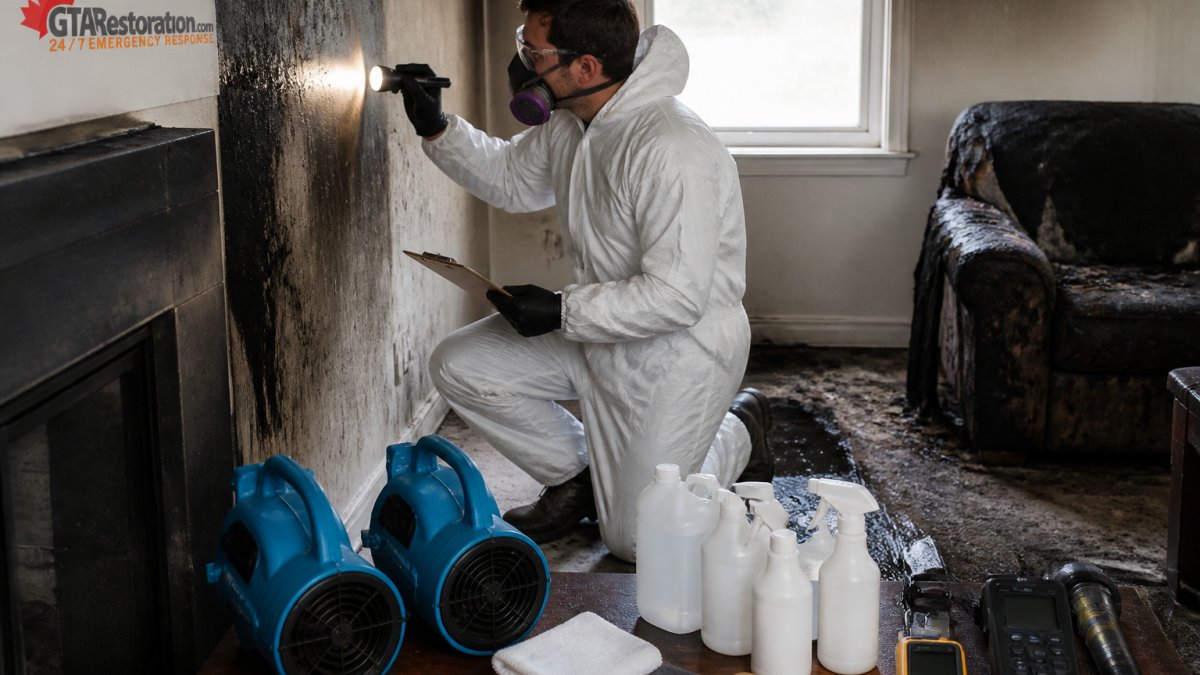
Choose Soot Removal Methods for Each Surface
Loose powder, greasy films and heat damage need different methods. Therefore, test a small area before cleaning a whole wall or ceiling. A method that works on glass may damage paint, fabric or unfinished wood. Heavy scrubbing can also drive residue deeper or harm a finish.
For some loose deposits, trained cleaners use suitable HEPA equipment or dry-cleaning sponges. Other surfaces need a different product or method. However, wet wiping is not the right first step for every deposit. Ask how the team will test its approach and protect nearby surfaces.
Check Belongings and Hidden Spaces
Next, sort belongings by material and level of damage. Keep a record of items moved off site, including photos and storage details. Some items can be cleaned, while others need expert advice or must be replaced. In particular, avoid using smoke-damaged electrical items until a qualified person checks them.
Smoke cleanup may also involve cupboards, wall spaces or air ducts. However, not every home needs the same duct work. Ask what evidence supports opening an area or cleaning a system. Access decisions should follow what the team finds. Ask it to explain why work is needed in each area.
Review Odour Sources and Final Checks
After soot removal, the team checks for remaining odour sources. The team may need to clean or remove damaged materials before it treats the smell. Simply covering a smell does not remove its source. Also, ask about treatment limits, when you can return and how to air out the rooms.
Finally, review the completed smoke damage cleaning against the agreed scope. Ask about stains, lingering odours, drying records and repair needs. A fresh smell alone does not prove that a building is safe. Any required clearance or expert checks should address the risks found on site.
For non-emergencies use our contact form
Smoke Cleanup Support
GTA Restoration can discuss smoke damage cleaning for your home or business. Tell us what burned, which rooms are affected and whether officials allow access.
Safe Site Access
First, confirm entry limits with officials. Then share keys, access times and any known hazards with the team.
Soot Removal Tests
Small test areas help guide cleaning choices. The method should suit the residue, surface and condition of the finish.
Protection for Clean Rooms
Before smoke cleanup begins, agree on work zones and routes for moving items. This helps limit the spread of residue.
Water and Drying Checks
If firefighting water remains, discuss drying needs alongside cleaning. Ask which materials need checks and how progress will be recorded.
Belongings and Storage
Next, list items that need cleaning or specialist review. Keep photos and a record of anything moved off site.
Hidden Smoke Residue
Ask what findings call for checks inside walls or air ducts. Also, confirm the access and repairs that this work may involve.
Odour After Smoke Cleanup
A lasting smell may need more checks. Therefore, ask about the source before choosing a treatment or covering affected surfaces.
Records and Next Steps
Finally, review the scope, photos and repairs still needed. Keep the project records with your claim files so they are easy to find.
To discuss the damage and next steps, contact GTA Restoration.
Service Areas Across Canada
GTA Restoration serves communities across Canada, including Toronto and the GTA. U.S. locations are opening. Browse our Canadian service areas below, and contact us to confirm services and availability for your address.
Search
- Air Duct Cleaning Montreal
- Ajax Asbestos Removal
- Ajax Mold Removal
- Ajax Water Damage
- Asbestos Removal Calgary
- Asbestos Removal Edmonton
- Asbestos Removal Fort Saskatchewan
- Asbestos Removal Gloucester
- Asbestos Removal Grimsby
- Asbestos Removal Hamilton
- Asbestos Removal Kanata
- Asbestos Removal Kitchener
- Asbestos Removal Laval
- Asbestos Removal Lincoln
- Asbestos Removal Montreal
- Asbestos Removal Nepean
- Asbestos Removal Niagara Falls
- Asbestos Removal Orleans
- Asbestos Removal Ottawa
- Asbestos Removal Sherwood Park
- Asbestos Removal Spruce Grove
- Asbestos Removal St Catharines
- Asbestos Removal St-Albert
- Asbestos Removal Thorold
- Asbestos Testing Hamilton
- Asbestos Testing Montreal
- Asbestos Testing Petersburg
- Aurora Mold Removal
- Aurora Water Damage
- Beaconsfield Asbestos Removal
- Brampton Asbestos Removal
- Brampton Mold Removal
- Brampton Water Damage
- Burlington Asbestos Removal
- Burlington Mold Removal
- Burlington Water Damage
- Burst Pipe Montreal Frozen Pipe
- Burst Pipe Repair Edmonton
- Burst Pipe Repair Ottawa
- Caledon Mold Removal
- Caledon Water Damage
- Calgary Mold Removal
- Calgary Water Damage
- Cambridge Mold Removal
- Cambridge Water Damage
- Clarington Mold Removal
- Concord Mold Removal
- Concord Water Damage
- Cooksville Mold Removal
- Edmonton Water Damage
- Emergency Roofing Vancouver
- Etobicoke Asbestos Removal
- Etobicoke Mold Removal
- Etobicoke Water Damage
- Fire Damage Grimsby
- Fire Damage Lincoln
- Fire Damage Niagara Falls
- Fire Restoration Fort McMurray
- Fire Damage Restoration Thorold
- Fire Damage St Catharines
- Flood Cleanup Grimsby
- Flood Cleanup Lincoln
- Flood Cleanup Niagara Falls
- Flood Cleanup St Catharines
- Flood Cleanup Thorold
- London Mold Removal
- London Water Damage
- Markham Asbestos Removal
- Markham Mold Removal
- Markham Water Damage
- Mississauga Asbestos Testing
- Mississauga Mold Removal
- Mississauga Water Damage
- Mold Inspection Removal Kitchener
- Mold Remediation Montreal
- Mold Removal & Inspection LaSalle
- Mold Removal Anjou
- Mold Removal Boucherville
- Mold Removal Brossard
- Mold Removal Burnaby
- Mold Removal Chambly
- Mold Removal Chateauguay
- Mold Removal Chomedey
- Mold Removal Coquitlam
- Mold Removal Dollard Des Ormeaux
- Mold Removal Dorval
- Mold Removal Edmonton
- Mold Removal Fort Saskatchewan
- Mold Removal Gloucester
- Mold Removal Grimsby
- Mold Removal Hamilton Inspection
- Mold Removal Ile Bizard
- Mold Removal in Osgoode
- Mold Removal Beaconsfield
- Mold Removal Kahnawake
- Mold Removal Kanata
- Mold Removal Kirkland
- Mold Removal Laval
- Mold Removal Lincoln
- Mold Removal Longueuil
- Mold Removal Montreal East
- Mold Removal Mount Royal
- Mold Removal Nepean
- Mold Removal New Westminster
- Mold Removal Niagara Falls
- Mold Removal Orleans
- Mold Removal Ottawa
- Mold Removal Cumberland
- Mold Remediation Hampstead
- Mold Removal Remediation Roxboro
- Mold Removal Richmond BC
- Mold Removal Rideau Lakes
- Mold Removal Rockcliffe Park
- Mold Removal Saint Hubert
- Mold Removal Saint Laurent
- Mold Removal Sherwood Park
- Mold Removal Spruce Grove
- Mold Removal St Catharines
- Mold Removal Ste Dorothee
- Mold Removal St۔ Albert
- Mold Removal Surrey
- Mold Removal Thorold
- Mold Removal Vancouver
- Mold Removal Vanier
- Mold Removal Westmount
- Montreal Biohazard Cleanup
- Montreal Emergency Plumber
- Montreal Fire Restoration
- Montreal Flood Cleanup
- Montreal Odor Removal
- Montreal Roofing Emergency
- Montreal Sewer Backup Cleanup
- Montreal Water Leak Detection
- Montréal Asbestos Removal
- Montréal Emergency Plumbing
- Montréal Mold Removal
- Montréal Pipe Burst Emergency
- Montréal Water Damage
- Newmarket Mold Removal
- Newmarket Water Damage
- North York Mold Removal
- Oakville Mold Removal
- Oakville Water Damage
- Oshawa Mold Removal
- Oshawa Water Damage
- Ottawa Air Duct Cleaning
- Pickering Mold Removal
- Pickering Water Damage
- Red Deer Water Damage
- RedDeer Mold Removal
- Richmond Hill Mold Removal
- Richmond Hill Water Damage
- Roof Repair Lincoln
- Roof Repair Niagara Falls
- Roof Repair St Catharines
- Scarborough Asbestos Removal
- Scarborough Mold Removal
- Scarborough Water Damage
- Sewage Cleanup Edmonton
- Sewer Backup Lincoln
- Sewer Backup Niagara Falls
- Sewer Backup Ottawa
- Sewer Backup St Catharines
- Thornhill Mold Removal
- Toronto & GTA Asbestos Removal
- Toronto & GTA Mold Removal
- Toronto Air Duct Cleaning
- Toronto Water Damage
- Unionville Mold Removal
- Unionville Water Damage
- Vancouver Asbestos Removal
- Vancouver Biohazard Cleanup
- Vancouver Emergency Plumber
- Vancouver Emergency Plumbing
- Vancouver Fire Restoration
- Vancouver Flood Cleanup
- Vancouver Mold Removal
- Vancouver Odor Removal
- Vancouver Pipe Burst Emergency
- Vancouver Sewer Backup Cleanup
- Vancouver Water Damage
- Vancouver Water Leak Detection
- Vaughan Mold Removal
- Vaughan Water Damage
- Vermiculite Removal Ottawa
- Water Damage Grimsby
- Water Damage Kanata
- Water Damage Kitchener
- Water Damage Lincoln
- Water Damage Longueuil
- Water Damage Nepean
- Water Damage Niagara Falls
- Water Damage Orleans
- Water Damage Ottawa
- Water Damage Repair Montreal
- Water Damage Laval Montreal
- Water Damage Restoration Thorold
- Sewage Backup Cleanup Montreal
- Water Damage St Catharines
- Water Damage Vancouver
- Water Flood Damage Repair Hamilton
- Flood Damage Repair Hampstead
- Whitby Water Damage
- Woodbridge Asbestos Removal
- Woodbridge Mold Removal
- Woodbridge Water Damage
- Restoration Equipment Rental
Smoke Damage Cleaning Questions
When can I enter after a fire?
Wait until officials allow entry. Then follow any access limits, since damaged wiring or weak materials may still present risks.
How do cleaners choose a soot removal method?
They assess the residue and surface first. Small tests then help find methods that work and avoid further damage.
Can smoke-damaged belongings be saved?
Some items can be cleaned, but the material and damage matter. Ask for an item review before deciding what to replace.
What affects the cleanup schedule?
Access, residue, water damage and repairs all affect timing. Therefore, ask for a schedule after the team checks the site.
Why can a smoke smell remain?
Residue may remain in materials or hidden spaces. Further checks can help find the source before choosing another treatment.
Direct Billing & Insurance Claims
Ask your insurer about coverage, deductibles and the records it needs.

In-House Financing Available
Financing up to 24 months. No interest. No money down. Ask us about the terms.
Learn more ↴ 
RELATED ARTICLES
 Facebook
 Instagram
 LinkedIn
 X / Twitter
 YouTube


