Smoke Damage Cleaning Equipment Explained
Last Updated: November 2, 2026 This article will provide an overview of the essential smoke damage cleaning equipment you need for effective restoration.
Quick Summary
Smoke damage cleaning equipment includes HEPA vacuums for removing loose soot, damp wiping for bonded residue, and air scrubbers that filter contaminated air. Dry removal comes first, and wet cleaning should be tested on a small hidden spot before use. Equipment alone may not clear strong odors, so persistent smells often need a professional assessment.
- Use a HEPA vacuum on loose soot before any wet cleaning.
- Test any cleaner on a small hidden area first.
- Run an air scrubber with doors and windows closed.
- Ozone generators can harm people and pets, so keep occupants out.
- Persistent smoke smells often need a professional assessment.
Table of Contents
- Which Equipment Removes Soot and Smoke Particles
- How an Air Scrubber for Smoke Damage Works
- Smoke Odor Removal Equipment and Its Limits
- Restoration Support
- Frequently Asked Questions
Which Equipment Removes Soot and Smoke Particles
Soot and smoke particles need the right tool for each surface. A HEPA-filtered vacuum helps remove loose soot from hard surfaces, while damp wiping suits bonded residue on surfaces that tolerate moisture.
Start with dry removal. A HEPA vacuum captures fine particles without pushing them back into the air. Use it before wet cleaning, since water too early can smear soot into a larger stain.
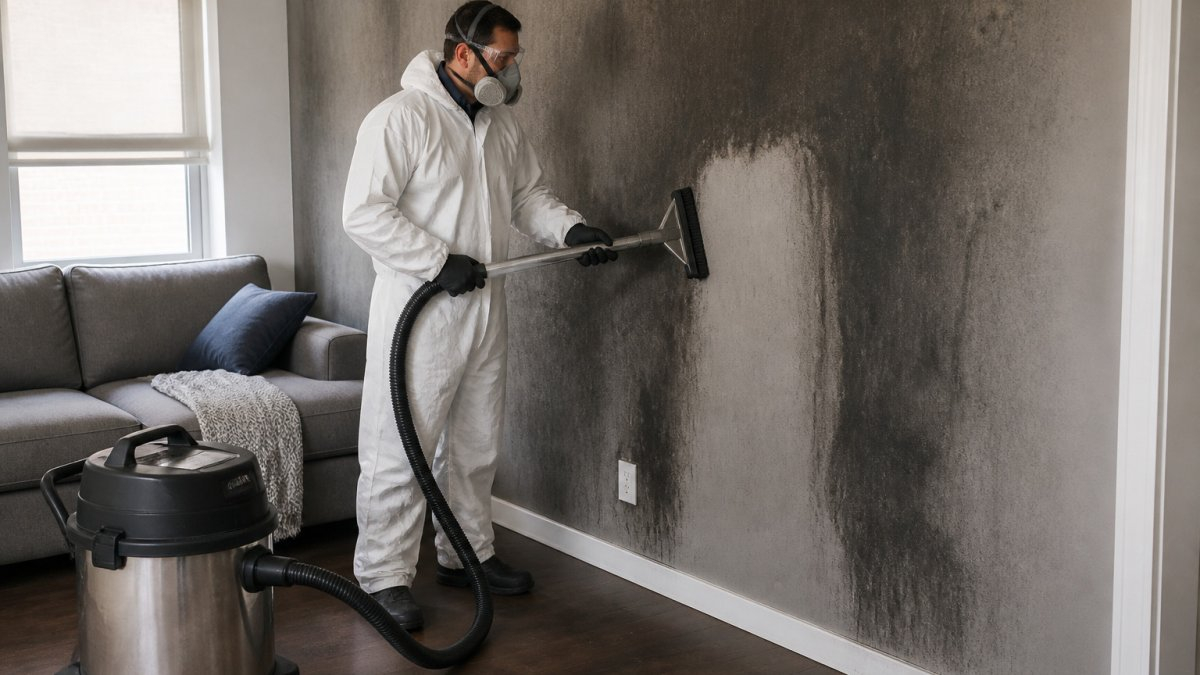
Wet cleaning comes next, but only on surfaces that tolerate moisture. Test any cleaner on a small hidden spot first.
Different tools handle soot and smoke residue on different surfaces, so match the equipment to the material before you start.
| Step | What to do | When |
|---|---|---|
| Dry removal | Use a HEPA vacuum on loose soot | Before any wet cleaning |
| Wet cleaning | Wipe bonded residue with a damp method | Only on surfaces that tolerate moisture |
| Spot test | Test any cleaner on a small hidden area | Before cleaning the full surface |
How an Air Scrubber for Smoke Damage Works
An air scrubber pulls contaminated air through filters and cleans it before returning it to the room. This matters because smoke particles travel into HVAC ducts, wall cavities, and light fixtures that dusting cannot reach.
Run the scrubber with doors and windows closed, and seal the room from the rest of the house. You can rent a HEPA air scrubber for this job. Leave it running until the air clears.
Smoke Odor Removal Equipment and Its Limits
Odor equipment helps, but it cannot fix everything. None of these tools replaces removing the source residue first.
A strong smoke smell often means residue remains in porous materials like drywall, insulation, or fabric. Equipment alone may not clear it, so persistent odors usually call for a professional assessment.
Watch out: Ozone generators can be harmful to people and pets, so keep occupants out of the treated space while they run (Ozone).
For stubborn smoke smells, contact a professional to find the source before buying equipment. A Toronto odour removal service can inspect and treat the source for you.
Restoration Support
Smoke cleanup goes more smoothly with a clear plan. Here is how restoration work generally proceeds.
Assess the Damage First
Look at the fire type and which materials were affected. Soot from a kitchen fire and smoke from a plastic fire leave different residues needing different methods.
Protect Yourself During Cleanup
Wear gloves, eye protection, and a respirator rated for fine particles. Soot can irritate skin and lungs, so avoid sweeping it dry.
Clean Hard Surfaces Before Soft Ones
Wipe non-porous surfaces such as glass, metal, and sealed countertops first. Porous materials like carpet and drywall often need replacement rather than cleaning.
Use HEPA Filtration Throughout
Run filtration equipment during and after cleanup to capture airborne particles. Change filters often, since a clogged filter spreads contamination.
Check Electronics Carefully
Do not power on electronics that smell of smoke or show soot. Have a technician inspect them, because residue can corrode circuits over time.
Address the HVAC System
Smoke travels through ducts. Have the system inspected before running it again, so contamination does not spread through the house.
Limit Odor Treatments
Deodorizing should follow source removal, since masking a smell leaves residue behind.
Know When to Call a Professional
Large fires, widespread soot, and damage to structural materials call for qualified restoration crews.
If you need help with smoke cleanup, call us at 416-800-0000 for a quote.
Frequently Asked Questions
What equipment do professionals use to clean smoke damage?
Professionals typically use HEPA vacuums for loose soot, air scrubbers to capture fine particles in the air, and specialty cleaners matched to each surface. They also use deodorizing equipment for lingering odors. Equipment choice depends on the residue type and how far the damage has spread.
Can a HEPA vacuum remove soot from walls and furniture?
A HEPA vacuum can remove loose soot from walls, upholstery and carpet before any wet cleaning begins. It will not remove soot that has bonded to a surface or soaked into porous materials. Vacuuming should be done gently to avoid spreading the residue.
What does an air scrubber do after a fire?
An air scrubber filters airborne smoke particles and fine soot out of the room air, which helps reduce particles that settle back onto cleaned surfaces. It works best alongside surface cleaning, not as a replacement for it. Operators should follow the manufacturer’s instructions and sealing guidance.
Can I clean smoke damage myself with household equipment?
Light, surface-level soot can sometimes be managed with a HEPA vacuum and gentle cleaning. Household machines such as washing machines often cannot fully remove smoke odor from fabrics. Heavy residue, HVAC systems and any area with unknown hazards should be handled by qualified professionals.
When should smoke-damaged materials be removed instead of cleaned?
Materials should be removed when soot is deeply absorbed, when odor persists after cleaning, or when residue is heavy and corrosive. Porous items like insulation and some upholstery often cannot be fully restored. A restoration professional can assess each item and advise what to keep.

For non-emergencies use our contact form
Smoke Damage Cleaning Equipment: 11 Quick Checks
Choose smoke damage cleaning equipment to suit the job. First, check the damage and site risks.
1. Check Safe Entry
Before using smoke cleanup equipment, confirm safe access. Also, tell the crew about known risks.
2. Choose Soot Removal Equipment
Match soot removal tools to the surface. Then, test a small area before cleaning.
3. HEPA Vacuum for Smoke Cleanup
A suitable HEPA vacuum helps collect loose soot. However, its filters must suit the task.
4. Smoke Air Filtration Equipment
Air scrubbers filter particles from the air. However, walls and floors still need cleaning.
5. Smoke Cleaning Sponges
Dry soot sponges can lift loose surface soot. First, check the finish and follow the product guide.
6. Drying Equipment After Fire Damage
Fire cleanup may also involve wet areas. Therefore, use moisture readings to plan drying.
7. Airflow During Smoke Cleanup
Do not blow soot into clean rooms. Instead, plan airflow before starting the equipment.
8. Smoke Odour Removal Equipment
Odour machines cannot replace cleaning. First, remove soot, waste, and damaged items.
9. Check Smoke Cleanup Equipment
Review power, filters, and placement. Also, keep cords and hoses out of walkways.
10. Keep Smoke Cleaning Records
Save photos and smoke cleanup notes. Also, record the tools used and any repairs needed.
11. Ask About Smoke Cleanup Tools
Discuss smoke damage cleaning equipment or full cleanup help. Then, confirm the work plan.
Need help choosing smoke cleanup equipment?
Call GTA Restoration to discuss the damage and next steps.
Service Areas Across Canada
GTA Restoration serves communities across Canada, including Toronto and the GTA. U.S. locations are opening. Browse our Canadian service areas below, and contact us to confirm services and availability for your address.
Search
- Air Duct Cleaning Montreal
- Ajax Asbestos Removal
- Ajax Mold Removal
- Ajax Water Damage
- Asbestos Removal Calgary
- Asbestos Removal Edmonton
- Asbestos Removal Fort Saskatchewan
- Asbestos Removal Gloucester
- Asbestos Removal Grimsby
- Asbestos Removal Hamilton
- Asbestos Removal Kanata
- Asbestos Removal Kitchener
- Asbestos Removal Laval
- Asbestos Removal Lincoln
- Asbestos Removal Montreal
- Asbestos Removal Nepean
- Asbestos Removal Niagara Falls
- Asbestos Removal Orleans
- Asbestos Removal Ottawa
- Asbestos Removal Sherwood Park
- Asbestos Removal Spruce Grove
- Asbestos Removal St Catharines
- Asbestos Removal St-Albert
- Asbestos Removal Thorold
- Asbestos Testing Hamilton
- Asbestos Testing Montreal
- Asbestos Testing Petersburg
- Aurora Mold Removal
- Aurora Water Damage
- Beaconsfield Asbestos Removal
- Brampton Asbestos Removal
- Brampton Mold Removal
- Brampton Water Damage
- Burlington Asbestos Removal
- Burlington Mold Removal
- Burlington Water Damage
- Burst Pipe Montreal Frozen Pipe
- Burst Pipe Repair Edmonton
- Burst Pipe Repair Ottawa
- Caledon Mold Removal
- Caledon Water Damage
- Calgary Mold Removal
- Calgary Water Damage
- Cambridge Mold Removal
- Cambridge Water Damage
- Clarington Mold Removal
- Concord Mold Removal
- Concord Water Damage
- Cooksville Mold Removal
- Edmonton Water Damage
- Emergency Roofing Vancouver
- Etobicoke Asbestos Removal
- Etobicoke Mold Removal
- Etobicoke Water Damage
- Fire Damage Grimsby
- Fire Damage Lincoln
- Fire Damage Niagara Falls
- Fire Restoration Fort McMurray
- Fire Damage Restoration Thorold
- Fire Damage St Catharines
- Flood Cleanup Grimsby
- Flood Cleanup Lincoln
- Flood Cleanup Niagara Falls
- Flood Cleanup St Catharines
- Flood Cleanup Thorold
- London Mold Removal
- London Water Damage
- Markham Asbestos Removal
- Markham Mold Removal
- Markham Water Damage
- Mississauga Asbestos Testing
- Mississauga Mold Removal
- Mississauga Water Damage
- Mold Inspection Removal Kitchener
- Mold Remediation Montreal
- Mold Removal & Inspection LaSalle
- Mold Removal Anjou
- Mold Removal Boucherville
- Mold Removal Brossard
- Mold Removal Burnaby
- Mold Removal Chambly
- Mold Removal Chateauguay
- Mold Removal Chomedey
- Mold Removal Coquitlam
- Mold Removal Dollard Des Ormeaux
- Mold Removal Dorval
- Mold Removal Edmonton
- Mold Removal Fort Saskatchewan
- Mold Removal Gloucester
- Mold Removal Grimsby
- Mold Removal Hamilton Inspection
- Mold Removal Ile Bizard
- Mold Removal in Osgoode
- Mold Removal Beaconsfield
- Mold Removal Kahnawake
- Mold Removal Kanata
- Mold Removal Kirkland
- Mold Removal Laval
- Mold Removal Lincoln
- Mold Removal Longueuil
- Mold Removal Montreal East
- Mold Removal Mount Royal
- Mold Removal Nepean
- Mold Removal New Westminster
- Mold Removal Niagara Falls
- Mold Removal Orleans
- Mold Removal Ottawa
- Mold Removal Cumberland
- Mold Remediation Hampstead
- Mold Removal Remediation Roxboro
- Mold Removal Richmond BC
- Mold Removal Rideau Lakes
- Mold Removal Rockcliffe Park
- Mold Removal Saint Hubert
- Mold Removal Saint Laurent
- Mold Removal Sherwood Park
- Mold Removal Spruce Grove
- Mold Removal St Catharines
- Mold Removal Ste Dorothee
- Mold Removal St۔ Albert
- Mold Removal Surrey
- Mold Removal Thorold
- Mold Removal Vancouver
- Mold Removal Vanier
- Mold Removal Westmount
- Montreal Biohazard Cleanup
- Montreal Emergency Plumber
- Montreal Fire Restoration
- Montreal Flood Cleanup
- Montreal Odor Removal
- Montreal Roofing Emergency
- Montreal Sewer Backup Cleanup
- Montreal Water Leak Detection
- Montréal Asbestos Removal
- Montréal Emergency Plumbing
- Montréal Mold Removal
- Montréal Pipe Burst Emergency
- Montréal Water Damage
- Newmarket Mold Removal
- Newmarket Water Damage
- North York Mold Removal
- Oakville Mold Removal
- Oakville Water Damage
- Oshawa Mold Removal
- Oshawa Water Damage
- Ottawa Air Duct Cleaning
- Pickering Mold Removal
- Pickering Water Damage
- Red Deer Water Damage
- RedDeer Mold Removal
- Richmond Hill Mold Removal
- Richmond Hill Water Damage
- Roof Repair Lincoln
- Roof Repair Niagara Falls
- Roof Repair St Catharines
- Scarborough Asbestos Removal
- Scarborough Mold Removal
- Scarborough Water Damage
- Sewage Cleanup Edmonton
- Sewer Backup Lincoln
- Sewer Backup Niagara Falls
- Sewer Backup Ottawa
- Sewer Backup St Catharines
- Thornhill Mold Removal
- Toronto & GTA Asbestos Removal
- Toronto & GTA Mold Removal
- Toronto Air Duct Cleaning
- Toronto Water Damage
- Unionville Mold Removal
- Unionville Water Damage
- Vancouver Asbestos Removal
- Vancouver Biohazard Cleanup
- Vancouver Emergency Plumber
- Vancouver Emergency Plumbing
- Vancouver Fire Restoration
- Vancouver Flood Cleanup
- Vancouver Mold Removal
- Vancouver Odor Removal
- Vancouver Pipe Burst Emergency
- Vancouver Sewer Backup Cleanup
- Vancouver Water Damage
- Vancouver Water Leak Detection
- Vaughan Mold Removal
- Vaughan Water Damage
- Vermiculite Removal Ottawa
- Water Damage Grimsby
- Water Damage Kanata
- Water Damage Kitchener
- Water Damage Lincoln
- Water Damage Longueuil
- Water Damage Nepean
- Water Damage Niagara Falls
- Water Damage Orleans
- Water Damage Ottawa
- Water Damage Repair Montreal
- Water Damage Laval Montreal
- Water Damage Restoration Thorold
- Sewage Backup Cleanup Montreal
- Water Damage St Catharines
- Water Damage Vancouver
- Water Flood Damage Repair Hamilton
- Flood Damage Repair Hampstead
- Whitby Water Damage
- Woodbridge Asbestos Removal
- Woodbridge Mold Removal
- Woodbridge Water Damage
- Restoration Equipment Rental
Smoke Damage Cleaning Equipment FAQs
Which tools help with smoke cleanup?
Crews may use HEPA vacuums, soot sponges, and air scrubbers, depending on the damage.
Does an air scrubber clean walls?
No. It filters particles from the air, so soot-covered surfaces still need cleaning.
Should I use ozone at home?
Health Canada advises against ozone generators in homes. Ask about other suitable options.
Can I rent smoke cleanup equipment?
Ask about equipment hire, but have the damage assessed before choosing tools.
Learn more ↴ 
Latest Articles
Direct Billing & Insurance Claims
Ask your insurer about coverage, deductibles and the records it needs.

In-House Financing Available
Financing up to 24 months. No interest. No money down. Ask us about the terms.
Certifications & Insurance
View our firm certification, technician qualifications and insurance documents.

IICRC Certified Firm
GTA Restoration Inc.
Firm number 199912
Valid through
Business Insurance
GTA Restoration Group Inc.
$5 million general liability per occurrence
$8 million contractors pollution per claim
–
IICRC Technician Qualifications
Richard Mark Provence · Registration 55726
Certificate expires
Water Damage Restoration · Fire & Smoke Restoration · Applied Microbial Remediation · Odor Control · Trauma & Crime Scene
View technician verification (PDF) — opens in a new tabInsurance is subject to policy terms, conditions and exclusions.
 Facebook
 Instagram
 LinkedIn
 X / Twitter
 YouTube