
Tags: Black Mold, Black Mold Symptoms, Detect Mold, Facts About Mold, Mold Remediation, Mold Removal, Mold Symptoms,
For non-emergencies use our contact form


Emergency? 24-Hours
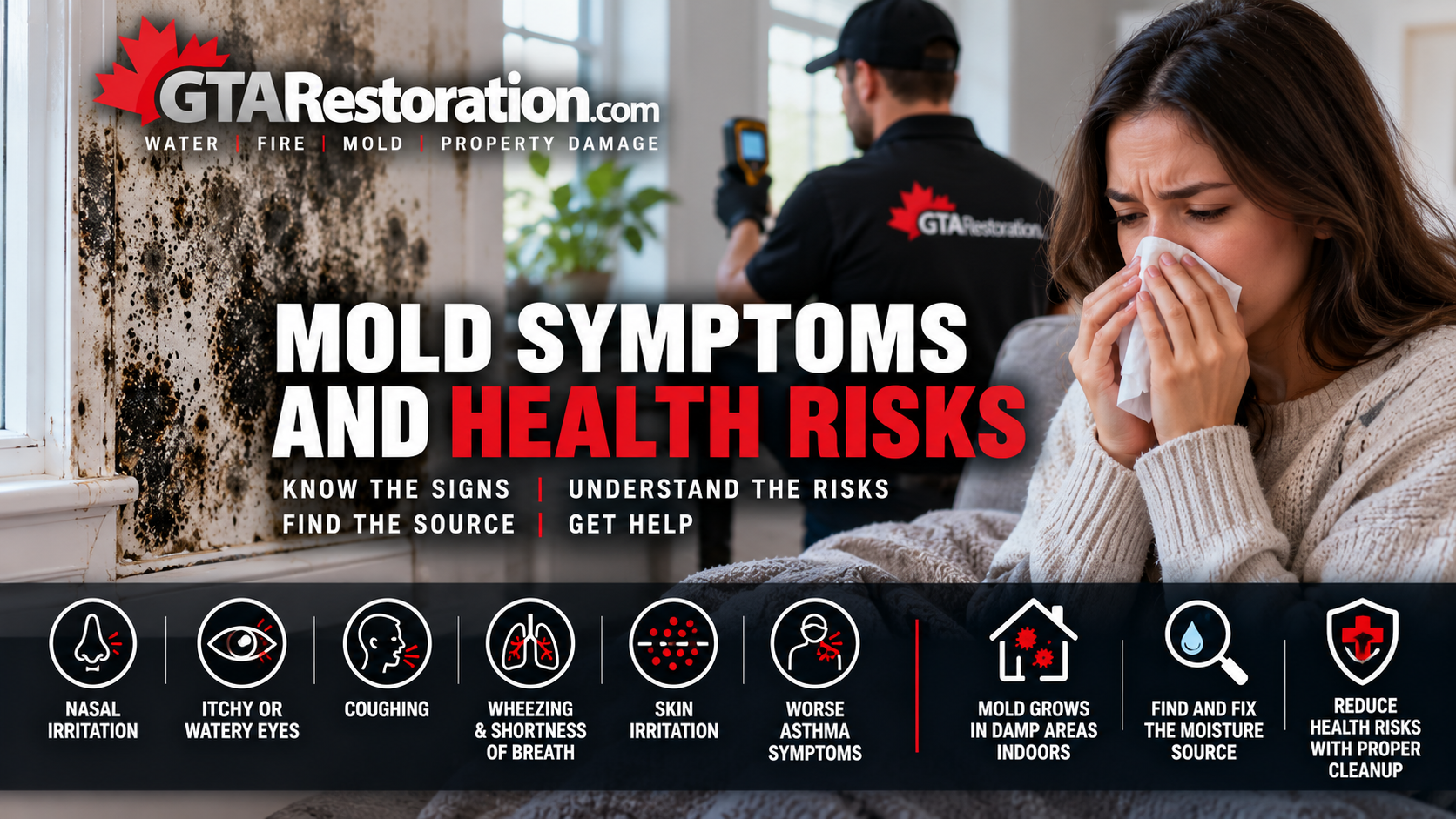
416-800-0000Mold affects people differently. For example, some people notice no symptoms, while others may develop eye, nose or throat irritation, coughing, wheezing or skin irritation.
People with asthma may notice stronger breathing symptoms in some damp or moldy spaces. Therefore, they should follow their medical plan and speak with their doctor if symptoms get worse.
Mold allergies can cause sneezing, a runny nose, itchy eyes and other allergy-like symptoms. However, many other indoor and outdoor triggers can cause similar problems.
A cough or headache does not prove that mold is the cause. Instead, a health care professional should assess medical symptoms, while a property professional checks moisture and building conditions.
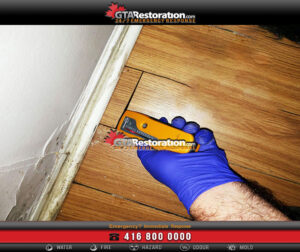
Visible spots, musty smells and repeated dampness can all point to a moisture problem. In addition, check nearby walls, floors and ceilings for signs of past or active water damage.
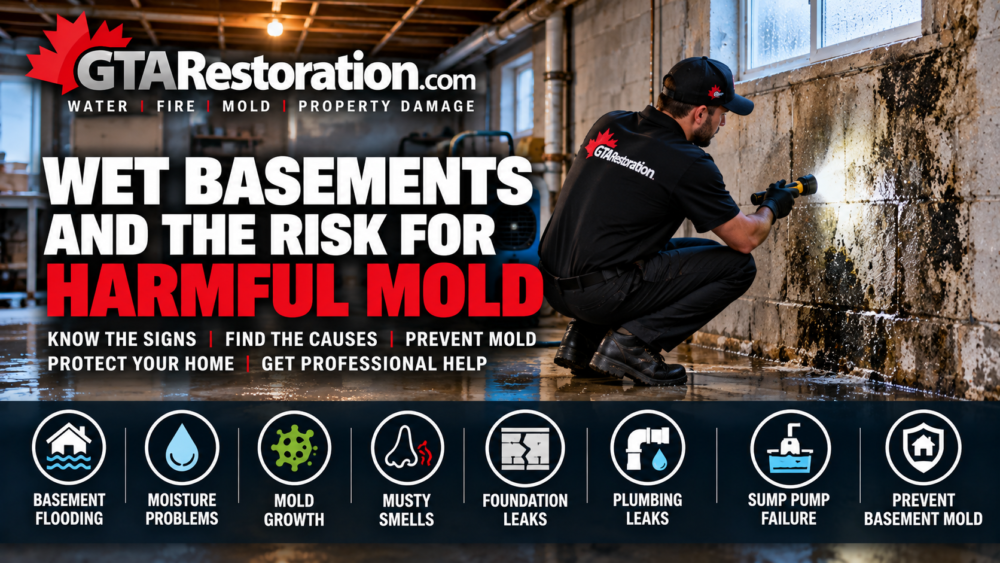
Mold needs moisture to grow. Therefore, repair leaking pipes, roof leaks, flooding and high-humidity problems before focusing only on surface cleaning.
Water may travel behind walls or beneath flooring. As a result, hidden moisture may remain inside the structure when mold keeps returning.
Not every visible mold problem needs air testing. However, testing can help in some cases when inspection alone does not answer an important question.
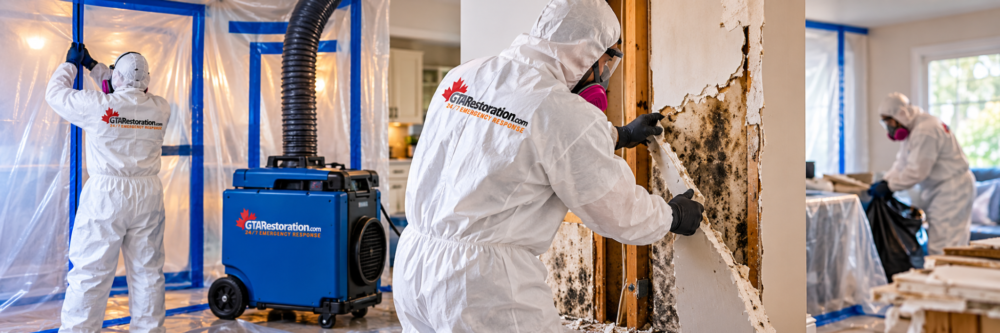
Larger areas, repeated mold growth or damage inside walls may require professional remediation. Most importantly, the work should also address the moisture source so the problem does not quickly return.
Anyone with ongoing or worsening breathing or allergy symptoms should speak with a health care professional. In particular, children, older people and people with asthma, severe allergies or weak immune systems may need extra care.
GTA Restoration provides mold inspections, remediation and moisture-related restoration throughout Toronto and the GTA. Our role is to assess and correct property conditions; meanwhile, medical professionals should assess personal health symptoms.
Get professional help finding the moisture source and addressing mold before it spreads into more building materials.
Service Areas Across Canada
GTA Restoration serves communities across Canada, including Toronto and the GTA. U.S. locations are opening. Browse our Canadian service areas below, and contact us to confirm services and availability for your address.
Search
Some people may experience a stuffy or runny nose, irritated eyes or throat, coughing, wheezing, skin irritation or worse asthma symptoms. However, others may have no symptoms.
Damp and moldy spaces are linked with coughing, wheezing and shortness of breath in some people. Therefore, anyone with serious or worsening breathing symptoms should seek medical advice.
Colour alone does not show how someone will react. Instead, any indoor mold growth points to a moisture problem that should be corrected.
Not always. Visible growth and a known moisture source may already provide enough information to begin planning cleanup. However, testing can help in certain cases.
Children, older people and people with asthma, severe allergies or weak immune systems may have a greater chance of health effects from damp or moldy conditions.
Learn more ↴ 
Latest Articles
Direct Billing & Insurance Claims
Ask your insurer about coverage, deductibles and the records it needs.

In-House Financing Available
Financing up to 24 months. No interest. No money down. Ask us about the terms.
Certifications & Insurance
View our firm certification, technician qualifications and insurance documents.

IICRC Certified Firm
GTA Restoration Inc.
Firm number 199912
Valid through
Business Insurance
GTA Restoration Group Inc.
$5 million general liability per occurrence
$8 million contractors pollution per claim
–
IICRC Technician Qualifications
Tony Sokol T. Lleshi · Registration 214520
Valid through
Water Damage Restoration · Fire & Smoke Damage Restoration · Applied Microbial Remediation · Odor Control · Trauma & Crime Scene
View technician verification (PDF) — opens in a new tabInsurance is subject to policy terms, conditions and exclusions.





Call Us 416-800-0000