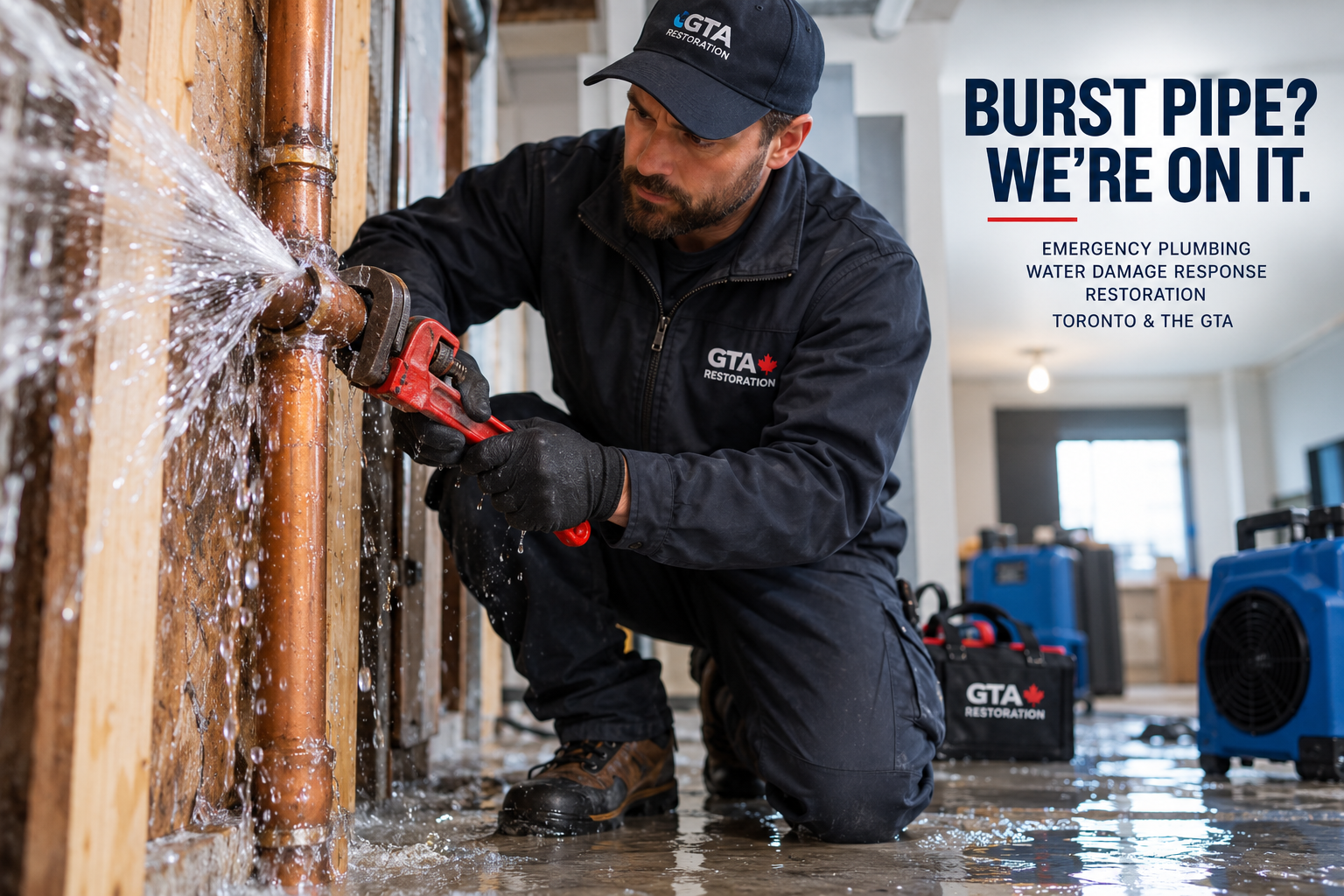
If you need an emergency plumber after burst pipe damage, act quickly. A burst pipe can turn a normal day into a property emergency within minutes. The first priority is to stop the water, protect occupants, and limit damage before it spreads through the building.
In Toronto and across the GTA, pipes often burst overnight, during freezing weather, while a property sits vacant, or when someone first notices water coming through a ceiling. What happens during the first hour matters. Floors can swell, drywall can absorb water, and moisture can move into wall cavities, lower levels, and nearby areas.
Emergency Plumber After Burst Pipe Damage In Toronto
When to Call an Emergency Plumber After Burst Pipe Damage
If a pipe splits, cracks, separates at a fitting, or actively leaks into the property, treat it as an emergency. Likewise, take action if water pressure suddenly drops, ceilings begin staining or bulging, or you hear rushing water behind a wall.
An emergency plumber after burst pipe damage does more than repair the failed line. The response should locate the problem, isolate the water source, stop the active leak, and check nearby plumbing for other signs of damage.
In many cases, plumbing repair and water damage cleanup need to start together. This becomes especially important in condos, apartments, commercial properties, and mixed-use buildings because water can quickly spread beyond the original area.
What to Do After a Burst Pipe
First, shut off the main water supply as soon as you can safely do so. If the problem affects only one fixture or branch line and you know how to isolate it, shut off that section. Otherwise, use the main water shutoff.
Next, consider electrical hazards. If water is near outlets, light fixtures, baseboard heaters, electrical equipment, or panels, stay away from the affected area. Shut off power only when you can safely reach the appropriate electrical control without entering water.
Then, move furniture, electronics, documents, inventory, and other items away from wet areas when conditions allow. Do not stand underneath a sagging or water-filled ceiling because wet ceiling materials can fail.
Finally, take photos and videos if you can do so safely. Document the source, affected rooms, wet materials, damaged contents, and visible water before cleanup begins. These records may help with the insurance claim later.
Stopping the leak solves only the first part of a burst pipe emergency. Water may remain under flooring, inside walls, above ceilings, and within insulation after the plumbing repair is complete.
For this reason, a coordinated professional water damage response can help reduce delays. The crew can address the plumbing problem, inspect wet materials, begin extraction, set up drying equipment, and monitor moisture conditions.
Emergency Plumbing Stabilization
First, the plumber stops the active release and stabilizes the plumbing system. Depending on the problem, the work may include isolating a valve, replacing a failed pipe section, making an emergency repair, or checking nearby plumbing for related damage.
The cause also matters. Freezing, corrosion, high water pressure, poor insulation, aging pipes, and previous repairs can all contribute to pipe failure. Therefore, identifying the cause can help determine whether the property needs additional plumbing work.
Water Extraction After a Burst Pipe
Once the water stops, crews can begin extracting standing water. Fast extraction helps limit the amount of moisture that flooring, drywall, baseboards, cabinets, insulation, and other materials absorb.
However, removing visible water does not mean the structure is dry. Moisture may remain beneath flooring or inside walls and ceilings.
Structural Drying & Moisture Checks
After extraction, crews can use air movers, dehumidifiers, moisture meters, and other drying tools to manage remaining moisture. Thermal imaging can also help identify temperature patterns that may point to areas requiring further moisture checks.
Different materials react differently to water. Hardwood, laminate, carpet, drywall, insulation, cabinets, and baseboards may require different drying or removal methods. As a result, crews should base the drying plan on actual site conditions rather than simply placing fans in the room.
Removal of Water-Damaged Materials
Some wet materials can dry in place, while others may need removal. For example, the water source, length of exposure, material condition, and level of contamination can all affect the decision.
A careful assessment can help avoid unnecessary demolition while allowing crews to remove materials that cannot remain safely or practically in place.
Why Fast Burst Pipe Response Matters
Water damage can continue spreading after the original pipe failure. Over time, moisture can move through porous materials, affect finishes, enter concealed spaces, and increase the amount of restoration work required.
For landlords and property managers, delays can also affect neighbouring units, common areas, tenants, and building operations. Similarly, commercial properties may face damaged inventory, equipment problems, and business interruptions.
Therefore, rapid response is not simply about convenience. It can help control the affected area and reduce further property damage.
Emergency Burst Pipe Repair in Condos & Commercial Buildings
Homes are not the only properties at risk. Condos, apartment buildings, offices, retail spaces, restaurants, and industrial properties can all experience major burst pipe emergencies.
Burst Pipes in Condos
In condos, a pipe may fail inside one unit while water appears in several units below or beside it. Water can travel through ceilings, walls, pipe openings, and shared building areas.
As a result, the response may require access coordination, communication with property management, moisture checks, and documentation across several areas. Learn more about water damage in condominium properties.
Commercial Burst Pipe Emergencies
In commercial buildings, a burst pipe can affect offices, inventory, mechanical rooms, ceilings, electrical systems, and normal operations. Crews should stabilize the property while limiting unnecessary disruption to the business.
Water near electrical or IT equipment may also create additional hazards. Therefore, restrict access to unsafe areas until qualified personnel can assess the conditions.
Insurance Documentation After a Burst Pipe
Clear documentation can help owners and property managers explain the loss to their insurance company. For example, useful records may include photos, moisture readings, site notes, equipment logs, affected-area details, and the emergency work completed.
GTA Restoration can document the emergency mitigation and restoration work completed at the property. However, the insurance company determines coverage according to the policy and circumstances of the claim.
How to Reduce the Risk of Another Burst Pipe
After the emergency, determine why the pipe failed. If freezing caused the problem, inspect pipes in exterior walls, garages, crawl spaces, mechanical areas, and other cold locations. Improving insulation or protecting vulnerable plumbing may reduce future risk.
Older plumbing may require a broader inspection. In addition, corrosion, recurring leaks, high water pressure, poor repairs, and long periods of vacancy can increase the chance of another failure.
Property owners should also know where the main water shutoff is located. That way, someone can stop the water quickly if another plumbing emergency occurs.
Emergency Plumber After Burst Pipe Toronto
When a pipe bursts, the goal is not simply to repair the plumbing. Instead, the response should stop the water, protect the property, remove standing water, dry affected materials, document the damage, and begin restoration.
GTA Restoration provides emergency plumbing, water extraction, structural drying, and property restoration throughout Toronto and the GTA. By coordinating these services, we can address both the plumbing problem and the resulting water damage.
Need Emergency Help After a Burst Pipe?
GTA Restoration provides 24/7 emergency plumbing, water extraction, structural drying, cleanup, and restoration throughout Toronto and the GTA.
If water is near electrical outlets, fixtures, panels, or energized equipment, stay away from the affected area and shut off power only if you can do so safely.
Emergency Burst Pipe Repair & Water Damage Restoration
An emergency plumber after burst pipe damage may need to do more than stop the leak. In many cases, the property also needs water extraction, moisture checks, structural drying, and restoration to prevent the damage from spreading.
Emergency Water Shutoff & Plumbing Repair
First, the active water source must be stopped. Depending on the problem, this may involve isolating a valve, repairing a failed section, or replacing damaged pipe. Afterward, the plumbing system should be checked for related problems such as freezing, corrosion, pressure issues, or additional weak points.
Water Extraction After a Burst Pipe
Once the leak is under control, crews can begin removing standing water from affected floors, rooms, and lower levels. Fast extraction can help limit the amount of moisture that spreads into drywall, flooring, insulation, and other building materials.
Structural Drying & Moisture Monitoring
In addition, professional drying equipment may be required after extraction. Air movers, dehumidifiers, moisture meters, and thermal imaging can help crews monitor the drying process and identify areas that may still contain moisture.
Hidden Water Damage
Water can travel behind walls, beneath floors, through ceilings, and into nearby rooms. For this reason, visible water does not always show the full extent of the damage. Further inspection may be needed before the drying setup is finalized.
Wet Drywall, Flooring & Insulation
Depending on the material, some building components may dry in place while others may require removal. Hardwood, laminate, carpet, drywall, baseboards, cabinetry, and insulation can all react differently to water exposure.
Burst Pipes in Condos
In condo buildings, water can move quickly between units and common areas. Access coordination, communication with property management, moisture checks, and clear documentation can become just as important as the plumbing repair itself.
Commercial Burst Pipe Emergencies
For commercial properties, burst pipes can affect offices, retail areas, mechanical rooms, inventory, electrical systems, and day-to-day operations. A coordinated response can help stabilize the site while reducing unnecessary downtime.
Insurance Documentation
Meanwhile, clear records can help during the insurance process. Photos, moisture readings, site notes, equipment logs, and a clear emergency scope can document what happened and what work was completed.
Why Fast Response Matters
Water damage can spread quickly through porous building materials. Therefore, early action can help limit secondary damage and give crews more options for drying and restoring affected materials.
Preventing Future Burst Pipes
After the emergency, inspect the cause of the failure. Freezing, poor insulation, high water pressure, corrosion, aging pipe, or previous repairs may point to areas that need attention before another leak occurs.
For this reason, a coordinated professional water damage response can help reduce delays. The crew can address the plumbing problem, inspect wet materials, begin extraction, set up drying equipment, and monitor moisture conditions.
Emergency Plumber After Burst Pipe Toronto
Finally, GTA Restoration provides emergency plumbing, water extraction, structural drying, and restoration throughout Toronto and the GTA. If a pipe has burst, act quickly to control the water source and begin mitigation as soon as conditions safely allow.
Need Emergency Help After a Burst Pipe?
GTA Restoration provides 24/7 emergency plumbing, water extraction, structural drying, and restoration throughout Toronto and the GTA.
If water is near electrical outlets, fixtures, panels, or other energized equipment, avoid the affected area and shut off power only if you can do so safely.
Nationwide, Local Pricing
GTA Restoration offers local flood & water damage repair, mold removal/remediation, asbestos removal/abatement, fire/smoke damage repair services and much more.
First, shut off the main water supply if you can do so safely. Then keep people away from electrical hazards and begin protecting nearby contents where possible.
When should I call an emergency plumber after a burst pipe?
Call right away when water is actively leaking, pressure suddenly drops, ceilings begin to bulge, or water appears behind walls or in lower levels.
Should I turn off the electricity?
If water is near electrical outlets, fixtures, heaters, or panels, avoid the area and turn off power only when you can do so safely.
Does fixing the pipe stop the water damage?
No. After the leak is repaired, extraction, moisture checks, and structural drying may still be required.
Can water travel behind walls and ceilings?
Yes. Water can move through wall cavities, insulation, floors, ceilings, and openings into nearby rooms or units.
How do professionals check for hidden moisture?
Crews may use moisture meters, thermal imaging, visual inspection, and other tools to identify areas that require further drying or investigation.
Can wet drywall be dried?
Sometimes. However, the decision depends on the water source, moisture level, material condition, and how long the drywall has remained wet.
What happens if a burst pipe affects a condo?
Water may spread into neighbouring units or common areas. Therefore, property management, affected residents, and restoration crews may need to coordinate access and documentation.
Can GTA Restoration help with insurance documentation?
Yes. Emergency response records may include photos, moisture readings, site notes, equipment logs, and details of the work completed.
How can I help prevent another burst pipe?
After repairs, inspect vulnerable pipes for freezing risk, poor insulation, corrosion, high water pressure, or signs of aging and previous damage.
Who should I call after a burst pipe?
Finally, call GTA Restoration at 416-800-0000 for emergency plumbing and water damage response in Toronto and the GTA.












You must be logged in to post a comment.