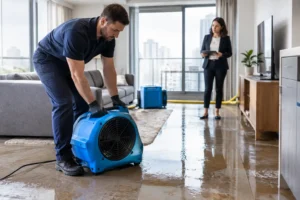
A sewer backup can turn a finished basement, bathroom, suite, or work area into an unsafe space within minutes. Sewer cleanup is not ordinary water removal. Wastewater may carry bacteria, viruses, parasites, and other contaminants that can spread through flooring, walls, contents, and heating systems.
Your first goal is simple: keep people away from the affected area, stop more sewage from entering if you can do so safely, and arrange a professional assessment. Fast action can limit the spread of contamination, but nobody should rush into cleanup without proper protection and a plan.
Take These Steps First
Keep children, pets, tenants, customers, and staff out of the affected area. Do not walk through sewage to retrieve belongings. Foot traffic can track contaminants into clean rooms and make the cleanup larger.
If sewage is still rising, avoid using toilets, sinks, showers, dishwashers, or laundry equipment. These fixtures may add more water to a blocked drain line. If the problem appears limited to one fixture, shut off its water supply if it is safe and accessible. A main sewer backup may affect several drains at once, especially the lowest fixtures in the building.
Do not use electrical equipment near standing water. Stay clear of outlets, extension cords, appliances, and electrical panels that may be wet. If you cannot safely reach the area without entering contaminated water, wait for qualified help.
Take photos and short videos from a safe, dry location before anything is moved. Capture the water line, affected rooms, damaged contents, visible drain conditions, and any exterior source that may be relevant. These records can help you explain the event to your insurer, property manager, condo corporation, or maintenance team. Coverage decisions remain with the insurer.
Why Sewer Water Needs Specialized Cleanup
Restoration professionals often classify sewage as highly contaminated water because it can contain fecal matter, pathogens, chemicals, and debris. Even when the water looks clear, it may not be safe to handle. A sewer backup also leaves contamination behind after visible water is removed.
Porous materials can be difficult to clean reliably after direct sewage contact. Carpet, carpet padding, upholstered furniture, insulation, paper products, unfinished wood, and some drywall may need removal. Whether an item can be cleaned depends on its material, the extent of exposure, and whether contamination reached hidden areas.
Hard surfaces may be cleaned and disinfected when they remain structurally sound. However, cleaning alone does not solve moisture trapped under floors, behind baseboards, or inside wall cavities. That moisture can contribute to odors, material damage, and mold growth if it is not addressed.
Avoid mixing cleaners or using bleach on every surface. Mixing products can create hazardous fumes, while some cleaners can damage finishes or fail to reach contaminated materials. Follow product directions and guidance from your local public health authority when handling sewage-related waste.
What a Professional Sewer Cleanup Assessment Covers
A proper assessment starts by identifying the source and pathway of the backup. This may involve a plumbing review to check drains, fixtures, sewer lines, backwater valves, or other likely points of failure. The source matters because cleanup work should not begin without addressing active inflow.
The restoration team then maps the affected area. They inspect visible surfaces and likely hidden locations, such as beneath flooring, behind walls, inside cabinets, and around mechanical equipment. Moisture readings can help identify materials that look dry but still hold water.
Access is part of the planning. In a condo, the team may need approval for common-area access, elevator protection, loading arrangements, or entry to adjacent suites. In a commercial property, safe access may involve isolating work areas, protecting inventory, and coordinating with building operations.
GTA Restoration can document visible damage, moisture readings, photos, removal records, estimates, and completed work records. These materials may support your claim process, but they do not determine policy coverage or claim approval.
The Sewer Backup Cleanup Process
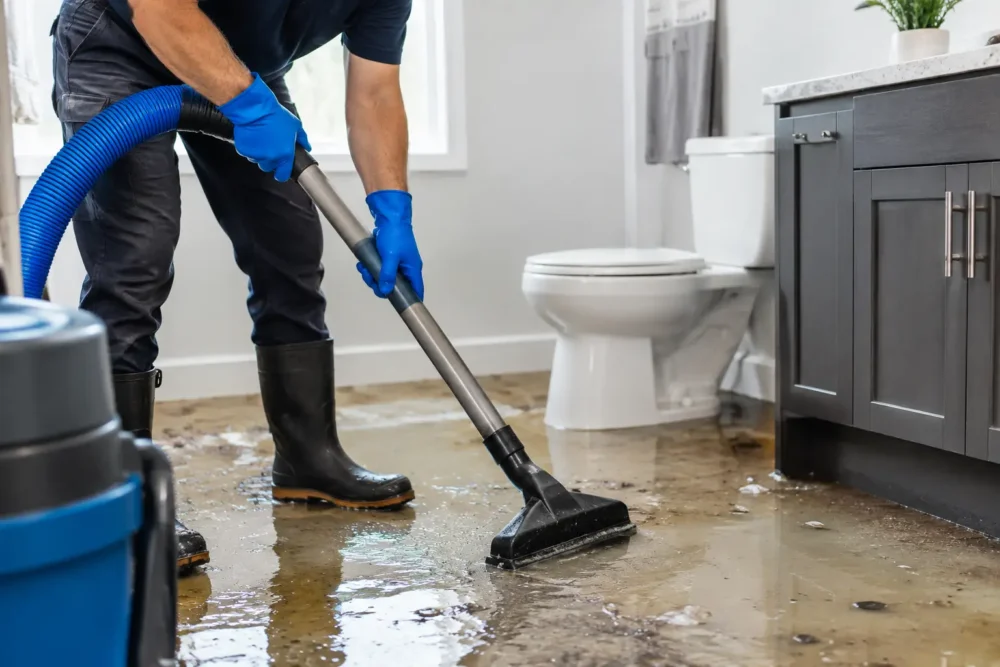
Cleanup usually begins with containment. Technicians separate affected spaces from clean areas where practical, helping reduce the movement of contaminated air, debris, and moisture. They then extract sewage and contaminated water using equipment suited to the site conditions.
Next comes removal of unsalvageable porous materials and contaminated debris. Crews bag and remove waste carefully, then clean affected structural surfaces. The exact scope depends on the type of floor, wall construction, water depth, duration of exposure, and whether sewage reached concealed spaces.
Cleaning is followed by disinfection where appropriate. Afterward, drying equipment helps lower moisture in materials that can remain. Air movement, dehumidification, and monitoring work together, but drying needs vary by construction and the extent of damage. A basement with concrete floors requires a different approach than a carpeted office or finished condo unit.
Repairs should begin after the affected materials are clean, dry, and ready for rebuilding. Repairs may include replacing removed drywall, insulation, flooring, trim, cabinets, or other finishes. Plumbing repairs may also be needed to correct the condition that caused the backup.
Protecting Records, Belongings, and Other Occupants
Do not discard damaged items before photographing them, unless they create an immediate health or safety concern. Make a simple inventory that includes the item, room, condition, and whether it was discarded, cleaned, or stored for review. Receipts, maintenance records, and previous plumbing reports can also be useful.
For landlords and property managers, keep a dated communication record. Note when occupants reported the issue, what access was provided, which areas were isolated, and what emergency measures were taken. In a condo, report the event promptly through the building’s required process while protecting your own unit and belongings.
Businesses should separate impacted stock, files, and equipment from unaffected property. Avoid returning items to use until their condition has been assessed. If wastewater reached food, medical supplies, porous packaging, or sensitive equipment, ask the relevant authority or manufacturer for handling guidance.
When to Call for Sewer Cleanup Help
Call for professional help when sewage enters the building, a drain repeatedly backs up, multiple fixtures overflow, or contaminated water reaches finished spaces. The same applies when you notice sewage odors, wet materials, or staining after the visible water has receded.
A small overflow from a toilet can still require more than surface cleaning if it reached carpet, baseboards, cabinetry, or a floor drain. The right response depends on what entered the area, how far it traveled, and which materials were exposed.
If you are in Toronto or the GTA, call 416-800-0000 for emergency sewer backup cleanup support. Keep the affected area closed, save your records, and focus first on preventing further exposure. Careful action now gives you a clearer path for safe cleanup and practical repairs.
Sewer damage can disrupt a home or business quickly. These services help address contamination, moisture, access concerns, and the records needed for next steps.
Emergency Sewage Extraction
We remove contaminated water and debris from accessible affected areas while helping limit spread into nearby rooms and finishes.
Containment and Site Protection
Containment measures can separate affected spaces, reduce tracked contamination, and protect cleaner areas during sewer cleanup work.
Moisture Assessment
Moisture readings help identify wet materials behind finished surfaces, under flooring, and in areas that may need further attention.
Disinfection and Surface Cleaning
Affected hard surfaces can be cleaned and disinfected using methods suited to the material, condition, and contamination level.
Removal of Damaged Materials
We can remove sewage-contaminated porous materials when cleaning is not appropriate or hidden moisture has affected the assembly.
Drying and Monitoring
Drying equipment and follow-up moisture checks help manage remaining moisture before repairs begin. Results depend on site conditions.
Plumbing and Drain Investigation
A plumbing review can help identify active backup causes, including blocked drains, fixture issues, or sewer line concerns.
Damage Documentation
Photos, moisture readings, estimates, and work records can support communication with insurers, condo managers, landlords, or property teams.
For urgent sewer cleanup support in Toronto and the GTA, call now to discuss safe access and next steps.
GTA Restoration serves communities across Canada, including Toronto and the GTA. U.S. locations are opening. Browse our Canadian service areas below, and contact us to confirm services and availability for your address.