...
Who Handles Condominium Flood Cleanup First?

A ceiling stain can become a wet floor in minutes when water travels between condo units. So, who handles condominium flood cleanup when the leak starts above, below, or inside your walls? Usually, several parties have separate jobs: the property manager coordinates building access, the board follows the condominium corporation’s responsibilities, a plumber addresses the source, and a restoration team handles water removal and drying.

The person who pays is not always the person who starts the cleanup. Condo declarations, bylaws, lease terms, and insurance policies can all affect responsibility. Do not wait for that question to be settled before taking safe steps to limit further damage.

Who Handles Condominium Flood Cleanup After a Leak?

Start by notifying the building’s emergency contact or property manager. They can arrange access to mechanical rooms, shut off water where appropriate, contact affected residents, and decide whether the problem involves common areas. If water is still flowing, avoid electrical hazards and do not enter areas with standing water near outlets, panels, or appliances.

The condo corporation or board often manages damage to common elements, such as hallways, shared plumbing, roofs, or building systems. However, each corporation’s governing documents define common elements and may identify unit features that owners must maintain. A pipe inside a wall may be common property in one building and an owner responsibility in another.

A unit owner commonly reports the loss, protects personal belongings where safe, and contacts their insurer. Owners may also be responsible for improvements inside the unit, such as upgraded flooring, cabinets, or fixtures. A tenant should notify the landlord and property manager right away, then contact their own insurer for personal contents and tenant-related coverage.

The property manager is often the practical point of contact during the first hours. They coordinate entry, communicate with the board, preserve building operations, and help restoration crews reach affected units. They do not decide every coverage issue. Insurers determine coverage under the applicable policies.

What a Restoration Team Does

Once the source is controlled or isolated, a qualified restoration company can assess the affected areas and begin emergency mitigation. GTA Restoration can support condo owners, managers, and building teams with water damage cleanup, moisture assessment, extraction, drying, and repair planning.

The first assessment looks beyond the visible puddle. Water can move under flooring, into wall cavities, through ceilings, and along framing. Restoration technicians document the apparent source, affected materials, moisture readings, and conditions that may require further investigation. This information helps the building team understand the scope without assuming who is financially responsible.

Extraction and stabilization

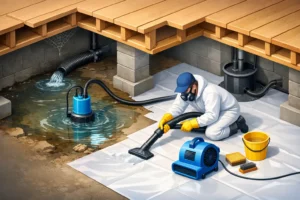
Water extraction removes standing water from floors, carpets, and other accessible surfaces. Crews may move wet contents when authorized, protect unaffected areas, and remove materials that cannot be safely dried or cleaned. The right approach depends on the water source, how long materials stayed wet, and whether contaminants may be present.

Clean water from a supply line still requires quick action. Water from a drain backup, toilet overflow, or other potentially contaminated source needs additional precautions. Keep people and pets away from affected areas, especially if sewage or visible debris is present. Do not use household fans to spread contaminated moisture through the unit.

Drying and monitoring

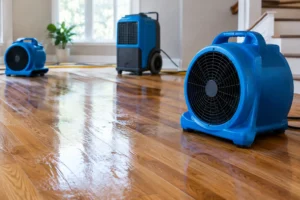
Drying is more than placing fans in a room. Professional equipment moves air, removes moisture, and targets damp materials that may not feel wet at the surface. Technicians take repeat moisture readings to track conditions in floors, walls, ceilings, and structural materials.

Some materials can be dried in place. Others may need removal because water has caused swelling, separation, odor, contamination, or hidden moisture. The restoration plan should reflect the building’s construction, access limits, and the condition of each affected material. Drying times vary, so no responsible contractor should promise a fixed completion date before assessment.

Access Matters in Condo Flood Cleanup

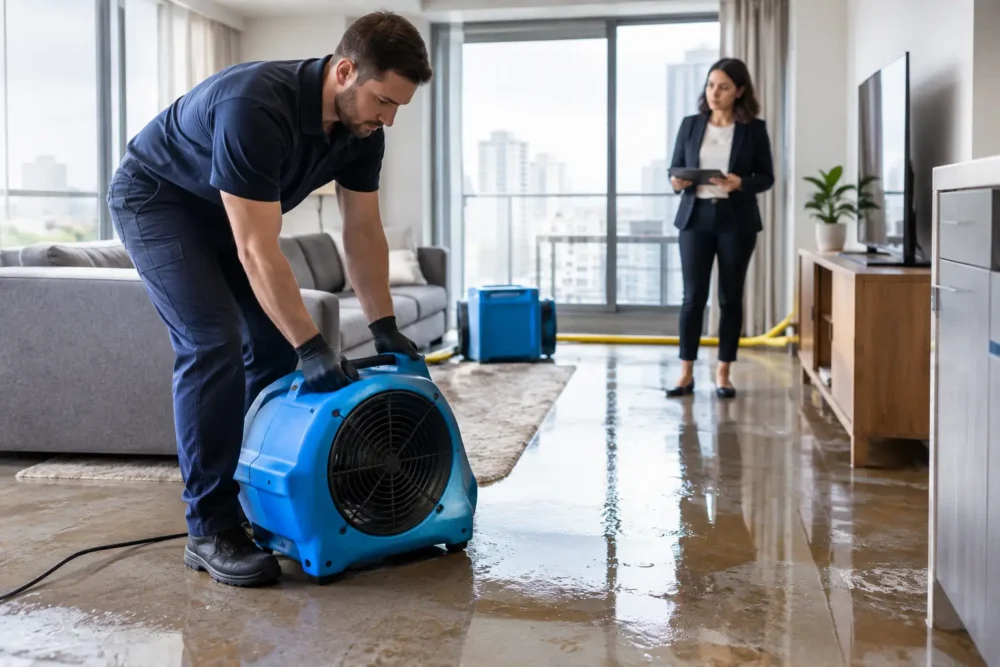
Flood cleanup in a condo often involves more coordination than cleanup in a detached home. Water may affect the source unit, the unit below, a corridor, and a service area at the same time. The property manager may need to authorize entry, schedule elevator use, arrange keys, and notify occupants before work can proceed.

Owners should not remove building materials or authorize major repairs without speaking to the manager or board, unless there is an immediate safety concern. Removing a ceiling, for example, can expose wiring, affect a neighboring unit, or complicate the investigation. Emergency mitigation should focus first on safety and preventing further damage.

If you cannot stay in the unit, ask the manager how access will be handled for inspections, drying equipment, and repair estimates. Keep communication in writing when possible. A simple record of calls, emails, access dates, and observed damage can prevent confusion later.

Build a Useful Damage Record

Photos and notes are useful before cleanup begins, during the work, and after visible drying. Capture the water path, damaged contents, stains, wet flooring, and any source you can safely photograph. Include wide shots that show the room and close shots that show specific damage.

Keep receipts for reasonable emergency expenses, such as temporary protection or approved accommodation, if applicable to your situation. Do not discard damaged belongings until the relevant insurer or adjuster advises you, unless they present a health hazard or the restoration team documents their condition first.

A restoration provider can supply photos, moisture readings, estimates, equipment records, and work documentation. These records may support discussions with the condo corporation, property manager, and insurer. They do not guarantee policy coverage, reimbursement, or responsibility findings.

When to Call for Help

Call the property manager immediately when the leak may involve shared plumbing, another unit, a roof, a sprinkler system, or a common area. Contact emergency services if there is an immediate danger, such as water near electrical equipment, a ceiling that appears likely to collapse, or a major uncontrolled flow.

For active water damage, professional help is especially useful when water has entered walls or ceilings, reached multiple units, soaked carpet or wood flooring, or came from a backup. Early assessment can identify moisture that is easy to miss and help the building coordinate the next steps.

The most helpful question is not simply who is at fault. It is who can safely stop the water, authorize access, document the damage, and begin proper cleanup. Acting on those priorities gives everyone a clearer path forward while responsibility and coverage are reviewed.

Share this... Spread the word!


Restoration Support

When a condo leak disrupts your unit or building, organized cleanup and clear records help managers, owners, and insurers review the loss.

Emergency Water Removal

Standing water should be extracted promptly after safe access is confirmed. Fast removal can reduce migration into floors, walls, and neighboring units.

Condo Unit Drying

Drying equipment and moisture readings help identify damp materials beyond visible surfaces. Access and building rules can affect equipment placement and monitoring.

Ceiling Leak Cleanup

A wet ceiling may hide water above the visible stain. Assessment helps identify saturation, material damage, and possible safety concerns before repairs begin.

Shared Area Protection

Hallways, lobbies, and service areas may need containment and protection during cleanup. Property management approval helps keep residents and work areas safe.

Sewage Backup Precautions

Backup water may contain contaminants and needs specialized handling. Keep occupants away, avoid spreading water, and report the issue to building management.

Moisture Documentation

Photos, moisture readings, and daily work records create a clearer damage file. They can support communication without deciding insurance coverage or liability.

Repair Planning

Repairs should follow assessment and drying, not replace them. The scope may include drywall, flooring, trim, or other materials affected by water.

Building Access Coordination

Condo cleanup may require keys, elevator reservations, and notices to residents. Coordinated access helps crews inspect and address all affected areas.

For urgent condo water damage support in Toronto and the GTA, call now to discuss safe next steps.

Call Us: 416-800-0000


GTA Service Centre


Frequently Asked Questions

Does the condo board pay for flood cleanup?

It depends on the declaration, the water source, and affected property. The board may coordinate common-element work, while insurers determine available coverage.

Should a tenant report a condo leak?

Yes. Notify the property manager and landlord immediately, then contact your insurer for personal belongings. Document damage before moving items when safe.

Can water damage spread to other units?

Yes. Water can travel through ceilings, walls, floor assemblies, and utility openings. Prompt reporting helps management inspect areas beyond the original unit.

What records should I keep after a condo flood?

Keep photos, videos, receipts, emails, moisture reports, and restoration documents. Record dates, observed conditions, and conversations with building representatives or insurers.

When is professional drying needed after a leak?

Professional drying is useful when water enters building materials, reaches concealed spaces, affects several units, or comes from a potentially contaminated source.


Learn more ↴


Direct Billing & Insurance Claims

Ask your insurer about coverage, deductibles and the records it needs.


Payment options

In-House Financing Available

Financing up to 24 months. No interest. No money down. Ask us about the terms.


Certifications & Insurance

View our firm certification, technician qualifications and insurance documents.

IICRC Certified Firm

GTA Restoration Inc.

Firm number 199912
Valid through

View IICRC certificate (PDF) — opens in a new tab

Business Insurance

GTA Restoration Group Inc.

$5 million general liability per occurrence
$8 million contractors pollution per claim
–

View insurance certificate (PDF) — opens in a new tab

IICRC Technician Qualifications

Richard Mark Provence · Registration 55726
Certificate expires

Water Damage Restoration · Fire & Smoke Restoration · Applied Microbial Remediation · Odor Control · Trauma & Crime Scene

View technician verification (PDF) — opens in a new tab

Insurance is subject to policy terms, conditions and exclusions.


Emergency? Click to Call!