

How to Protect Furniture During Smoke Cleanup
Last Updated: November 14, 2026
Quick Summary
How to protect furniture during smoke cleanup starts before you touch a single cushion. Move furniture out of the most affected rooms if you can do it safely, and place aluminum foil or plastic wrap under the legs to stop soot transferring to the floor. Wear disposable gloves and a fine-particle mask, and work from the cleanest items to the most damaged.
- Move furniture out of the most affected rooms only if you can do so safely.
- Place aluminum foil or plastic wrap under furniture legs to stop soot reaching the floor.
- Wear disposable gloves and a fine-particle mask, and keep children and pets away.
- Clean the cleanest items first and the most damaged last to avoid spreading residue.
- Dry-brush or gently vacuum loose soot before cleaning, and never rub it into fabric.
Table of Contents
- Protecting Furniture Before You Start Cleaning Smoke Damage
- How to Clean Soot Off Furniture and Remove Smoke Odor Safely
- Cleaning Upholstered Furniture After Smoke Damage and When to Call Professionals
- Frequently Asked Questions
Protecting Furniture Before You Start Cleaning Smoke Damage
Smoke gets into everything, and furniture is often the hardest hit. How to protect furniture during smoke cleanup starts before you touch a single cushion.
Move furniture out of the most affected rooms if you can do it safely. For more on protecting property and saving belongings, see how to protect property after fire. Keep children and pets away, open windows, and wear disposable gloves and a fine-particle mask.
Before moving heavy pieces, protect the floor and furniture. Aluminum foil or plastic wrap under furniture legs stops soot from transferring to the floor.
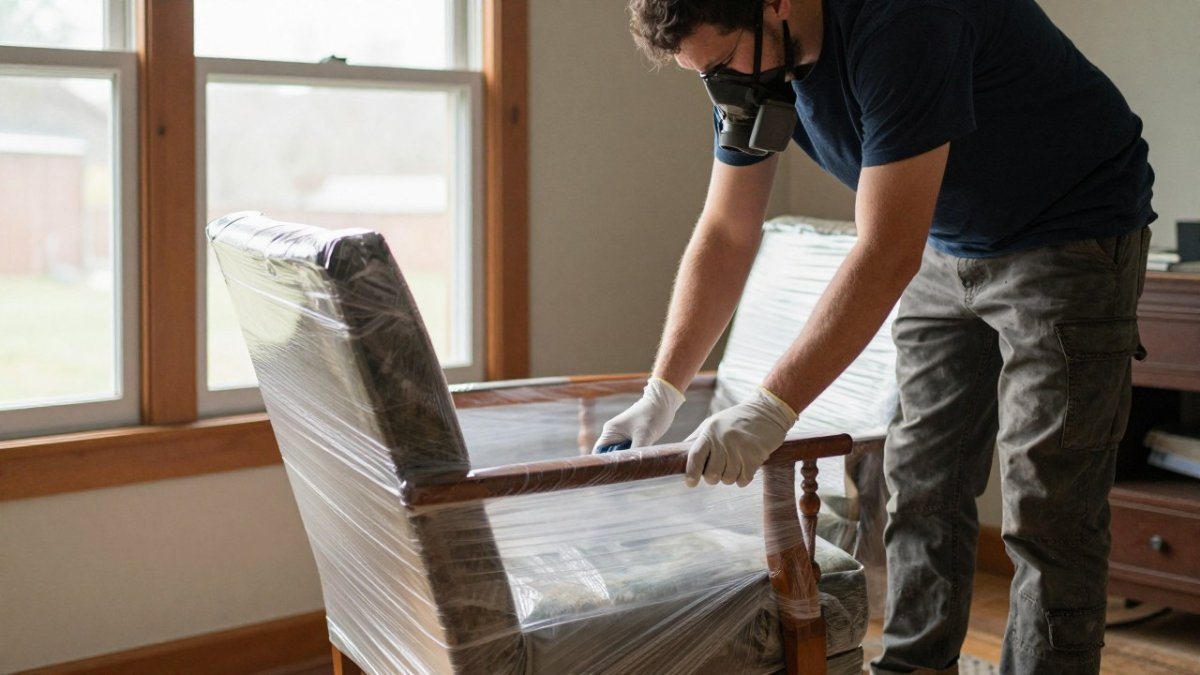
Follow the clean-to-dirty rule when you work. How to protect furniture during smoke cleanup depends on it: start with the cleanest items and move to the most damaged so you don’t spread residue onto pieces you’ve already cleaned.
Watch out: Don’t rub soot into fabric. Dry-brush or gently vacuum loose residue first.
Here is a quick reference for the first steps before cleaning furniture after smoke damage.
| Step | What to do | Note |
|---|---|---|
| Move furniture | Move pieces out of the most affected rooms if safe | Do it only if you can do so safely |
| Protect yourself | Wear disposable gloves and a fine-particle mask | Keep children and pets away |
| Protect floors | Place aluminum foil or plastic wrap under legs | Stops soot transferring to the floor |
| Work order | Start with cleanest items, end with most damaged | Prevents spreading residue |
| Loose residue | Dry-brush or gently vacuum first | Do not rub soot into fabric |
How to Clean Soot Off Furniture and Remove Smoke Odor Safely
Start with the least aggressive method. Use a HEPA-filter vacuum to lift loose soot from hard surfaces and upholstery. Vacuum slowly and avoid pushing residue deeper into the fibres.
For hard wood and finished surfaces, wipe with a mild soap solution and clean rags. Rinse with a damp cloth and dry right away. Test any cleaner on a hidden spot first.
Smoke odour can linger in items for weeks. Our odour removal guide explains how to get the smoke smell out of your home. Airing the room out, with safe ventilation, helps. Deep cleaning across floors, drapes, rugs and furniture is also recommended in the research, since smoke residue spreads across many surfaces. Remediation of indoor environments impacted by wildfire smoke: A review
Watch out: Never mix cleaning products. Some combinations release harmful fumes (Use household chemicals safely).
If you still smell smoke after cleaning, the odour may be soaked deep into the materials. Our odour removal guide covers next steps for stubborn smells.
Cleaning Upholstered Furniture After Smoke Damage and When to Call Professionals
Upholstered furniture holds smoke well. Vacuum it thoroughly, then spot-test a mild cleaner on a hidden area. Some fabrics, leather, and vinyl react badly to water or harsh products.
Some items are not worth the effort. Our guide on when to replace smoke damaged contents compares what can be cleaned with what is the safer, practical choice. Heavily soaked cushions, items with deep odour, or pieces with damaged structure may be better replaced. Kitchen Fire Case Study, Matt’s Story
If damage is widespread, or you’re unsure what can be saved, a restoration professional can assess each piece. A restoration professional can help you decide what to clean, what to replace, and what to set aside for your insurance claim. Find out how we can help with odour removal in Toronto and the GTA.
Frequently Asked Questions
How do you protect furniture during smoke cleanup?
Move furniture out of the affected room when possible, and cover legs with aluminum foil or plastic food wrap to keep soot from spreading to floors. Keep items wrapped and off carpets. Wear gloves and a mask, and avoid wiping soot dry across surfaces.
Should you cover furniture after a fire?
Yes, covering furniture with clean plastic sheeting or drop cloths helps limit further soot settling on it while the room is ventilated. Cover upholstered pieces loosely so air can move around them. Remove covers only after cleanup is complete and the items have been checked.
How do you clean soot off upholstered furniture?
Start by removing loose soot with a HEPA-filter vacuum, working gently in one direction. Test any cleaner on a hidden spot first. Soot can smear when wet, so avoid heavy scrubbing, and call a professional for delicate or heavily affected fabrics.
How long does smoke odor stay in furniture?
Smoke odor can linger for weeks or longer if soot and residue remain in fabric, padding or wood. Ventilating the room and cleaning thoroughly often reduces it. Persistent odors usually need professional cleaning or deodorizing treatment.
When should you call a professional for smoke-damaged furniture?
Call a professional if the furniture is valuable, antique, heavily sooted or still smells after cleaning. Stop if you feel unwell, or if the damage involves soot from a major fire. Restoration professionals can assess items and handle hazardous residue safely.

For non-emergencies use our contact form
Restoration Support for Properties Across Canada
Property damage can affect a home, business or shared building. GTA Restoration serves communities across Canada, including Toronto and the GTA. We are opening locations in the United States. Contact us to confirm current services and availability for your address.
Emergency Restoration Help
Call for 24/7 restoration help. Describe any active leak, standing water or visible damage. Access, site conditions and crew availability affect the response.
Water Removal
Standing water needs a plan suited to its source and the affected materials. Share details about the depth, location and any known contamination.
Moisture Checks
Visible marks may not show the full extent of a leak. Moisture readings help identify areas that need closer inspection and follow-up.
Mold Concerns
Report visible mold, musty smells and past leaks. Addressing the moisture source is an important part of planning cleanup and repairs.
Fire and Smoke Damage
Smoke, soot and firefighting water can affect different parts of a building. Discuss the affected areas before moving belongings or starting cleanup.
Contaminated Areas
Sewage and other contamination need a site-specific approach. Keep people and pets away from affected areas while arranging an assessment.
Commercial Properties
Building access, tenants and operating hours matter. Our commercial restoration services help owners and managers plan work around site needs.
Equipment Rental
Explore restoration equipment rental and confirm the unit, power requirements, rental dates and operating instructions before booking.
Need emergency help?
Call GTA Restoration to discuss the fault, access.
Service Areas Across Canada
GTA Restoration serves communities across Canada, including Toronto and the GTA. U.S. locations are opening. Browse our Canadian service areas below, and contact us to confirm services and availability for your address.
Search
- Air Duct Cleaning Montreal
- Ajax Asbestos Removal
- Ajax Mold Removal
- Ajax Water Damage
- Asbestos Removal Calgary
- Asbestos Removal Edmonton
- Asbestos Removal Fort Saskatchewan
- Asbestos Removal Gloucester
- Asbestos Removal Grimsby
- Asbestos Removal Hamilton
- Asbestos Removal Kanata
- Asbestos Removal Kitchener
- Asbestos Removal Laval
- Asbestos Removal Lincoln
- Asbestos Removal Montreal
- Asbestos Removal Nepean
- Asbestos Removal Niagara Falls
- Asbestos Removal Orleans
- Asbestos Removal Ottawa
- Asbestos Removal Sherwood Park
- Asbestos Removal Spruce Grove
- Asbestos Removal St Catharines
- Asbestos Removal St-Albert
- Asbestos Removal Thorold
- Asbestos Testing Hamilton
- Asbestos Testing Montreal
- Asbestos Testing Petersburg
- Aurora Mold Removal
- Aurora Water Damage
- Beaconsfield Asbestos Removal
- Brampton Asbestos Removal
- Brampton Mold Removal
- Brampton Water Damage
- Burlington Asbestos Removal
- Burlington Mold Removal
- Burlington Water Damage
- Burst Pipe Montreal Frozen Pipe
- Burst Pipe Repair Edmonton
- Burst Pipe Repair Ottawa
- Caledon Mold Removal
- Caledon Water Damage
- Calgary Mold Removal
- Calgary Water Damage
- Cambridge Mold Removal
- Cambridge Water Damage
- Clarington Mold Removal
- Concord Mold Removal
- Concord Water Damage
- Cooksville Mold Removal
- Edmonton Water Damage
- Emergency Roofing Vancouver
- Etobicoke Asbestos Removal
- Etobicoke Mold Removal
- Etobicoke Water Damage
- Fire Damage Grimsby
- Fire Damage Lincoln
- Fire Damage Niagara Falls
- Fire Restoration Fort McMurray
- Fire Damage Restoration Thorold
- Fire Damage St Catharines
- Flood Cleanup Grimsby
- Flood Cleanup Lincoln
- Flood Cleanup Niagara Falls
- Flood Cleanup St Catharines
- Flood Cleanup Thorold
- London Mold Removal
- London Water Damage
- Markham Asbestos Removal
- Markham Mold Removal
- Markham Water Damage
- Mississauga Asbestos Testing
- Mississauga Mold Removal
- Mississauga Water Damage
- Mold Inspection Removal Kitchener
- Mold Remediation Montreal
- Mold Removal & Inspection LaSalle
- Mold Removal Anjou
- Mold Removal Boucherville
- Mold Removal Brossard
- Mold Removal Burnaby
- Mold Removal Chambly
- Mold Removal Chateauguay
- Mold Removal Chomedey
- Mold Removal Coquitlam
- Mold Removal Dollard Des Ormeaux
- Mold Removal Dorval
- Mold Removal Edmonton
- Mold Removal Fort Saskatchewan
- Mold Removal Gloucester
- Mold Removal Grimsby
- Mold Removal Hamilton Inspection
- Mold Removal Ile Bizard
- Mold Removal in Osgoode
- Mold Removal Beaconsfield
- Mold Removal Kahnawake
- Mold Removal Kanata
- Mold Removal Kirkland
- Mold Removal Laval
- Mold Removal Lincoln
- Mold Removal Longueuil
- Mold Removal Montreal East
- Mold Removal Mount Royal
- Mold Removal Nepean
- Mold Removal New Westminster
- Mold Removal Niagara Falls
- Mold Removal Orleans
- Mold Removal Ottawa
- Mold Removal Cumberland
- Mold Remediation Hampstead
- Mold Removal Remediation Roxboro
- Mold Removal Richmond BC
- Mold Removal Rideau Lakes
- Mold Removal Rockcliffe Park
- Mold Removal Saint Hubert
- Mold Removal Saint Laurent
- Mold Removal Sherwood Park
- Mold Removal Spruce Grove
- Mold Removal St Catharines
- Mold Removal Ste Dorothee
- Mold Removal St۔ Albert
- Mold Removal Surrey
- Mold Removal Thorold
- Mold Removal Vancouver
- Mold Removal Vanier
- Mold Removal Westmount
- Montreal Biohazard Cleanup
- Montreal Emergency Plumber
- Montreal Fire Restoration
- Montreal Flood Cleanup
- Montreal Odor Removal
- Montreal Roofing Emergency
- Montreal Sewer Backup Cleanup
- Montreal Water Leak Detection
- Montréal Asbestos Removal
- Montréal Emergency Plumbing
- Montréal Mold Removal
- Montréal Pipe Burst Emergency
- Montréal Water Damage
- Newmarket Mold Removal
- Newmarket Water Damage
- North York Mold Removal
- Oakville Mold Removal
- Oakville Water Damage
- Oshawa Mold Removal
- Oshawa Water Damage
- Ottawa Air Duct Cleaning
- Pickering Mold Removal
- Pickering Water Damage
- Red Deer Water Damage
- RedDeer Mold Removal
- Richmond Hill Mold Removal
- Richmond Hill Water Damage
- Roof Repair Lincoln
- Roof Repair Niagara Falls
- Roof Repair St Catharines
- Scarborough Asbestos Removal
- Scarborough Mold Removal
- Scarborough Water Damage
- Sewage Cleanup Edmonton
- Sewer Backup Lincoln
- Sewer Backup Niagara Falls
- Sewer Backup Ottawa
- Sewer Backup St Catharines
- Thornhill Mold Removal
- Toronto & GTA Asbestos Removal
- Toronto & GTA Mold Removal
- Toronto Air Duct Cleaning
- Toronto Water Damage
- Unionville Mold Removal
- Unionville Water Damage
- Vancouver Asbestos Removal
- Vancouver Biohazard Cleanup
- Vancouver Emergency Plumber
- Vancouver Emergency Plumbing
- Vancouver Fire Restoration
- Vancouver Flood Cleanup
- Vancouver Mold Removal
- Vancouver Odor Removal
- Vancouver Pipe Burst Emergency
- Vancouver Sewer Backup Cleanup
- Vancouver Water Damage
- Vancouver Water Leak Detection
- Vaughan Mold Removal
- Vaughan Water Damage
- Vermiculite Removal Ottawa
- Water Damage Grimsby
- Water Damage Kanata
- Water Damage Kitchener
- Water Damage Lincoln
- Water Damage Longueuil
- Water Damage Nepean
- Water Damage Niagara Falls
- Water Damage Orleans
- Water Damage Ottawa
- Water Damage Repair Montreal
- Water Damage Laval Montreal
- Water Damage Restoration Thorold
- Sewage Backup Cleanup Montreal
- Water Damage St Catharines
- Water Damage Vancouver
- Water Flood Damage Repair Hamilton
- Flood Damage Repair Hampstead
- Whitby Water Damage
- Woodbridge Asbestos Removal
- Woodbridge Mold Removal
- Woodbridge Water Damage
- Restoration Equipment Rental
Restoration Questions
Where are your services available?
GTA Restoration serves communities across Canada, including Toronto and the GTA. U.S. locations are opening. Tell us the property address so we can discuss the work needed and confirm current availability.
What should I tell the team first?
Describe what happened, when you noticed it and which rooms are affected. Mention any active leak or access restrictions. These details help us discuss the next step and confirm availability.
How is the drying plan decided?
The water source, affected materials and moisture readings help guide the plan. Equipment needs can change as work progresses. Ask how the team will check conditions before repairs cover the affected area.
Can restoration work be covered by insurance?
Coverage depends on your policy and the cause of the damage. Your insurer decides the claim. Keep photos, dates and receipts, and ask which records are needed before agreeing to the work.
Who can I call about urgent damage?
Call the phone number shown on this page for 24/7 restoration help. Explain the problem and ask about availability. If there is immediate danger, contact emergency services and follow their directions.
Learn more ↴ 
Latest Blog
Latest Articles
Direct Billing & Insurance Claims
Ask your insurer about coverage, deductibles and the records it needs.

In-House Financing Available
Financing up to 24 months. No interest. No money down. Ask us about the terms.
Certifications & Insurance
View our firm certification, technician qualifications and insurance documents.

IICRC Certified Firm
GTA Restoration Inc.
Firm number 199912
Valid through
Business Insurance
GTA Restoration Group Inc.
$5 million general liability per occurrence
$8 million contractors pollution per claim
–
IICRC Technician Qualifications
Richard Mark Provence · Registration 55726
Certificate expires
Water Damage Restoration · Fire & Smoke Restoration · Applied Microbial Remediation · Odor Control · Trauma & Crime Scene
View technician verification (PDF) — opens in a new tabInsurance is subject to policy terms, conditions and exclusions.
 Facebook
 Instagram
 LinkedIn
 X / Twitter
 YouTube


