
How to Handle Basement Water Damage: 7 Steps
Basement water damage can leave you unsure what to do first. Before moving belongings or starting cleanup, keep people away from the affected area and arrange a safety check. These seven steps explain how to plan water removal, drying and repairs without overlooking the cause.
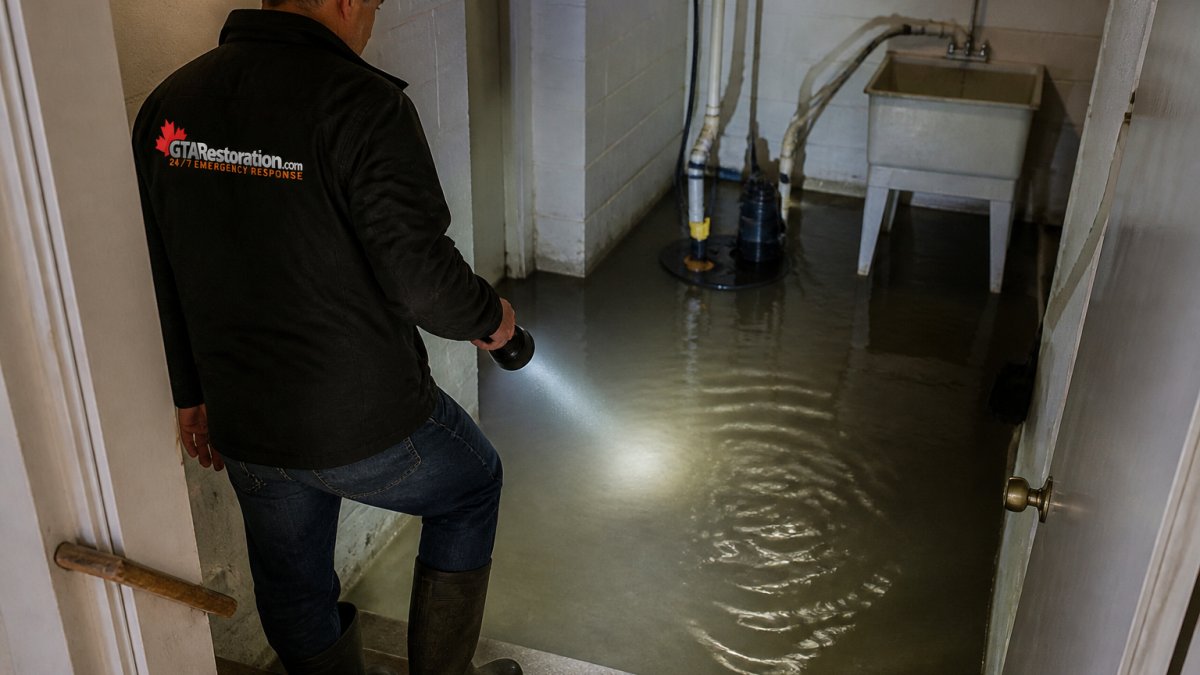
1. Check a flooded basement for hazards
Do not enter standing water if it may touch outlets, cords, appliances or the electrical panel. Never walk through water to reach a breaker. Contact your utility or a licensed electrical contractor about making the area safe.
If you smell gas, leave the building and call the gas utility from outside. Keep children and pets away. Structural movement, sagging ceilings or rapidly rising water also need urgent professional assessment.
2. Identify what caused the basement water damage
A leaking supply pipe, failed sump pump, sewer backup and rainwater seepage need different repairs. Next, describe where the water appeared and whether it followed a storm or plumbing use. Shut off a leaking water supply only if you can reach the valve safely.
For suspected sewer backup, avoid unnecessary toilet and sink use. In Toronto, report basement flooding to 311. A plumber can investigate private drains and damaged pipes.
3. Record the damage and contact your insurer
Take photographs from a safe location. Note when you discovered the water, the rooms affected and any visible source. Then contact your insurer and ask what records it needs before you discard belongings.
Also, keep an item list, receipts and written work estimates. Your insurer decides coverage under your policy. GTA Restoration can provide cleanup and repair records through our property restoration support; an estimate does not guarantee claim approval.
4. Plan water removal and cleanup
However, water depth alone does not tell you whether cleanup is safe. The source, contamination, electrical conditions and affected materials all matter. Sewage and outdoor floodwater require special precautions. A basement flood cleanup assessment helps establish the work needed.
Once access is safe, the team can select extraction equipment and decide which belongings or building materials can be cleaned. Ask where wastewater and damaged materials will go. Do not pump water into an unsuitable drain or onto a neighbouring property.
5. Dry a wet basement and check progress
Removing standing water is only part of the job. For example, moisture can remain beneath flooring, inside wall assemblies and in stored contents. Drying equipment needs to suit those materials and the conditions in the room.
Ask how moisture readings will guide the drying plan. Even if a surface feels dry, damp layers may remain below it. Avoid opening walls yourself when electrical wiring or hazardous materials may be present. Do not close cavities or install finishes until the affected materials are ready.
6. Address mould and repair needs
Also, report musty smells, visible growth and earlier leaks. Cleaning the surface alone may leave the moisture source unresolved. If mould is present, ask about the area affected and suitable containment before using fans or disturbing materials.
Health Canada’s flood cleanup guidance explains precautions and drying considerations. The type of water and wet material guide the cleaning method. There is no single disinfectant or fixed drying schedule that suits every basement.
7. Reduce the chance of another flood
Match prevention work to the cause. Review gutters, downspouts and grading for rainwater problems. For plumbing or drainage issues, ask a qualified contractor about the relevant repairs and maintenance. Once installed, sump pumps and backwater valves need regular checks.
After repairs, keep your photos, moisture records and maintenance instructions together. Need help with basement water damage? Call GTA Restoration at 416-800-0000 to discuss the property, access and available restoration support.
For non-emergencies use our contact form
Planning Basement Water Damage Restoration
A clear restoration plan explains what needs work now and what can wait. GTA Restoration can discuss water removal, drying and repairs for your property. First, share the location, affected rooms and known hazards when you call. These details help the team understand the work and arrange access.
Information for the First Call
Describe when you noticed the water and whether it is still entering. Mention sewage, a failed pump or damaged plumbing. Also explain any electrical concerns so the team can discuss the next step.
Access, Tenants and Shared Spaces
Tell the team about occupied basement rooms, shared entrances and parking limits. If you rent, notify the property owner. In a managed building, involve the person responsible for access and common areas.
Wet Floors and Wall Finishes
Record the flooring and wall materials in the affected rooms. Hidden layers may need closer inspection. Ask which areas the team can assess safely and what information will guide removal or drying decisions.
Stored Belongings
Keep a list of affected furniture, boxes and stored items. Their condition and exposure help guide cleaning or disposal. Photograph damage when safe, and ask your insurer what records it needs before disposal.
Drying Equipment
Discuss power requirements, noise and access before equipment arrives. A drying plan should suit the property and wet materials. Ask who will check the equipment and monitor progress while it runs.
Progress Updates
Agree on how you will receive updates about moisture readings and the work plan. However, if the team finds hidden damage, ask what it changes and review the proposed work before approving additional costs.
Repair Estimates
Next, separate urgent cleanup from repairs to finishes or fixtures. A written estimate should explain what the work includes, what it leaves out and the next steps. Ask questions about any part you do not understand.
Claim Paperwork
Keep photographs, invoices and work notes in one place. Our restoration documentation support can help organise records of the damage and work. Your insurer determines coverage and any requirements under your policy.
Follow-Up Maintenance
Keep instructions for repaired plumbing, pumps or drainage devices. Then, review upkeep with the contractor who did the work. After future storms, report recurring dampness early so the source can be investigated before finishes conceal the problem.
Need help with basement water damage? Call to discuss your property and available restoration support.
Service Areas Across Canada
GTA Restoration serves communities across Canada, including Toronto and the GTA. U.S. locations are opening. Browse our Canadian service areas below, and contact us to confirm services and availability for your address.
Search
- Air Duct Cleaning Montreal
- Ajax Asbestos Removal
- Ajax Mold Removal
- Ajax Water Damage
- Asbestos Removal Calgary
- Asbestos Removal Edmonton
- Asbestos Removal Fort Saskatchewan
- Asbestos Removal Gloucester
- Asbestos Removal Grimsby
- Asbestos Removal Hamilton
- Asbestos Removal Kanata
- Asbestos Removal Kitchener
- Asbestos Removal Laval
- Asbestos Removal Lincoln
- Asbestos Removal Montreal
- Asbestos Removal Nepean
- Asbestos Removal Niagara Falls
- Asbestos Removal Orleans
- Asbestos Removal Ottawa
- Asbestos Removal Sherwood Park
- Asbestos Removal Spruce Grove
- Asbestos Removal St Catharines
- Asbestos Removal St-Albert
- Asbestos Removal Thorold
- Asbestos Testing Hamilton
- Asbestos Testing Montreal
- Asbestos Testing Petersburg
- Aurora Mold Removal
- Aurora Water Damage
- Beaconsfield Asbestos Removal
- Brampton Asbestos Removal
- Brampton Mold Removal
- Brampton Water Damage
- Burlington Asbestos Removal
- Burlington Mold Removal
- Burlington Water Damage
- Burst Pipe Montreal Frozen Pipe
- Burst Pipe Repair Edmonton
- Burst Pipe Repair Ottawa
- Caledon Mold Removal
- Caledon Water Damage
- Calgary Mold Removal
- Calgary Water Damage
- Cambridge Mold Removal
- Cambridge Water Damage
- Clarington Mold Removal
- Concord Mold Removal
- Concord Water Damage
- Cooksville Mold Removal
- Edmonton Water Damage
- Emergency Roofing Vancouver
- Etobicoke Asbestos Removal
- Etobicoke Mold Removal
- Etobicoke Water Damage
- Fire Damage Grimsby
- Fire Damage Lincoln
- Fire Damage Niagara Falls
- Fire Restoration Fort McMurray
- Fire Damage Restoration Thorold
- Fire Damage St Catharines
- Flood Cleanup Grimsby
- Flood Cleanup Lincoln
- Flood Cleanup Niagara Falls
- Flood Cleanup St Catharines
- Flood Cleanup Thorold
- London Mold Removal
- London Water Damage
- Markham Asbestos Removal
- Markham Mold Removal
- Markham Water Damage
- Mississauga Asbestos Testing
- Mississauga Mold Removal
- Mississauga Water Damage
- Mold Inspection Removal Kitchener
- Mold Remediation Montreal
- Mold Removal & Inspection LaSalle
- Mold Removal Anjou
- Mold Removal Boucherville
- Mold Removal Brossard
- Mold Removal Burnaby
- Mold Removal Chambly
- Mold Removal Chateauguay
- Mold Removal Chomedey
- Mold Removal Coquitlam
- Mold Removal Dollard Des Ormeaux
- Mold Removal Dorval
- Mold Removal Edmonton
- Mold Removal Fort Saskatchewan
- Mold Removal Gloucester
- Mold Removal Grimsby
- Mold Removal Hamilton Inspection
- Mold Removal Ile Bizard
- Mold Removal in Osgoode
- Mold Removal Beaconsfield
- Mold Removal Kahnawake
- Mold Removal Kanata
- Mold Removal Kirkland
- Mold Removal Laval
- Mold Removal Lincoln
- Mold Removal Longueuil
- Mold Removal Montreal East
- Mold Removal Mount Royal
- Mold Removal Nepean
- Mold Removal New Westminster
- Mold Removal Niagara Falls
- Mold Removal Orleans
- Mold Removal Ottawa
- Mold Removal Cumberland
- Mold Remediation Hampstead
- Mold Removal Remediation Roxboro
- Mold Removal Richmond BC
- Mold Removal Rideau Lakes
- Mold Removal Rockcliffe Park
- Mold Removal Saint Hubert
- Mold Removal Saint Laurent
- Mold Removal Sherwood Park
- Mold Removal Spruce Grove
- Mold Removal St Catharines
- Mold Removal Ste Dorothee
- Mold Removal St۔ Albert
- Mold Removal Surrey
- Mold Removal Thorold
- Mold Removal Vancouver
- Mold Removal Vanier
- Mold Removal Westmount
- Montreal Biohazard Cleanup
- Montreal Emergency Plumber
- Montreal Fire Restoration
- Montreal Flood Cleanup
- Montreal Odor Removal
- Montreal Roofing Emergency
- Montreal Sewer Backup Cleanup
- Montreal Water Leak Detection
- Montréal Asbestos Removal
- Montréal Emergency Plumbing
- Montréal Mold Removal
- Montréal Pipe Burst Emergency
- Montréal Water Damage
- Newmarket Mold Removal
- Newmarket Water Damage
- North York Mold Removal
- Oakville Mold Removal
- Oakville Water Damage
- Oshawa Mold Removal
- Oshawa Water Damage
- Ottawa Air Duct Cleaning
- Pickering Mold Removal
- Pickering Water Damage
- Red Deer Water Damage
- RedDeer Mold Removal
- Richmond Hill Mold Removal
- Richmond Hill Water Damage
- Roof Repair Lincoln
- Roof Repair Niagara Falls
- Roof Repair St Catharines
- Scarborough Asbestos Removal
- Scarborough Mold Removal
- Scarborough Water Damage
- Sewage Cleanup Edmonton
- Sewer Backup Lincoln
- Sewer Backup Niagara Falls
- Sewer Backup Ottawa
- Sewer Backup St Catharines
- Thornhill Mold Removal
- Toronto & GTA Asbestos Removal
- Toronto & GTA Mold Removal
- Toronto Air Duct Cleaning
- Toronto Water Damage
- Unionville Mold Removal
- Unionville Water Damage
- Vancouver Asbestos Removal
- Vancouver Biohazard Cleanup
- Vancouver Emergency Plumber
- Vancouver Emergency Plumbing
- Vancouver Fire Restoration
- Vancouver Flood Cleanup
- Vancouver Mold Removal
- Vancouver Odor Removal
- Vancouver Pipe Burst Emergency
- Vancouver Sewer Backup Cleanup
- Vancouver Water Damage
- Vancouver Water Leak Detection
- Vaughan Mold Removal
- Vaughan Water Damage
- Vermiculite Removal Ottawa
- Water Damage Grimsby
- Water Damage Kanata
- Water Damage Kitchener
- Water Damage Lincoln
- Water Damage Longueuil
- Water Damage Nepean
- Water Damage Niagara Falls
- Water Damage Orleans
- Water Damage Ottawa
- Water Damage Repair Montreal
- Water Damage Laval Montreal
- Water Damage Restoration Thorold
- Sewage Backup Cleanup Montreal
- Water Damage St Catharines
- Water Damage Vancouver
- Water Flood Damage Repair Hamilton
- Flood Damage Repair Hampstead
- Whitby Water Damage
- Woodbridge Asbestos Removal
- Woodbridge Mold Removal
- Woodbridge Water Damage
- Restoration Equipment Rental
Basement Water Damage: FAQs
What should I do before entering a flooded basement?
Keep people out and arrange a safety check. Do not enter water that may contact electricity or cross it to reach a breaker.
Can clear water still be contaminated?
Yes. Appearance alone cannot establish safety. The source, time in the building and materials it touched affect the cleanup plan.
How will I know when the basement is dry?
Ask for moisture checks of the affected materials. Surface appearance and a set number of days cannot confirm that hidden layers are dry.
Does insurance cover every basement flood?
Coverage depends on your policy and the cause. Contact your insurer promptly and keep photos, receipts and work records.
Who can help find the cause of recurring water?
A plumber or drainage specialist can assess the suspected source. Restoration teams can document affected materials and plan cleanup and drying.
Direct Billing & Insurance Claims
Ask your insurer about coverage, deductibles and the records it needs.

In-House Financing Available
Financing up to 24 months. No interest. No money down. Ask us about the terms.
Learn more ↴ 
RELATED ARTICLES
 Facebook
 Instagram
 LinkedIn
 X / Twitter
 YouTube


