Last Updated: November 24, 2026
Quick Summary
Protect your condo during condo restoration by documenting all damage with photos and receipts, notifying building management, and confirming who is authorized to enter your unit. Move belongings clear of the work zone, seal doorways and cover floors to contain dust, and confirm the contractor’s insurance before work begins.
- Photograph pre-existing conditions and each stage of progress to support your insurance claim.
- Ask your contractor how they will control dust before work begins, since debris drifts through shared ventilation.
- Read your condominium corporation’s rules on work hours, elevator use, and contractor access before booking.
- Give neighbours notice of noisy or dusty work; a short note prevents most complaints.
- Walk the unit with your contractor before sign-off and note anything unfinished in writing.
Table of Contents
- Your Condo Restoration Preparation Checklist
- Condo Restoration Dust Containment and Air Quality Controls
- The Water Damage Restoration Timeline for a Condo
- Restoration Support
- Frequently Asked Questions
Your Condo Restoration Preparation Checklist
Water damage in a condo rarely stays put. It seeps into neighbouring suites and shared ventilation, so protection starts before crews arrive. Knowing how to protect a Toronto condo during restoration work cuts both damage and stress.
Protect your condo by documenting everything first, then securing belongings, isolating the work zone, and coordinating access with building management. For unit-specific prevention and preparation tips, see how to avoid water damage in your condo.
- Document the damage with photos, dates, and receipts.
- Notify building management of the source and any hazards.
- Confirm access authorization, who enters, when, and with what keys.
- Move belongings clear of the work zone.
- Isolate the area by sealing doorways and covering floors.
- Confirm contractor insurance before work starts.
- Agree on inspection check-ins and a final sign-off.
For a broader walkthrough, see our Property Owner Protection Guide.
Condo Restoration Dust Containment and Air Quality Controls
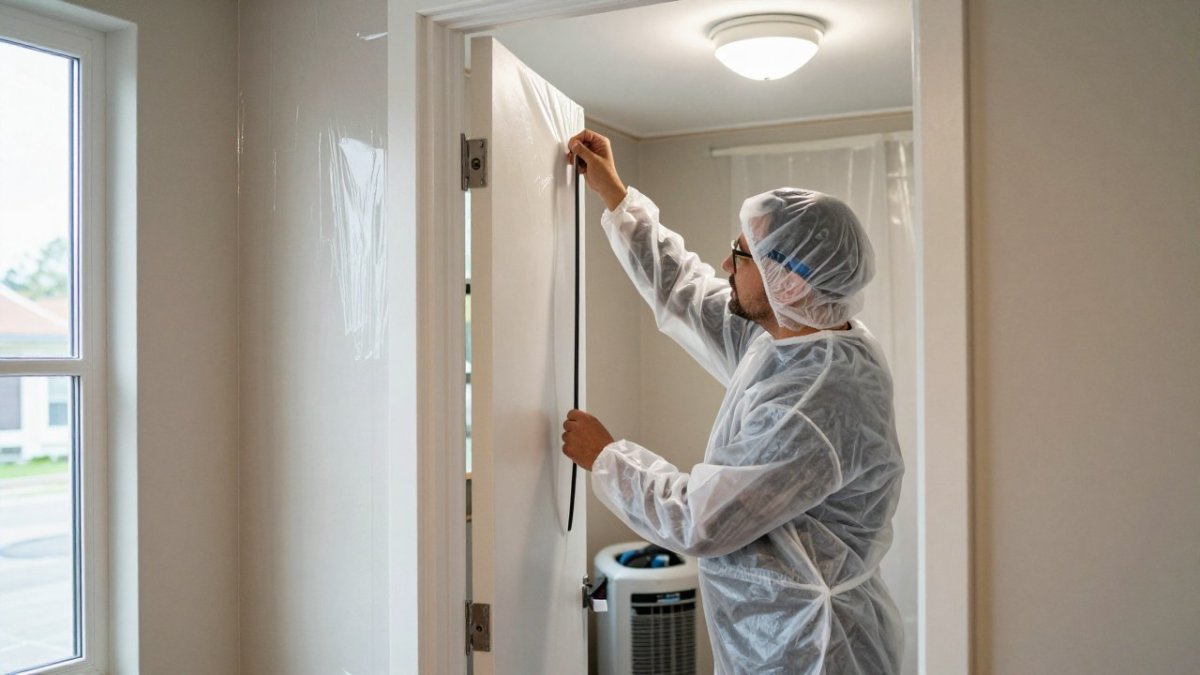
Dust is the quiet problem in condo restoration. Fine debris drifts through shared ventilation into neighbouring units, so containment matters as much as cleanup.
Ask your contractor how they will control dust before work begins. A solid plan usually includes:
If you smell damp or musty air after work, get it checked. Our mould inspection and testing service finds hidden moisture before it spreads.
The Water Damage Restoration Timeline for a Condo
Water damage follows a predictable clock. The faster water removal and drying start, the less structural damage and mould risk you face.
A typical timeline looks like this:
| Phase | What Happens | Timing |
|---|---|---|
| Emergency response | Water removal begins, hazards controlled | Same day |
| Drying | Air movers and dehumidifiers run | Several days |
| Repairs | Drywall, flooring, painting | After drying |
| Inspection | Final walkthrough and sign-off | End of project |
Emergency work and planned renovation protection differ. Emergency restoration moves fast to stop damage.
Who pays is often the biggest question. Our guide on who pays for condo water damage explains liability. For water removal now, our Toronto and GTA water damage restoration service runs around the clock.
Restoration Support
Restoration work in a condo touches more than your unit. These quick points help you stay in control from day one.
Know Your Building Rules
Read your condominium corporation’s rules on work hours, elevator use, and contractor access before booking.
Document Before and After
Photograph pre-existing conditions and each stage of progress. This record supports your insurance claim.
Protect Neighbours
Give neighbours notice of noisy or dusty work. A short note prevents most complaints.
Secure the Work Area
Lock or tape off the zone so children and pets stay clear of debris and equipment.
Watch Pets and Kids
Move pets to a quiet room or off-site. Keep children away from tools and plastic sheeting.
Plan Access and Communication
Agree on a single contact for building security and your contractor. Share it with the board.
Confirm Insurance Early
Ask your contractor for a certificate of insurance. Send it to building management if required.
Schedule the Final Inspection
Walk the unit with your contractor before sign-off. Note anything unfinished in writing.
We handle water, fire, smoke, and mold cleanup across Toronto and the GTA, and guide owners through insurance claims. Call us when you need help.
Frequently Asked Questions
How do I prepare my condo for restoration work?
Start with the condo restoration preparation checklist: photograph every room, clear valuables and medications, and remove pets before crews arrive. Empty the cabinets and closets nearest the work zone, and move furniture to the far side of the unit or into storage. Confirm building access and elevator booking with management first.
How can contractors control dust and noise in a condo?
Ask your contractor how dust and debris will be contained in the work zone, and how return vents and shared corridors will stay protected. For noise, request work windows that fit building rules and give neighbours advance notice of the loudest days.
How long does condo water damage restoration take?
The water damage restoration timeline for a condo usually runs several days of drying followed by repairs, though the total depends on how far moisture spread and whether materials need replacing. Your contractor should confirm the drying timeline and progress with moisture readings.

For non-emergencies use our contact form
Restoration Support for Properties Across Canada
Property damage can affect a home, business or shared building. GTA Restoration serves communities across Canada, including Toronto and the GTA. We are opening locations in the United States. Contact us to confirm current services and availability for your address.
Emergency Restoration Help
Call for 24/7 restoration help. Describe any active leak, standing water or visible damage. Access, site conditions and crew availability affect the response.
Water Removal
Standing water needs a plan suited to its source and the affected materials. Share details about the depth, location and any known contamination.
Moisture Checks
Visible marks may not show the full extent of a leak. Moisture readings help identify areas that need closer inspection and follow-up.
Mold Concerns
Report visible mold, musty smells and past leaks. Addressing the moisture source is an important part of planning cleanup and repairs.
Fire and Smoke Damage
Smoke, soot and firefighting water can affect different parts of a building. Discuss the affected areas before moving belongings or starting cleanup.
Contaminated Areas
Sewage and other contamination need a site-specific approach. Keep people and pets away from affected areas while arranging an assessment.
Commercial Properties
Building access, tenants and operating hours matter. Our commercial restoration services help owners and managers plan work around site needs.
Equipment Rental
Explore restoration equipment rental and confirm the unit, power requirements, rental dates and operating instructions before booking.
Need emergency help?
Call GTA Restoration to discuss the fault, access.
Service Areas Across Canada
GTA Restoration serves communities across Canada, including Toronto and the GTA. U.S. locations are opening. Browse our Canadian service areas below, and contact us to confirm services and availability for your address.
Search
- Air Duct Cleaning Montreal
- Ajax Asbestos Removal
- Ajax Mold Removal
- Ajax Water Damage
- Asbestos Removal Calgary
- Asbestos Removal Edmonton
- Asbestos Removal Fort Saskatchewan
- Asbestos Removal Gloucester
- Asbestos Removal Grimsby
- Asbestos Removal Hamilton
- Asbestos Removal Kanata
- Asbestos Removal Kitchener
- Asbestos Removal Laval
- Asbestos Removal Lincoln
- Asbestos Removal Montreal
- Asbestos Removal Nepean
- Asbestos Removal Niagara Falls
- Asbestos Removal Orleans
- Asbestos Removal Ottawa
- Asbestos Removal Sherwood Park
- Asbestos Removal Spruce Grove
- Asbestos Removal St Catharines
- Asbestos Removal St-Albert
- Asbestos Removal Thorold
- Asbestos Testing Hamilton
- Asbestos Testing Montreal
- Asbestos Testing Petersburg
- Aurora Mold Removal
- Aurora Water Damage
- Beaconsfield Asbestos Removal
- Brampton Asbestos Removal
- Brampton Mold Removal
- Brampton Water Damage
- Burlington Asbestos Removal
- Burlington Mold Removal
- Burlington Water Damage
- Burst Pipe Montreal Frozen Pipe
- Burst Pipe Repair Edmonton
- Burst Pipe Repair Ottawa
- Caledon Mold Removal
- Caledon Water Damage
- Calgary Mold Removal
- Calgary Water Damage
- Cambridge Mold Removal
- Cambridge Water Damage
- Clarington Mold Removal
- Concord Mold Removal
- Concord Water Damage
- Cooksville Mold Removal
- Edmonton Water Damage
- Emergency Roofing Vancouver
- Etobicoke Asbestos Removal
- Etobicoke Mold Removal
- Etobicoke Water Damage
- Fire Damage Grimsby
- Fire Damage Lincoln
- Fire Damage Niagara Falls
- Fire Restoration Fort McMurray
- Fire Damage Restoration Thorold
- Fire Damage St Catharines
- Flood Cleanup Grimsby
- Flood Cleanup Lincoln
- Flood Cleanup Niagara Falls
- Flood Cleanup St Catharines
- Flood Cleanup Thorold
- London Mold Removal
- London Water Damage
- Markham Asbestos Removal
- Markham Mold Removal
- Markham Water Damage
- Mississauga Asbestos Testing
- Mississauga Mold Removal
- Mississauga Water Damage
- Mold Inspection Removal Kitchener
- Mold Remediation Montreal
- Mold Removal & Inspection LaSalle
- Mold Removal Anjou
- Mold Removal Boucherville
- Mold Removal Brossard
- Mold Removal Burnaby
- Mold Removal Chambly
- Mold Removal Chateauguay
- Mold Removal Chomedey
- Mold Removal Coquitlam
- Mold Removal Dollard Des Ormeaux
- Mold Removal Dorval
- Mold Removal Edmonton
- Mold Removal Fort Saskatchewan
- Mold Removal Gloucester
- Mold Removal Grimsby
- Mold Removal Hamilton Inspection
- Mold Removal Ile Bizard
- Mold Removal in Osgoode
- Mold Removal Beaconsfield
- Mold Removal Kahnawake
- Mold Removal Kanata
- Mold Removal Kirkland
- Mold Removal Laval
- Mold Removal Lincoln
- Mold Removal Longueuil
- Mold Removal Montreal East
- Mold Removal Mount Royal
- Mold Removal Nepean
- Mold Removal New Westminster
- Mold Removal Niagara Falls
- Mold Removal Orleans
- Mold Removal Ottawa
- Mold Removal Cumberland
- Mold Remediation Hampstead
- Mold Removal Remediation Roxboro
- Mold Removal Richmond BC
- Mold Removal Rideau Lakes
- Mold Removal Rockcliffe Park
- Mold Removal Saint Hubert
- Mold Removal Saint Laurent
- Mold Removal Sherwood Park
- Mold Removal Spruce Grove
- Mold Removal St Catharines
- Mold Removal Ste Dorothee
- Mold Removal St۔ Albert
- Mold Removal Surrey
- Mold Removal Thorold
- Mold Removal Vancouver
- Mold Removal Vanier
- Mold Removal Westmount
- Montreal Biohazard Cleanup
- Montreal Emergency Plumber
- Montreal Fire Restoration
- Montreal Flood Cleanup
- Montreal Odor Removal
- Montreal Roofing Emergency
- Montreal Sewer Backup Cleanup
- Montreal Water Leak Detection
- Montréal Asbestos Removal
- Montréal Emergency Plumbing
- Montréal Mold Removal
- Montréal Pipe Burst Emergency
- Montréal Water Damage
- Newmarket Mold Removal
- Newmarket Water Damage
- North York Mold Removal
- Oakville Mold Removal
- Oakville Water Damage
- Oshawa Mold Removal
- Oshawa Water Damage
- Ottawa Air Duct Cleaning
- Pickering Mold Removal
- Pickering Water Damage
- Red Deer Water Damage
- RedDeer Mold Removal
- Richmond Hill Mold Removal
- Richmond Hill Water Damage
- Roof Repair Lincoln
- Roof Repair Niagara Falls
- Roof Repair St Catharines
- Scarborough Asbestos Removal
- Scarborough Mold Removal
- Scarborough Water Damage
- Sewage Cleanup Edmonton
- Sewer Backup Lincoln
- Sewer Backup Niagara Falls
- Sewer Backup Ottawa
- Sewer Backup St Catharines
- Thornhill Mold Removal
- Toronto & GTA Asbestos Removal
- Toronto & GTA Mold Removal
- Toronto Air Duct Cleaning
- Toronto Water Damage
- Unionville Mold Removal
- Unionville Water Damage
- Vancouver Asbestos Removal
- Vancouver Biohazard Cleanup
- Vancouver Emergency Plumber
- Vancouver Emergency Plumbing
- Vancouver Fire Restoration
- Vancouver Flood Cleanup
- Vancouver Mold Removal
- Vancouver Odor Removal
- Vancouver Pipe Burst Emergency
- Vancouver Sewer Backup Cleanup
- Vancouver Water Damage
- Vancouver Water Leak Detection
- Vaughan Mold Removal
- Vaughan Water Damage
- Vermiculite Removal Ottawa
- Water Damage Grimsby
- Water Damage Kanata
- Water Damage Kitchener
- Water Damage Lincoln
- Water Damage Longueuil
- Water Damage Nepean
- Water Damage Niagara Falls
- Water Damage Orleans
- Water Damage Ottawa
- Water Damage Repair Montreal
- Water Damage Laval Montreal
- Water Damage Restoration Thorold
- Sewage Backup Cleanup Montreal
- Water Damage St Catharines
- Water Damage Vancouver
- Water Flood Damage Repair Hamilton
- Flood Damage Repair Hampstead
- Whitby Water Damage
- Woodbridge Asbestos Removal
- Woodbridge Mold Removal
- Woodbridge Water Damage
- Restoration Equipment Rental
Restoration Questions
Where are your services available?
GTA Restoration serves communities across Canada, including Toronto and the GTA. U.S. locations are opening. Tell us the property address so we can discuss the work needed and confirm current availability.
What should I tell the team first?
Describe what happened, when you noticed it and which rooms are affected. Mention any active leak or access restrictions. These details help us discuss the next step and confirm availability.
How is the drying plan decided?
The water source, affected materials and moisture readings help guide the plan. Equipment needs can change as work progresses. Ask how the team will check conditions before repairs cover the affected area.
Can restoration work be covered by insurance?
Coverage depends on your policy and the cause of the damage. Your insurer decides the claim. Keep photos, dates and receipts, and ask which records are needed before agreeing to the work.
Who can I call about urgent damage?
Call the phone number shown on this page for 24/7 restoration help. Explain the problem and ask about availability. If there is immediate danger, contact emergency services and follow their directions.
Learn more ↴ 
Latest Articles
Direct Billing & Insurance Claims
Ask your insurer about coverage, deductibles and the records it needs.

In-House Financing Available
Financing up to 24 months. No interest. No money down. Ask us about the terms.
Certifications & Insurance
View our firm certification, technician qualifications and insurance documents.

IICRC Certified Firm
GTA Restoration Inc.
Firm number 199912
Valid through
Business Insurance
GTA Restoration Group Inc.
$5 million general liability per occurrence
$8 million contractors pollution per claim
–
IICRC Technician Qualifications
Richard Mark Provence · Registration 55726
Certificate expires
Water Damage Restoration · Fire & Smoke Restoration · Applied Microbial Remediation · Odor Control · Trauma & Crime Scene
View technician verification (PDF) — opens in a new tabInsurance is subject to policy terms, conditions and exclusions.
 Facebook
 Instagram
 LinkedIn
 X / Twitter
 YouTube