
Flooded Basement Cleanup 24/7: What to Do First
Flooded basement cleanup 24/7 starts with safe access and a plan to stop more water from entering. A burst pipe, storm or backed-up drain can each need a different response. Therefore, keep people out of the affected area while you arrange help.
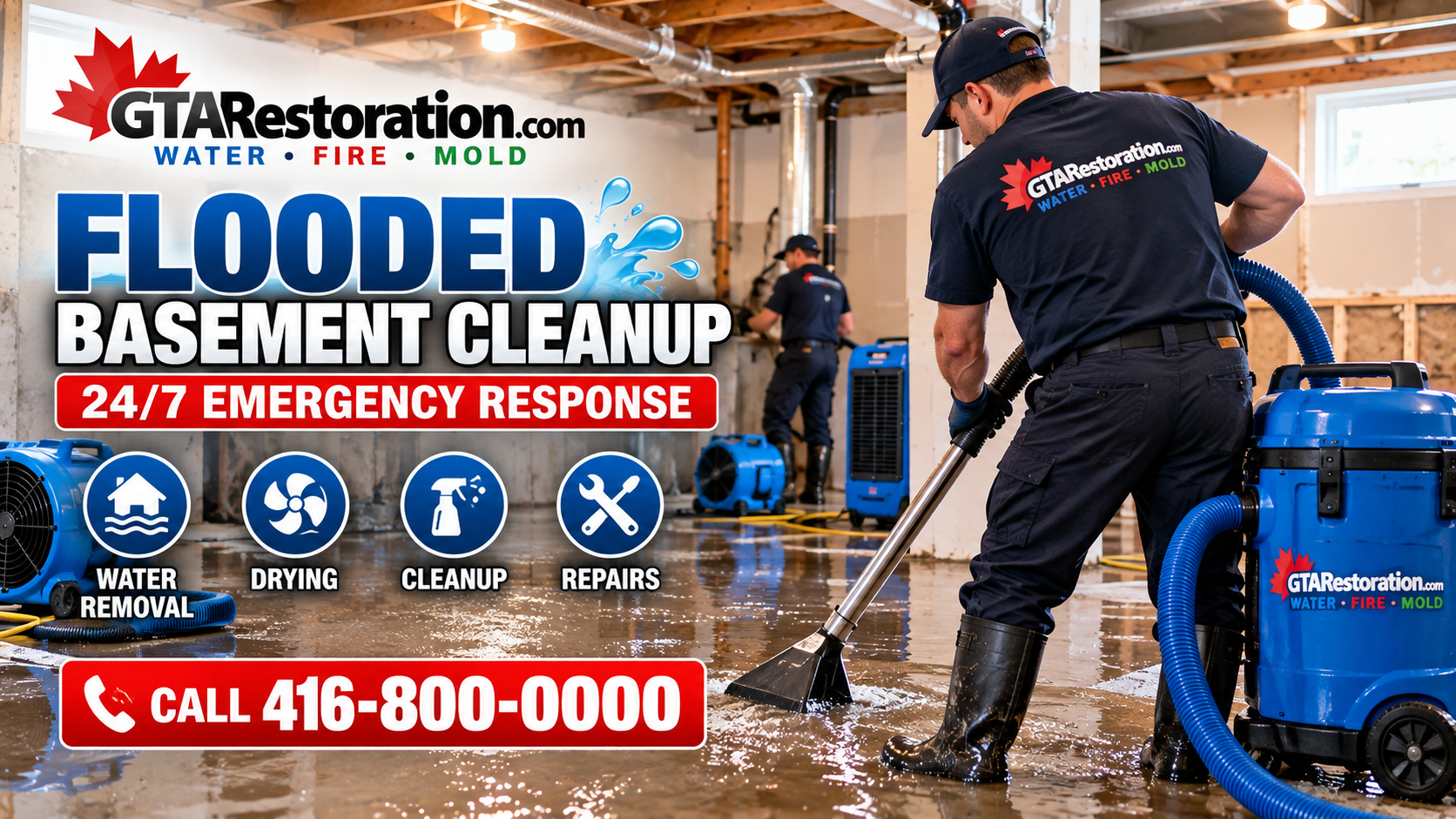
GTA Restoration provides emergency basement cleanup in Toronto and the GTA. Call 416-800-0000 to discuss water removal, drying and cleanup. Tell us whether water is still rising and ask about the expected arrival time for your location.
Stay Out When Access May Be Unsafe
Do not enter water near outlets, wiring, a furnace or an electrical panel. Never walk through a flooded basement to reach a breaker. Instead, contact the electric utility for help with disconnecting power. The Electrical Safety Authority’s flood safety guidance explains when to stay out.
Also, keep children and pets away from floodwater, sewage and damaged materials. If water reached electrical equipment, have a licensed electrical contractor assess it before use. A lower water level does not prove that the area is safe.
Control the Source Only When It Is Safe
For a leaking supply pipe, close the water valve only if you can reach it safely. However, stormwater or a drain backup may need help from a plumber or the City. Do not assume clear-looking floodwater is clean.
In Toronto, report basement flooding to 311. If you suspect a sewer backup, avoid using sinks and toilets unless necessary until the issue is resolved. The City’s basement flooding guide explains reporting and the local response.
Prepare for the First Cleanup Call
You do not need to enter the water to gather details. Share what you already know:
- Your address, contact number and a safe way to reach the basement.
- When you noticed the flood and whether water is still coming in.
- The likely source, such as a pipe, sump pump, floor drain or heavy rain.
- Any known electrical risks, sewage, blocked stairs or damaged ceilings.
For a rental or shared building, notify the property manager as well. In addition, explain access limits, parking and any occupied basement rooms. These details help the crew plan the visit.
Keep a Record Without Taking Risks
Take photos from a safe, dry spot if possible. Include affected floors, walls and belongings. Then, report the damage to your insurer and keep receipts for emergency work. Your insurer decides coverage; cleanup work does not guarantee claim approval.
Before work starts, ask what the initial scope includes. Confirm how the crew will explain disposal, added equipment or hidden damage that may change the cost.

How Emergency Basement Cleanup Works
Assess the Water Before Removal
The crew first checks access, the likely source and the affected materials. Ongoing water entry may need action before extraction can make progress. For example, a backed-up drain needs a different plan from a stopped supply leak.
If sewage is involved, our sewer backup cleanup service addresses contaminated water and materials. Avoid carrying wet items through clean rooms before the crew sets out a handling plan.
Remove Standing Water and Trace Its Path
Once conditions allow, pumps and extractors remove standing water. Next, moisture checks help locate damp layers under floors and behind wall finishes. Our basement extraction and cleanup service covers these stages.
The wet area may extend beyond the puddle you first saw. Therefore, tell the crew about nearby cupboards, stairs and rooms that may also be affected. A dry-looking surface can still hide moisture below.
Sort Damaged Materials and Clean the Area
Some materials can stay, while others need removal because of damage or contamination. The decision depends on the source, condition and ability to clean and dry each item. Ask the crew to explain what it plans to remove.
Cleaning follows the needs of the loss. In particular, sewage-affected porous materials may need disposal. Do not mix cleaning products or treat a sewer backup as an ordinary spill.

Basement Drying After Water Removal
Air movers help suitable wet surfaces release moisture, while dehumidifiers remove it from the air. Crews track readings and adjust the setup as drying progresses. Where moisture remains in building layers, specialty drying may form part of the work.
Follow the crew’s instructions about equipment and room access. Also, report a power trip, leak or equipment problem instead of changing the setup yourself. Drying time varies, so readings matter more than a fixed number of days.
Address Dampness Before Mould Develops
Prompt cleanup and drying can reduce the chance of mould growth. Health Canada’s flood cleanup and indoor air quality advice explains why wet materials need early attention.
If you notice visible growth or a musty smell, tell the crew before moving materials or aiming fans at them. A mould assessment and remediation plan may be needed alongside the water cleanup.
Confirm the Next Stage
Before rebuilding, confirm the drying results and any source repairs still needed. Keep the cleanup records for the next contractor or your insurer. For flooring, drywall and cost planning, read our flooded basement repair guide.
Need Flooded Basement Cleanup 24/7?
Call GTA Restoration about emergency water removal, drying and cleanup in Toronto and the GTA.
Call 416-800-0000
Learn More
Water Damage Restoration | Basement Waterproofing






 Facebook
  Instagram
  LinkedIn
  X / Twitter
  YouTube

