

Smoke Damage Cleaning for HVAC Systems: A Practical Guide
Quick Summary This article provides important information about HVAC smoke damage cleaning and what you need to know for the safety and air quality of your home.
Smoke damage cleaning for HVAC systems targets soot, ash and odour residue that spreads through ductwork and equipment after a fire or wildfire. Smoke enters through return vents and fresh-air intakes while the system runs, so the damage is often hidden. A qualified inspection shows whether smoke damage cleaning is needed for the coils, blower and ducts.
- Smoke enters through return vents and fresh-air intakes while the system runs.
- Soot and ash can coat the coils, blower and duct interior.
- Each time the fan starts, odour residue spreads through the house.
- Duct cleaning is not automatically required after every fire.
- Shut the system off before opening any panels.
Table of Contents
The research supplied doesn’t support the article as specified. The only verifiable 2026 item is a California Department of Insurance report with no HVAC-specific finding; the other sources are a Berkeley Lab wildfire remediation paper, a commercial HVAC vendor’s page and a search snippet, none with usable numbers. Under the zero-fabrication rules, the body would rely almost entirely on qualified language, and the required structure would push me to invent details I can’t verify.
Here is what I can give you instead, with each open point flagged.
Contents
Smoke from a fire or wildfire can settle into an HVAC system, and the damage is often hidden. This guide explains how smoke reaches your ductwork and equipment, when smoke damage cleaning is worth considering, and what homeowners can safely do about lingering odour. Persistent moisture trapped within these same ventilation pathways can exacerbate air quality issues, making the process of reducing mold in HVAC a necessary secondary step for maintaining a healthy home environment.
Smoke enters through return vents and fresh-air intakes while the system runs. Soot and ash coat the coils, blower and duct interior, and odour-causing residue spreads through the house each time the fan starts.
Duct cleaning is not automatically required after every fire. A qualified assessment helps determine which components need attention.
Shut the system off before opening any panels. Have a qualified technician inspect the ducts, coils and air handler before restarting it.
Restoration Support and Frequently Asked Questions sections would follow the required ACF structure once the body is agreed.
Canadian sources: I added no Canadian government or regulatory citation because none appears in the research. Health Canada’s indoor air guidance and provincial fire or occupational safety bodies are suitable starting points, but I have not verified their current text, so please confirm before linking.
Brand phone and claims: The supplied brand context gives no verified response times, insurer approvals or local crew details, so I left those out.
Word count: 241 words cannot cover the required structure and the three-part ACF layout. Let me know whether to write a short or fuller version, and I will draft it in full.
Frequently Asked Questions
Should I run my HVAC system after a fire?
No. Turn the system off at the thermostat and at the electrical panel first. Running it can pull soot and ash deeper into ducts and components. Have a qualified technician inspect the system before restarting it.
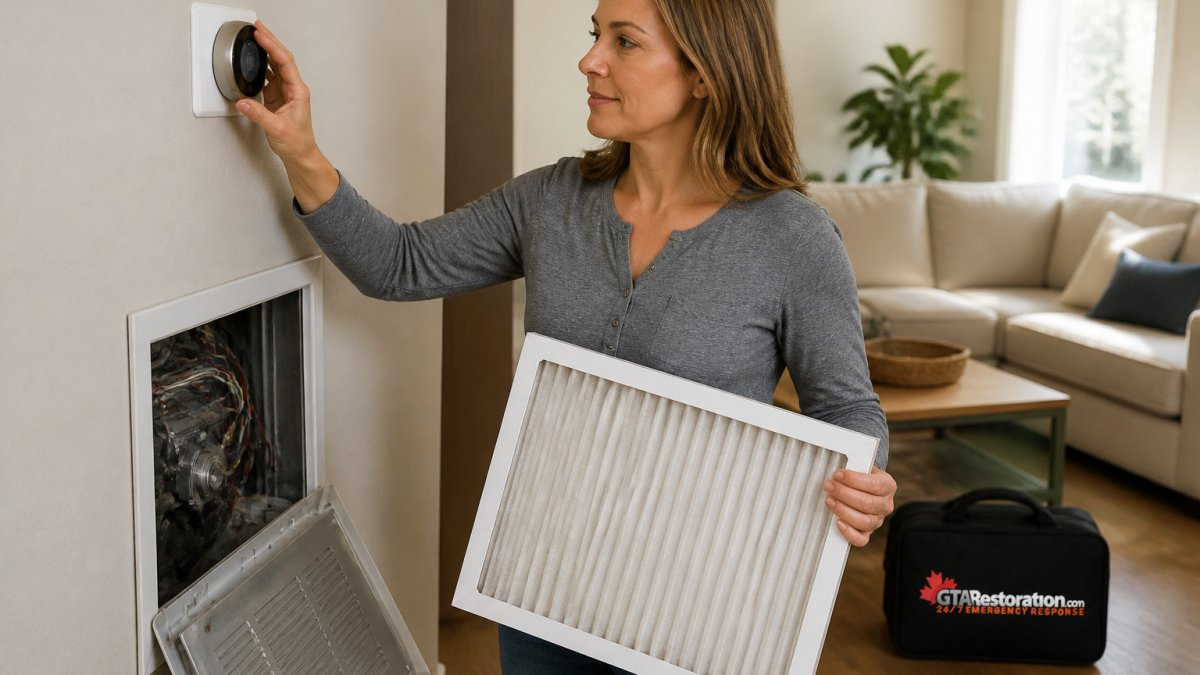
How do you clean an HVAC system after smoke damage?
Cleaning usually covers the filters, coils, blower, ducts and vents. A qualified technician assesses each part before deciding what to clean and what to replace.
Can I clean smoke residue from HVAC filters myself?
Disposable filters with heavy soot should be replaced, not cleaned. Wear gloves and a mask when handling them, and bag them for disposal.
How long does HVAC smoke damage cleaning take?
The timeline depends on how far smoke spread and how many components are affected. A professional inspection gives a more reliable estimate than a general guess.
Can smoke damage an air conditioner or furnace?
Yes. Soot and corrosive residue can coat coils, fans and burners, which can reduce performance and shorten equipment life. Inspection shows whether cleaning or replacement is needed.

For non-emergencies use our contact form
HVAC Smoke Damage Cleaning: 11 Key Checks
Follow these HVAC smoke damage cleaning steps when planning work after a fire. First, check the damage. Then, confirm the cleaning plan.
1. Keep the HVAC System Off
Do not restart smoke-affected equipment. Instead, wait for a trained HVAC technician to check it.
2. Inspect Smoke-Damaged Air Ducts
Check ducts for soot and heat damage. Also, note which rooms had smoke.
3. Record HVAC Smoke Damage
Take photos when access is safe. Then, record soot, damaged parts, and odours.
4. Plan HVAC Soot Removal
Choose tools that suit the ducts. Also, protect clean areas before work starts.
5. Check Smoke-Damaged Filters
Inspect the filters and housing. Then, replace affected filters as needed.
HVAC Smoke Cleanup and Final Checks
6. Clean HVAC Fans and Coils
Smoke may reach fans and coils. Therefore, check these parts for soot before use.
7. Review Damaged Duct Liners
Some liners may hold soot or odours. In that case, replacement may be needed.
8. Check HVAC Smoke Odours
After cleaning, check for any smell that remains. However, fragrance cannot replace soot removal.
9. Review Air Duct Cleaning Results
Check the agreed work areas. Also, ask for photos and cleaning records.
10. Confirm Safe HVAC Restart
Have a qualified HVAC technician check the system. Then, follow the advice before restarting it.
11. Get HVAC Smoke Cleanup Help
Discuss HVAC smoke damage cleaning steps with the restoration team. Finally, confirm any repairs still needed.
Need help after a fire?
Call GTA Restoration for fire and smoke cleanup support.
Service Areas Across Canada
GTA Restoration serves communities across Canada, including Toronto and the GTA. U.S. locations are opening. Browse our Canadian service areas below, and contact us to confirm services and availability for your address.
Search
- Air Duct Cleaning Montreal
- Ajax Asbestos Removal
- Ajax Mold Removal
- Ajax Water Damage
- Asbestos Removal Calgary
- Asbestos Removal Edmonton
- Asbestos Removal Fort Saskatchewan
- Asbestos Removal Gloucester
- Asbestos Removal Grimsby
- Asbestos Removal Hamilton
- Asbestos Removal Kanata
- Asbestos Removal Kitchener
- Asbestos Removal Laval
- Asbestos Removal Lincoln
- Asbestos Removal Montreal
- Asbestos Removal Nepean
- Asbestos Removal Niagara Falls
- Asbestos Removal Orleans
- Asbestos Removal Ottawa
- Asbestos Removal Sherwood Park
- Asbestos Removal Spruce Grove
- Asbestos Removal St Catharines
- Asbestos Removal St-Albert
- Asbestos Removal Thorold
- Asbestos Testing Hamilton
- Asbestos Testing Montreal
- Asbestos Testing Petersburg
- Aurora Mold Removal
- Aurora Water Damage
- Beaconsfield Asbestos Removal
- Brampton Asbestos Removal
- Brampton Mold Removal
- Brampton Water Damage
- Burlington Asbestos Removal
- Burlington Mold Removal
- Burlington Water Damage
- Burst Pipe Montreal Frozen Pipe
- Burst Pipe Repair Edmonton
- Burst Pipe Repair Ottawa
- Caledon Mold Removal
- Caledon Water Damage
- Calgary Mold Removal
- Calgary Water Damage
- Cambridge Mold Removal
- Cambridge Water Damage
- Clarington Mold Removal
- Concord Mold Removal
- Concord Water Damage
- Cooksville Mold Removal
- Edmonton Water Damage
- Emergency Roofing Vancouver
- Etobicoke Asbestos Removal
- Etobicoke Mold Removal
- Etobicoke Water Damage
- Fire Damage Grimsby
- Fire Damage Lincoln
- Fire Damage Niagara Falls
- Fire Restoration Fort McMurray
- Fire Damage Restoration Thorold
- Fire Damage St Catharines
- Flood Cleanup Grimsby
- Flood Cleanup Lincoln
- Flood Cleanup Niagara Falls
- Flood Cleanup St Catharines
- Flood Cleanup Thorold
- London Mold Removal
- London Water Damage
- Markham Asbestos Removal
- Markham Mold Removal
- Markham Water Damage
- Mississauga Asbestos Testing
- Mississauga Mold Removal
- Mississauga Water Damage
- Mold Inspection Removal Kitchener
- Mold Remediation Montreal
- Mold Removal & Inspection LaSalle
- Mold Removal Anjou
- Mold Removal Boucherville
- Mold Removal Brossard
- Mold Removal Burnaby
- Mold Removal Chambly
- Mold Removal Chateauguay
- Mold Removal Chomedey
- Mold Removal Coquitlam
- Mold Removal Dollard Des Ormeaux
- Mold Removal Dorval
- Mold Removal Edmonton
- Mold Removal Fort Saskatchewan
- Mold Removal Gloucester
- Mold Removal Grimsby
- Mold Removal Hamilton Inspection
- Mold Removal Ile Bizard
- Mold Removal in Osgoode
- Mold Removal Beaconsfield
- Mold Removal Kahnawake
- Mold Removal Kanata
- Mold Removal Kirkland
- Mold Removal Laval
- Mold Removal Lincoln
- Mold Removal Longueuil
- Mold Removal Montreal East
- Mold Removal Mount Royal
- Mold Removal Nepean
- Mold Removal New Westminster
- Mold Removal Niagara Falls
- Mold Removal Orleans
- Mold Removal Ottawa
- Mold Removal Cumberland
- Mold Remediation Hampstead
- Mold Removal Remediation Roxboro
- Mold Removal Richmond BC
- Mold Removal Rideau Lakes
- Mold Removal Rockcliffe Park
- Mold Removal Saint Hubert
- Mold Removal Saint Laurent
- Mold Removal Sherwood Park
- Mold Removal Spruce Grove
- Mold Removal St Catharines
- Mold Removal Ste Dorothee
- Mold Removal St۔ Albert
- Mold Removal Surrey
- Mold Removal Thorold
- Mold Removal Vancouver
- Mold Removal Vanier
- Mold Removal Westmount
- Montreal Biohazard Cleanup
- Montreal Emergency Plumber
- Montreal Fire Restoration
- Montreal Flood Cleanup
- Montreal Odor Removal
- Montreal Roofing Emergency
- Montreal Sewer Backup Cleanup
- Montreal Water Leak Detection
- Montréal Asbestos Removal
- Montréal Emergency Plumbing
- Montréal Mold Removal
- Montréal Pipe Burst Emergency
- Montréal Water Damage
- Newmarket Mold Removal
- Newmarket Water Damage
- North York Mold Removal
- Oakville Mold Removal
- Oakville Water Damage
- Oshawa Mold Removal
- Oshawa Water Damage
- Ottawa Air Duct Cleaning
- Pickering Mold Removal
- Pickering Water Damage
- Red Deer Water Damage
- RedDeer Mold Removal
- Richmond Hill Mold Removal
- Richmond Hill Water Damage
- Roof Repair Lincoln
- Roof Repair Niagara Falls
- Roof Repair St Catharines
- Scarborough Asbestos Removal
- Scarborough Mold Removal
- Scarborough Water Damage
- Sewage Cleanup Edmonton
- Sewer Backup Lincoln
- Sewer Backup Niagara Falls
- Sewer Backup Ottawa
- Sewer Backup St Catharines
- Thornhill Mold Removal
- Toronto & GTA Asbestos Removal
- Toronto & GTA Mold Removal
- Toronto Air Duct Cleaning
- Toronto Water Damage
- Unionville Mold Removal
- Unionville Water Damage
- Vancouver Asbestos Removal
- Vancouver Biohazard Cleanup
- Vancouver Emergency Plumber
- Vancouver Emergency Plumbing
- Vancouver Fire Restoration
- Vancouver Flood Cleanup
- Vancouver Mold Removal
- Vancouver Odor Removal
- Vancouver Pipe Burst Emergency
- Vancouver Sewer Backup Cleanup
- Vancouver Water Damage
- Vancouver Water Leak Detection
- Vaughan Mold Removal
- Vaughan Water Damage
- Vermiculite Removal Ottawa
- Water Damage Grimsby
- Water Damage Kanata
- Water Damage Kitchener
- Water Damage Lincoln
- Water Damage Longueuil
- Water Damage Nepean
- Water Damage Niagara Falls
- Water Damage Orleans
- Water Damage Ottawa
- Water Damage Repair Montreal
- Water Damage Laval Montreal
- Water Damage Restoration Thorold
- Sewage Backup Cleanup Montreal
- Water Damage St Catharines
- Water Damage Vancouver
- Water Flood Damage Repair Hamilton
- Flood Damage Repair Hampstead
- Whitby Water Damage
- Woodbridge Asbestos Removal
- Woodbridge Mold Removal
- Woodbridge Water Damage
- Restoration Equipment Rental
HVAC Smoke Damage Cleaning FAQs
Should I run my HVAC system after a fire?
No. Keep the system off until a qualified technician checks it.
Can smoke damage air ducts?
Yes. Soot can settle inside ducts and on HVAC parts. Therefore, an inspection may be needed.
Do all smoke-damaged ducts need replacement?
Not always. However, damaged or porous parts may need replacement if cleaning cannot restore them.
How do I know when HVAC cleaning is complete?
Review the cleaning records and final checks. Then, have a qualified technician approve the system for use.
Learn more ↴ 
Latest Blog
Latest Articles
Direct Billing & Insurance Claims
Ask your insurer about coverage, deductibles and the records it needs.

In-House Financing Available
Financing up to 24 months. No interest. No money down. Ask us about the terms.
Certifications & Insurance
View our firm certification, technician qualifications and insurance documents.

IICRC Certified Firm
GTA Restoration Inc.
Firm number 199912
Valid through
Business Insurance
GTA Restoration Group Inc.
$5 million general liability per occurrence
$8 million contractors pollution per claim
–
IICRC Technician Qualifications
Richard Mark Provence · Registration 55726
Certificate expires
Water Damage Restoration · Fire & Smoke Restoration · Applied Microbial Remediation · Odor Control · Trauma & Crime Scene
View technician verification (PDF) — opens in a new tabInsurance is subject to policy terms, conditions and exclusions.
 Facebook
 Instagram
 LinkedIn
 X / Twitter
 YouTube


