...
Top Roof Leak Solutions That Limit Water Damage

A roof leak rarely stays a roof-only problem. Water can move along rafters, insulation, wiring paths, and wall cavities before it appears as a ceiling stain. The top roof leak solutions focus on stopping more water from entering, finding the true source, drying affected materials, and repairing damage before moisture creates larger issues.

If water is actively entering the building, protect people first. Keep clear of wet electrical fixtures, move belongings away from the area when safe, and place a container below a steady drip. Do not climb onto a wet, icy, or storm-damaged roof. A stained or sagging ceiling can also hold trapped water, so keep people out from underneath it.

Start With Safe Water Control

The first practical step is limiting the amount of water reaching finishes and contents. A bucket, towels, and plastic sheeting can help protect floors and furniture while you arrange assessment and repairs. If rain is still falling, a qualified roofing professional may use a temporary exterior cover when conditions allow.

Inside, take a careful look at the visible leak area without opening ceilings or walls yourself. Note whether the leak occurs only during wind-driven rain, after snow melt, or even in dry weather. That timing gives useful clues. A rain-only leak may point to damaged shingles, flashing, vents, skylights, or roof penetrations. A drip during dry weather could involve plumbing, HVAC condensation, or water stored in building materials after an earlier event.

For tenants and condo residents, report the issue promptly through the required building channel. The source may be in a common roof area, another unit, or a shared mechanical space. Property managers should document the report, arrange safe access, and keep residents informed about any work area restrictions.

Find the Leak Source Before Choosing a Repair

A ceiling stain is not a reliable map to the roof opening. Water travels downhill and sideways along framing, insulation, and vapor barriers. Repairing the spot directly above a stain can miss the actual entry point.

A proper assessment usually starts outside, where the roof surface, flashing, valleys, drains, roof vents, skylights, and chimney intersections are checked. Inside, the assessment may include attic access, moisture readings, visible material conditions, and a review of where water has traveled. Moisture meters help identify wet materials that look dry on the surface.

Access matters. Clear a path to the attic hatch, affected room, electrical panel, and exterior work area if it is safe to do so. For commercial properties, provide roof-access details, site contacts, and any building rules that affect work hours or safety procedures. Good access helps the team assess conditions without disturbing unaffected spaces.

Top Roof Leak Solutions for Common Causes

The right repair depends on the source and the roof system. Small leaks can become costly when a temporary patch is treated as a permanent repair, or when hidden moisture is left behind.

Damaged shingles or roofing membrane

Missing, cracked, lifted, or worn shingles can admit water around fasteners and seams. On low-slope roofs, splits, failed seams, ponding water, and membrane damage may be the concern. A qualified repair may involve replacing damaged materials and correcting the surrounding installation detail, rather than simply applying surface sealant.

Failed flashing and roof penetrations

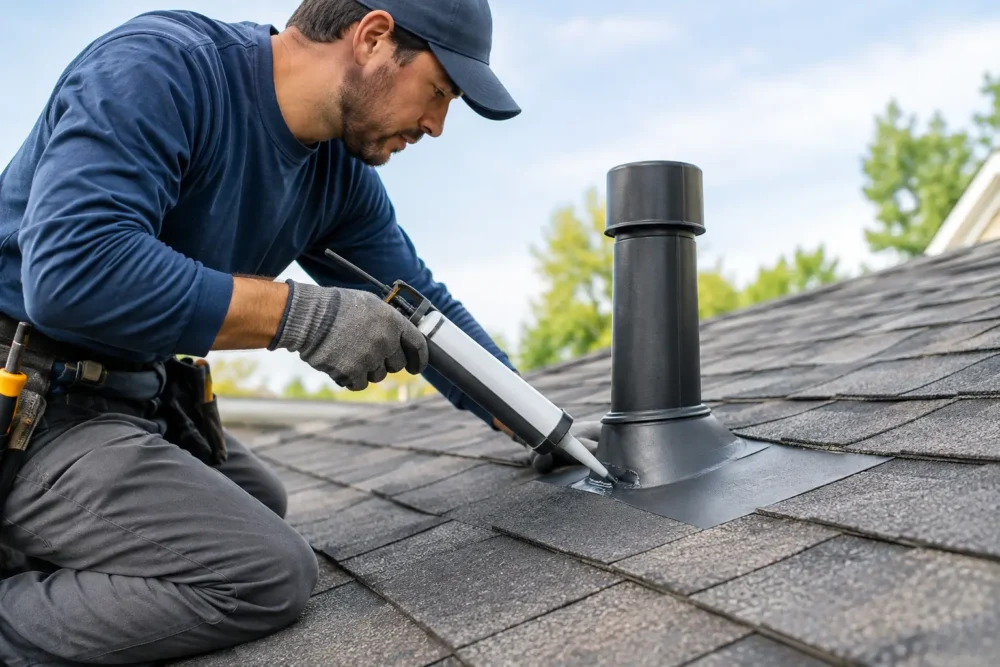
Flashing directs water away from vulnerable transitions around chimneys, walls, vents, skylights, and plumbing stacks. It can loosen, corrode, crack, or separate as materials expand and contract. Re-sealing alone may help in limited cases, but badly damaged flashing often needs replacement or a more complete repair.

Skylight, vent, and chimney leaks

These features require careful inspection because the leak may sit at the curb, gasket, flashing, cap, or surrounding roofing material. Condensation can also mimic a roof leak around skylights and attic vents. The solution changes depending on whether water is entering from outside or forming inside the building.

Clogged drains, gutters, and ice buildup

Blocked drainage can force water beneath roofing edges or allow it to pool near vulnerable areas. In cold conditions, ice dams may trap meltwater at the roof edge. Removing ice with sharp tools or applying unsafe heat can damage roofing and create injury risks. A repair plan should address both the immediate water path and the drainage issue that contributed to it.

Dry the Building, Not Just the Roof

Stopping the leak does not automatically solve the water damage. Wet insulation, drywall, wood framing, and flooring may hold moisture after the visible drip ends. Without proper drying, materials can deteriorate and mold may grow where it cannot be seen.

Restoration work may include controlled water removal, moisture inspection, targeted drying equipment, and removal of materials that cannot be safely dried or cleaned. The approach depends on how long materials were wet, the amount of water involved, and whether the water may be contaminated. A sewer-related or otherwise contaminated leak needs different handling than clean rainwater.

Avoid running household fans into a closed wet cavity without knowing what is inside. Air movement can help in some situations, but it can also spread dust or contamination and does not replace measured drying. Drying should continue until readings and material conditions support the next repair steps.

Protect Contents and Keep Useful Records

Photograph the roof leak, ceiling damage, affected belongings, and any visible water path before cleanup when it is safe. Record dates, weather conditions, the time you noticed the problem, and steps taken to reduce damage. Keep receipts for emergency supplies and retain written estimates, moisture readings, invoices, and work records.

These records can help explain what happened to your insurer or property manager. Insurance coverage decisions remain with the insurer and depend on the policy and cause of loss. Restoration and roofing teams can provide photos, observations, estimates, and records of completed work, but they cannot decide coverage.

GTA Restoration can assist with water-damage assessment, drying, cleanup, and repair coordination when a roof leak has affected the interior. Acting early gives you a clearer picture of the damage and more options for protecting the property.

A small stain deserves attention before the next storm turns it into wet insulation, damaged finishes, or a closed-off room.

Share this... Spread the word!


Restoration Support

Roof leaks can affect more than the roof surface. Practical assessment and drying support can help reduce disruption while repairs are planned.

Emergency Water Control

We can assess active interior water intrusion, help contain water, and identify immediate cleanup priorities while safe roof repair arrangements are made.

Moisture Assessment

Moisture readings can help locate wet ceilings, walls, insulation, and flooring beyond the visible stain, supporting a focused drying plan.

Water Damage Cleanup

Affected materials may need water extraction, surface cleaning, and controlled removal when they cannot be safely dried or restored.

Structural Drying

Drying equipment and follow-up monitoring help address retained moisture in building materials after the roof entry point has been controlled.

Ceiling and Wall Repairs

After drying, damaged drywall, insulation, and finishes can be assessed for repair or replacement based on their condition.

Condo Leak Coordination

For condo leaks, clear records and careful access planning can support communication with management, occupants, and the responsible repair parties.

Commercial Property Support

Facilities teams can receive damage documentation, moisture findings, and work records to help plan access, repairs, and business continuity steps.

Damage Documentation

Photos, readings, estimates, and work records can help document observed conditions for owners, property managers, and insurance discussions.

For help assessing interior water damage after a roof leak in Toronto or the GTA, call GTA Restoration.

Call Us: 416-800-0000


GTA Service Centre


Frequently Asked Questions

What should I do first when my roof starts leaking?

Move people and belongings away from the leak, contain dripping water, avoid electrical hazards, and arrange a professional assessment when conditions are safe.

Can a roof leak cause mold?

Yes. Damp insulation, drywall, and wood can support mold growth if moisture remains. Prompt drying and moisture checks help identify hidden wet areas.

Why is the ceiling stain far from the roof damage?

Water can travel along roof framing, insulation, pipes, and wiring routes. The visible stain may be well below or away from the entry point.

Does a repaired roof mean the interior is dry?

Not necessarily. The entry point may be fixed while building materials remain wet. Moisture readings help guide drying and repair decisions.

Will insurance pay for roof leak damage?

Coverage depends on your policy, the cause, and insurer review. Keep photos, receipts, estimates, and work records for your claim discussion.


Learn more ↴


Direct Billing & Insurance Claims

Ask your insurer about coverage, deductibles and the records it needs.


Payment options

In-House Financing Available

Financing up to 24 months. No interest. No money down. Ask us about the terms.


Certifications & Insurance

View our firm certification, technician qualifications and insurance documents.

IICRC Certified Firm

GTA Restoration Inc.

Firm number 199912
Valid through

View IICRC certificate (PDF) — opens in a new tab

Business Insurance

GTA Restoration Group Inc.

$5 million general liability per occurrence
$8 million contractors pollution per claim
–

View insurance certificate (PDF) — opens in a new tab

IICRC Technician Qualifications

Richard Mark Provence · Registration 55726
Certificate expires

Water Damage Restoration · Fire & Smoke Restoration · Applied Microbial Remediation · Odor Control · Trauma & Crime Scene

View technician verification (PDF) — opens in a new tab

Insurance is subject to policy terms, conditions and exclusions.


Emergency? Click to Call!