
How to Stop Mold Growth After Water Damage
Table of Contents
- How Quickly Does Mold Growth Start After Water Damage?
- How to Dry Out a House After Water Damage
- Water Damage Cleanup Steps That Stop Mold Growth
- Restoration Support
- Frequently Asked Questions
Last Updated: October 17, 2026
How Quickly Does Mold Growth Start After Water Damage?
Mold can begin to grow on wet materials within 24 to 48 hours, so fast action matters. Water damage creates the conditions mold needs: moisture, warmth, and food. Porous materials like drywall, wood, and carpet feed it well.
The clock starts the moment water touches a surface. How fast you dry a space decides how much you save. Get air moving and surfaces dry within the first day or two to stop mold growth.
Watch for early signs: a musty smell, dark speckles near baseboards, or soft, discolored drywall. Don’t assume a small puddle will air-dry on its own; in a closed, humid room it often won’t.
How to Dry Out a House After Water Damage
Drying a home after water damage means removing standing water, then moving air across every wet surface until materials are fully dry.
Shut off the water source if you can do so safely, then remove standing water with a wet/dry vacuum or pump. Never step into standing water near outlets or electrical panels.
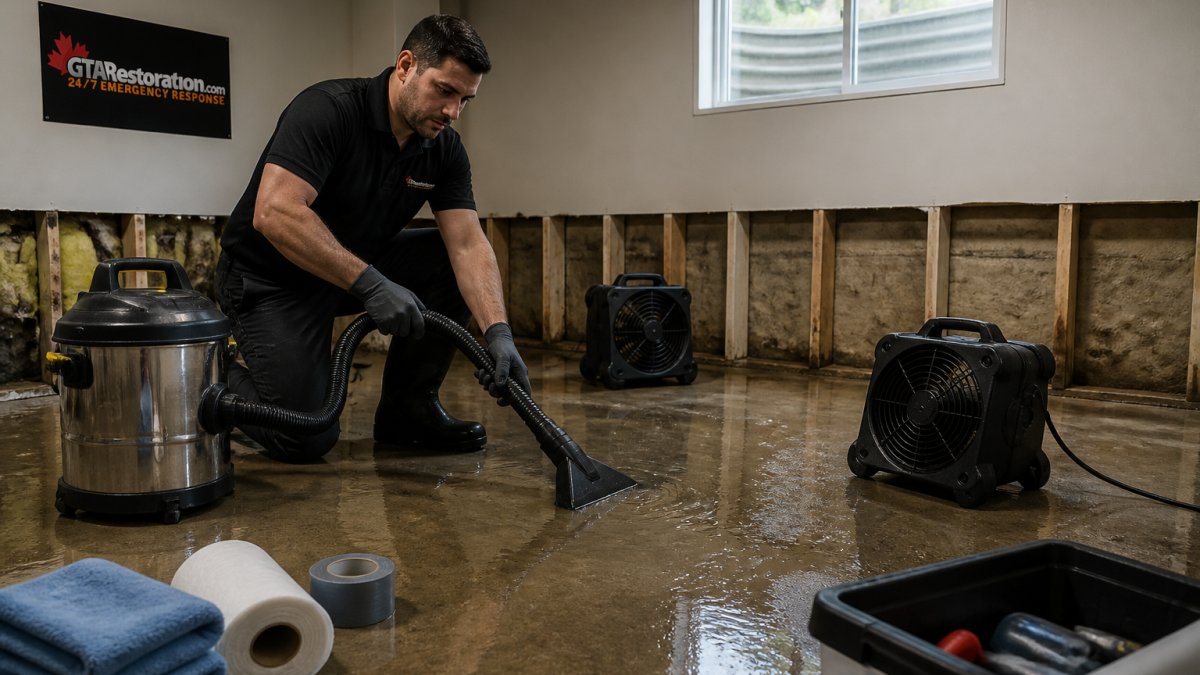
Next, set up fans and open windows to keep air moving. Dehumidifiers pull moisture from the air so it doesn’t settle back into walls. Pull up wet carpet and aim air at baseboards and wall cavities.
Drywall and insulation trap water. If they feel soft or stay damp after a day, they may need to come out, often a job for a qualified professional.
Water Damage Cleanup Steps That Stop Mold Growth
Cleanup that stops mold growth follows a clear order: fix the moisture source, remove what can’t be saved, clean what stays, and dry everything completely.
Skipping step one is the biggest error. If you clean and dry but the leak keeps running, mold returns. Source control comes first, every time.
For safety, wear gloves, eye protection, and a mask. Do not disturb materials you suspect contain asbestos or lead; in older homes, that is work for a qualified professional.
If the affected area is large or has been wet for days, a professional assessment is worth it. At GTA Restoration, we handle cleanup, drying, and repair planning, and help with insurance claims.
Restoration Support
Mold after water damage is stressful, but a clear plan makes it manageable. These points cover the practical details that protect your home and confirm the job is done.
Fix the Moisture Source First
No cleanup lasts if water keeps coming in. Find the leak, burst pipe, or seepage point before you dry or clean anything. Stopping the source is the first real step to preventing regrowth.
Dry Within the First Day or Two
Mold needs moisture to grow. Getting air moving and surfaces dry within 24 to 48 hours gives you the best chance to stop it. Fans and dehumidifiers do more than open windows alone.
Remove Materials That Can’t Be Saved
Soaked drywall, insulation, and carpet often hold water too long to dry. Removing these non-structural materials early prevents hidden growth and cross-contamination.
Set Up Containment to Limit Spread
During cleanup, dust and spores can travel. Sealing off the work area with plastic sheeting and negative air pressure keeps contamination from spreading to clean areas (the EPA).
Wear the Right Protective Equipment
Gloves, eye protection, and a proper mask reduce exposure during cleanup. Anyone with breathing concerns should avoid the work area. Your safety comes before salvaging any material.
Know When to Call a Professional
Large areas, sewage water, or growth that keeps returning call for professional assessment. We handle cleanup, drying, and repair planning, and guide you through insurance claims.
Check Moisture Before You Rebuild
Don’t close up walls until materials read dry. A moisture meter confirms the inside of a wall is dry, not just the surface. Rebuilding too soon traps moisture and invites mold back.
Test Only When It Answers a Question
Testing helps when you need to confirm hidden growth or document a claim. A qualified laboratory analyzes air and surface samples. Skip testing when the answer won’t change your next steps.
Keep Records of the Work
Save photos, receipts, and any lab results. Clear records support insurance claims and help the next contractor understand what was done. Good documentation protects you later.
If water damage has you worried about hidden mold, our team can assess the space and lay out a clear plan. Call Us: 416-800-0000
Frequently Asked Questions
How quickly can mold grow after water damage?
Mold can begin growing within 24 to 48 hours after water damage if moisture remains. Spores are always present indoors, and they only need damp surfaces to start multiplying. The faster you dry the area, the lower your risk. If water sat for more than a day, treat the space as likely contaminated and consider a professional assessment.
What should I do first after water damage to prevent mold?
Stop the water source if it is safe, then remove standing water and start drying immediately. Open windows, use fans and a dehumidifier, and pull up wet carpets or padding. Move furniture off wet floors. If the water came from a sewage backup or involves electrical hazards, leave the cleanup to a qualified professional.
Can I clean mold myself after a leak?
Small patches on hard, non-porous surfaces may be cleaned with detergent and water while wearing gloves and eye protection. Do not dry-brush mold, as that spreads spores. Porous materials like drywall, insulation, or carpet that stay wet usually need removal. If the area is larger than a small patch or you have health concerns, hire a remediation professional.
For non-emergencies use our contact form
Restoration Support for Properties Across Canada
Property damage can affect a home, business or shared building. GTA Restoration serves communities across Canada, including Toronto and the GTA. We are opening locations in the United States. Contact us to confirm current services and availability for your address.
Emergency Restoration Help
Call for 24/7 restoration help. Describe any active leak, standing water or visible damage. Access, site conditions and crew availability affect the response.
Water Removal
Standing water needs a plan suited to its source and the affected materials. Share details about the depth, location and any known contamination.
Moisture Checks
Visible marks may not show the full extent of a leak. Moisture readings help identify areas that need closer inspection and follow-up.
Mold Concerns
Report visible mold, musty smells and past leaks. Addressing the moisture source is an important part of planning cleanup and repairs.
Fire and Smoke Damage
Smoke, soot and firefighting water can affect different parts of a building. Discuss the affected areas before moving belongings or starting cleanup.
Contaminated Areas
Sewage and other contamination need a site-specific approach. Keep people and pets away from affected areas while arranging an assessment.
Commercial Properties
Building access, tenants and operating hours matter. Our commercial restoration services help owners and managers plan work around site needs.
Equipment Rental
Explore restoration equipment rental and confirm the unit, power requirements, rental dates and operating instructions before booking.
Need emergency help?
Call GTA Restoration to discuss the fault, access.
Service Areas Across Canada
GTA Restoration serves communities across Canada, including Toronto and the GTA. U.S. locations are opening. Browse our Canadian service areas below, and contact us to confirm services and availability for your address.
Search
- Air Duct Cleaning Montreal
- Ajax Asbestos Removal
- Ajax Mold Removal
- Ajax Water Damage
- Asbestos Removal Calgary
- Asbestos Removal Edmonton
- Asbestos Removal Fort Saskatchewan
- Asbestos Removal Gloucester
- Asbestos Removal Grimsby
- Asbestos Removal Hamilton
- Asbestos Removal Kanata
- Asbestos Removal Kitchener
- Asbestos Removal Laval
- Asbestos Removal Lincoln
- Asbestos Removal Montreal
- Asbestos Removal Nepean
- Asbestos Removal Niagara Falls
- Asbestos Removal Orleans
- Asbestos Removal Ottawa
- Asbestos Removal Sherwood Park
- Asbestos Removal Spruce Grove
- Asbestos Removal St Catharines
- Asbestos Removal St-Albert
- Asbestos Removal Thorold
- Asbestos Testing Hamilton
- Asbestos Testing Montreal
- Asbestos Testing Petersburg
- Aurora Mold Removal
- Aurora Water Damage
- Beaconsfield Asbestos Removal
- Brampton Asbestos Removal
- Brampton Mold Removal
- Brampton Water Damage
- Burlington Asbestos Removal
- Burlington Mold Removal
- Burlington Water Damage
- Burst Pipe Montreal Frozen Pipe
- Burst Pipe Repair Edmonton
- Burst Pipe Repair Ottawa
- Caledon Mold Removal
- Caledon Water Damage
- Calgary Mold Removal
- Calgary Water Damage
- Cambridge Mold Removal
- Cambridge Water Damage
- Clarington Mold Removal
- Concord Mold Removal
- Concord Water Damage
- Cooksville Mold Removal
- Edmonton Water Damage
- Emergency Roofing Vancouver
- Etobicoke Asbestos Removal
- Etobicoke Mold Removal
- Etobicoke Water Damage
- Fire Damage Grimsby
- Fire Damage Lincoln
- Fire Damage Niagara Falls
- Fire Restoration Fort McMurray
- Fire Damage Restoration Thorold
- Fire Damage St Catharines
- Flood Cleanup Grimsby
- Flood Cleanup Lincoln
- Flood Cleanup Niagara Falls
- Flood Cleanup St Catharines
- Flood Cleanup Thorold
- London Mold Removal
- London Water Damage
- Markham Asbestos Removal
- Markham Mold Removal
- Markham Water Damage
- Mississauga Asbestos Testing
- Mississauga Mold Removal
- Mississauga Water Damage
- Mold Inspection Removal Kitchener
- Mold Remediation Montreal
- Mold Removal & Inspection LaSalle
- Mold Removal Anjou
- Mold Removal Boucherville
- Mold Removal Brossard
- Mold Removal Burnaby
- Mold Removal Chambly
- Mold Removal Chateauguay
- Mold Removal Chomedey
- Mold Removal Coquitlam
- Mold Removal Dollard Des Ormeaux
- Mold Removal Dorval
- Mold Removal Edmonton
- Mold Removal Fort Saskatchewan
- Mold Removal Gloucester
- Mold Removal Grimsby
- Mold Removal Hamilton Inspection
- Mold Removal Ile Bizard
- Mold Removal in Osgoode
- Mold Removal Beaconsfield
- Mold Removal Kahnawake
- Mold Removal Kanata
- Mold Removal Kirkland
- Mold Removal Laval
- Mold Removal Lincoln
- Mold Removal Longueuil
- Mold Removal Montreal East
- Mold Removal Mount Royal
- Mold Removal Nepean
- Mold Removal New Westminster
- Mold Removal Niagara Falls
- Mold Removal Orleans
- Mold Removal Ottawa
- Mold Removal Cumberland
- Mold Remediation Hampstead
- Mold Removal Remediation Roxboro
- Mold Removal Richmond BC
- Mold Removal Rideau Lakes
- Mold Removal Rockcliffe Park
- Mold Removal Saint Hubert
- Mold Removal Saint Laurent
- Mold Removal Sherwood Park
- Mold Removal Spruce Grove
- Mold Removal St Catharines
- Mold Removal Ste Dorothee
- Mold Removal St۔ Albert
- Mold Removal Surrey
- Mold Removal Thorold
- Mold Removal Vancouver
- Mold Removal Vanier
- Mold Removal Westmount
- Montreal Biohazard Cleanup
- Montreal Emergency Plumber
- Montreal Fire Restoration
- Montreal Flood Cleanup
- Montreal Odor Removal
- Montreal Roofing Emergency
- Montreal Sewer Backup Cleanup
- Montreal Water Leak Detection
- Montréal Asbestos Removal
- Montréal Emergency Plumbing
- Montréal Mold Removal
- Montréal Pipe Burst Emergency
- Montréal Water Damage
- Newmarket Mold Removal
- Newmarket Water Damage
- North York Mold Removal
- Oakville Mold Removal
- Oakville Water Damage
- Oshawa Mold Removal
- Oshawa Water Damage
- Ottawa Air Duct Cleaning
- Pickering Mold Removal
- Pickering Water Damage
- Red Deer Water Damage
- RedDeer Mold Removal
- Richmond Hill Mold Removal
- Richmond Hill Water Damage
- Roof Repair Lincoln
- Roof Repair Niagara Falls
- Roof Repair St Catharines
- Scarborough Asbestos Removal
- Scarborough Mold Removal
- Scarborough Water Damage
- Sewage Cleanup Edmonton
- Sewer Backup Lincoln
- Sewer Backup Niagara Falls
- Sewer Backup Ottawa
- Sewer Backup St Catharines
- Thornhill Mold Removal
- Toronto & GTA Asbestos Removal
- Toronto & GTA Mold Removal
- Toronto Air Duct Cleaning
- Toronto Water Damage
- Unionville Mold Removal
- Unionville Water Damage
- Vancouver Asbestos Removal
- Vancouver Biohazard Cleanup
- Vancouver Emergency Plumber
- Vancouver Emergency Plumbing
- Vancouver Fire Restoration
- Vancouver Flood Cleanup
- Vancouver Mold Removal
- Vancouver Odor Removal
- Vancouver Pipe Burst Emergency
- Vancouver Sewer Backup Cleanup
- Vancouver Water Damage
- Vancouver Water Leak Detection
- Vaughan Mold Removal
- Vaughan Water Damage
- Vermiculite Removal Ottawa
- Water Damage Grimsby
- Water Damage Kanata
- Water Damage Kitchener
- Water Damage Lincoln
- Water Damage Longueuil
- Water Damage Nepean
- Water Damage Niagara Falls
- Water Damage Orleans
- Water Damage Ottawa
- Water Damage Repair Montreal
- Water Damage Laval Montreal
- Water Damage Restoration Thorold
- Sewage Backup Cleanup Montreal
- Water Damage St Catharines
- Water Damage Vancouver
- Water Flood Damage Repair Hamilton
- Flood Damage Repair Hampstead
- Whitby Water Damage
- Woodbridge Asbestos Removal
- Woodbridge Mold Removal
- Woodbridge Water Damage
- Restoration Equipment Rental
Restoration Questions
Where are your services available?
GTA Restoration serves communities across Canada, including Toronto and the GTA. U.S. locations are opening. Tell us the property address so we can discuss the work needed and confirm current availability.
What should I tell the team first?
Describe what happened, when you noticed it and which rooms are affected. Mention any active leak or access restrictions. These details help us discuss the next step and confirm availability.
How is the drying plan decided?
The water source, affected materials and moisture readings help guide the plan. Equipment needs can change as work progresses. Ask how the team will check conditions before repairs cover the affected area.
Can restoration work be covered by insurance?
Coverage depends on your policy and the cause of the damage. Your insurer decides the claim. Keep photos, dates and receipts, and ask which records are needed before agreeing to the work.
Who can I call about urgent damage?
Call the phone number shown on this page for 24/7 restoration help. Explain the problem and ask about availability. If there is immediate danger, contact emergency services and follow their directions.
Direct Billing & Insurance Claims
Ask your insurer about coverage, deductibles and the records it needs.

In-House Financing Available
Financing up to 24 months. No interest. No money down. Ask us about the terms.
Learn more ↴ 
RELATED ARTICLES
 Facebook
 Instagram
 LinkedIn
 X / Twitter
 YouTube


