
Water Damage Restoration for Retail Stores: 2026 Guide
Table of Contents
- The First Hour After Retail Water Damage: A Store Team Checklist
- Emergency Water Damage Cleanup: What Happens When the Crew Arrives
- The Water Damage Restoration Process, Step by Step
- Retail Inventory Water Damage: Triage, Salvage and Insurance Evidence
- Protecting POS Systems, Servers and Customer Data
- Water Damage Restoration Timeline and Reopening Criteria
- Insurance Claims, Documentation and Phased Reopening
- Frequently Asked Questions
Last Updated: October 16, 2026
The First Hour After Retail Water Damage: A Store Team Checklist
A burst pipe at 2 AM does not wait for your morning manager. Water damage restoration for retail stores starts the moment someone notices the leak, not when a crew arrives.
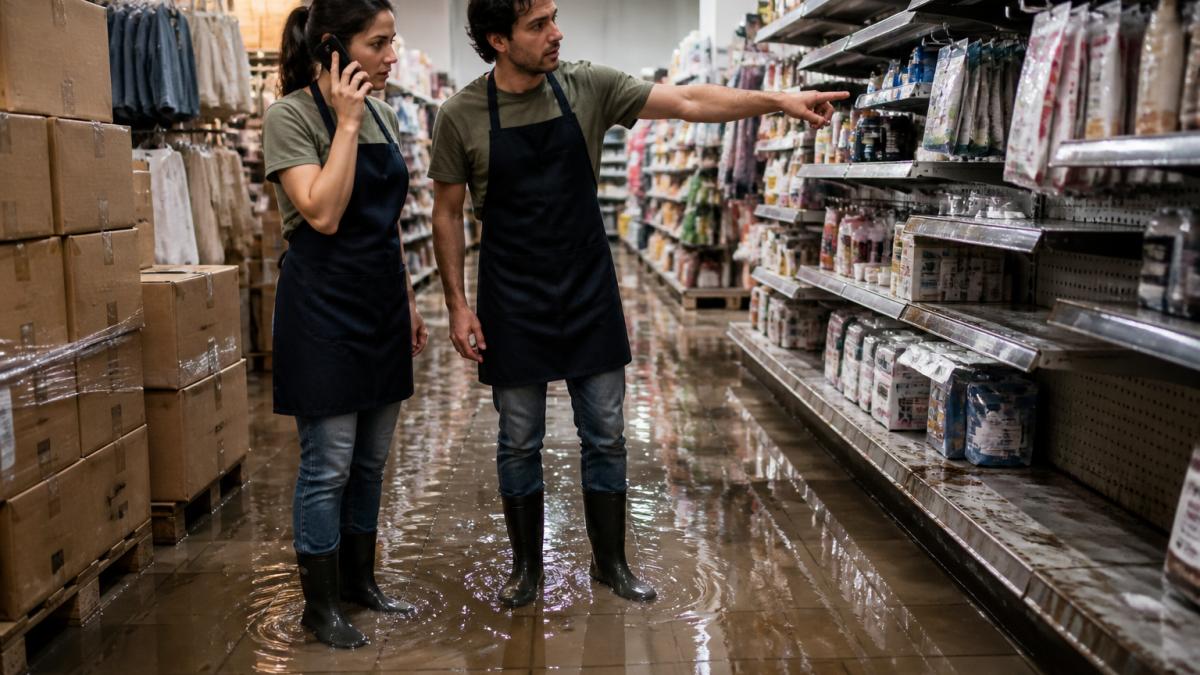
At GTA Restoration, we have handled water losses in stores, restaurants, and commercial units for 19 years. The pattern is always the same: calm, sequenced action saves money. Panic costs it.
Most restoration pages tell you to call a crew. Few tell your staff what to do in the ten minutes before that call connects.
Minute 0-2: Stop the Source and Clear the Zone
Assign one person as the incident lead. That person owns the sequence below and does not get pulled into cleanup.
- Shut off the water at the nearest isolation valve if the source is a supply line, toilet, or appliance. If you cannot reach it dry, skip to power shutdown.
- Kill power to the affected zone at the breaker panel only if you can reach the panel without crossing water.
- Announce a clear-zone order: staff and customers out of the wet area, no exceptions.
- Post a wet-floor sign at both ends of the aisle and block it with a cart or stanchion.
Minute 2-5: Escalate and Assign Roles
- Incident lead calls the restoration line and stays on the phone for intake questions.
- Safety spotter watches the zone for sparking, sagging ceiling tiles, or water reaching outlets, and calls out changes.
- Documenter starts photos and video immediately (see the next section).
- Floor lead moves customers away from the zone and pauses checkout if the POS area is threatened.
Minute 5-15: Protect High-Value and Electrical Assets
- Power down and unplug affected POS terminals, receipt printers, and card readers.
- Move servers, backup drives, and cash drawers above the water line if it is safe to do so.
- Lift stock off the floor onto pallets, shelving, or dry counters, do not drag boxes through standing water.
- Do not power on any wet electronics. Let a technician assess them.
Minute 15-60: Document, Contain, and Prepare for Arrival
- Photograph wide shots of the whole aisle, then close-ups of the source, water lines on walls, and wet merchandise.
- Note the time you found the leak and the time you shut the water off.
- Save receipts, delivery slips, and inventory sheets near the wet zone.
- If safe, place towels or containment berms to slow water spreading to dry aisles.
- Clear a path for the crew: move vehicles, unlock the service door, and note any hazards (slippery stairs, low clearance).
That photo set and role log become the backbone of your insurance claim and the crew’s starting point when they arrive.
Emergency Water Damage Cleanup: What Happens When the Crew Arrives
Emergency water damage cleanup is the fast removal of standing water and the start of drying, usually within hours of your call. A trained crew arrives, shuts off the source if you have not, and begins extraction.
Here is what a proper response looks like when we arrive:
- Source confirmed and stopped
- Safety check on power, gas, and structural risks
- Standing water extracted with truck-mounted or portable units
- Wet materials mapped and moisture readings logged
- Drying equipment placed and running
Speed matters. Water wicks into drywall, baseboards, and shelving within hours. The longer it sits, the more you replace instead of dry.
The Water Damage Restoration Process, Step by Step
The water damage restoration process follows a fixed sequence: stop the source, assess the damage, extract the water, dry the structure, verify, then repair. Skipping a step causes mold and callbacks.
Source Identification and Damage Assessment
Source identification means finding where the water came from. It is not always where the water is.
- Roof leaks show up far from the stain
- Supply line failures hide behind walls
- Sewer backups need different handling than clean water
Assessment follows. We map how far moisture traveled using meters and thermal tools. This tells us what can be dried and what must be removed.
Extraction, Structural Drying and Moisture Monitoring
Extraction pulls the bulk water out. Structural drying then removes what soaked into the building.
- Air movers push air across wet surfaces to speed evaporation
- Dehumidifiers pull that moisture out of the air
- Moisture monitoring tracks progress daily with readings
Commercial drying equipment runs until readings match a dry standard for your building. Then, and only then, is drying done.
| Stage | What Happens | Typical Duration |
|---|---|---|
| Extraction | Standing water removed | Same day |
| Drying | Air movers and dehumidifiers run | 3-5 days |
| Monitoring | Daily moisture readings logged | Throughout drying |
| Verification | Readings confirm dry standard met | Before repairs |
Retail Inventory Water Damage: Triage, Salvage and Insurance Evidence
Retail inventory water damage is where stores bleed money. Most of it is preventable with fast triage, but triage alone does not recover margin, you need a salvage method and an evidence trail that survives an adjuster’s review.
Sort Every Wet Item Into Three Piles
- Salvage: non-porous goods you can clean and dry, like sealed plastics, glass, metal fixtures, and hard toys.
- Assess: items a restorer can clean, like some hard goods, sealed electronics, and leather goods that have not soaked through.
- Discard: porous items that hold contamination, like cardboard, paper, fabric, upholstered goods, and open food.
Salvage Methods That Actually Work
- Rinse and dry hard goods with clean water, then air-dry with airflow, do not stack wet items.
- Wipe sealed electronics with a damp cloth only; never submerge, and never power on until a technician clears them.
- Freeze-dry documents like invoices, manuals, and warranty cards if they matter to the claim.
- Discard anything with visible mould or a musty odor, cleaning will not restore it.
Documentation Mechanics That Protect the Claim
Photograph each pile before it leaves the floor, and label photos by pile and aisle. Then build a simple inventory log with four columns: item, quantity, condition, and disposition (salvage, assess, discard). Attach the log to your claim and keep a copy off-site.
- Shoot wide shots of the pile, then close-ups of labels and SKUs.
- Record the time each pile was sorted.
- Keep discarded items in a labeled area until the adjuster confirms they can go, some policies require inspection.
- Note the replacement cost and the salvage value for each line where you can.
Insurance Evidence Standards
Most commercial property policies pay on documented proof of loss, not on estimates. That means your log, photos, and receipts need to line up. If your POS system can export a sales and inventory report for the affected period, include it, it corroborates the loss.
Call 416-800-0000 for 24/7 help →
GTA Restoration documents inventory losses alongside structural damage so your claim tells one consistent story from first call to final repair.
Protecting POS Systems, Servers and Customer Data
Your point-of-sale systems, servers, and customer data are the assets most stores forget. Water reaches them through floors, ceilings, and cable runs.
- Power down and unplug affected POS terminals
- Move servers and backup drives above the water line
- Do not power on wet electronics. Let a pro assess them
- Back up transaction and customer data to the cloud if you still can
Wet electronics can short when powered. Data loss is worse than hardware loss. Most guides skip this step. Do not.
Water Damage Restoration Timeline and Reopening Criteria
The water damage restoration timeline depends on the water category, the size of the loss, and the materials affected. A small clean-water spill may dry in days. A contaminated flood can take weeks.
Reopen only when these are true:
- Moisture readings meet the dry standard
- No standing water or damp materials remain
- Affected areas are cleaned and sanitized
- Electrical and safety systems are checked
Mould Prevention and Indoor Air Quality After a Water Loss
Mould prevention starts with drying fast and drying fully. Mold needs moisture and time. Remove the moisture and you remove the risk.
- Keep drying equipment running until readings confirm dry
- Fix the source so water does not return
- Replace porous materials that stayed wet too long
- Improve airflow in closed back rooms and stockrooms
If you smell a musty odor after drying, call for a check. Odor usually means hidden moisture.
Insurance Claims, Documentation and Phased Reopening
Most commercial property policies cover sudden water damage, but they pay on documentation. Your claim is only as strong as your records.
- Keep every photo, receipt, and moisture log
- Track business interruption losses, like lost sales and spoiled stock
- Ask your restorer for a written scope of work
- Reopen in phases so you can trade while repairs finish
A phased reopening lets you run a partial storefront while the back area dries and gets rebuilt. It protects cash flow.
GTA Restoration guides clients through the claim from first call to final repair. We document the loss, work with your adjuster, and provide the paperwork insurers expect. That is part of why we offer 24/7 emergency response across the region, backed by 19 years of experience.
Frequently Asked Questions
What should a retailer do first after discovering water damage?
Safety comes before salvage. Turn off power to affected areas at the breaker if you can reach it safely, move staff and customers away from standing water, and photograph everything before touching stock or fixtures. Then call a restoration provider with 24/7 response. Early extraction and drying within the first 24 to 48 hours greatly reduces the chance of mould and cuts the scope of repairs. Keep a written log of who you called and when.
How long does water damage restoration take for a retail store?
Most retail water damage restoration timelines run three to five days for extraction and structural drying, though a clean-water loss in a small sales floor can dry faster. Contaminated water, saturated shelving, or water trapped under vinyl or tile can push drying to a week or more. Repairs and reconstruction follow once moisture readings confirm materials are dry. A restoration team should give you a written timeline and update it as monitoring data comes in.
Can a retail store reopen before all materials are dry?
Phased reopening is common and often smart, but only after an objective drying check. Moisture meters and thermal imaging should confirm that walls, floors and ceilings have reached acceptable levels in the areas you plan to reopen. Cordoning off wet zones, rerouting foot traffic and keeping air movers and dehumidifiers running lets you sell from dry sections while drying continues. Reopening over damp materials risks mould growth and customer complaints.
How can retailers protect inventory during water damage cleanup?
Move undamaged stock to a dry, elevated area as soon as it is safe, and prioritise high-value, seasonal or perishable items. Photograph each damaged pallet, shelf or rack before disposal so your insurance claim has evidence. Separate items touched by contaminated water from those affected by clean water, since the two are handled differently. Ask the restoration team to keep salvageable merchandise in a controlled drying space rather than a damp backroom.
Water in your store is a race against the clock. Every hour of delay means more ruined stock, more mold risk, and a bigger bill. GTA Restoration responds 24/7 with trained technicians, commercial drying equipment, and full-service cleanup, drying, and repair planning. We also help you document the loss and work through your insurance claim from start to finish. Call 416-800-0000 for 24/7 help and get your store back to trading.
For non-emergencies use our contact form
Restoration Support for Properties Across Canada
Property damage can affect a home, business or shared building. GTA Restoration serves communities across Canada, including Toronto and the GTA. We are opening locations in the United States. Contact us to confirm current services and availability for your address.
Emergency Restoration Help
Call for 24/7 restoration help. Describe any active leak, standing water or visible damage. Access, site conditions and crew availability affect the response.
Water Removal
Standing water needs a plan suited to its source and the affected materials. Share details about the depth, location and any known contamination.
Moisture Checks
Visible marks may not show the full extent of a leak. Moisture readings help identify areas that need closer inspection and follow-up.
Mold Concerns
Report visible mold, musty smells and past leaks. Addressing the moisture source is an important part of planning cleanup and repairs.
Fire and Smoke Damage
Smoke, soot and firefighting water can affect different parts of a building. Discuss the affected areas before moving belongings or starting cleanup.
Contaminated Areas
Sewage and other contamination need a site-specific approach. Keep people and pets away from affected areas while arranging an assessment.
Commercial Properties
Building access, tenants and operating hours matter. Our commercial restoration services help owners and managers plan work around site needs.
Equipment Rental
Explore restoration equipment rental and confirm the unit, power requirements, rental dates and operating instructions before booking.
Need emergency help?
Call GTA Restoration to discuss the fault, access.
Service Areas Across Canada
GTA Restoration serves communities across Canada, including Toronto and the GTA. U.S. locations are opening. Browse our Canadian service areas below, and contact us to confirm services and availability for your address.
Search
- Air Duct Cleaning Montreal
- Ajax Asbestos Removal
- Ajax Mold Removal
- Ajax Water Damage
- Asbestos Removal Calgary
- Asbestos Removal Edmonton
- Asbestos Removal Fort Saskatchewan
- Asbestos Removal Gloucester
- Asbestos Removal Grimsby
- Asbestos Removal Hamilton
- Asbestos Removal Kanata
- Asbestos Removal Kitchener
- Asbestos Removal Laval
- Asbestos Removal Lincoln
- Asbestos Removal Montreal
- Asbestos Removal Nepean
- Asbestos Removal Niagara Falls
- Asbestos Removal Orleans
- Asbestos Removal Ottawa
- Asbestos Removal Sherwood Park
- Asbestos Removal Spruce Grove
- Asbestos Removal St Catharines
- Asbestos Removal St-Albert
- Asbestos Removal Thorold
- Asbestos Testing Hamilton
- Asbestos Testing Montreal
- Asbestos Testing Petersburg
- Aurora Mold Removal
- Aurora Water Damage
- Beaconsfield Asbestos Removal
- Brampton Asbestos Removal
- Brampton Mold Removal
- Brampton Water Damage
- Burlington Asbestos Removal
- Burlington Mold Removal
- Burlington Water Damage
- Burst Pipe Montreal Frozen Pipe
- Burst Pipe Repair Edmonton
- Burst Pipe Repair Ottawa
- Caledon Mold Removal
- Caledon Water Damage
- Calgary Mold Removal
- Calgary Water Damage
- Cambridge Mold Removal
- Cambridge Water Damage
- Clarington Mold Removal
- Concord Mold Removal
- Concord Water Damage
- Cooksville Mold Removal
- Edmonton Water Damage
- Emergency Roofing Vancouver
- Etobicoke Asbestos Removal
- Etobicoke Mold Removal
- Etobicoke Water Damage
- Fire Damage Grimsby
- Fire Damage Lincoln
- Fire Damage Niagara Falls
- Fire Restoration Fort McMurray
- Fire Damage Restoration Thorold
- Fire Damage St Catharines
- Flood Cleanup Grimsby
- Flood Cleanup Lincoln
- Flood Cleanup Niagara Falls
- Flood Cleanup St Catharines
- Flood Cleanup Thorold
- London Mold Removal
- London Water Damage
- Markham Asbestos Removal
- Markham Mold Removal
- Markham Water Damage
- Mississauga Asbestos Testing
- Mississauga Mold Removal
- Mississauga Water Damage
- Mold Inspection Removal Kitchener
- Mold Remediation Montreal
- Mold Removal & Inspection LaSalle
- Mold Removal Anjou
- Mold Removal Boucherville
- Mold Removal Brossard
- Mold Removal Burnaby
- Mold Removal Chambly
- Mold Removal Chateauguay
- Mold Removal Chomedey
- Mold Removal Coquitlam
- Mold Removal Dollard Des Ormeaux
- Mold Removal Dorval
- Mold Removal Edmonton
- Mold Removal Fort Saskatchewan
- Mold Removal Gloucester
- Mold Removal Grimsby
- Mold Removal Hamilton Inspection
- Mold Removal Ile Bizard
- Mold Removal in Osgoode
- Mold Removal Beaconsfield
- Mold Removal Kahnawake
- Mold Removal Kanata
- Mold Removal Kirkland
- Mold Removal Laval
- Mold Removal Lincoln
- Mold Removal Longueuil
- Mold Removal Montreal East
- Mold Removal Mount Royal
- Mold Removal Nepean
- Mold Removal New Westminster
- Mold Removal Niagara Falls
- Mold Removal Orleans
- Mold Removal Ottawa
- Mold Removal Cumberland
- Mold Remediation Hampstead
- Mold Removal Remediation Roxboro
- Mold Removal Richmond BC
- Mold Removal Rideau Lakes
- Mold Removal Rockcliffe Park
- Mold Removal Saint Hubert
- Mold Removal Saint Laurent
- Mold Removal Sherwood Park
- Mold Removal Spruce Grove
- Mold Removal St Catharines
- Mold Removal Ste Dorothee
- Mold Removal St۔ Albert
- Mold Removal Surrey
- Mold Removal Thorold
- Mold Removal Vancouver
- Mold Removal Vanier
- Mold Removal Westmount
- Montreal Biohazard Cleanup
- Montreal Emergency Plumber
- Montreal Fire Restoration
- Montreal Flood Cleanup
- Montreal Odor Removal
- Montreal Roofing Emergency
- Montreal Sewer Backup Cleanup
- Montreal Water Leak Detection
- Montréal Asbestos Removal
- Montréal Emergency Plumbing
- Montréal Mold Removal
- Montréal Pipe Burst Emergency
- Montréal Water Damage
- Newmarket Mold Removal
- Newmarket Water Damage
- North York Mold Removal
- Oakville Mold Removal
- Oakville Water Damage
- Oshawa Mold Removal
- Oshawa Water Damage
- Ottawa Air Duct Cleaning
- Pickering Mold Removal
- Pickering Water Damage
- Red Deer Water Damage
- RedDeer Mold Removal
- Richmond Hill Mold Removal
- Richmond Hill Water Damage
- Roof Repair Lincoln
- Roof Repair Niagara Falls
- Roof Repair St Catharines
- Scarborough Asbestos Removal
- Scarborough Mold Removal
- Scarborough Water Damage
- Sewage Cleanup Edmonton
- Sewer Backup Lincoln
- Sewer Backup Niagara Falls
- Sewer Backup Ottawa
- Sewer Backup St Catharines
- Thornhill Mold Removal
- Toronto & GTA Asbestos Removal
- Toronto & GTA Mold Removal
- Toronto Air Duct Cleaning
- Toronto Water Damage
- Unionville Mold Removal
- Unionville Water Damage
- Vancouver Asbestos Removal
- Vancouver Biohazard Cleanup
- Vancouver Emergency Plumber
- Vancouver Emergency Plumbing
- Vancouver Fire Restoration
- Vancouver Flood Cleanup
- Vancouver Mold Removal
- Vancouver Odor Removal
- Vancouver Pipe Burst Emergency
- Vancouver Sewer Backup Cleanup
- Vancouver Water Damage
- Vancouver Water Leak Detection
- Vaughan Mold Removal
- Vaughan Water Damage
- Vermiculite Removal Ottawa
- Water Damage Grimsby
- Water Damage Kanata
- Water Damage Kitchener
- Water Damage Lincoln
- Water Damage Longueuil
- Water Damage Nepean
- Water Damage Niagara Falls
- Water Damage Orleans
- Water Damage Ottawa
- Water Damage Repair Montreal
- Water Damage Laval Montreal
- Water Damage Restoration Thorold
- Sewage Backup Cleanup Montreal
- Water Damage St Catharines
- Water Damage Vancouver
- Water Flood Damage Repair Hamilton
- Flood Damage Repair Hampstead
- Whitby Water Damage
- Woodbridge Asbestos Removal
- Woodbridge Mold Removal
- Woodbridge Water Damage
- Restoration Equipment Rental
Restoration Questions
Where are your services available?
GTA Restoration serves communities across Canada, including Toronto and the GTA. U.S. locations are opening. Tell us the property address so we can discuss the work needed and confirm current availability.
What should I tell the team first?
Describe what happened, when you noticed it and which rooms are affected. Mention any active leak or access restrictions. These details help us discuss the next step and confirm availability.
How is the drying plan decided?
The water source, affected materials and moisture readings help guide the plan. Equipment needs can change as work progresses. Ask how the team will check conditions before repairs cover the affected area.
Can restoration work be covered by insurance?
Coverage depends on your policy and the cause of the damage. Your insurer decides the claim. Keep photos, dates and receipts, and ask which records are needed before agreeing to the work.
Who can I call about urgent damage?
Call the phone number shown on this page for 24/7 restoration help. Explain the problem and ask about availability. If there is immediate danger, contact emergency services and follow their directions.
Direct Billing & Insurance Claims
Ask your insurer about coverage, deductibles and the records it needs.

In-House Financing Available
Financing up to 24 months. No interest. No money down. Ask us about the terms.
Learn more ↴ 
RELATED ARTICLES
 Facebook
 Instagram
 LinkedIn
 X / Twitter
 YouTube


