Certified Mold Remediation Technician | Why Training Matters

Why a Certified Mold Remediation Technician Matters
A certified mold remediation technician receives training in moisture control, containment, cleaning, material removal, and safe remediation practices.
Certification alone does not guarantee a successful project. However, proper training helps technicians understand how to assess mold conditions, control the work area, and address the moisture source that allowed the problem to develop.
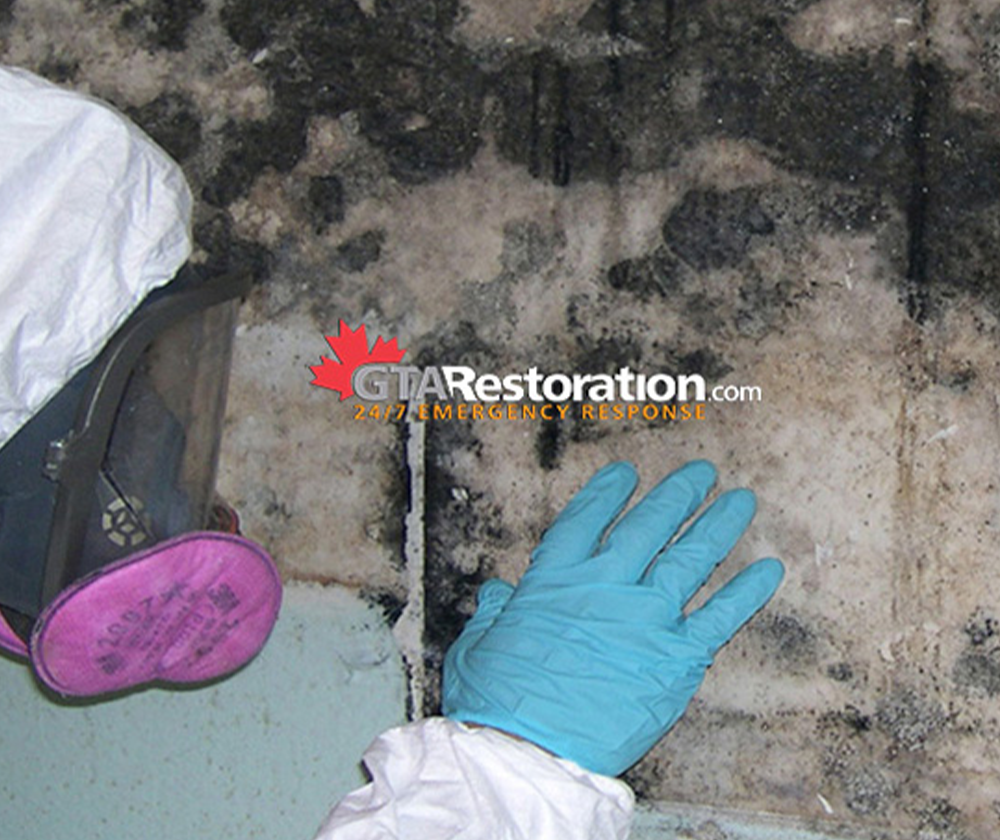
What a Mold Remediation Technician Does
A technician first reviews the affected area and looks for visible mold, water damage, leaks, and damp building materials. The inspection helps define the size and conditions of the problem.
Technicians may use moisture meters to check damp materials. In addition, thermal imaging can reveal temperature patterns that deserve a closer moisture check. However, thermal imaging does not directly detect mold or measure moisture.
After the assessment, the technician can plan the cleanup around the materials involved, moisture conditions, and size of the affected area.
Mold Containment and Cleanup Training
Containment helps limit the movement of dust and mold particles into nearby areas. Depending on the project, technicians may install plastic barriers, control airflow, and use HEPA filtration.
Next, the team may remove damaged porous materials, HEPA vacuum remaining surfaces, clean the work area, and dry materials that can remain.
Because every property is different, technicians should adjust the remediation plan to the actual site conditions instead of following the same routine on every project.
Why Moisture Control Matters During Mold Remediation
Removing visible mold will not solve the underlying problem if a leak or moisture source continues. Therefore, a trained technician should also investigate why the affected materials became damp.
Common causes include plumbing leaks, roof leaks, flooding, condensation, poor ventilation, and high indoor humidity.
Health Canada recommends correcting moisture problems and keeping indoor relative humidity between about 30% and 50% where practical. For more information, review Health Canada’s guidance on moisture and mould.
Certification and Mold Remediation Experience
Certification shows that a technician completed training through a recognized program. However, field experience also matters because mold conditions vary from one property to another.
For example, the IICRC offers the Applied Microbial Remediation Technician certification. Its training covers techniques for mold and sewage remediation and focuses on protecting workers and occupants during remediation work.
A restoration company should combine training with practical experience, clear communication, proper equipment, and a scope that matches the conditions at the property.
When to Call a Mold Remediation Professional
Not every small mold problem requires a large professional remediation project. Health Canada provides guidance that allows property owners to handle some smaller areas with suitable precautions.
However, professional help makes sense when mold covers a large area, keeps returning, appears inside concealed spaces, or follows sewage-contaminated flooding. Significant water damage inside wall, ceiling, or floor cavities may also require professional assessment.
For professional help, visit our mold removal and remediation services.
What to Look for When Hiring a Mold Technician
Before choosing a remediation company, ask about the technician’s training, experience, work plan, and approach to moisture control.
- Ask what mold remediation training the technician has completed.
- Review the technician’s relevant field experience.
- Ask how the team will assess the affected area.
- Confirm whether the project requires containment.
- Ask how the team will handle damaged materials.
- Find out how technicians will check moisture conditions.
- Request a clear explanation of the proposed remediation scope.
If a leak or flood caused the mold problem, our water damage restoration services can also help with moisture checks, drying, cleanup, and related repairs.
Certified Mold Remediation Technician FAQs
Why should I choose a certified mold technician?
Certification shows that the technician completed formal training in mold remediation practices. You should also consider experience, communication, moisture control, and the proposed scope of work.
Does certification guarantee mold will never return?
No. New leaks, flooding, condensation, or high humidity can create new mold problems. Correcting moisture conditions remains an important part of prevention.
Can thermal imaging detect hidden mold?
No. Thermal imaging shows temperature differences, not mold. Technicians can use those patterns to identify locations that may need further moisture checks.
Does every mold problem require professional remediation?
No. Property owners can sometimes handle small areas with suitable precautions. Larger, recurring, hidden, or contaminated problems often require professional help.
What certification covers mold remediation?
The IICRC offers the Applied Microbial Remediation Technician certification, commonly called AMRT. The program covers mold and sewage remediation techniques.
Need a Certified Mold Remediation Technician?
GTA Restoration provides mold assessment, remediation, moisture control, and water damage restoration throughout Toronto and the GTA.
What Is a Water Damage Restoration Technician? | Water Damage Restoration Process | Toronto Emergency Plumber | The Benefits of Hiring Professional Mold Removal Services | Mold Remediation Process Guide
For non-emergencies use our contact form
Why Mold Remediation Training Matters
Training gives a mold remediation technician a better understanding of moisture, containment, cleaning, material removal, and safe work practices. However, certification should be considered together with hands-on experience and a clear project plan.
Recognized Mold Remediation Training
The IICRC offers the Applied Microbial Remediation Technician certification for professionals involved in mold and sewage remediation. The training covers remediation techniques and work practices designed to protect workers and building occupants.
Experience Still Matters
No two mold projects are exactly alike. Therefore, field experience can help a technician adjust the remediation plan to the size of the problem, building materials, moisture source, and conditions found during the inspection.
Look Beyond Visible Mold
A good remediation plan should address more than surface growth. Moisture behind walls, beneath flooring, or inside other building materials may require further investigation before cleanup begins.
Ask About the Scope of Work
Before work starts, ask what areas will be contained, which materials may need removal, what cleaning methods will be used, and how moisture conditions will be checked.
Correct the Moisture Problem
Finally, fixing the moisture source is essential. Even properly completed remediation may not prevent future mold if leaks, condensation, flooding, or high humidity continue.
Service Areas Across Canada
GTA Restoration serves communities across Canada, including Toronto and the GTA. U.S. locations are opening. Browse our Canadian service areas below, and contact us to confirm services and availability for your address.
Search
- Air Duct Cleaning Montreal
- Ajax Asbestos Removal
- Ajax Mold Removal
- Ajax Water Damage
- Asbestos Removal Calgary
- Asbestos Removal Edmonton
- Asbestos Removal Fort Saskatchewan
- Asbestos Removal Gloucester
- Asbestos Removal Grimsby
- Asbestos Removal Hamilton
- Asbestos Removal Kanata
- Asbestos Removal Kitchener
- Asbestos Removal Laval
- Asbestos Removal Lincoln
- Asbestos Removal Montreal
- Asbestos Removal Nepean
- Asbestos Removal Niagara Falls
- Asbestos Removal Orleans
- Asbestos Removal Ottawa
- Asbestos Removal Sherwood Park
- Asbestos Removal Spruce Grove
- Asbestos Removal St Catharines
- Asbestos Removal St-Albert
- Asbestos Removal Thorold
- Asbestos Testing Hamilton
- Asbestos Testing Montreal
- Asbestos Testing Petersburg
- Aurora Mold Removal
- Aurora Water Damage
- Beaconsfield Asbestos Removal
- Brampton Asbestos Removal
- Brampton Mold Removal
- Brampton Water Damage
- Burlington Asbestos Removal
- Burlington Mold Removal
- Burlington Water Damage
- Burst Pipe Montreal Frozen Pipe
- Burst Pipe Repair Edmonton
- Burst Pipe Repair Ottawa
- Caledon Mold Removal
- Caledon Water Damage
- Calgary Mold Removal
- Calgary Water Damage
- Cambridge Mold Removal
- Cambridge Water Damage
- Clarington Mold Removal
- Concord Mold Removal
- Concord Water Damage
- Cooksville Mold Removal
- Edmonton Water Damage
- Emergency Roofing Vancouver
- Etobicoke Asbestos Removal
- Etobicoke Mold Removal
- Etobicoke Water Damage
- Fire Damage Grimsby
- Fire Damage Lincoln
- Fire Damage Niagara Falls
- Fire Restoration Fort McMurray
- Fire Damage Restoration Thorold
- Fire Damage St Catharines
- Flood Cleanup Grimsby
- Flood Cleanup Lincoln
- Flood Cleanup Niagara Falls
- Flood Cleanup St Catharines
- Flood Cleanup Thorold
- London Mold Removal
- London Water Damage
- Markham Asbestos Removal
- Markham Mold Removal
- Markham Water Damage
- Mississauga Asbestos Testing
- Mississauga Mold Removal
- Mississauga Water Damage
- Mold Inspection Removal Kitchener
- Mold Remediation Montreal
- Mold Removal & Inspection LaSalle
- Mold Removal Anjou
- Mold Removal Boucherville
- Mold Removal Brossard
- Mold Removal Burnaby
- Mold Removal Chambly
- Mold Removal Chateauguay
- Mold Removal Chomedey
- Mold Removal Coquitlam
- Mold Removal Dollard Des Ormeaux
- Mold Removal Dorval
- Mold Removal Edmonton
- Mold Removal Fort Saskatchewan
- Mold Removal Gloucester
- Mold Removal Grimsby
- Mold Removal Hamilton Inspection
- Mold Removal Ile Bizard
- Mold Removal in Osgoode
- Mold Removal Beaconsfield
- Mold Removal Kahnawake
- Mold Removal Kanata
- Mold Removal Kirkland
- Mold Removal Laval
- Mold Removal Lincoln
- Mold Removal Longueuil
- Mold Removal Montreal East
- Mold Removal Mount Royal
- Mold Removal Nepean
- Mold Removal New Westminster
- Mold Removal Niagara Falls
- Mold Removal Orleans
- Mold Removal Ottawa
- Mold Removal Cumberland
- Mold Remediation Hampstead
- Mold Removal Remediation Roxboro
- Mold Removal Richmond BC
- Mold Removal Rideau Lakes
- Mold Removal Rockcliffe Park
- Mold Removal Saint Hubert
- Mold Removal Saint Laurent
- Mold Removal Sherwood Park
- Mold Removal Spruce Grove
- Mold Removal St Catharines
- Mold Removal Ste Dorothee
- Mold Removal St۔ Albert
- Mold Removal Surrey
- Mold Removal Thorold
- Mold Removal Vancouver
- Mold Removal Vanier
- Mold Removal Westmount
- Montreal Biohazard Cleanup
- Montreal Emergency Plumber
- Montreal Fire Restoration
- Montreal Flood Cleanup
- Montreal Odor Removal
- Montreal Roofing Emergency
- Montreal Sewer Backup Cleanup
- Montreal Water Leak Detection
- Montréal Asbestos Removal
- Montréal Emergency Plumbing
- Montréal Mold Removal
- Montréal Pipe Burst Emergency
- Montréal Water Damage
- Newmarket Mold Removal
- Newmarket Water Damage
- North York Mold Removal
- Oakville Mold Removal
- Oakville Water Damage
- Oshawa Mold Removal
- Oshawa Water Damage
- Ottawa Air Duct Cleaning
- Pickering Mold Removal
- Pickering Water Damage
- Red Deer Water Damage
- RedDeer Mold Removal
- Richmond Hill Mold Removal
- Richmond Hill Water Damage
- Roof Repair Lincoln
- Roof Repair Niagara Falls
- Roof Repair St Catharines
- Scarborough Asbestos Removal
- Scarborough Mold Removal
- Scarborough Water Damage
- Sewage Cleanup Edmonton
- Sewer Backup Lincoln
- Sewer Backup Niagara Falls
- Sewer Backup Ottawa
- Sewer Backup St Catharines
- Thornhill Mold Removal
- Toronto & GTA Asbestos Removal
- Toronto & GTA Mold Removal
- Toronto Air Duct Cleaning
- Toronto Water Damage
- Unionville Mold Removal
- Unionville Water Damage
- Vancouver Asbestos Removal
- Vancouver Biohazard Cleanup
- Vancouver Emergency Plumber
- Vancouver Emergency Plumbing
- Vancouver Fire Restoration
- Vancouver Flood Cleanup
- Vancouver Mold Removal
- Vancouver Odor Removal
- Vancouver Pipe Burst Emergency
- Vancouver Sewer Backup Cleanup
- Vancouver Water Damage
- Vancouver Water Leak Detection
- Vaughan Mold Removal
- Vaughan Water Damage
- Vermiculite Removal Ottawa
- Water Damage Grimsby
- Water Damage Kanata
- Water Damage Kitchener
- Water Damage Lincoln
- Water Damage Longueuil
- Water Damage Nepean
- Water Damage Niagara Falls
- Water Damage Orleans
- Water Damage Ottawa
- Water Damage Repair Montreal
- Water Damage Laval Montreal
- Water Damage Restoration Thorold
- Sewage Backup Cleanup Montreal
- Water Damage St Catharines
- Water Damage Vancouver
- Water Flood Damage Repair Hamilton
- Flood Damage Repair Hampstead
- Whitby Water Damage
- Woodbridge Asbestos Removal
- Woodbridge Mold Removal
- Woodbridge Water Damage
- Restoration Equipment Rental
Hiring a Mold Technician?
Training and experience both matter when choosing someone to handle a mold problem.
Quick Hiring Checklist
- Ask about certification and training.
- Check relevant field experience.
- Review the proposed remediation scope.
- Ask how moisture will be addressed.
- Confirm how affected materials will be handled.
GTA Restoration provides professional mold remediation and moisture assessment throughout Toronto and the GTA.
Learn more ↴ 
RELATED ARTICLES
Direct Billing & Insurance Claims
Ask your insurer about coverage, deductibles and the records it needs.

In-House Financing Available
Financing up to 24 months. No interest. No money down. Ask us about the terms.
Certifications & Insurance
View our firm certification, technician qualifications and insurance documents.

IICRC Certified Firm
GTA Restoration Inc.
Firm number 199912
Valid through
Business Insurance
GTA Restoration Group Inc.
$5 million general liability per occurrence
$8 million contractors pollution per claim
–
IICRC Technician Qualifications
Tony Sokol T. Lleshi · Registration 214520
Valid through
Water Damage Restoration · Fire & Smoke Damage Restoration · Applied Microbial Remediation · Odor Control · Trauma & Crime Scene
View technician verification (PDF) — opens in a new tabInsurance is subject to policy terms, conditions and exclusions.
 Facebook
 Instagram
 LinkedIn
 X / Twitter
 YouTube