For non-emergencies use our contact form

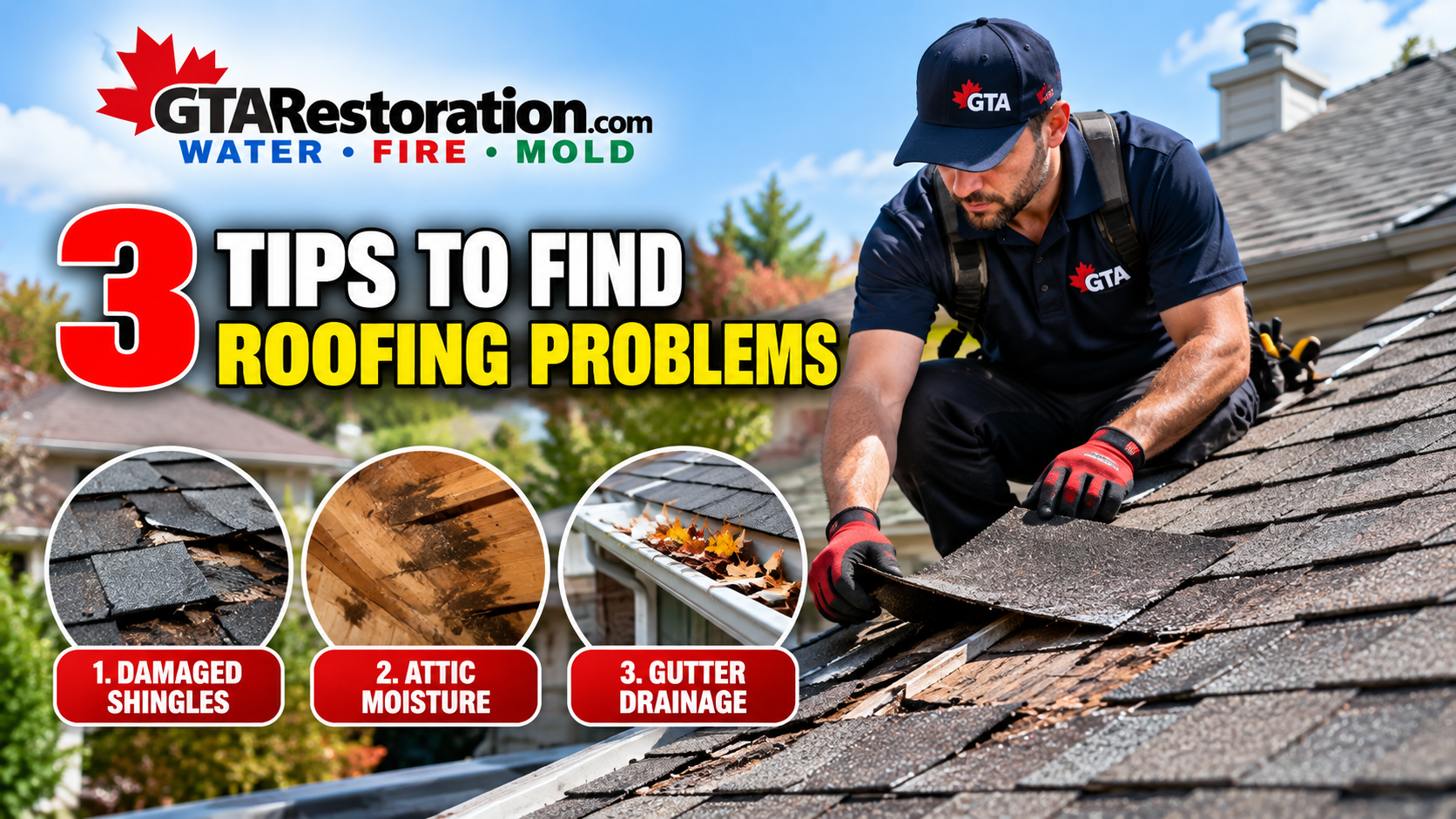
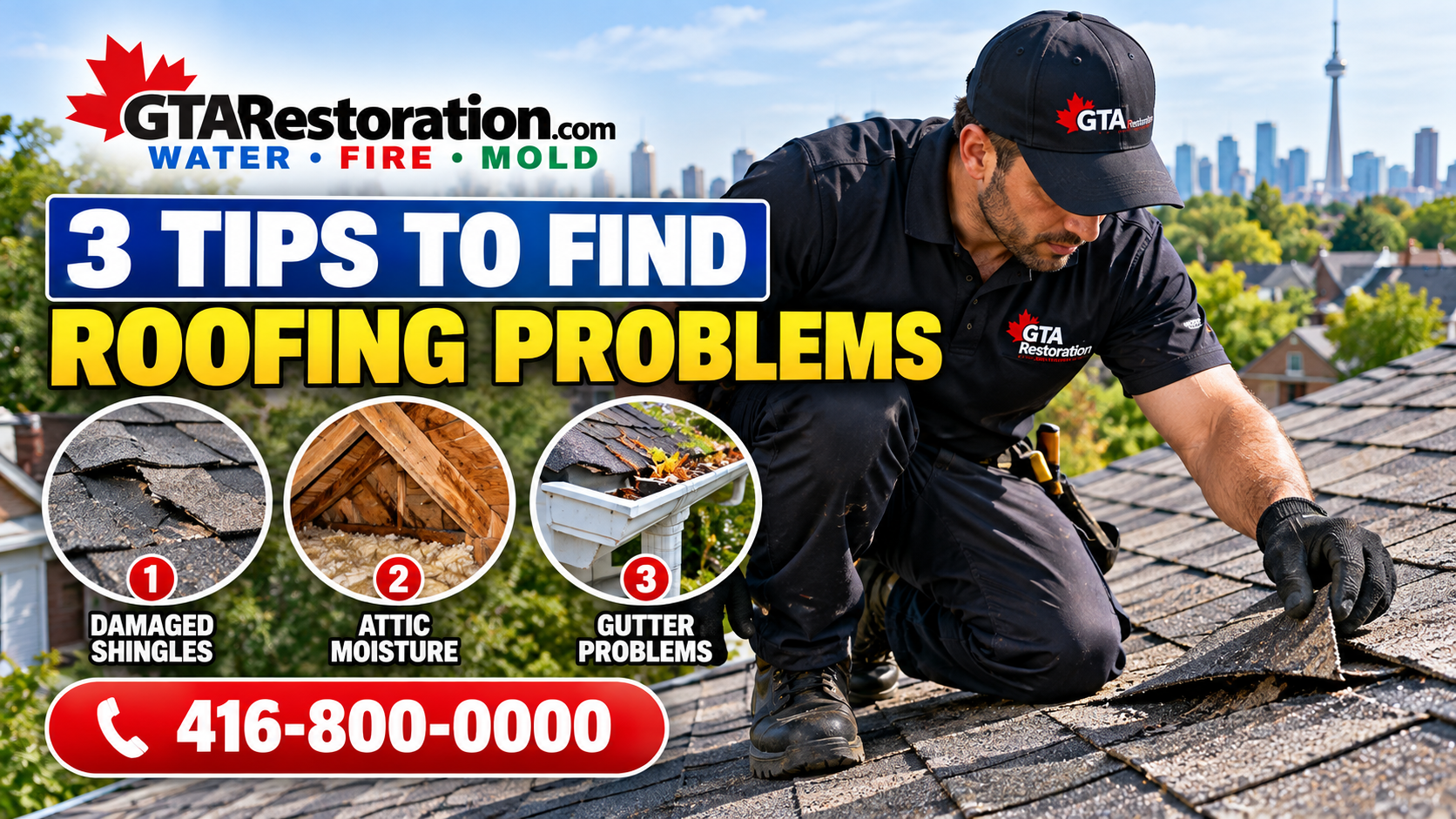
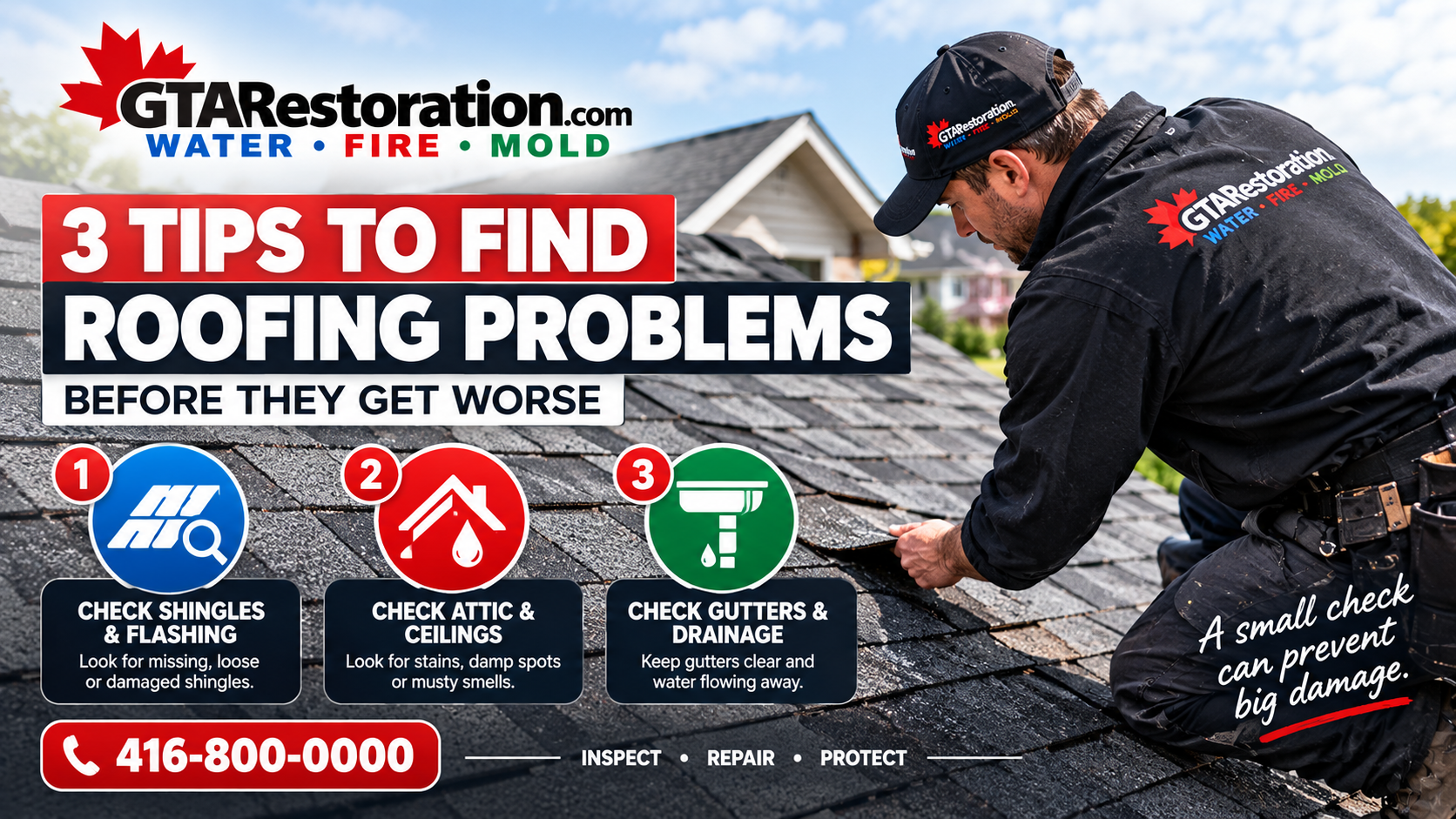
Signs of Roof Problems: 3 Areas to Check
Some signs of roof problems are obvious, such as missing shingles or an active ceiling leak. However, others are harder to identify because water can enter through one part of the roof and travel along decking, framing, insulation, or other materials before it becomes visible inside the property.
For this reason, the location of a ceiling stain does not always identify the exact point where water entered the roof. A careful inspection of roofing materials, penetrations, gutters, attic spaces, and interior finishes can help narrow down the source.
Regular roof maintenance can also help property owners identify loose materials, drainage problems, deteriorated flashing, and other defects before they contribute to larger leaks. In addition, routine visual checks can help reveal changes after storms or seasonal weather.
Below are three areas worth checking when you suspect roofing problems or water entry.
1. Check Roof Penetrations, Flashing and Protrusions
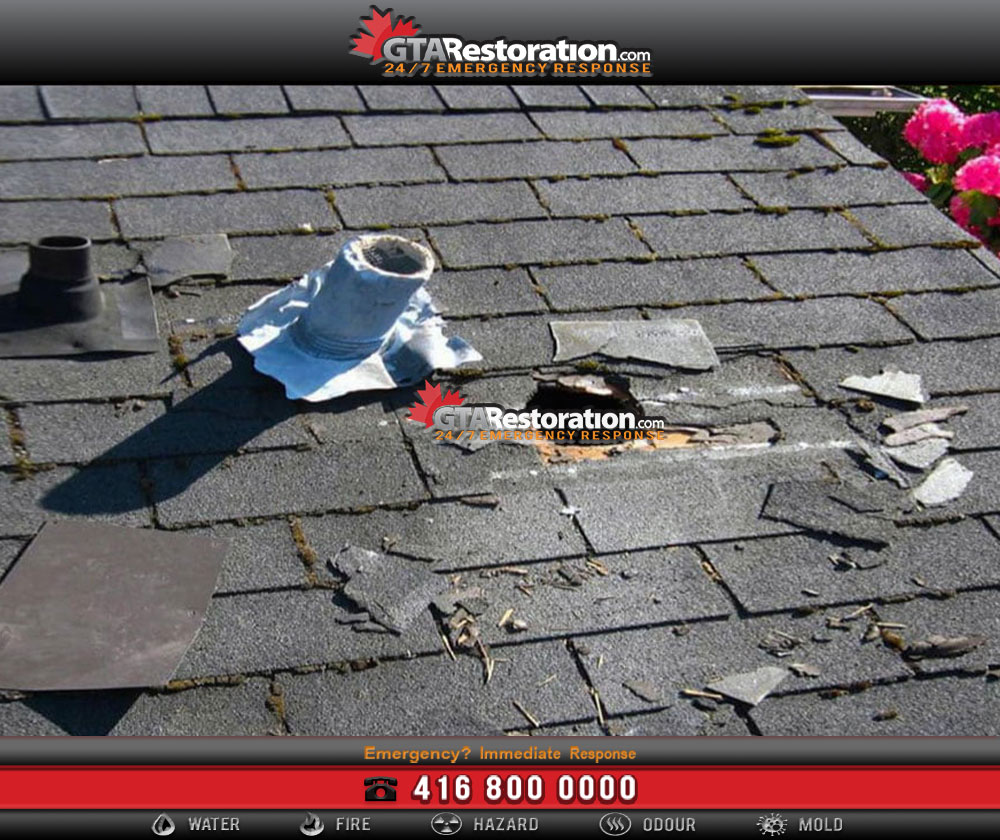
Chimneys, skylights, plumbing vents, roof vents, exhaust penetrations, and other features interrupt the main roof surface. Because these areas contain joints, flashing, seals, and transitions, they deserve careful inspection when you are looking for signs of a roof leak.
Common areas to review include:
- Chimney flashing
- Skylight flashing and seals
- Plumbing vent boots
- Roof vents
- Valleys and roof transitions
- Edges around additions or roof-level changes
Look for visibly loose flashing, cracked sealant, damaged shingles, gaps, staining, or other signs of deterioration. However, avoid climbing onto a steep, wet, icy, storm-damaged, or unstable roof. Many problems can first be checked safely from the ground, attic, or interior.
2. Check the Attic for Signs of Water Entry
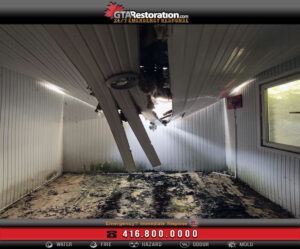
The attic can provide useful clues when the exterior source of a roof leak is difficult to find. For example, water may travel along rafters, roof decking, fasteners, insulation, or framing before reaching the ceiling below.
Possible warning signs include:
- Wet or damp insulation
- Water stains on roof decking or framing
- Dark staining or discolouration
- Rusted fasteners
- Dripping during rainfall or snowmelt
- Musty odours
- Recurring condensation
Attic moisture does not always come from an exterior roof leak. For instance, poor ventilation, indoor humidity, bathroom exhaust, plumbing leaks, or condensation may also contribute to damp conditions. Therefore, the source should be investigated before assuming the roofing material is responsible.
If you already have interior water staining or hidden moisture concerns, our leak detection Toronto service can help with further assessment.
3. Inspect Gutters, Downspouts and Roof Drainage
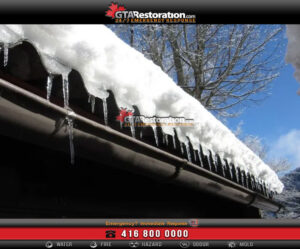
Gutters and downspouts play an important role in moving rainwater and melting snow away from the roof and building. However, leaves, debris, ice, sagging sections, damaged connections, or blocked outlets can interfere with drainage.
The City of Toronto recommends keeping eavestroughs and downspouts clear of leaves and debris so they can drain properly. Property owners should also keep roof drainage components in good condition. For more information, review the City of Toronto guidance for managing water around the house.
From a safe location, check for:
- Clogged gutters
- Standing water inside eavestroughs
- Loose or sagging gutter sections
- Water overflowing during rainfall
- Disconnected or damaged downspouts
- Water draining toward the foundation
As a result, correcting drainage problems can help reduce unnecessary water accumulation around roof edges, exterior walls, and the foundation.
Other Common Signs of Roof Problems
The three areas above are a useful starting point. However, signs of roof problems can appear in several other ways throughout a property.
Missing, Cracked or Curling Shingles
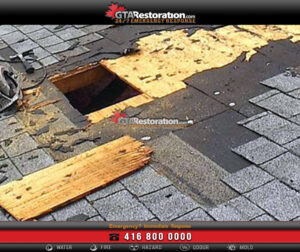
Wind, age, impact damage, and weather exposure can loosen or damage shingles. Consequently, missing or deteriorated roofing materials may expose vulnerable areas to rain and snow.
Ceiling and Wall Stains
Brown or yellow ceiling stains, bubbling paint, peeling finishes, damp drywall, or recurring water marks can indicate moisture entering from above. However, remember that the visible stain may be some distance from the actual entry point.
Water After Heavy Rain or Snowmelt
A leak that appears only during certain weather conditions still deserves attention. For example, wind-driven rain, melting snow, ice, or drainage problems can expose weaknesses that remain dry during normal weather.
Damaged Flashing
Loose, corroded, cracked, or poorly sealed flashing can allow water into joints and roof transitions. In particular, flashing problems commonly occur around chimneys, skylights, vents, valleys, and roof edges.
What to Do if Your Roof Is Actively Leaking
If water is entering the building, protect occupants first. In addition, keep people away from wet electrical fixtures, damaged ceilings, or areas where water is collecting near electrical equipment.
When conditions are safe:
- Move valuable contents away from the affected area.
- Use containers to collect dripping water where practical.
- Take photographs and videos of visible damage.
- Do not climb onto an unsafe roof during severe weather.
- Arrange professional roof assessment or temporary protection.
- Check whether interior materials also require drying.
Depending on the conditions, emergency roof work may involve temporary protection first. Permanent repairs can then follow when weather and site conditions allow.
Roof Leaks Can Cause Hidden Water Damage
Stopping the exterior leak does not automatically dry the building. Therefore, water can remain inside ceilings, drywall, insulation, framing, flooring, or wall cavities after the roof problem has been controlled.
As a result, moisture readings and structural drying may help determine whether additional restoration work is necessary when interior materials become wet.
For significant interior water damage, visit our water damage restoration Toronto page.
When to Call for Emergency Roof Repair
Professional help may be appropriate when the roof has missing materials, storm damage, active water entry, damaged flashing, fallen debris, or another condition that exposes the building to further water damage.
GTA Restoration provides emergency roof repair Toronto support for active leaks, storm damage, temporary protection, and related water-damage restoration.
Signs of Roof Problems FAQs
Does a Ceiling Stain Show Exactly Where the Roof Is Leaking?
No. Water can travel along roof decking, framing, insulation, pipes, or other materials before it becomes visible inside the property.
Can Clogged Gutters Contribute to Roofing Problems?
Yes. Blocked or damaged drainage can cause water to overflow or collect where it should normally drain away. Therefore, keeping gutters and downspouts clear helps maintain proper drainage.
Should I Inspect My Roof After a Storm?
Yes. A visual inspection from a safe location can help identify missing shingles, debris, damaged flashing, loose materials, or other obvious changes after severe weather.
Is Attic Moisture Always Caused by a Roof Leak?
No. Attic moisture can also result from condensation, poor ventilation, indoor humidity, plumbing problems, or improperly vented exhaust systems. Therefore, identifying the source is important before deciding on repairs.
Can a Small Roof Leak Cause Significant Water Damage?
Yes. Even limited water entry can affect insulation, drywall, ceilings, framing, or finishes if the leak continues or moisture remains trapped.
Should I Climb Onto the Roof to Find a Leak?
Avoid climbing onto steep, wet, icy, damaged, or unstable roofing. Instead, arrange a professional inspection when conditions make roof access unsafe.
Need Help With a Roof Leak in Toronto?
GTA Restoration provides emergency roof-related support, leak assessment, water-damage restoration, and structural drying throughout Toronto and the GTA.
If your roof is actively leaking, protect the affected area and arrange professional help as soon as conditions safely allow.
Learn more ↴
Toronto Roofing Emergency| Emergency Roofing Vancouver | Roofing Emergency in Toronto | 4 Common Roofing Emergency Questions | Attic Mold Removal Cost: What Drives the Price


You must be logged in to post a comment.