Detect Mold Early and Why Mold Removal Can’t Wait
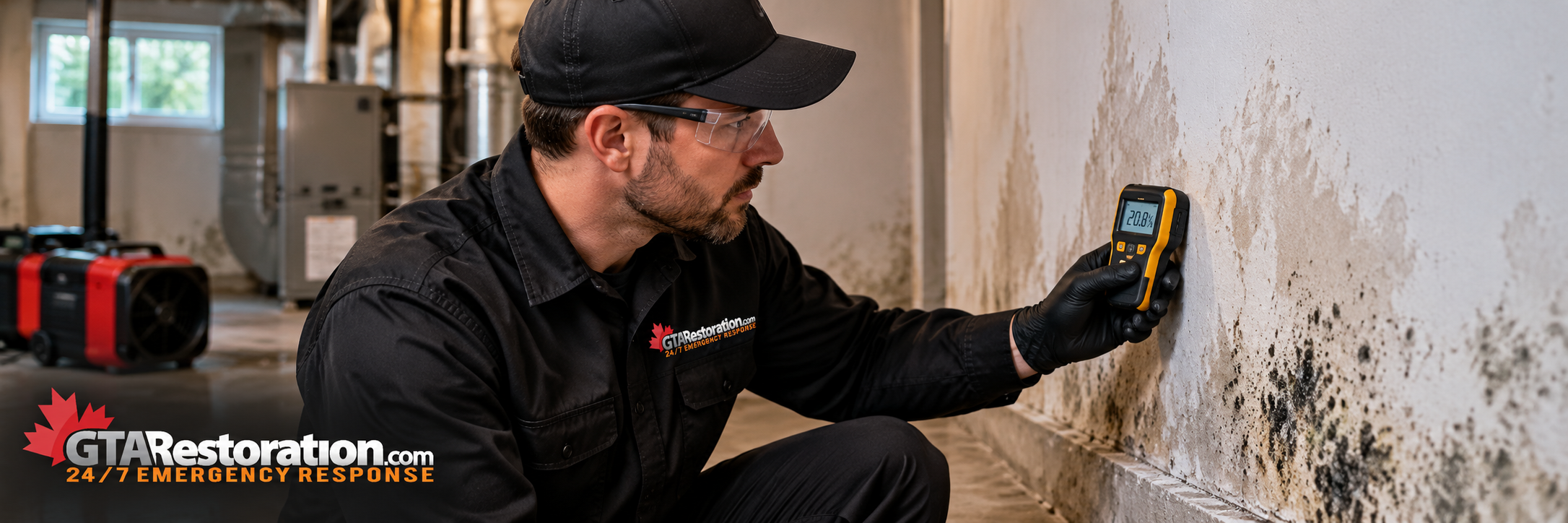
Detect Mold Early and Why Mold Removal Can’t Wait
Learning to detect mold early starts with spotting visible growth, musty odours, and moisture problems before you choose a cleanup method. Leaks and damp materials deserve attention even when you cannot see mold. Therefore, investigate the source rather than simply covering a stain or masking a smell.
GTA Restoration provides mold inspection, cleanup, water removal, drying, and repair support throughout Toronto and the GTA. First, our team reviews the affected areas and the history of leaks. Then, we explain the findings and outline the next steps for your property.
Early Mold Detection and Your Inspection Plan
An inspection considers the visible damage, possible moisture sources, and areas that need closer attention. The cleanup method and schedule depend on:
- The extent of growth and condition of affected materials
- Where the moisture started and whether the source remains active
- How long the area has stayed damp
After the inspection, our team prepares a scope of work. In addition, we explain the proposed removal, cleaning, drying, and repairs so you can review the plan before work begins.
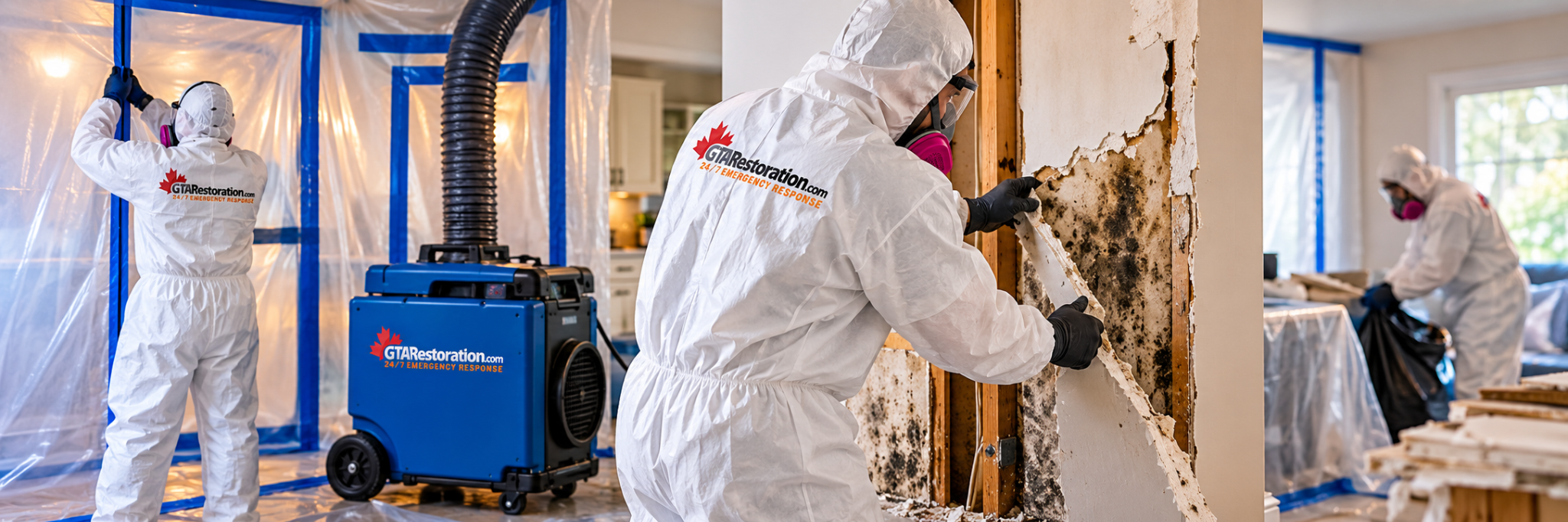
Mold Removal and Remediation Services
Water damage and mold problems often overlap. For example, overflowing fixtures, floods, and burst pipes can leave building materials wet. Our water damage restoration service helps address extraction and drying alongside the mold cleanup plan.
However, removing standing water does not confirm that every material has dried. Moisture may remain beneath flooring or inside walls. To detect mold early, review these areas after a leak rather than relying only on the room’s appearance.
For larger losses, our flooded basement cleanup team can help assess the damage. Tell us if the water involves sewage, since contaminated water needs different precautions.
Water Restoration and Early Mold Detection
- Find the moisture source. Inspect the affected areas and identify the leak or other moisture problem. A plumbing failure may also need burst pipe repairs.
- Extract water and plan drying. Remove standing water when conditions allow safe work. Then, use suitable drying equipment and moisture checks to track the remaining dampness.
- Assess mold and affected materials. Check visible growth and decide which materials need cleaning or removal. Coordinate mold cleanup with moisture control instead of treating them as separate problems.
- Record the work and plan repairs. Keep photographs, findings, and work records together. Finally, review the repairs and any further checks the property needs.
Each stage should follow the conditions on site. In particular, do not assume that drying alone removes existing mold. Our team explains the work needed for the affected surfaces and materials.
Mold Removal, Repairs, and Project Records
Some projects need new drywall, insulation, flooring, or trim after cleanup. However, replacing finishes before resolving dampness can leave the original problem in place.
Our team can provide project records for your discussions with an insurer. Keep estimates, invoices, photographs, and written updates together, and ask your insurer to explain coverage for the loss.
Warning Signs That Help You Detect Mold Early
Look for a pattern of moisture problems rather than relying on one mark or smell. Common warning signs include:
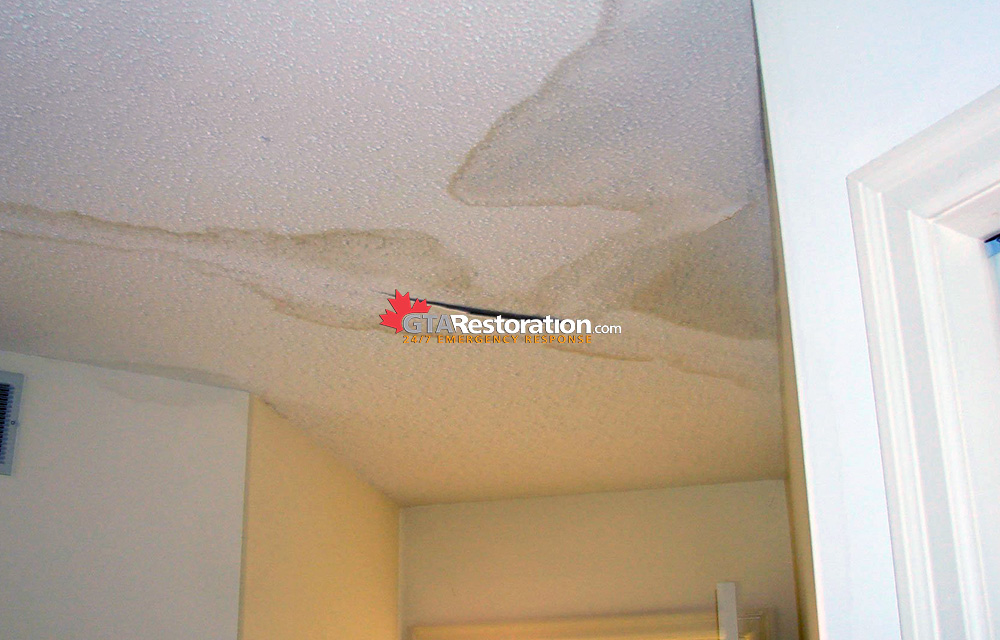 Stains and surface changes: Water marks, peeling paint, soft drywall, or warped flooring can point to moisture damage. These changes alone do not prove mold.
- Persistent musty odours: An earthy smell may warrant a closer inspection, especially when the source remains unclear.
- Recurring dampness: Window condensation, repeated leaks, or wet materials can create conditions that support growth.
- Visible patches: Growth on walls, ceilings, or belongings needs attention. Avoid touching, brushing, or disturbing it during your initial checks.
Health Canada explains these warning signs in its guidance on identifying moisture and mould in the home.
Detect Mold Early: Why Prompt Removal Matters
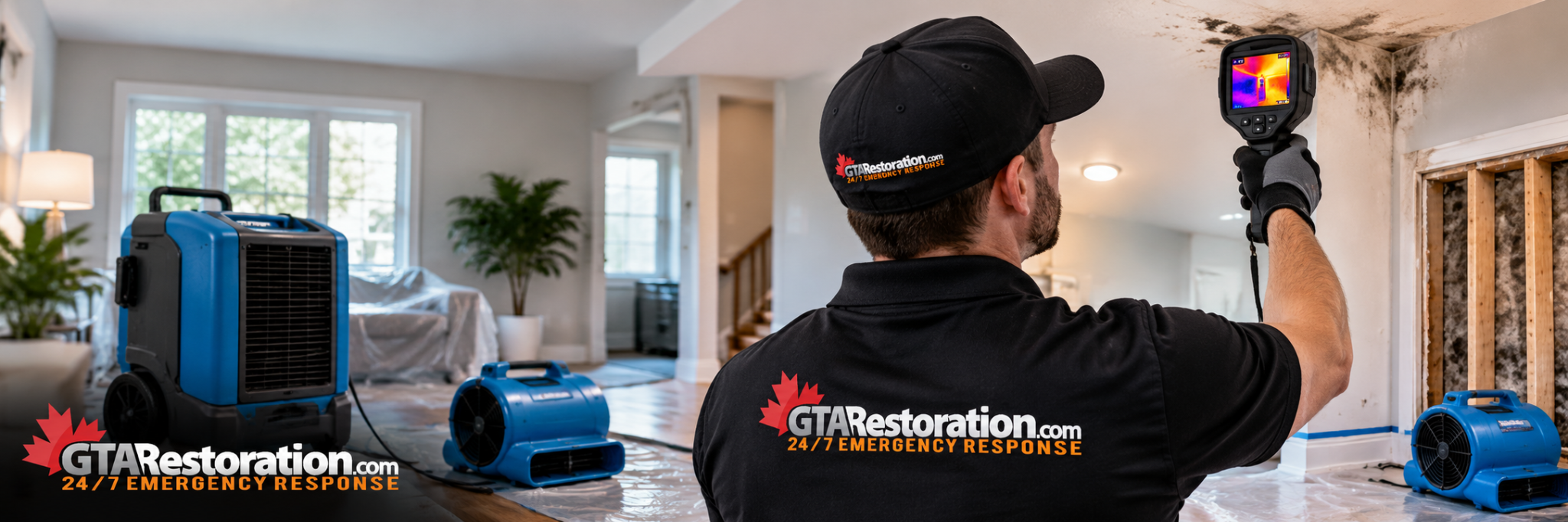
Ongoing moisture can allow mold to grow and damage the materials it affects. Therefore, deal with leaks and dampness promptly rather than waiting for larger patches to appear.
The EPA recommends drying water-damaged materials within 24 to 48 hours to help prevent mold growth. This is not a guarantee that mold will wait. Review its guide to mold, moisture, and prevention for further advice.
Hidden Moisture Needs a Closer Look
A visual inspection cannot see through closed walls or flooring. Instead, technicians review moisture readings, stains, odours, and the property’s leak history to identify areas that may need further access.
If dampness keeps returning, our water leak detection service can help investigate the source. Discuss any proposed opening of finished surfaces before work starts.
Does Early Mold Detection Require Air Testing?
Not usually. Health Canada does not recommend routine air testing for most mold concerns. However, a qualified professional may suggest targeted sampling when an inspection leaves a specific concern unexplained.
Air samples cannot predict health effects. Learn more in Health Canada’s mold inspection and testing guidance.
Mold and Indoor Air Concerns
Indoor mold and dampness can contribute to eye, nose, and throat irritation and worsen asthma symptoms. However, symptoms alone do not establish their cause. Discuss persistent health concerns with a healthcare professional rather than relying on a building inspection.
When to Arrange Professional Mold Removal
Seek professional help for widespread growth, recurring mold, suspected hidden damage, or sewage-related contamination. Small surface patches do not always require major removal work, but the moisture source still needs attention.
Most importantly, detect mold early by following up on warning signs and previous leaks. Contact GTA Restoration for an inspection and a cleanup plan based on your property’s condition.
Notice Early Signs of Mold?
Contact GTA Restoration for mold inspection, moisture checks, cleanup, drying, and repair planning throughout Toronto and the GTA.
Avoid disturbing visible mold or opening suspect walls before an assessment.
Learn More
Toronto Mold Inspection | Property Inspection | Leak Detection | Basic Facts about Mold and Dampness
For non-emergencies use our contact form
Detect Mold Early and Plan the Next Steps
GTA Restoration helps homeowners and businesses investigate mold concerns, moisture problems, and damage after leaks. A clear inspection plan helps you understand the findings before approving cleanup. Then, a written scope sets out the proposed removal, drying, repairs, and project records.
Preparing for Early Mold Detection
Note where stains, smells, or dampness appear and when you first noticed them. Also, gather photos and details of earlier leaks or repairs.
Visible Mold and Surface Changes
Point out growth, peeling paint, and damaged finishes during the visit. However, avoid scraping or brushing suspect surfaces just to prepare for the inspection.
Musty Odours and Hidden Moisture
Explain which rooms have recurring smells and whether they change after rain or plumbing use. These details help the team decide where to look more closely.
Checks After Water Damage
Share the date of any flood, the rooms involved, and previous drying work. In addition, identify areas where the walls or floors still seem damp.
Understanding Mold Inspection Findings
Ask the team to explain what it found and any limits of the inspection. A visual visit cannot confirm the condition of every concealed surface.
Mold Testing Questions
Routine air testing is not necessary for most concerns. Before approving samples, ask what question they will answer and how the results could change the plan.
Reviewing Your Mold Removal Estimate
Check the proposed cleaning, material removal, drying, and repair costs. Also, agree on how the team will explain new findings before starting extra work.
Drying and Moisture Control
Find out who will handle the leak or other source of dampness. Then, ask what moisture checks will guide the decision to begin repairs.
Belongings and Work Area Access
Tell the team about furniture, fabrics, and stored items near the damage. Avoid moving moldy belongings through clean rooms before discussing the handling plan.
Project Records and Follow-Up
Keep photographs, estimates, invoices, and written updates together. Finally, review any remaining repairs or follow-up checks so you know what still needs attention.
Booking an Early Mold Inspection
Contact GTA Restoration with your address and a brief description of the concern. Our team can discuss inspection availability, active leaks, and the next steps.
Noticed mold, musty odours, or recurring dampness?
Contact GTA Restoration for inspection, moisture checks, cleanup, and restoration support.
Service Areas Across Canada
GTA Restoration serves communities across Canada, including Toronto and the GTA. U.S. locations are opening. Browse our Canadian service areas below, and contact us to confirm services and availability for your address.
Search
- Air Duct Cleaning Montreal
- Ajax Asbestos Removal
- Ajax Mold Removal
- Ajax Water Damage
- Asbestos Removal Calgary
- Asbestos Removal Edmonton
- Asbestos Removal Fort Saskatchewan
- Asbestos Removal Gloucester
- Asbestos Removal Grimsby
- Asbestos Removal Hamilton
- Asbestos Removal Kanata
- Asbestos Removal Kitchener
- Asbestos Removal Laval
- Asbestos Removal Lincoln
- Asbestos Removal Montreal
- Asbestos Removal Nepean
- Asbestos Removal Niagara Falls
- Asbestos Removal Orleans
- Asbestos Removal Ottawa
- Asbestos Removal Sherwood Park
- Asbestos Removal Spruce Grove
- Asbestos Removal St Catharines
- Asbestos Removal St-Albert
- Asbestos Removal Thorold
- Asbestos Testing Hamilton
- Asbestos Testing Montreal
- Asbestos Testing Petersburg
- Aurora Mold Removal
- Aurora Water Damage
- Beaconsfield Asbestos Removal
- Brampton Asbestos Removal
- Brampton Mold Removal
- Brampton Water Damage
- Burlington Asbestos Removal
- Burlington Mold Removal
- Burlington Water Damage
- Burst Pipe Montreal Frozen Pipe
- Burst Pipe Repair Edmonton
- Burst Pipe Repair Ottawa
- Caledon Mold Removal
- Caledon Water Damage
- Calgary Mold Removal
- Calgary Water Damage
- Cambridge Mold Removal
- Cambridge Water Damage
- Clarington Mold Removal
- Concord Mold Removal
- Concord Water Damage
- Cooksville Mold Removal
- Edmonton Water Damage
- Emergency Roofing Vancouver
- Etobicoke Asbestos Removal
- Etobicoke Mold Removal
- Etobicoke Water Damage
- Fire Damage Grimsby
- Fire Damage Lincoln
- Fire Damage Niagara Falls
- Fire Restoration Fort McMurray
- Fire Damage Restoration Thorold
- Fire Damage St Catharines
- Flood Cleanup Grimsby
- Flood Cleanup Lincoln
- Flood Cleanup Niagara Falls
- Flood Cleanup St Catharines
- Flood Cleanup Thorold
- London Mold Removal
- London Water Damage
- Markham Asbestos Removal
- Markham Mold Removal
- Markham Water Damage
- Mississauga Asbestos Testing
- Mississauga Mold Removal
- Mississauga Water Damage
- Mold Inspection Removal Kitchener
- Mold Remediation Montreal
- Mold Removal & Inspection LaSalle
- Mold Removal Anjou
- Mold Removal Boucherville
- Mold Removal Brossard
- Mold Removal Burnaby
- Mold Removal Chambly
- Mold Removal Chateauguay
- Mold Removal Chomedey
- Mold Removal Coquitlam
- Mold Removal Dollard Des Ormeaux
- Mold Removal Dorval
- Mold Removal Edmonton
- Mold Removal Fort Saskatchewan
- Mold Removal Gloucester
- Mold Removal Grimsby
- Mold Removal Hamilton Inspection
- Mold Removal Ile Bizard
- Mold Removal in Osgoode
- Mold Removal Beaconsfield
- Mold Removal Kahnawake
- Mold Removal Kanata
- Mold Removal Kirkland
- Mold Removal Laval
- Mold Removal Lincoln
- Mold Removal Longueuil
- Mold Removal Montreal East
- Mold Removal Mount Royal
- Mold Removal Nepean
- Mold Removal New Westminster
- Mold Removal Niagara Falls
- Mold Removal Orleans
- Mold Removal Ottawa
- Mold Removal Cumberland
- Mold Remediation Hampstead
- Mold Removal Remediation Roxboro
- Mold Removal Richmond BC
- Mold Removal Rideau Lakes
- Mold Removal Rockcliffe Park
- Mold Removal Saint Hubert
- Mold Removal Saint Laurent
- Mold Removal Sherwood Park
- Mold Removal Spruce Grove
- Mold Removal St Catharines
- Mold Removal Ste Dorothee
- Mold Removal St۔ Albert
- Mold Removal Surrey
- Mold Removal Thorold
- Mold Removal Vancouver
- Mold Removal Vanier
- Mold Removal Westmount
- Montreal Biohazard Cleanup
- Montreal Emergency Plumber
- Montreal Fire Restoration
- Montreal Flood Cleanup
- Montreal Odor Removal
- Montreal Roofing Emergency
- Montreal Sewer Backup Cleanup
- Montreal Water Leak Detection
- Montréal Asbestos Removal
- Montréal Emergency Plumbing
- Montréal Mold Removal
- Montréal Pipe Burst Emergency
- Montréal Water Damage
- Newmarket Mold Removal
- Newmarket Water Damage
- North York Mold Removal
- Oakville Mold Removal
- Oakville Water Damage
- Oshawa Mold Removal
- Oshawa Water Damage
- Ottawa Air Duct Cleaning
- Pickering Mold Removal
- Pickering Water Damage
- Red Deer Water Damage
- RedDeer Mold Removal
- Richmond Hill Mold Removal
- Richmond Hill Water Damage
- Roof Repair Lincoln
- Roof Repair Niagara Falls
- Roof Repair St Catharines
- Scarborough Asbestos Removal
- Scarborough Mold Removal
- Scarborough Water Damage
- Sewage Cleanup Edmonton
- Sewer Backup Lincoln
- Sewer Backup Niagara Falls
- Sewer Backup Ottawa
- Sewer Backup St Catharines
- Thornhill Mold Removal
- Toronto & GTA Asbestos Removal
- Toronto & GTA Mold Removal
- Toronto Air Duct Cleaning
- Toronto Water Damage
- Unionville Mold Removal
- Unionville Water Damage
- Vancouver Asbestos Removal
- Vancouver Biohazard Cleanup
- Vancouver Emergency Plumber
- Vancouver Emergency Plumbing
- Vancouver Fire Restoration
- Vancouver Flood Cleanup
- Vancouver Mold Removal
- Vancouver Odor Removal
- Vancouver Pipe Burst Emergency
- Vancouver Sewer Backup Cleanup
- Vancouver Water Damage
- Vancouver Water Leak Detection
- Vaughan Mold Removal
- Vaughan Water Damage
- Vermiculite Removal Ottawa
- Water Damage Grimsby
- Water Damage Kanata
- Water Damage Kitchener
- Water Damage Lincoln
- Water Damage Longueuil
- Water Damage Nepean
- Water Damage Niagara Falls
- Water Damage Orleans
- Water Damage Ottawa
- Water Damage Repair Montreal
- Water Damage Laval Montreal
- Water Damage Restoration Thorold
- Sewage Backup Cleanup Montreal
- Water Damage St Catharines
- Water Damage Vancouver
- Water Flood Damage Repair Hamilton
- Flood Damage Repair Hampstead
- Whitby Water Damage
- Woodbridge Asbestos Removal
- Woodbridge Mold Removal
- Woodbridge Water Damage
- Restoration Equipment Rental
Detect Mold Early: Frequently Asked Questions
How can I detect mold early?
Look for visible growth, musty smells, recurring dampness, and water damage. Then, investigate the moisture source rather than simply covering stains.
Does a musty smell always mean mold?
No. A smell alone does not confirm mold. However, persistent musty odours warrant a closer inspection, especially after leaks or flooding.
Do I need an air test to find mold?
Usually not. Visual inspection and moisture checks provide the starting point. A professional may suggest targeted testing when a specific concern remains unexplained.
Why should I avoid delaying mold removal?
Moisture can allow growth and material damage to continue. Therefore, address the water source and arrange suitable cleanup rather than waiting for the problem to expand.
Can health symptoms confirm mold exposure?
No. Symptoms can have several causes. Discuss health concerns with a healthcare professional and investigate building moisture separately.
Can mold return after cleanup?
Yes, especially when the moisture problem continues. Repair leaks, dry affected materials, and follow up on recurring dampness alongside mold removal.
Learn more ↴ 
Latest Articles
Direct Billing & Insurance Claims
Ask your insurer about coverage, deductibles and the records it needs.

In-House Financing Available
Financing up to 24 months. No interest. No money down. Ask us about the terms.
Certifications & Insurance
View our firm certification, technician qualifications and insurance documents.

IICRC Certified Firm
GTA Restoration Inc.
Firm number 199912
Valid through
Business Insurance
GTA Restoration Group Inc.
$5 million general liability per occurrence
$8 million contractors pollution per claim
–
IICRC Technician Qualifications
Tony Sokol T. Lleshi · Registration 214520
Valid through
Water Damage Restoration · Fire & Smoke Damage Restoration · Applied Microbial Remediation · Odor Control · Trauma & Crime Scene
View technician verification (PDF) — opens in a new tabInsurance is subject to policy terms, conditions and exclusions.
 Facebook
 Instagram
 LinkedIn
 X / Twitter
 YouTube