GTA Restoration provides professional Leak Detection services for homes, condos, rental properties, and commercial buildings throughout Toronto and the GTA. Hidden leaks can develop behind walls, below flooring, above ceilings, around plumbing, or near roofs and foundations.
Finding a hidden water leak early can help limit moisture spread, water damage, and unnecessary repairs. Therefore, recurring stains, damp materials, musty odours, or unusual water use should be investigated promptly.
Signs of a Hidden Water Leak
Common signs of a hidden water leak include:
Water stains on walls or ceilings
Damp flooring or baseboards
Peeling paint or bubbling finishes
Musty odours
Higher-than-normal water use
Recurring moisture near fixtures
If the source is not visible, professional hidden leak detection can help narrow down the affected area before walls or ceilings are opened unnecessarily.
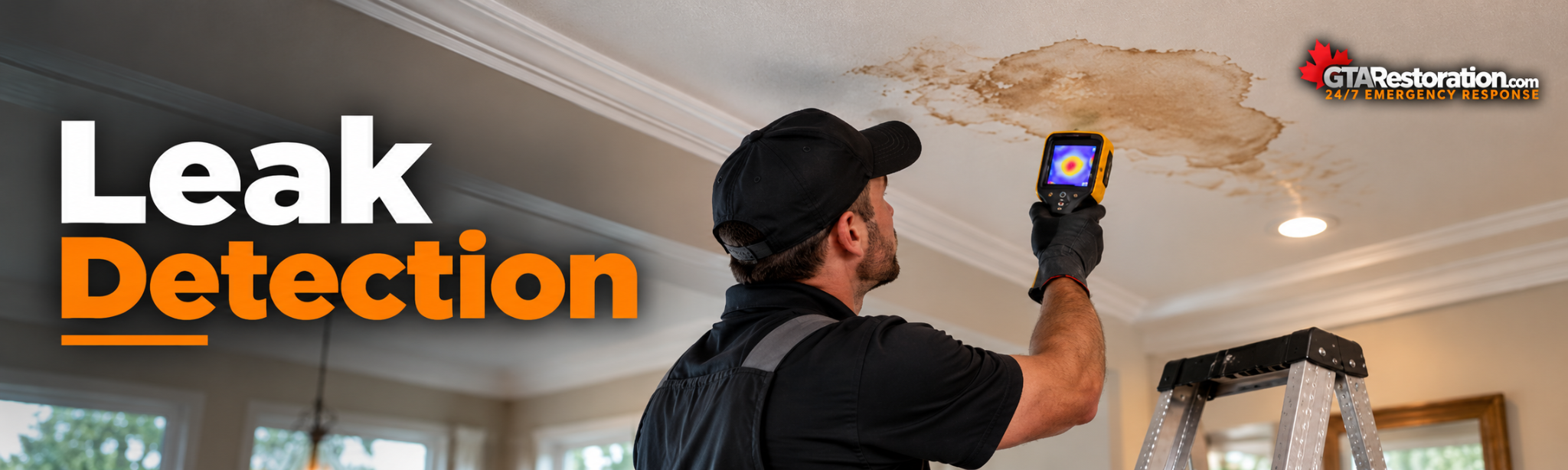
Leak Detection combines moisture inspection tools with building knowledge. Technicians may use moisture meters, thermal imaging, visual checks, and other inspection methods to identify areas that need a closer look.
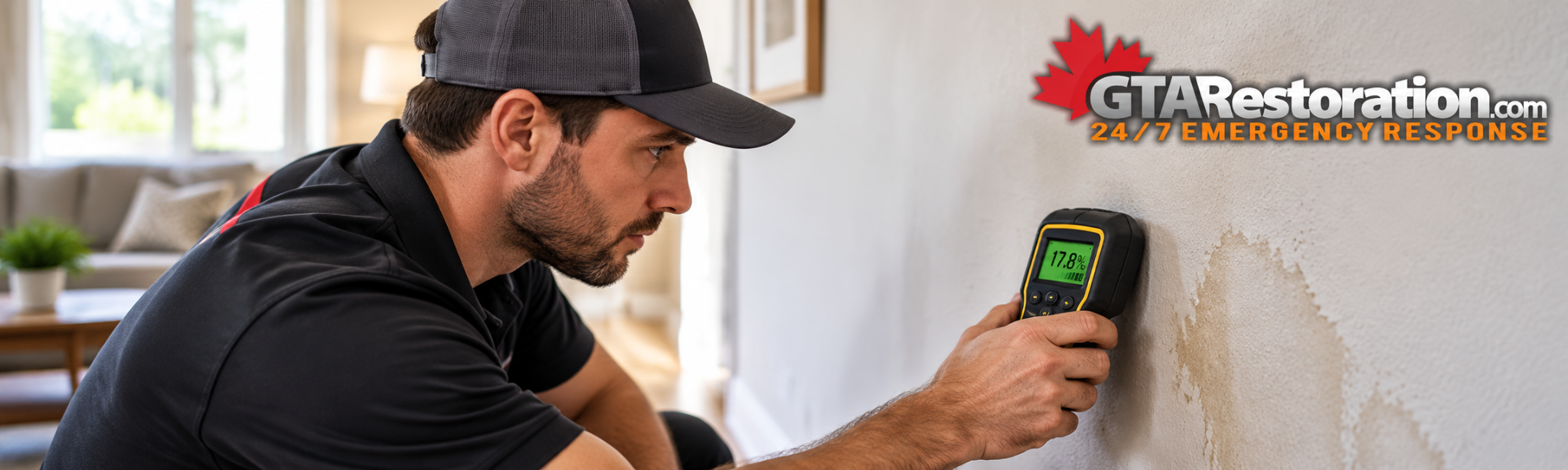
For example, moisture meter testing can help locate damp materials, while thermal imaging may reveal temperature patterns that guide further investigation. However, technicians should confirm suspicious areas with moisture readings and visual evidence.
Concerned about a hidden water leak?
Call GTA Restoration for leak and moisture inspection throughout Toronto and the GTA.
Leak Detection
GTA Restoration is fully trained to quickly and efficiently detect water leaks, no matter where they are our team can find it. Using the latest equipment in the industry, GTA Restoration is able to see behind walls and floors without having to destroy them.
Non-destructive Moisture Meters
Our non-destructive moisture meters help us find moisture under vinyl floor coverings, wood, drywall, tiles, concrete, and masonry without having to remove them. This is a good method to quickly create a moisture map of a property so that we can investigate it in more depth.
Thermal imaging
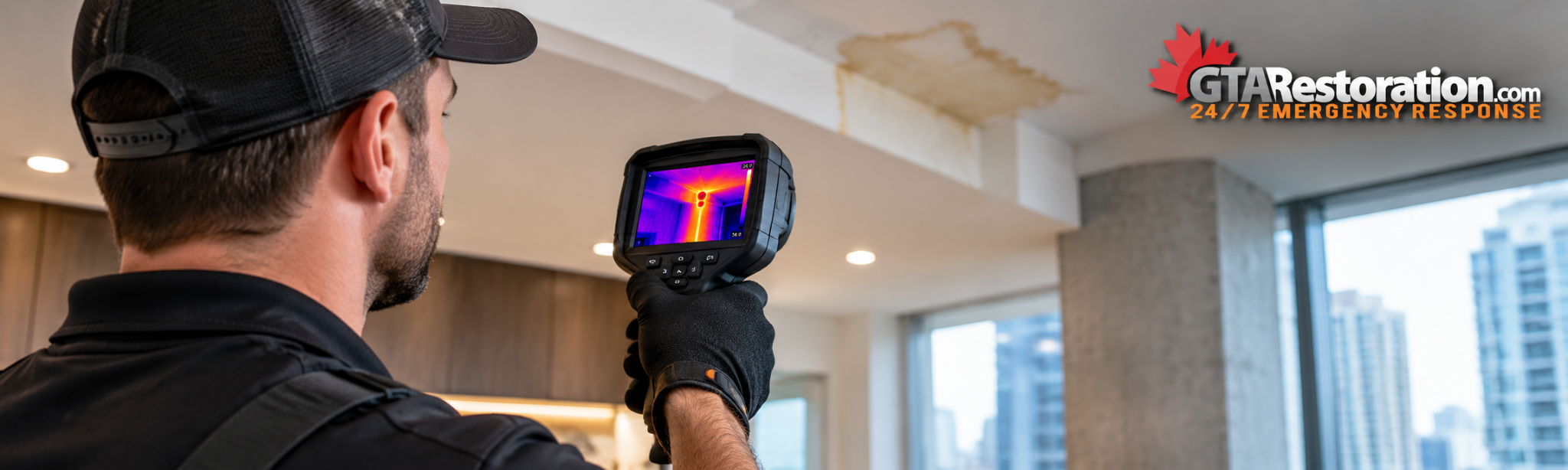
Our infrared camera can show us hot and cold surfaces, helping us find water leaks quickly and easily behind walls and under floors without having to remove them.
Boro Scope
These are optical devices attached to a long tube with a camera on the end, which is useful for finding leaks in confined areas while preventing disruption.
Why Early Leak Detection Matters
Even a small hidden water leak can affect drywall, flooring, insulation, cabinets, ceilings, and other building materials. Therefore, early Leak Detection can help reduce moisture spread and keep repairs focused on the affected area.
Because water can travel through framing, pipes, walls, and ceilings, the first visible stain does not always identify the actual leak source. A professional moisture inspection can help determine where further investigation is needed.
Common Water Leak Sources
Plumbing supply lines and drains
Toilets, tubs, showers, and sinks
Water-connected appliances
Roof and flashing problems
Windows and exterior walls
Neighbouring condo units
Condo and Commercial Leak Detection
In condos, moisture can travel between suites through ceilings, walls, plumbing openings, and shared building assemblies. Consequently, condo leak detection may require access to neighbouring units or common areas.
Commercial properties can also develop leaks around washrooms, kitchens, mechanical rooms, plumbing systems, and equipment. As a result, commercial leak detection can help limit disruption and focus repairs on the correct location.
Leak Detection and Property Drying
Finding the leak source is only the first part of the restoration process. After the source is repaired, affected materials may still contain moisture.
Depending on the conditions, structural drying may include dehumidifiers, air movers, and moisture monitoring. For more complex projects, review our Specialty Drying services.
Mold and Long-Term Moisture
Persistent moisture can create conditions that support mold growth. Therefore, repairing the leak and properly drying affected materials are both important.
Professional Leak Detection Services
GTA Restoration provides Leak Detection, hidden moisture inspection, structural drying, and water damage restoration throughout Toronto and the GTA. For larger losses, visit our Water Damage Restoration services.
Need Leak Detection Help?
Call GTA Restoration at 416-800-0000 for leak detection, moisture inspection, drying, and water damage restoration in Toronto and the GTA.
Professional Leak Detection and Moisture Inspection
Professional Leak Detection can help locate hidden water leaks and unexplained moisture before additional property damage develops. In addition, GTA Restoration provides inspections for houses, condos, rental properties, offices, and commercial buildings throughout Toronto and the GTA.
Water can travel through walls, ceilings, flooring, framing, insulation, and cabinets before becoming visible. Therefore, the first water stain does not always identify the actual leak source.
Hidden Plumbing Leaks
Hidden water leaks can develop around supply lines, drains, valves, toilets, showers, sinks, and appliance connections. For example, a small plumbing leak may remain concealed until staining, dampness, or damaged finishes appear.
Because the source may be some distance from the visible damage, technicians often inspect the surrounding area as well. As a result, the investigation can focus on the most likely source.
Moisture Meter Inspection
Moisture meter testing helps technicians identify damp materials and compare them with nearby dry areas. In addition, readings can show whether water has spread through drywall, flooring, wood, ceilings, or cabinets.
Therefore, moisture readings can help guide further inspection. They can also support decisions about drying or restoration after the source is repaired.
Thermal Imaging for Leak Detection
Thermal imaging can help guide a hidden leak investigation by showing unusual surface-temperature patterns. However, temperature differences can result from several building conditions.
For this reason, technicians confirm thermal imaging findings with moisture readings and visual evidence. Consequently, a thermal camera should support the inspection rather than replace other checks.
Leaks Behind Walls and Ceilings
A stain on a ceiling or wall may appear far from the source. Therefore, leak detection behind walls and ceilings often involves following moisture patterns before opening building materials.
In many cases, non-invasive inspection can narrow down the problem first. However, limited access may still be needed to confirm or repair the source.
Condo Leak Detection
Water can move between condo units through ceilings, walls, plumbing openings, and shared building assemblies. As a result, condo leak detection may require coordinated access to neighbouring suites or common areas.
Meanwhile, property managers and residents may need to arrange access to several locations. Consequently, better coordination can make the investigation more efficient.
Commercial Leak Detection
Offices, retail properties, restaurants, warehouses, and other businesses can develop leaks around kitchens, washrooms, mechanical areas, plumbing systems, and equipment. Therefore, commercial leak detection can help focus repair work on the correct area and reduce unnecessary disruption.
In addition, early investigation may help prevent moisture from spreading farther into nearby materials.
Drying After the Leak Is Repaired
Repairing the source stops additional water from entering, but wet materials may continue holding moisture. Afterward, technicians can inspect drywall, flooring, insulation, wood, cabinets, and ceilings.
Depending on the findings, structural drying may require dehumidification, air movement, and moisture monitoring. Therefore, drying should continue until technicians confirm that suitable materials have reached acceptable moisture levels.
Leak Detection and Water Damage Restoration
If a leak has caused wider property damage, GTA Restoration can provide water extraction, drying, damaged-material assessment, and restoration. Ultimately, the restoration plan depends on the leak source, amount of water, and building materials affected.
For this reason, finding the source and assessing the remaining moisture are both important parts of the process.
Need Help Finding a Hidden Water Leak?
Contact GTA Restoration for Leak Detection, moisture inspection, structural drying, and water damage restoration throughout Toronto and the GTA.
Nationwide, Local Pricing
GTA Restoration offers local flood & water damage repair, mold removal/remediation, asbestos removal/abatement, fire/smoke damage repair services and much more.
Quick answers about Leak Detection, hidden water leaks, thermal imaging, moisture testing, and structural drying.
What are common signs of a hidden water leak?
Common hidden leak signs include water stains, damp drywall, peeling paint, warped flooring, musty odours, wet cabinets, and unexpected increases in water use.
Can thermal imaging detect a water leak?
Thermal imaging can reveal temperature patterns that help guide a leak investigation. However, technicians should confirm suspicious areas with moisture readings and visual evidence.
How does a moisture meter help?
Moisture meter testing helps identify damp building materials and determine how far moisture may have travelled. As a result, technicians can focus further investigation on affected areas.
Do technicians always need to open walls?
No. Non-invasive leak detection methods can often narrow down the suspected area before walls or ceilings are opened. However, limited access may still be required to confirm or repair the source.
What happens after the leak is repaired?
Technicians can check nearby materials for remaining moisture. Depending on the findings, structural drying or additional water damage restoration may be required.
Do you provide leak detection for condos and businesses?
Yes. GTA Restoration provides Leak Detection and moisture inspection for homes, condos, rental properties, offices, and commercial buildings throughout Toronto and the GTA.












You must be logged in to post a comment.