Water Damage Repair & Flood Cleanup Service Near You
Water Damage Repair & Flood Cleanup
Water Damage Repair and flood cleanup can help restore homes and businesses after burst pipes, plumbing leaks, basement flooding, appliance failures, roof leaks, and other water emergencies. GTA Restoration provides water extraction, moisture inspection, structural drying, cleanup, and restoration throughout Toronto and the GTA.
Water can travel beneath flooring, behind drywall, inside insulation, and through framing before the full extent becomes visible. Therefore, professional water damage cleanup should address both visible water and hidden moisture.
What to Do After a Flood or Leak
First, stop the water source when you can do so safely. Depending on the cause, you may need to shut off the main water supply, arrange a plumbing repair, correct a roof leak, or deal with another source.
Electrical hazards, unstable materials, and contaminated water require extra caution. Avoid standing water when electrical outlets, appliances, wiring, or the electrical panel may have come into contact with water.
The source of the water also affects the cleanup process. A clean plumbing leak differs from sewage, drain backups, or outdoor floodwater. As a result, technicians may need different cleaning, removal, and drying procedures.
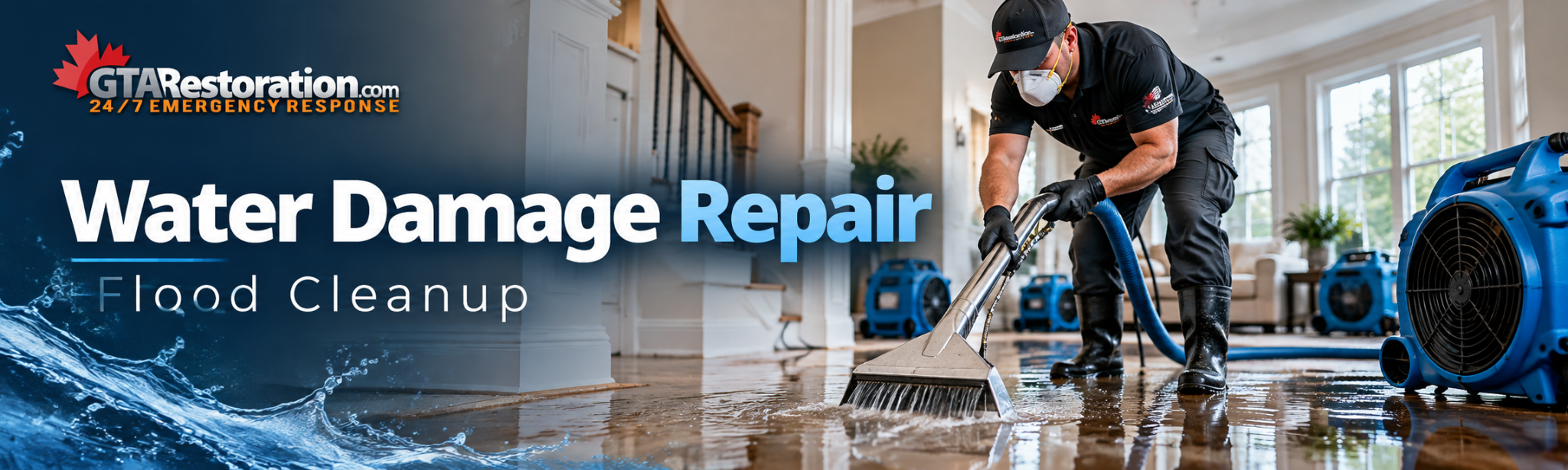
Water extraction removes standing water before it continues soaking into flooring, drywall, cabinets, insulation, and other building materials. Restoration crews may use pumps, wet vacuums, and professional extraction equipment depending on the amount of water present.
Removing visible water is only the beginning. Moisture can remain beneath flooring and inside walls after the surface looks dry. Therefore, technicians should check affected materials before repairs begin.
Contents and Wet Materials
Furniture, rugs, boxes, and other wet belongings can trap moisture against floors and walls. Crews may move suitable contents to improve access and airflow.
Meanwhile, heavily damaged or contaminated materials may require removal. The water source, amount of moisture, material type, and condition help determine whether crews can dry or need to remove an item.
Structural Drying and Moisture Control
After extraction, structural drying may combine commercial dehumidifiers, professional air movers, moisture meters, and regular monitoring. Air movement encourages moisture to leave wet surfaces, while dehumidifiers remove moisture from the surrounding air.
Equipment placement depends on the affected materials and conditions inside the building. In addition, technicians can monitor moisture readings and adjust the drying setup as conditions improve.
Moisture Meters and Thermal Imaging
Moisture meters can help identify damp building materials and compare affected areas with nearby dry materials. Thermal imaging may also help technicians locate temperature patterns that require closer investigation.
However, thermal imaging does not directly measure water. For this reason, technicians can confirm suspicious areas with moisture readings, visual inspection, and knowledge of the building.
Flood Cleanup for Basements and Buildings
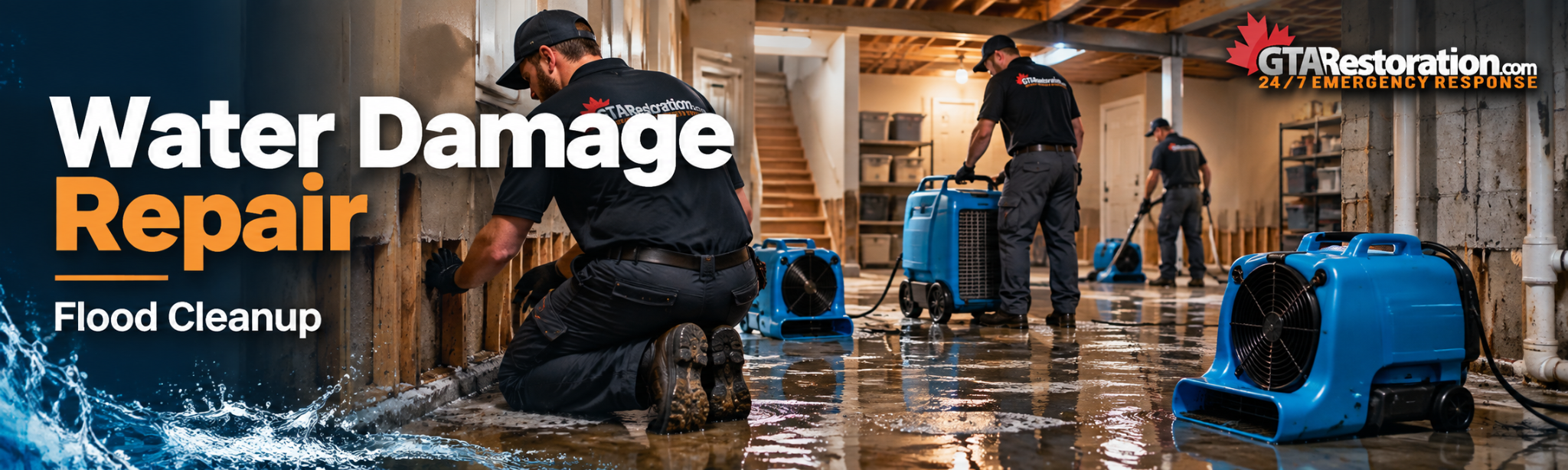
Flood cleanup can involve water extraction, debris removal, material assessment, cleaning, structural drying, and moisture monitoring. Basements often require careful inspection because water can move behind finished walls, beneath flooring, and around mechanical equipment.
Sewage backups and contaminated floodwater need additional precautions. Depending on the conditions, crews may remove porous materials that cannot be cleaned or dried appropriately.
Basement Flooding
A flooded basement can affect drywall, insulation, flooring, baseboards, stored belongings, and mechanical areas. Once the source is controlled, crews can remove standing water and identify where moisture has travelled.
Once drying progresses, the property may need repairs. Water Damage Repair can include replacing damaged drywall, insulation, flooring, trim, ceilings, cabinets, and other materials when restoration is appropriate.
The amount of repair depends on the source of the loss and the condition of the affected materials. Some areas may need only minor work, while larger losses may require more extensive restoration.
Residential Properties
Homes, condos, and rental properties can experience water damage from plumbing failures, appliance leaks, roof problems, sewer backups, and basement floods. A focused inspection helps determine which materials need drying, cleaning, or repair.
Commercial Properties
Commercial buildings may require larger extraction and drying setups. Offices, retail spaces, restaurants, warehouses, and multi-unit properties can also need moisture monitoring across several rooms or floors.
Documentation and Insurance Claims
Photos, moisture readings, equipment records, and details about affected materials can help document a water damage loss. Property owners should also keep invoices, repair records, and other information related to emergency work.
Insurance coverage varies by policy and cause of damage. Therefore, contact your insurer or broker to confirm deductibles, coverage, and documentation requirements. GTA Restoration can provide restoration records, while the insurer makes decisions about claim coverage.
Professional Water Damage Repair
Consider professional restoration when water affects several rooms, drywall or insulation becomes heavily wet, contaminated water enters the property, or hidden moisture remains after a leak.
GTA Restoration provides Water Damage Repair, flood cleanup, water extraction, moisture inspection, structural drying, and restoration throughout Toronto and the GTA.
Need Water Damage Repair or Flood Cleanup?
Call GTA Restoration for water extraction, structural drying, cleanup, and property restoration.
Professional Water Damage Repair can help restore affected areas after plumbing leaks, burst pipes, appliance failures, basement floods, roof leaks, and other water losses. GTA Restoration provides extraction, moisture inspection, drying, cleanup, and restoration for residential and commercial properties throughout Toronto and the GTA.
Water often moves beyond the area that first appears wet. Therefore, a proper restoration plan should address hidden moisture as well as standing water and visible damage.
Water Extraction
Fast water extraction helps reduce the amount of moisture that flooring, drywall, insulation, wood, and other materials continue to absorb. Crews may use professional pumps, wet vacuums, and extraction equipment according to the amount of water present.
Moisture Inspection
After crews remove standing water, moisture may remain behind walls or beneath flooring. In addition, moisture meters and thermal imaging can help guide further inspection of concealed areas.
Structural Drying
Air movers increase airflow across wet surfaces, while commercial dehumidifiers remove moisture from the surrounding air. Consequently, controlled structural drying can help address moisture that remains after water extraction.
Flood Cleanup
A flood may leave water, debris, damaged materials, and contamination inside a property. Depending on the source, cleanup can involve extraction, cleaning, material removal, drying, and moisture monitoring.
Basement Water Damage
Basement flooding can affect drywall, flooring, insulation, stored contents, and mechanical areas. Because moisture may spread behind finished surfaces, basement flood cleanup should include checks beyond the visibly wet area.
Contaminated Water
Sewage and some outdoor floodwater can introduce contaminants into a building. For this reason, technicians may use additional protective measures and remove porous materials that cannot be restored appropriately.
Property Repairs
Once suitable materials have dried, damaged finishes may require repair or replacement. Depending on the loss, Water Damage Repair can include drywall, flooring, insulation, trim, ceiling, and other restoration work.
Residential and Commercial Cleanup
GTA Restoration assists homeowners, landlords, condo owners, businesses, and property managers. Larger commercial losses may require equipment and moisture monitoring across several rooms, floors, or units.
Insurance Documentation
Photos, moisture readings, job records, and repair information can help document restoration work. However, the insurance company determines coverage according to the policy and cause of loss.
Restoration Help When You Need It
Whether the property has a small plumbing leak or extensive flooding, early water removal and proper drying can help limit additional damage. GTA Restoration can inspect the affected area and explain the cleanup and restoration steps that may be required.
Need Water Damage Repair & Flood Cleanup?
Contact GTA Restoration for water extraction, moisture inspection, structural drying, cleanup, and restoration.
GTA Restoration serves communities across Canada, including Toronto and the GTA. U.S. locations are opening. Browse our Canadian service areas below, and contact us to confirm services and availability for your address.
Quick answers about Water Damage Repair, flood cleanup, extraction, structural drying, and hidden moisture.
What should I do first after a flood or major leak?
Stop the water source when you can do so safely and stay clear of electrical hazards. Next, assess the amount and source of water before beginning cleanup.
Is removing standing water enough?
No. Moisture can remain inside drywall, flooring, insulation, cabinets, and framing after visible water disappears. Therefore, moisture checks and structural drying may still be necessary.
What is the difference between flood cleanup and water mitigation?
Flood cleanup focuses on removing water, debris, contamination, and damaged materials. Meanwhile, water mitigation focuses on limiting additional damage through drying, moisture control, and other protective steps.
How do technicians find hidden moisture?
Technicians may use moisture meters, thermal imaging, and visual inspection. Together, these tools can help narrow down damp areas behind walls, beneath flooring, and around concealed spaces.
Can wet drywall or flooring always be saved?
No. The water source, contamination level, material condition, and amount of moisture all affect the decision. Some materials can dry successfully, while others may require removal and replacement.
Can GTA Restoration provide insurance documentation?
Yes. GTA Restoration can provide photos, moisture readings, equipment records, and restoration documentation. Your insurer determines whether the policy covers the loss.
Direct Billing & Insurance Claims
Ask your insurer about coverage, deductibles and the records it needs.
In-House Financing Available
Financing up to 24 months. No interest. No money down. Ask us about the terms.




 Facebook
  Instagram
  LinkedIn
  X / Twitter
  YouTube

