...
Mold Removal and Mould Remediation Toronto - GTA Restoration

Emergency? 24-Hrs

416.800.0000
  • Home Restore
  • Emergency Services
    • Emergency Plumbers 24/7
    • Water Damage Restoration
    • Flooded Basement
    • Mold Remediation Toronto
    • Sewer Backup Remediation
    • Fire & Smoke Restoration
    • Odour Removal Toronto
    • Biohazard Cleanup
    • Emergency Roofing Repair
    • Water Leak and Detection
    • Condominium Restoration
    • Basement WaterProofing
    • Property Inspection Toronto
    • Sanitizing and Disinfection
    • Insurance Claim Appraisers
    • Equipment for Rent Toronto
    • Privacy Policy & Service Terms
  • Commercial Restoration
  • Blog
  • Our Team
  • Contact
27 September 2026 - Categories:

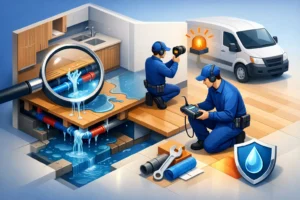
Best Leak Detection Tools for Hidden Water Leaks


Disaster Restoration Emergency Plumbing Service Blog Icon

Best Leak Detection Tools for Hidden Water Leaks, Tools For Hidden Water Leaks

Best Leak Detection Tools for Hidden Water Damage

A ceiling stain, musty smell, damp baseboard or unexplained increase in a water bill can point to a hidden leak. The best leak detection tools help narrow down where water is coming from before moisture spreads through drywall, flooring, insulation or other building materials.

No single tool can find every type of leak. A moisture meter can identify damp materials, while thermal imaging can help locate suspicious temperature patterns. Acoustic equipment may help trace pressurized pipe leaks. Therefore, professional leak investigations often combine several tools instead of relying on one device.

Best Leak Detection Tools for Hidden Water Leaks

The right equipment depends on the type of plumbing system, where the leak may be located and whether water has already reached surrounding materials. Some tools locate moisture. Others help identify pressure loss, unusual flow or the sound of escaping water.

Moisture Meters for Hidden Water Damage

A moisture meter is one of the most useful tools during a water-damage inspection. Technicians use it to compare normal areas with locations that may contain excess moisture.

Pin-type meters use small probes that enter the material. Pinless meters scan surfaces without making probe holes. Both can help check drywall, wood, baseboards, ceilings and certain flooring materials.

However, a moisture meter usually shows where moisture exists rather than exactly where the plumbing leak started. Water can travel along framing, pipes and building cavities before appearing in another location.

Thermal Imaging Cameras for Leak Detection

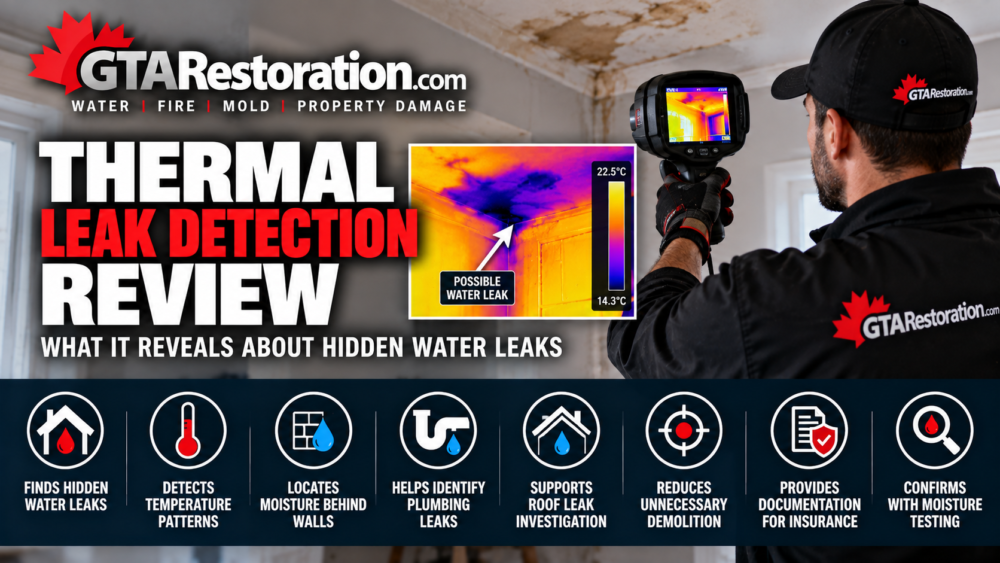
Thermal cameras display surface temperature differences. Wet building materials can sometimes create a different thermal pattern because evaporation changes the surface temperature.

For example, a technician may scan a ceiling below a bathroom and notice an unusual cool pattern near the suspected leak area. Hot-water lines can also create visible temperature patterns behind some finished surfaces.

Thermal imaging works well as a non-invasive screening tool. However, a thermal camera does not see water directly. Insulation gaps, HVAC airflow, sunlight and other conditions can create similar patterns. For that reason, technicians should verify suspicious areas with moisture readings and physical inspection.

Acoustic Leak Detection Equipment

Water escaping from a pressurized pipe can create sound and vibration. Acoustic listening equipment amplifies these signals so technicians can narrow down the location of a concealed leak.

Acoustic equipment can help with leaks behind walls, beneath floors, under concrete slabs and along buried supply lines. Ground microphones and electronic listening devices can make small leak sounds easier to identify.

Background noise can affect the results. Mechanical equipment, occupied commercial areas and thick building materials may make testing more difficult. In some cases, technicians need a quieter environment to get clearer readings.

Tracer Gas for Difficult Hidden Leaks

Tracer gas can help when other methods cannot isolate a difficult leak. A technician isolates the pipe system and introduces a suitable tracer gas. Specialized equipment then detects where the gas escapes.

This method can work well for concealed plumbing, heating lines and certain slab leaks. It requires proper setup and testing procedures, so trained professionals normally perform the work.

More Leak Detection Tools for Plumbing Problems

Borescope Inspection Cameras

A borescope places a small camera on the end of a flexible cable. Technicians can insert it through a small access opening to inspect hidden spaces behind walls, beneath cabinets or inside ceiling cavities.

A borescope can reveal standing water, wet insulation, pipe fittings, staining or other visible conditions while limiting unnecessary demolition.

However, the camera can only show the area directly in front of it. Other diagnostic tools should first narrow down the suspected leak location.

Pressure Testing Equipment

Pressure gauges can help determine whether a closed plumbing system loses pressure. When fixtures remain off but pressure continues to drop, the plumbing system may have a leak that requires further investigation.

Pressure testing can help narrow down supply-line problems. However, it does not automatically show the exact location of the failure.

Flow Monitoring and Smart Leak Sensors

Flow-monitoring systems track water movement through plumbing lines. Some systems can identify unusual flow patterns, continuous water use or sudden changes that may indicate a leak.

The U.S. Environmental Protection Agency explains that leak-detection systems may use moisture sensors, water-flow monitoring or a combination of technologies. Some systems can also activate an automatic shutoff valve when they detect abnormal conditions. See the EPA Water Sense leak detection guide for more information.

These systems provide useful early warnings, but an alert does not always identify the exact problem. A running toilet, appliance hose, irrigation line or concealed pipe can create unusual water use.

How to Choose the Best Leak Detection Tools

The best leak detection tools depend on the symptoms and the type of building. Start by identifying what you can see, hear or measure.

For Damp Drywall or Ceiling Stains

Moisture meters and thermal imaging usually provide a useful starting point. Technicians can map the wet area and then investigate nearby plumbing, roofing or fixtures.

For a Hidden Pressurized Pipe Leak

Acoustic equipment, pressure testing and tracer gas may provide better information when the leak involves a concealed supply line.

For Water Under Flooring

Moisture meters and thermal imaging can help locate suspicious areas. Technicians may need additional inspection when water travels beneath hardwood, laminate or other finished flooring.

For Water Inside a Wall Cavity

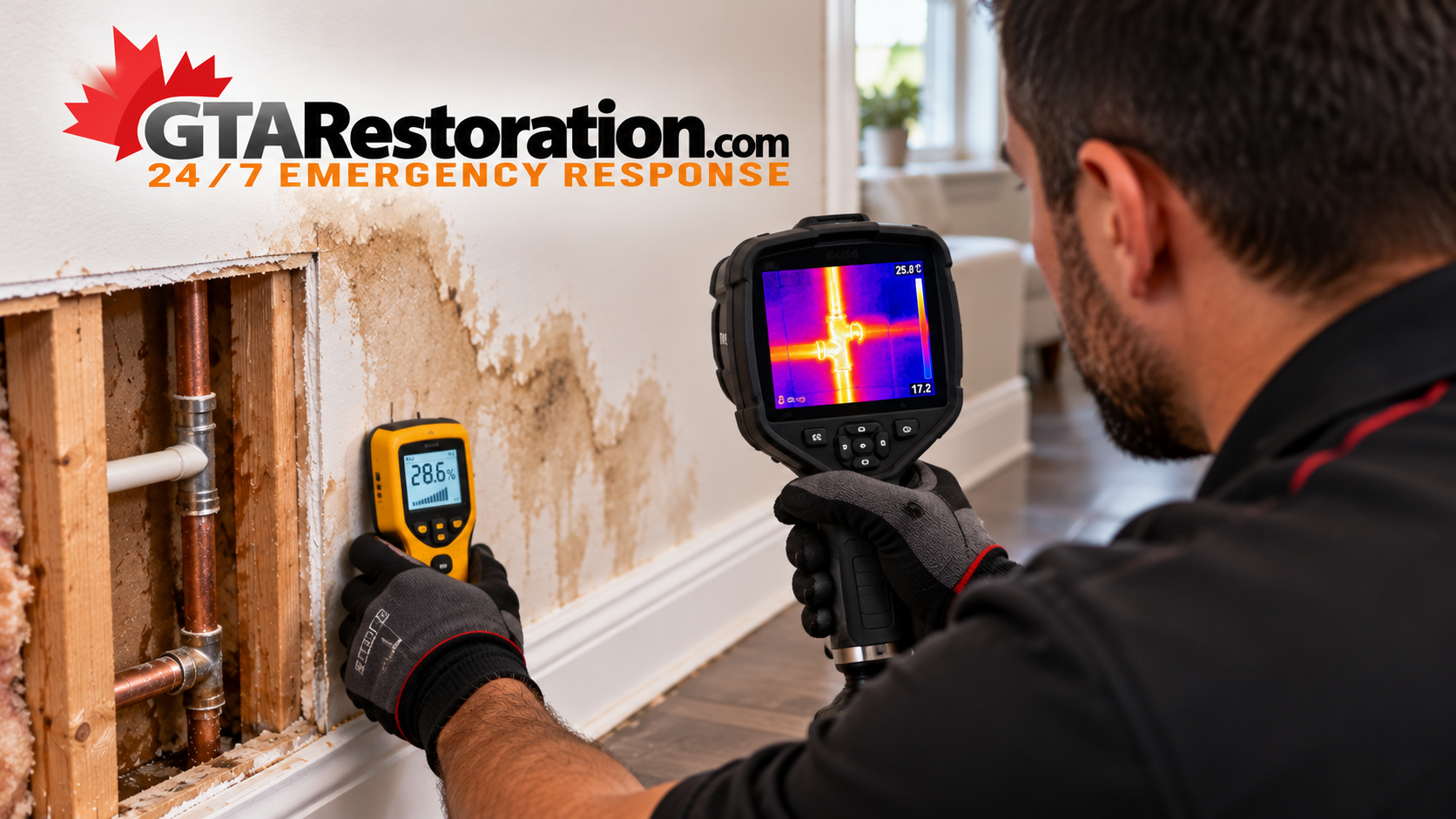
A combination of thermal imaging, moisture readings and borescope inspection can reduce unnecessary wall removal. The goal is to create targeted access rather than opening large areas without evidence.

For Rising Water Bills Without Visible Damage

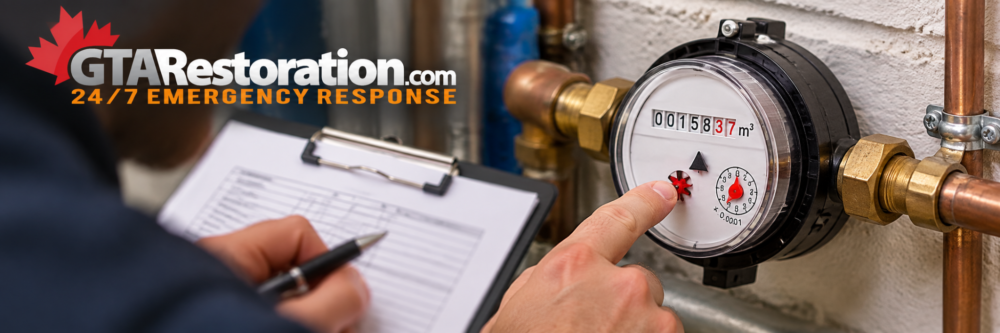
Check the water meter and look for continuous water use when fixtures remain off. Flow-monitoring equipment can also identify unusual usage patterns.

Why Professional Leak Detection Uses More Than One Tool

The best leak detection tools work together. A thermal camera may reveal an unusual temperature pattern. A moisture meter can confirm that the material contains excess moisture. Acoustic equipment or pressure testing can then help investigate the plumbing system itself.

This step-by-step approach helps reduce guesswork and unnecessary demolition.

Finding the Leak Is Only the First Step

Stopping the source does not automatically dry the building. Water may remain behind drywall, under flooring or inside insulation after a plumber repairs the pipe.

If water has already reached building materials, GTA Restoration can provide professional leak inspection and moisture assessment throughout Toronto and the GTA.

When the leak has caused significant water damage, our emergency water restoration team can provide extraction, structural drying and moisture monitoring.

Warning Signs That Need Fast Attention

Do not ignore spreading ceiling stains, swollen flooring, soft drywall, musty odours or recurring damp areas. Water near electrical panels, outlets or fixtures requires extra caution.

If a ceiling starts sagging or water continues spreading quickly, keep people away from the affected area and address the water source as soon as conditions safely allow.

Choosing the Right Leak Detection Method

Ultimately, the best leak detection tools are the ones that match the type of leak. Moisture meters help map damp materials. Thermal cameras provide fast non-invasive screening. Acoustic tools can help locate pressurized leaks, while tracer gas, borescopes and pressure testing solve more specialized problems.

Accurate leak detection should find the source while limiting unnecessary damage to walls, ceilings and flooring. Once technicians locate the problem, they can plan the plumbing repair and determine whether surrounding materials also need drying.


Suspect a Hidden Water Leak?

GTA Restoration provides professional moisture inspections, hidden leak investigation and water damage restoration throughout Toronto and the GTA.

Find the source early before hidden moisture spreads farther through the property.

Call Us: 416-800-0000

Learn More

Professional Leak Inspection | Signs of Hidden Leaks | Smart Water Sensors | Emergency Water Restoration | Musty Basement Causes | Montreal Water Leak Detection | Montreal Water Leak Detection | Thermal Leak Detection Review  | Water Leak Detection GTA | Thermal Imaging Camera | Leak Detection

Share this... Spread the word!


Tags: Leak Detection, Leak Detection Services, Pipe Leak Detection, tools, Water Leak Detection, Water Leak Detection Toronto,
☛ ☛ Related Restoration Articles You May Also Like!

3 Tips to find Roofing Problems
Water Damage & Mold from Melting Snow!
Is Your Home Secretly Leaking? Your Guide to Catching Water Leaks Early 
How to Find Small Leaks in Your Home

Emergency? Immediate response 24/7

416.800.0000 416.800.0000

For non-emergencies use our contact form

Start With the Visible Signs

Look for water stains, peeling paint, swollen baseboards, damp flooring and musty odours. These signs can help narrow down where moisture may be travelling.

Use Moisture Readings

Moisture meters help compare normal materials with damp areas. They can also help track how far water has spread beyond the visible stain.

Scan With Thermal Imaging

Thermal cameras can quickly identify unusual temperature patterns across walls, ceilings and floors. Technicians should confirm suspicious areas with additional testing.

Listen for Pressurized Leaks

Acoustic tools can amplify the sound of water escaping from pressurized plumbing. These devices can help narrow down concealed pipe leaks.

Check Plumbing Pressure

Pressure testing can show whether a closed plumbing system loses pressure. A pressure drop can support further investigation for a concealed supply-line problem.

Use Borescopes for Hidden Cavities

A small inspection camera can show conditions behind walls or beneath cabinets through limited access points. This may reduce unnecessary demolition.

Consider Tracer Gas Testing

Tracer gas can help locate difficult concealed leaks when other methods cannot provide a clear answer. Proper system isolation and testing procedures matter.

Monitor Water Flow

Smart monitoring systems can identify unusual water use and provide early alerts. Some systems can also trigger an automatic shutoff valve.

Check Under Flooring

Water can travel beneath hardwood, laminate and vinyl flooring. Moisture may remain hidden even when the visible surface appears dry.

Do Not Depend on One Tool

One device rarely provides every answer. Professional investigations often combine visual inspection, moisture readings, thermal imaging and plumbing tests.

Dry Materials After the Repair

Repairing the pipe stops new water from entering, but wet drywall, wood or insulation may still require drying. Continue monitoring affected areas after the plumbing repair.

Get Professional Help for Hidden Leaks

GTA Restoration provides moisture inspections, leak investigation, water extraction and structural drying throughout Toronto and the GTA. Our team can help identify affected areas and determine the next step after a hidden water loss.


Need Help Finding a Hidden Water Leak?

Locate the source, check surrounding materials and control the damage before moisture spreads farther.

Call Us: 416-800-0000


Nationwide, Local Pricing

GTA Restoration offers local flood & water damage repair, mold removal/remediation, asbestos removal/abatement, fire/smoke damage repair services and much more.

Search

  • Ajax Asbestos Removal
  • Ajax Mold Removal
  • Ajax Water Damage
  • Anjou Mold Removal
  • Aurora Mold Removal
  • Aurora Water Damage
  • Beaconsfield Asbestos Removal
  • Beaconsfield Mold Removal
  • Boucherville Mold Removal
  • Brampton Asbestos Removal
  • Brampton Asbestos Removal
  • Brampton Mold Removal
  • Brampton Water Damage
  • Brossard Mold Removal
  • Burlington Asbestos Removal
  • Burlington Mold Removal
  • Burlington Water Damage
  • Burnaby Mold Removal
  • Burst Frozen Pipe Edmonton
  • Caledon Mold Removal
  • Caledon Water Damage
  • Calgary Asbestos Removal
  • Calgary Mold Removal
  • Calgary Water Damage
  • Cambridge Mold Removal
  • Cambridge Water Damage
  • Chambly Mold Removal
  • Chateauguay Mold Removal
  • Chomedey Mold Removal
  • Clarington Mold Removal
  • Concord Mold Removal
  • Concord Water Damage
  • Mississauga Mold Removal
  • Coquitlam Mold Removal
  • Cumberland Mold Removal
  • Dollard-des-Ormeaux Mold Removal
  • Dorval Mold Removal
  • Edmonton Asbestos Removal
  • Edmonton Mold Removal
  • Edmonton Water Damage
  • Etobicoke Asbestos Removal
  • Etobicoke Mold Removal
  • Etobicoke Water Damage
  • McMurray Fire Damage Services
  • Saskatchewan Asbestos Removal
  • Saskatchewan Mold Removal
  • Frozen Burst Pipe Repair Montreal
  • Frozen Burst Pipe Repair Ottawa
  • Gloucester Asbestos Removal
  • Gloucester Mold Removal
  • Hamilton Asbestos Removal
  • Hamilton Asbestos Testing
  • Hamilton Mold Removal
  • Hamilton Water Damage
  • Hampstead Mold Removal
  • Hampstead Water & Flood Damage
  • L'île-Bizard Mold Removal
  • Kahnawake Mold Removal
  • Kanata Asbestos Removal
  • Kanata Mold Removal
  • Kanata Water Damage
  • Kirkland Mold Removal
  • Kitchener Asbestos Removal
  • Kitchener Mold Removal
  • Kitchener Water Damage
  • Lasalle Mold Removal
  • Laval Asbestos Removal
  • Laval Mold Removal
  • Laval Water Damage
  • London Mold Removal
  • London Water Damage
  • Longueuil Mold Removal
  • Longueuil Water Damage
  • Markham Asbestos Removal
  • Markham Mold Removal
  • Markham Water Damage
  • Mississauga Asbestos Testing
  • Mississauga Mold Removal
  • Mississauga Water Damage
  • Montreal Air Duct Cleaning
  • Montreal Asbestos Removal
  • Montreal Asbestos Testing
  • Montreal East Mold Removal
  • Montreal Mold Removal
  • Montreal Water Damage
  • Mount-Royal Mold Removal
  • Nepean Asbestos Removal
  • Nepean Mold Removal
  • Nepean Water Damage
  • New Market Water Damage
  • New Westminster Mold Removal
  • Newmarket Mold Removal
  • North York Mold Removal
  • Oakville Mold Removal
  • Oakville Water Damage
  • Orleans Asbestos Removal
  • Orleans Mold Removal
  • Orleans Water Damage
  • Osgoode Mold Removal
  • Oshawa Mold Removal
  • Oshawa Water Damage
  • Ottawa Air Duct Cleaning
  • Ottawa Asbestos Removal
  • Ottawa Mold Removal
  • Ottawa Vermiculite Removal
  • Ottawa Water Damage
  • Pickering Mold Removal
  • Pickering Water Damage
  • Red Deer Mold Removal
  • Red Deer Water Damage
  • Richmond Hill Mold Removal
  • Richmond Hill Water Damage
  • Richmond Mold Removal
  • Rideau Lakes Mold Removal
  • Rockcliffe Park Mold Removal
  • Roxboro Mold Removal
  • Saint Laurent Mold Removal
  • Saint-Hubert Mold Removal
  • Scarborough Asbestos Removal
  • Scarborough Mold removal
  • Scarborough Water Damage
  • Sewer Backup Edmonton
  • Sewer Backup Montreal
  • Sewer Backup Ottawa
  • Sherwood Park Asbestos Removal
  • Sherwood Park Mold Removal
  • Spruce Grove Asbestos Removal
  • Spruce Grove Mold Removal
  • St. Albert Asbestos Removal
  • St. Albert Mold Removal
  • Ste.Dorothee Mold Removal
  • Surrey Mold Removal
  • Thornhill Mold Removal
  • Toronto & GTA Asbestos Removal
  • Toronto & GTA Mold Removal
  • Toronto Air Duct Cleaning
  • Toronto Water Damage
  • Unionville Mold Removal
  • Unionville Water Damage
  • Vancouver Asbestos Removal
  • Vancouver Mold Removal
  • Vancouver Water Damage
  • Vanier Mold Removal
  • Vaughan Mold Removal
  • Vaughan Water Damage
  • Westmount Mold Removal
  • Whitby Water Damage
  • Woodbridge Asbestos Removal
  • Woodbridge Mold Removal
  • Woodbridge Water Damage
  • Waterproofing
  • Kitchen & Bath Pro
  • Condo Restoration

Main Head Office


Best Leak Detection Tools – FAQs

What are the best leak detection tools?

Useful tools include moisture meters, thermal imaging cameras, acoustic listening equipment, tracer gas, borescopes, pressure gauges and flow monitors.

Can a thermal camera see water inside a wall?

No. A thermal camera shows surface temperature differences. Technicians use moisture readings and other tests to confirm whether water causes the pattern.

Can a moisture meter find the exact leak?

A moisture meter helps locate damp materials, but water may travel away from the original leak source before it becomes visible.

How do professionals find hidden pipe leaks?

They may combine moisture readings, thermal imaging, acoustic testing, pressure tests, tracer gas and inspection cameras.

Can leak detectors automatically shut off the water?

Some smart flow-monitoring systems can activate an automatic shutoff valve when they detect unusual water use or a possible leak.

What should I do after a hidden leak is repaired?

Check surrounding drywall, flooring, insulation and wood for remaining moisture. Wet materials may still need professional drying after the plumbing repair.


We Work Direct with All Insurance Companies

Wᴇ ᴀʀᴇ ᴄᴏᴍᴍɪᴛᴛᴇᴅ ᴏɴ ᴡᴏʀᴋɪɴɢ ᴡɪᴛʜ ᴇᴠᴇʀʏ ɪɴsᴜʀᴀɴᴄᴇ ᴄᴏᴍᴘᴀɴʏ ᴀᴄʀᴏss Cᴀɴᴀᴅᴀ & USA.


In House Financing Available

In House Financing Available

FREE Financing Up To 24 Months NO INTEREST NO MONEY DOWN


Contact Us

Learn more ↴ GTA Restoration Tips

RELATED ARTICLES

  • How To Avoid Sprinkler Water Damage?
  • How To Deal With Floods & Water Damage?
  • Signs of Mould Growth In Your Property?
  • Avoid Mould Damage from Melting Snow
  • How to Prevent Water Damage In Summer
  • Avoid Mold Growth With Proper Air Flow
  • Prevent House Floods from Spring Rains
  • Prevent Frozen Burst Pipes in Winter
  • What To Do on Your Flooded Basement?


follow us on  LinkedIn Instagram Twitter Facebook YouTube


Our Clients

Our Vendor Clients


Affiliates

fully certified


GTA Restoration Toronto

Copyright © 2009 - 2026 All Rights Reserved. Sitemap/Links

LinkedInInstagram Twitter Facebook YouTube

Call Us 416-800-0000

Emergency? Immediate response 24/7

416.800.0000

416.800.0000

We cover all GTA 24/7.

Head Office:
250 Consumers Rd,
#10
Toronto, ON
M2J 4V6,
Open 24 hours

Downtown Office:
1 Toronto St,
#10
Toronto, ON
M5W 1A1,
Open 24 hours

For non-emergencies use our contact form


    Not sure what you need?

    Call us today to find the best product for your situation.

    416-800-0000 416-800-0000

    Head Office:
    101 Lebovic Ave,
    Unit #10
    Scarborough,
    ON, M1L 4T7
    Hours
    24-Hours Open

    Downtown Office:
    250 Yonge Street,
    Unit #1A
    Toronto,
    ON, M5B 2L7
    Hours
    24-Hours Open

    Best Leak Detection Tools for Hidden Water Leaks

    Get a quote today


      GTA Restoration Assistant 24/7 Emergency Restoration Help
      Hi! I'm GTA Restoration's virtual assistant. How can I help with your property damage today?
      Emergency? Call 416-800-0000
      Loading Comments...

      You must be logged in to post a comment.