...
Water Damage Restoration Toronto - GTA Restoration

Emergency? 24-Hrs

416.800.0000
  • Home Restore
  • Emergency Services
    • Emergency Plumbers 24/7
    • Water Damage Restoration
    • Flooded Basement
    • Mold Remediation Toronto
    • Sewer Backup Remediation
    • Fire & Smoke Restoration
    • Odour Removal Toronto
    • Biohazard Cleanup
    • Emergency Roofing Repair
    • Water Leak and Detection
    • Condominium Restoration
    • Basement WaterProofing
    • Property Inspection Toronto
    • Sanitizing and Disinfection
    • Insurance Claim Appraisers
    • Equipment for Rent Toronto
    • Privacy Policy & Service Terms
  • Commercial Restoration
  • Blog
  • Our Team
  • Contact
28 May 2026 - Categories:

Best Dehumidifiers for Water Damage


Disaster Restoration Emergency Plumbing Service Blog Icon

Best Dehumidifiers Rental for Water Damage, Best Dehumidifiers Rental

Best Dehumidifiers Rental for Water Damage

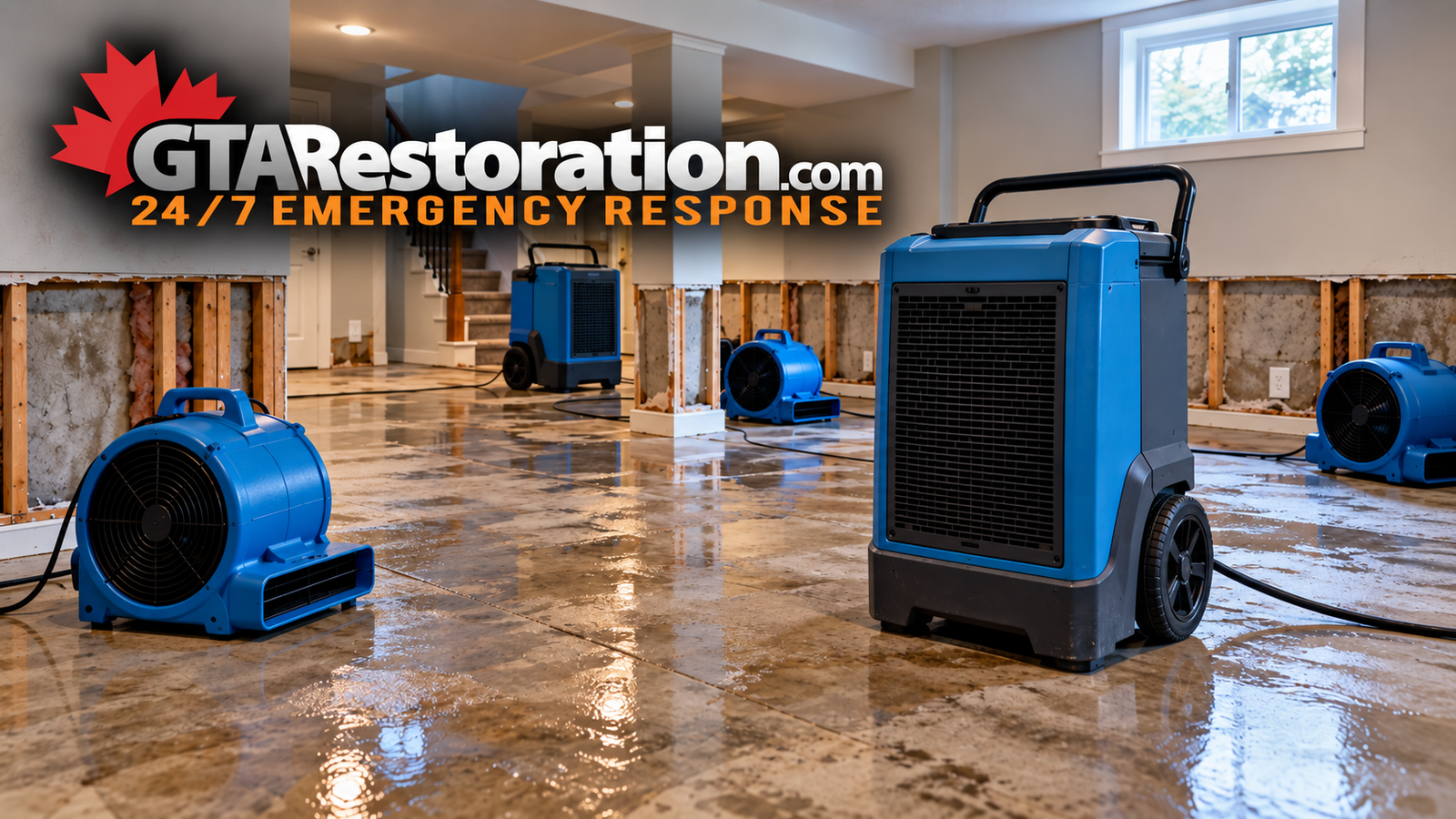
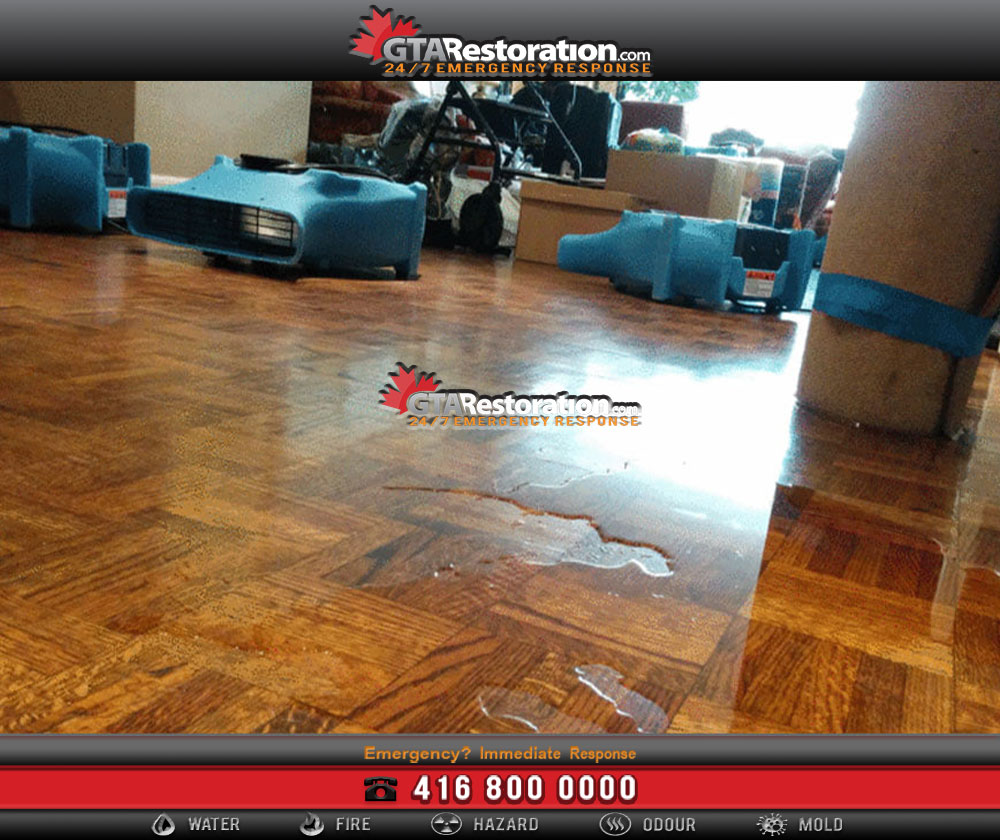
Water on the floor is only part of a water-loss problem. Moisture can remain inside drywall, beneath flooring, behind baseboards and in the air long after standing water disappears. That is why choosing the best dehumidifiers for water damage matters after a leak, flood, burst pipe or plumbing failure.

The right equipment helps lower humidity while wet materials release moisture into the surrounding air. However, not every dehumidifier has enough capacity for structural drying. A small household unit may work for mild dampness, while soaked drywall, flooring or several wet rooms may require professional restoration equipment.

What Makes the Best Dehumidifiers for Water Damage?

The best dehumidifiers for water damage need to do more than lower the humidity shown on a display. Water-damage drying can create a large and continuous moisture load. Therefore, the equipment needs strong moisture-removal capacity, dependable drainage and enough durability for long operating periods.

Room size matters, but it should not be the only factor. The amount of water, affected materials, temperature, humidity and length of exposure can all change the drying requirements.

Residential Dehumidifiers for Minor Water Damage

Standard residential dehumidifiers can work well for mild dampness, condensation or a small clean-water leak that someone discovered quickly. They can also help control leftover humidity after water extraction removes standing water.

Manufacturers build common residential units mainly for household humidity control rather than major restoration work. As a result, these machines may struggle when drywall, carpet padding, wood or insulation holds significant moisture.

If materials stay damp or humidity remains high, the property may need more drying capacity.

Large-Capacity Units for Moderate Water Losses

Large residential and light-commercial units provide more moisture removal and often include continuous drainage. They may work well in a finished basement, condo or smaller commercial area where water has not spread very far.

However, a larger machine does not automatically mean the structure is dry. Moisture can remain beneath flooring, inside walls or behind cabinets even while the air feels comfortable.

Restoration-Grade LGR Dehumidifiers for Water Damage

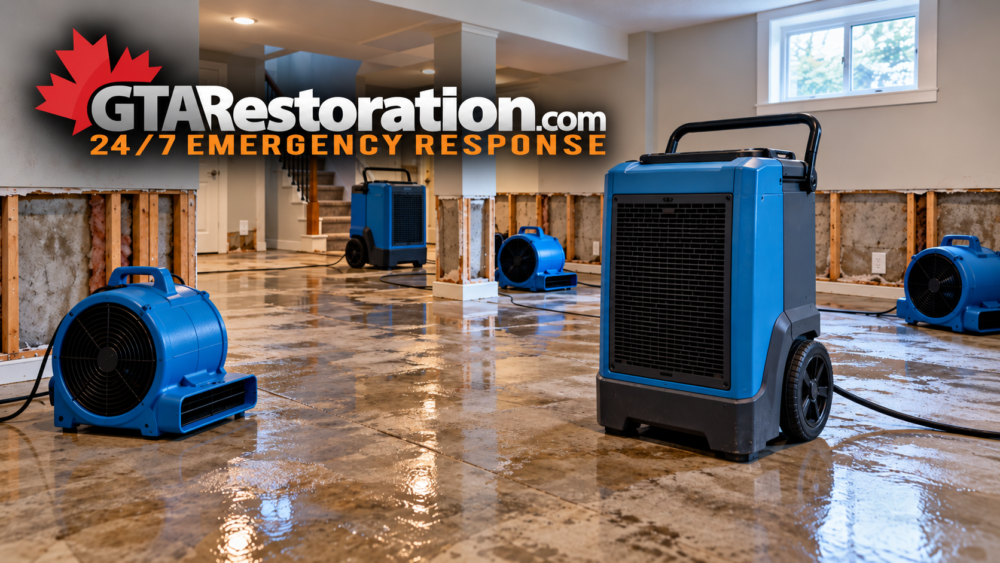
Professional restoration crews often use low-grain refrigerant, or LGR, dehumidifiers during water-damage drying. These machines continue removing moisture as humidity drops and can handle demanding job-site conditions.

LGR equipment works especially well when wet building materials continue releasing moisture into the air. Professional drying usually combines dehumidification with air movement, water extraction and regular moisture readings.

GTA Restoration also offers professional drying equipment through its restoration equipment catalogue for projects where equipment rental makes sense.

Desiccant Dehumidifiers for Special Drying Conditions

Desiccant dehumidifiers use a moisture-absorbing material instead of the refrigeration process found in standard refrigerant units. They can perform well in certain low-temperature or specialized drying situations.

They do not suit every flood or leak. Temperature, building conditions, electrical requirements, ducting and the drying goal should guide equipment selection.

How to Choose a Dehumidifier After Water Damage

The correct machine depends on how much water entered the property, how long materials stayed wet and which materials absorbed moisture. A small room with saturated drywall can require more drying power than a larger room with only light surface moisture.

Porous materials such as drywall, wood, carpet, insulation and cabinetry can hold water and slowly release it. Therefore, drying needs can change as moisture moves from the materials into the air.

When a Home Dehumidifier May Be Enough

A residential unit may work when a clean-water leak affects a small area, someone stops the source quickly and water does not spread beneath finished floors or into wall cavities.

For example, a small supply-line leak on a hard surface may only require extraction, cleanup and additional humidity control rather than a full professional drying setup.

Continue checking the area carefully. Persistent dampness, high humidity, swelling materials or a musty odour can show that the drying process needs more time or stronger equipment.

When Restoration Dehumidifiers Are a Better Choice

Professional drying becomes more important when water spreads through several rooms, reaches wall cavities or soaks large areas of flooring. Wet carpet padding, damp subfloors and water trapped behind finished surfaces can also require stronger equipment and moisture monitoring.

If water reaches carpet or padding, see our carpet water-loss resources for additional information.

Flooded basements, multi-unit condo losses and commercial water damage may also require several machines instead of one dehumidifier.

Contaminated Water Needs More Than Drying Equipment

A dehumidifier alone cannot solve a sewage or contaminated-water problem. The cleanup may also require controlled material removal, cleaning, disinfection and additional safety precautions.

Keep people and pets away from the area when sewage, electrical hazards or other unsafe conditions exist. Always identify the water source before setting up drying equipment.

Important Features in Water Damage Dehumidifiers

Moisture Removal Capacity

Compare how much moisture each unit can remove under its rated operating conditions. Temperature and humidity affect published capacity figures, so actual performance can change at the job site.

Continuous Drainage

Water-damage drying can produce condensate continuously. A direct drain hose or built-in condensate pump works much better than repeatedly emptying a small collection bucket.

Reliable Continuous Operation

A restoration machine may run for long periods while technicians monitor drying progress. Durable construction, dependable controls and regular maintenance help the equipment continue working properly throughout the drying process.

Automatic Restart

Auto restart can help after a temporary power interruption. However, someone should still check the equipment after an outage to confirm that both the unit and drainage system continue operating correctly.

Performance at Lower Humidity

Removing the first wave of moisture only starts the structural drying process. Restoration-grade equipment continues working as conditions become drier and building materials release their remaining moisture.

Best Dehumidifiers for Water Damage Work With Air Movers

Dehumidification forms only one part of a complete drying system. Air movers increase evaporation from wet surfaces. The dehumidifier then removes that moisture from the surrounding air.

The U.S. Environmental Protection Agency recommends reducing indoor humidity with dehumidifiers and using fans to speed drying for several types of clean-water-damaged materials. Review the EPA water damage and mold prevention guidance for additional information.

For more detail about how extraction, evaporation, dehumidification and temperature work together, review our structural drying principles.

Do Not Ignore Hidden Moisture

One common mistake is assuming a property is dry because the floor surface looks normal. Water can remain beneath vinyl plank, laminate and hardwood flooring. It can also stay beneath cabinets and inside wall assemblies.

If water reaches finished flooring, our floating-floor drying guide explains why moisture beneath the surface needs extra attention.

Measure Materials, Not Just Room Humidity

A humidistat can show changes in the surrounding air, but it cannot confirm whether drywall, subfloor or framing has reached the proper drying goal.

Professional restoration crews use moisture meters and other diagnostic tools to monitor wet materials. Thermal imaging can also help technicians locate temperature patterns that deserve further investigation, although thermal cameras do not directly measure moisture.

Residential and Commercial Water Damage Drying

The best dehumidifiers for water damage also depend on the type of property. A small residential leak has different requirements from water spreading across an apartment corridor, retail unit or commercial building.

Residential Water Damage Drying

Homeowners usually need to protect flooring, walls, furniture and contents while preventing moisture from spreading farther through the structure. Smaller losses may need only limited equipment, while flooded basements and multi-room losses can require a complete drying setup.

Commercial and Multi-Unit Drying

Commercial losses may involve larger spaces, higher ceilings and water movement through several rooms or units. Property managers may also need moisture records, equipment logs and restoration documentation.

In these situations, contractors should select equipment based on moisture load, wet materials and site conditions rather than convenience alone.

Equipment Rental or Professional Water Damage Restoration?

Renting equipment can make sense for a small, controlled project when you know the water source and can monitor the affected materials. However, equipment rental should not replace a professional assessment when water spreads into structural materials or hidden areas.

Professional restoration teams can remove standing water, track moisture migration, install suitable drying equipment and monitor the property until the materials reach the required drying goals.

GTA Restoration provides 24/7 emergency drying and restoration service throughout Toronto and the GTA.

Choosing the Best Dehumidifier for Your Water Loss

Ultimately, the best dehumidifiers for water damage are the machines that match the actual moisture load. A household unit may handle a minor leak. Larger losses may need LGR or other restoration-grade equipment working together with air movers and moisture monitoring.

The goal is not simply to make the room feel dry. The goal is to remove excess moisture from building materials before hidden water creates additional damage.


Need a Dehumidifier or Professional Structural Drying?

GTA Restoration provides professional drying equipment, water extraction, moisture monitoring and water damage restoration throughout Toronto and the GTA.

Remove the water, locate hidden moisture and choose drying equipment that matches the loss.

Call Us: 416-800-0000

Learn More

Restoration Equipment Catalogue | Emergency Drying Service | Structural Drying Principles | Drying Wet Flooring | Carpet Water-Loss Resources | How to Dry Wet Basement Walls | Commercial Dehumidifier Rental Review | Large Desiccant Dehumidifier | Water Damage Ottawa

Share this... Spread the word!


Tags: 24/7 water damage restoration, Basement Water Damage, Emergency Water Damage, Large Dehumidifier, Small Domestic Dehumidifier,

☛ ☛ Related Restoration Articles You May Also Like!

Water Damage Restoration Tips: 5 Essential Steps
How fast should you deal with water damage?
Emergency Restoration Response Team 24/7
What To Do If You Have Water Damage in Toronto

Emergency? Immediate response 24/7

416.800.0000 416.800.0000

For non-emergencies use our contact form

Choose Equipment for the Water Loss

A dehumidifier should match the amount of water, affected materials and site conditions. Do not select equipment by room size alone when drywall, flooring or other porous materials are wet.

Remove Standing Water First

Dehumidifiers are not designed to replace water extraction. Remove standing water as soon as conditions safely allow, then begin structural drying and humidity control.

Use Residential Units for Small Losses

A household unit may help after a minor clean-water leak that was caught quickly. It can also control leftover humidity when materials are only lightly damp.

Use Restoration Equipment for Larger Losses

Professional equipment offers greater moisture-removal capacity for wet building materials and larger affected areas. LGR units are commonly used during structural drying.

Provide Continuous Drainage

A direct hose or condensate pump allows the equipment to operate without repeatedly stopping to empty a collection bucket.

Add Air Movement

Airflow helps moisture evaporate from wet surfaces. Dehumidification then removes that moisture from the air. Both processes often work together during structural drying.

Check Hidden Areas

Water may remain beneath flooring, behind baseboards, under cabinets and inside wall cavities. Surface appearance alone cannot confirm that these areas are dry.

Monitor Building Materials

Humidity readings are useful, but material readings provide additional information about drying progress. Continue drying until affected materials reach suitable goals.

Consider the Water Source

Clean plumbing water, groundwater and sewage do not require the same response. Contaminated water may require cleaning and controlled removal in addition to drying.

Check Temperature

Dehumidifier performance changes with temperature and humidity. Cooler basements and unusual job-site conditions may require different equipment or a different drying plan.

Do Not Stop Too Early

A room can feel dry while flooring, drywall or framing still contains excess moisture. Confirm the condition of affected materials before removing drying equipment.

Get Professional Help for Larger Losses

GTA Restoration provides water extraction, professional dehumidification, air movement, moisture monitoring and emergency water damage restoration throughout Toronto and the GTA.


Need Water Damage Drying Equipment?

Choose equipment based on the moisture load, affected materials and drying conditions rather than room size alone.

Call Us: 416-800-0000


Nationwide, Local Pricing

GTA Restoration offers local flood & water damage repair, mold removal/remediation, asbestos removal/abatement, fire/smoke damage repair services and much more.

Search

  • Ajax Asbestos Removal
  • Ajax Mold Removal
  • Ajax Water Damage
  • Anjou Mold Removal
  • Aurora Mold Removal
  • Aurora Water Damage
  • Beaconsfield Asbestos Removal
  • Beaconsfield Mold Removal
  • Boucherville Mold Removal
  • Brampton Asbestos Removal
  • Brampton Asbestos Removal
  • Brampton Mold Removal
  • Brampton Water Damage
  • Brossard Mold Removal
  • Burlington Asbestos Removal
  • Burlington Mold Removal
  • Burlington Water Damage
  • Burnaby Mold Removal
  • Burst Frozen Pipe Edmonton
  • Caledon Mold Removal
  • Caledon Water Damage
  • Calgary Asbestos Removal
  • Calgary Mold Removal
  • Calgary Water Damage
  • Cambridge Mold Removal
  • Cambridge Water Damage
  • Chambly Mold Removal
  • Chateauguay Mold Removal
  • Chomedey Mold Removal
  • Clarington Mold Removal
  • Concord Mold Removal
  • Concord Water Damage
  • Mississauga Mold Removal
  • Coquitlam Mold Removal
  • Cumberland Mold Removal
  • Dollard-des-Ormeaux Mold Removal
  • Dorval Mold Removal
  • Edmonton Asbestos Removal
  • Edmonton Mold Removal
  • Edmonton Water Damage
  • Etobicoke Asbestos Removal
  • Etobicoke Mold Removal
  • Etobicoke Water Damage
  • McMurray Fire Damage Services
  • Saskatchewan Asbestos Removal
  • Saskatchewan Mold Removal
  • Frozen Burst Pipe Repair Montreal
  • Frozen Burst Pipe Repair Ottawa
  • Gloucester Asbestos Removal
  • Gloucester Mold Removal
  • Hamilton Asbestos Removal
  • Hamilton Asbestos Testing
  • Hamilton Mold Removal
  • Hamilton Water Damage
  • Hampstead Mold Removal
  • Hampstead Water & Flood Damage
  • L'île-Bizard Mold Removal
  • Kahnawake Mold Removal
  • Kanata Asbestos Removal
  • Kanata Mold Removal
  • Kanata Water Damage
  • Kirkland Mold Removal
  • Kitchener Asbestos Removal
  • Kitchener Mold Removal
  • Kitchener Water Damage
  • Lasalle Mold Removal
  • Laval Asbestos Removal
  • Laval Mold Removal
  • Laval Water Damage
  • London Mold Removal
  • London Water Damage
  • Longueuil Mold Removal
  • Longueuil Water Damage
  • Markham Asbestos Removal
  • Markham Mold Removal
  • Markham Water Damage
  • Mississauga Asbestos Testing
  • Mississauga Mold Removal
  • Mississauga Water Damage
  • Montreal Air Duct Cleaning
  • Montreal Asbestos Removal
  • Montreal Asbestos Testing
  • Montreal East Mold Removal
  • Montreal Mold Removal
  • Montreal Water Damage
  • Mount-Royal Mold Removal
  • Nepean Asbestos Removal
  • Nepean Mold Removal
  • Nepean Water Damage
  • New Market Water Damage
  • New Westminster Mold Removal
  • Newmarket Mold Removal
  • North York Mold Removal
  • Oakville Mold Removal
  • Oakville Water Damage
  • Orleans Asbestos Removal
  • Orleans Mold Removal
  • Orleans Water Damage
  • Osgoode Mold Removal
  • Oshawa Mold Removal
  • Oshawa Water Damage
  • Ottawa Air Duct Cleaning
  • Ottawa Asbestos Removal
  • Ottawa Mold Removal
  • Ottawa Vermiculite Removal
  • Ottawa Water Damage
  • Pickering Mold Removal
  • Pickering Water Damage
  • Red Deer Mold Removal
  • Red Deer Water Damage
  • Richmond Hill Mold Removal
  • Richmond Hill Water Damage
  • Richmond Mold Removal
  • Rideau Lakes Mold Removal
  • Rockcliffe Park Mold Removal
  • Roxboro Mold Removal
  • Saint Laurent Mold Removal
  • Saint-Hubert Mold Removal
  • Scarborough Asbestos Removal
  • Scarborough Mold removal
  • Scarborough Water Damage
  • Sewer Backup Edmonton
  • Sewer Backup Montreal
  • Sewer Backup Ottawa
  • Sherwood Park Asbestos Removal
  • Sherwood Park Mold Removal
  • Spruce Grove Asbestos Removal
  • Spruce Grove Mold Removal
  • St. Albert Asbestos Removal
  • St. Albert Mold Removal
  • Ste.Dorothee Mold Removal
  • Surrey Mold Removal
  • Thornhill Mold Removal
  • Toronto & GTA Asbestos Removal
  • Toronto & GTA Mold Removal
  • Toronto Air Duct Cleaning
  • Toronto Water Damage
  • Unionville Mold Removal
  • Unionville Water Damage
  • Vancouver Asbestos Removal
  • Vancouver Mold Removal
  • Vancouver Water Damage
  • Vanier Mold Removal
  • Vaughan Mold Removal
  • Vaughan Water Damage
  • Westmount Mold Removal
  • Whitby Water Damage
  • Woodbridge Asbestos Removal
  • Woodbridge Mold Removal
  • Woodbridge Water Damage
  • Waterproofing
  • Kitchen & Bath Pro
  • Condo Restoration

Main Head Office


Best Dehumidifiers for Water Damage – FAQs

What type of dehumidifier is best after water damage?

Minor losses may only need a household unit. Larger or structural water damage often requires restoration-grade LGR equipment and professional moisture monitoring.

What is an LGR dehumidifier?

LGR means low-grain refrigerant. These professional machines are designed to continue removing moisture as humidity levels fall during structural drying.

Can one dehumidifier dry a flooded basement?

Not always. Equipment needs depend on the amount of water, basement size, materials affected and moisture trapped inside walls or flooring.

Should I use fans with a dehumidifier?

Air movement and dehumidification commonly work together. Air movers support evaporation while the dehumidifier removes moisture from the surrounding air.

How do I know when water damage is dry?

Do not rely only on appearance or room humidity. Moisture readings from affected flooring, drywall, wood and other materials can help confirm drying progress.

Can I rent professional drying equipment?

Yes. GTA Restoration offers restoration equipment rentals in Toronto, including professional drying equipment for suitable projects.


We Work Direct with All Insurance Companies

Wᴇ ᴀʀᴇ ᴄᴏᴍᴍɪᴛᴛᴇᴅ ᴏɴ ᴡᴏʀᴋɪɴɢ ᴡɪᴛʜ ᴇᴠᴇʀʏ ɪɴsᴜʀᴀɴᴄᴇ ᴄᴏᴍᴘᴀɴʏ ᴀᴄʀᴏss Cᴀɴᴀᴅᴀ & USA.


In House Financing Available

In House Financing Available

FREE Financing Up To 24 Months NO INTEREST NO MONEY DOWN


Contact Us

Learn more ↴ GTA Restoration Tips

RELATED ARTICLES

  • How To Avoid Sprinkler Water Damage?
  • How To Deal With Floods & Water Damage?
  • Signs of Mould Growth In Your Property?
  • Avoid Mould Damage from Melting Snow
  • How to Prevent Water Damage In Summer
  • Avoid Mold Growth With Proper Air Flow
  • Prevent House Floods from Spring Rains
  • Prevent Frozen Burst Pipes in Winter
  • What To Do on Your Flooded Basement?


follow us on  LinkedIn Instagram Twitter Facebook YouTube


Our Clients

Our Vendor Clients


Affiliates

fully certified


GTA Restoration Toronto

Copyright © 2009 - 2026 All Rights Reserved. Sitemap/Links

LinkedIn Instagram Twitter Facebook YouTube

Call Us 416-800-0000

Emergency? Immediate response 24/7

416.800.0000

416.800.0000

We cover all GTA 24/7.

Head Office:
250 Consumers Rd,
#10
Toronto, ON
M2J 4V6,
Open 24 hours

Downtown Office:
1 Toronto St,
#10
Toronto, ON
M5W 1A1,
Open 24 hours

For non-emergencies use our contact form


    Not sure what you need?

    Call us today to find the best product for your situation.

    416-800-0000 416-800-0000

    Head Office:
    101 Lebovic Ave,
    Unit #10
    Scarborough,
    ON, M1L 4T7
    Hours
    24-Hours Open

    Downtown Office:
    250 Yonge Street,
    Unit #1A
    Toronto,
    ON, M5B 2L7
    Hours
    24-Hours Open

    Best Dehumidifiers for Water Damage

    Get a quote today


      GTA Restoration Assistant 24/7 Emergency Restoration Help
      Hi! I'm GTA Restoration's virtual assistant. How can I help with your property damage today?
      Emergency? Call 416-800-0000
      Loading Comments...

      You must be logged in to post a comment.