
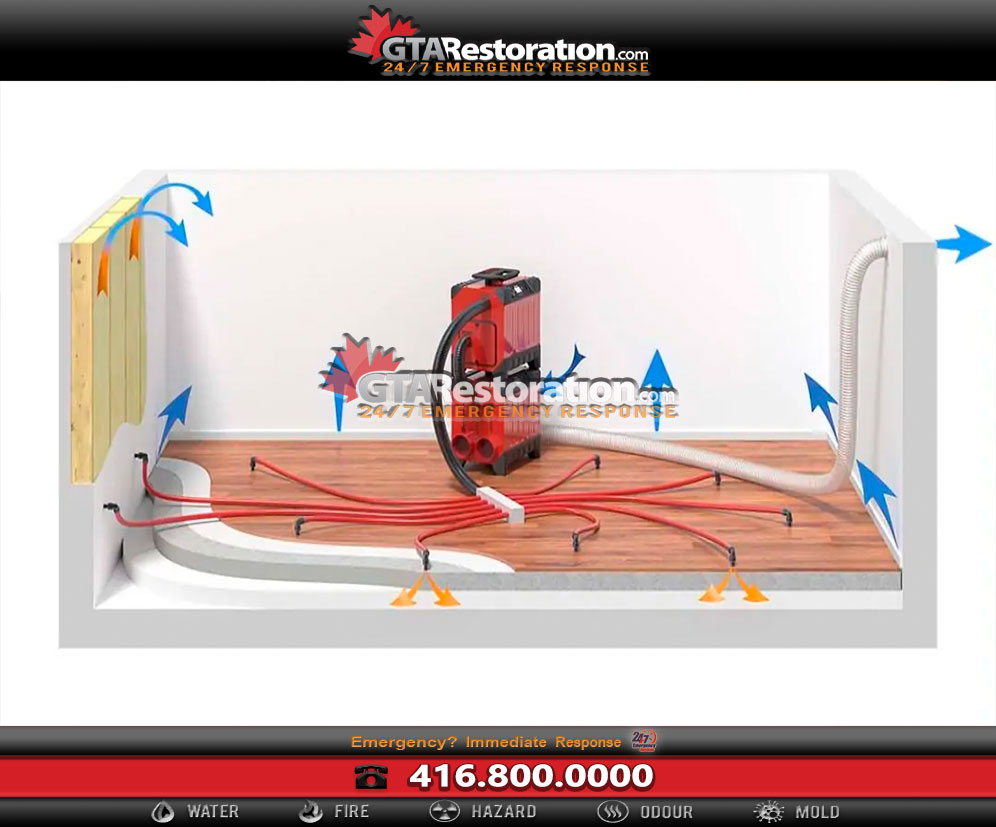
Tags: Drying, Drying Floating Floors, How to Dry Wet Basement Walls, Inject Dry Specialty Drying, Specialty Drying,

For non-emergencies use our contact form


Emergency? 24-Hours
416-800-0000Good records help you plan drying and repairs. Use these checks when discussing the work with your crew.
First, record when you found the water. Also, explain which rooms it reached and any steps already taken.
Next, share the brand, product name and receipts. Spare packaging can help the installer identify the floor.
From a safe place, photograph raised edges and stains. Keep dates so the crew can track changes.
Before work starts, ask whether removal, equipment checks and repairs are included. Then, clarify any separate charges.
During floor drying, keep walkways clear as directed. Ask the crew where furniture can go without blocking equipment.
If boards cannot stay, ask why. Also, confirm how the team will handle damaged planks and underlay.
Before rebuilding, request final readings and the drying targets used. Check whether any areas still need attention.
Finally, save the quote, invoices and product care instructions. Report fresh leaks or lifting edges after the work.
Unsure what your wet floor needs?
GTA Restoration can assess the damage and explain your options.
Service Areas Across Canada
GTA Restoration serves communities across Canada, including Toronto and the GTA. U.S. locations are opening. Browse our Canadian service areas below, and contact us to confirm services and availability for your address.
Search
No. Water may remain beneath the planks. Therefore, check the underlay and subfloor too.
Sometimes. However, swollen cores or damaged joints may mean the affected planks need replacement.
No. Water can reach other layers. A waterproof plank does not confirm a dry base.
Not always. Airflow may not reach trapped moisture. Instead, crews may need to lift some flooring.
Time varies with the materials and damage. Therefore, use moisture readings to assess progress.
Learn more ↴ 
Latest Articles
Direct Billing & Insurance Claims
Ask your insurer about coverage, deductibles and the records it needs.

In-House Financing Available
Financing up to 24 months. No interest. No money down. Ask us about the terms.
Certifications & Insurance
View our firm certification, technician qualifications and insurance documents.

IICRC Certified Firm
GTA Restoration Inc.
Firm number 199912
Valid through

Business Insurance
GTA Restoration Group Inc.
$5 million general liability per occurrence
$8 million contractors pollution per claim
–
IICRC Technician Qualifications
Tony Sokol T. Lleshi · Registration 214520
Valid through
Water Damage Restoration · Fire & Smoke Damage Restoration · Applied Microbial Remediation · Odor Control · Trauma & Crime Scene
View technician verification (PDF) — opens in a new tabInsurance is subject to policy terms, conditions and exclusions.





Call Us 416-800-0000