
Tags: Leak Detection, Water Leak Detection,

For non-emergencies use our contact form


Emergency? 24-Hours
416-800-0000Small leaks can leave you unsure where to start. GTA Restoration helps trace water use, damp spots and hidden moisture in Toronto and the GTA. Before a visit, gather your meter readings and note where the problem began. These details help us plan the checks your home needs.
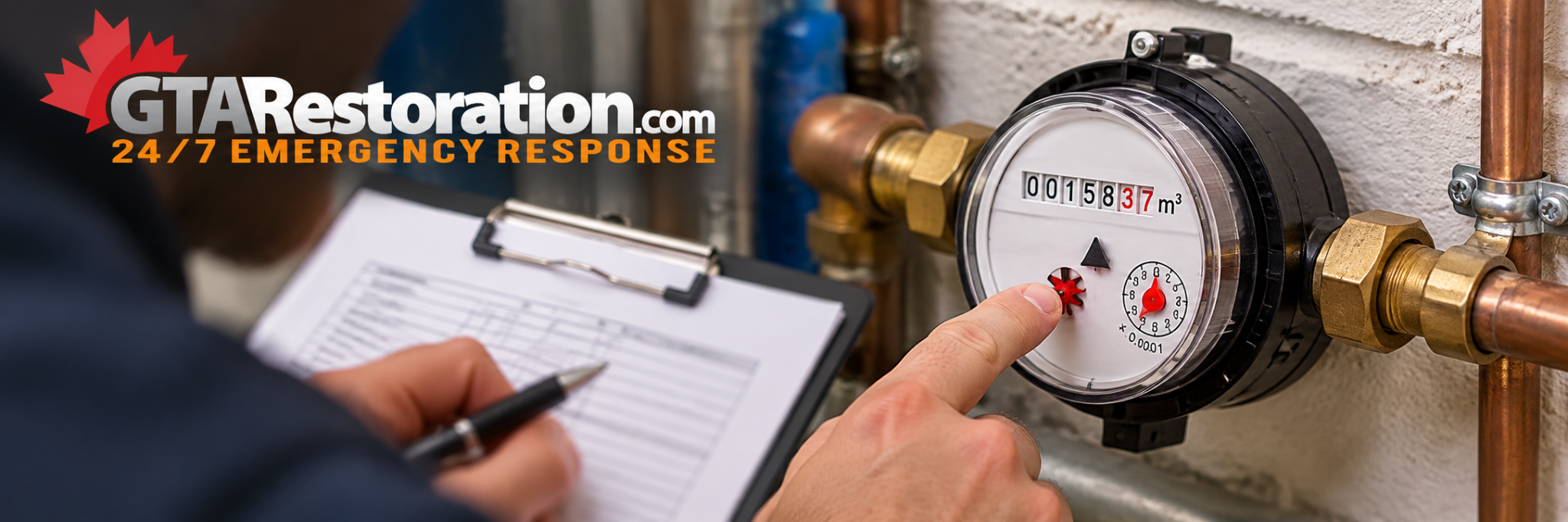
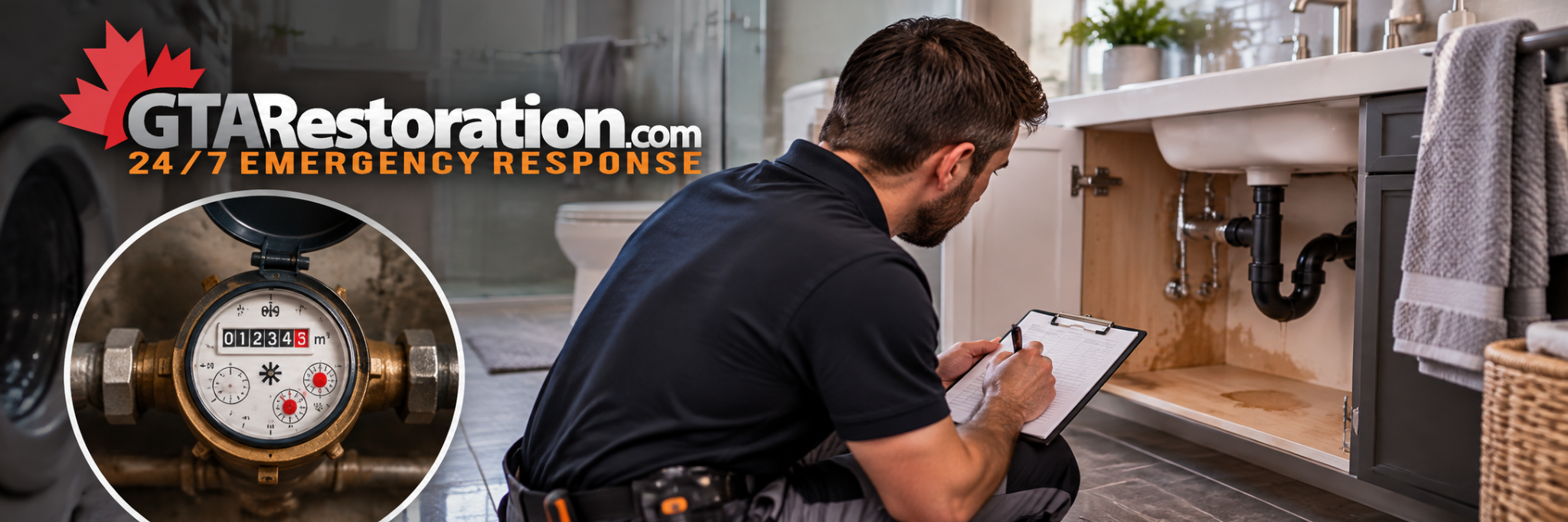
Record the readings and times from your no-water-use check. Also, note whether a toilet, ice maker or other device drew water during the test. A photo of each reading can help you compare small changes.
Explain whether dampness follows rain, a shower, laundry or another use. Then, note how long it lasts. A stain that grows after rain may need different checks from a drip that appears when a tap runs.
Check whether your home recently used more water than usual. For example, guests or lawn watering can change a bill. However, ask for help when higher water use has no clear cause or lasts after normal use returns.
Take clear photos from a safe spot. In addition, record when stains appeared and whether they have grown. Keep clear of a sagging ceiling or wet wiring; a photo is not worth entering an unsafe area.
Confirm where the meter sits and whether it serves only your home. In a shared building, ask management about access. Do not force an old valve or adjust a shared system to carry out a test.
Leak detection helps narrow down the source. A plumber may then need access to repair a pipe, tap or joint. Therefore, check whether the quote covers finding the leak, fixing it and making good any openings.
Stopping the water does not remove moisture already inside building materials. Ask whether nearby walls, floors or cabinets need further checks and drying. A dry surface alone may not show what remains inside the wall or floor.
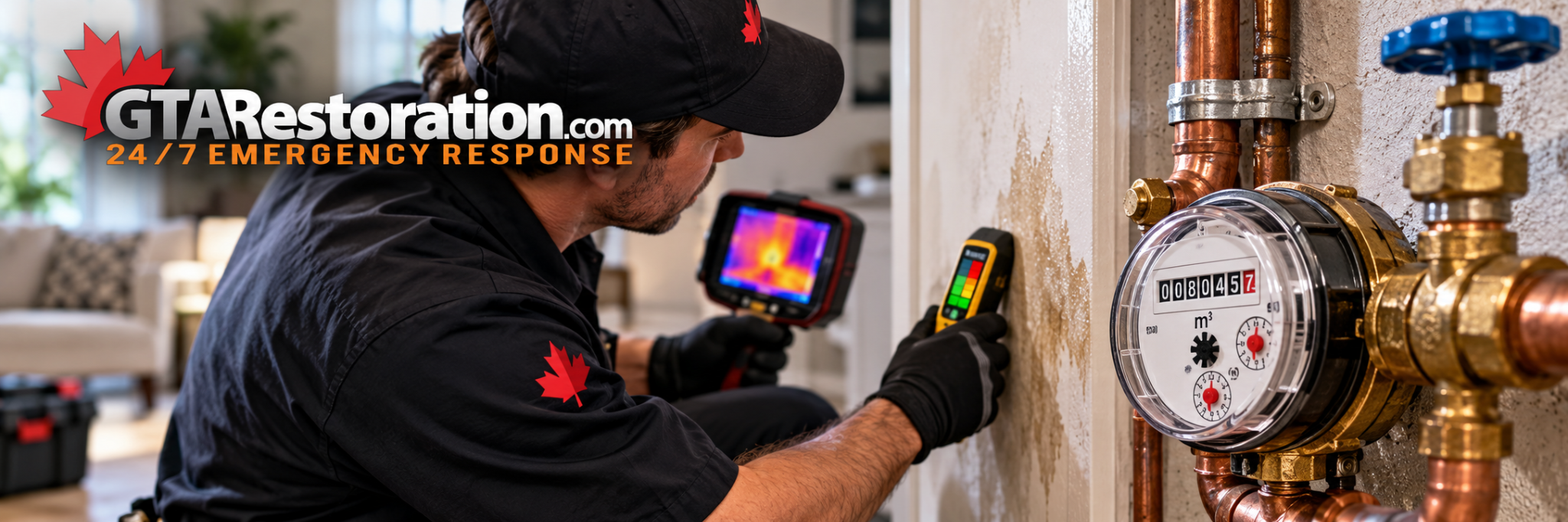
Discuss the findings before anyone opens a finished surface. The team can use suitable tools to narrow the area of concern. Even so, some faults need direct access to confirm the cause and complete a repair.
Notify management when water may affect another unit or a shared space. Then, agree on one contact for access and updates. This helps the people involved know which rooms are safe to enter and when work can begin.
Ask about the cost of testing, plumbing repairs and cleanup separately. Also, confirm how the team will report new findings before you approve more work. Keep the quote, photos and invoices together so you can review what took place.
Need help with a small leak or water stain?
Call GTA Restoration to discuss leak detection and moisture checks in Toronto and the GTA.
Service Areas Across Canada
GTA Restoration serves communities across Canada, including Toronto and the GTA. U.S. locations are opening. Browse our Canadian service areas below, and contact us to confirm services and availability for your address.
Search
Check your meter while nobody uses water, then look for drips or damp spots. A short test may miss a slow leak; EPA WaterSense suggests a two-hour comparison.
No. A toilet refill, ice maker or other device may be using water. Rule out normal use before asking for further checks.
Yes. Water can pass from the tank to the bowl. Put food colouring in the tank, wait without flushing and look for colour in the bowl.
No. It shows surface temperature patterns. The team compares these with moisture readings and other findings to trace the likely source.
We serve Toronto and the GTA. Call 416-800-0000 with your location and what you have noticed. Do not wait for a test if water is spreading.
Learn more ↴ 
Latest Articles
Direct Billing & Insurance Claims
Ask your insurer about coverage, deductibles and the records it needs.

In-House Financing Available
Financing up to 24 months. No interest. No money down. Ask us about the terms.
Certifications & Insurance
View our firm certification, technician qualifications and insurance documents.

IICRC Certified Firm
GTA Restoration Inc.
Firm number 199912
Valid through

Business Insurance
GTA Restoration Group Inc.
$5 million general liability per occurrence
$8 million contractors pollution per claim
–
IICRC Technician Qualifications
Tony Sokol T. Lleshi · Registration 214520
Valid through
Water Damage Restoration · Fire & Smoke Damage Restoration · Applied Microbial Remediation · Odor Control · Trauma & Crime Scene
View technician verification (PDF) — opens in a new tabInsurance is subject to policy terms, conditions and exclusions.





Call Us 416-800-0000