A toilet that will not flush is frustrating. A toilet that bubbles while the washing machine drains, followed by dark water rising from a basement floor drain, is a different level of emergency. Understanding sewer backup vs drain clog helps property owners make the right call quickly, protect occupants, and limit avoidable damage.
A simple clog usually affects one fixture or one small section of plumbing. A sewer backup can contaminate finished spaces, damage building materials, and create health risks that require professional cleanup. The signs can overlap at first, but the source, urgency, and proper response are very different.
Sewer Backup vs Drain Clog: The Core Difference
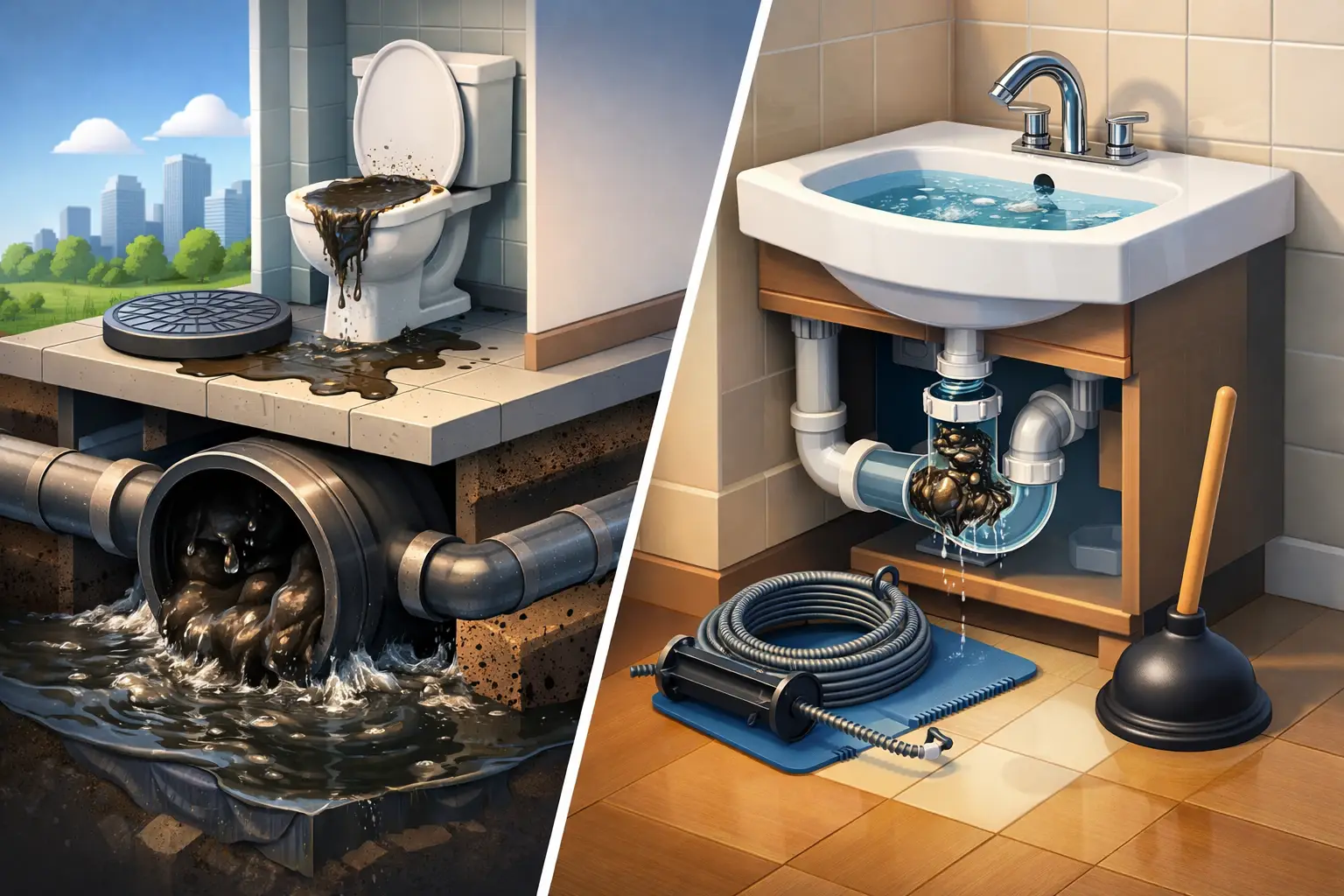
A drain clog is a blockage in a branch drain, the pipe serving a particular fixture or group of nearby fixtures. Hair, soap buildup, grease, food debris, wipes, or a small object can restrict water flow. The problem is usually contained to a sink, shower, toilet, or appliance drain.
A sewer backup occurs farther downstream, often in the building sewer line that carries wastewater from the property to the municipal sewer system or septic system. Tree roots, grease accumulation, collapsed or offset pipes, heavy rainfall, a damaged backwater valve, or a municipal sewer surcharge can force wastewater back into the building.
The practical difference is where the water goes. With a local drain clog, water may sit in a sink or tub, then drain slowly. With a sewer backup, wastewater often emerges from the lowest open drain in the building, such as a basement floor drain, shower, laundry standpipe, or lower-level toilet. That water may contain sewage and should be treated as contaminated.
Signs You May Have a Drain Clog
A localized clog tends to be predictable. One sink drains slowly, a shower pools around your feet, or one toilet needs repeated plunging. Nearby fixtures may work normally because they drain through separate branch lines.
For example, if the kitchen sink is slow but the bathroom toilet, shower, and basement floor drain are normal, grease or food debris may be blocking the kitchen line. If only one bathroom sink is affected, hair and soap residue are common culprits.
A clog can still worsen. Repeated chemical drain cleaners may damage certain pipes, create hazardous splash risks, and fail to remove the blockage. A plunger may help with a minor toilet obstruction, but recurring clogs deserve a professional inspection. The goal is to remove the cause, not force water past it temporarily.
Warning Signs of a Sewer Backup
Multiple fixtures acting up at once is the strongest warning sign of a main sewer line problem. When wastewater cannot move through the main line, it looks for another exit. That is why a toilet may gurgle when the shower runs or why a basement drain overflows when an upstairs appliance empties.
Watch for these connected symptoms:
- Water or sewage coming up through a basement floor drain, shower, tub, or toilet
- Gurgling from toilets or drains when another fixture is used
- Several drains backing up or draining slowly at the same time
- A strong sewage odor indoors, especially near lower-level drains
- Overflow that begins after heavy rain or widespread snowmelt
The appearance and odor of the water matter. Clear water from a supply-line leak requires prompt drying, but sewage-contaminated water requires additional containment, sanitation, and removal procedures. Do not assume that water in a basement is harmless simply because it appears diluted.
What Causes Each Problem?
Drain clogs are often caused by everyday use. Bathroom drains collect hair, soap, and hygiene products. Kitchen lines collect fats, oils, grease, and food particles. Toilets can clog when wipes, paper towels, hygiene products, or excessive toilet paper enter the drain. Products marketed as flushable do not always move safely through older or restricted plumbing systems.
Sewer backups have broader causes. In older neighborhoods, tree roots can enter small cracks in buried sewer pipes and expand over time. Clay, cast-iron, or aging pipe sections may crack, shift, corrode, or collapse. Grease can harden inside a main line. Construction debris or non-flushable materials can create a severe blockage.
Weather can also be a factor. During intense rainfall, municipal sewer systems may become overloaded. If the public sewer is surcharged and a property lacks effective backflow protection, wastewater can be pushed toward the lowest fixtures. In a condo or commercial building, the source may also involve a shared stack, common drain line, or mechanical system. That calls for a coordinated response with building management and qualified restoration professionals.
What to Do in the First Minutes
If you suspect a local clog, stop using the affected fixture. Avoid running water into it, and do not keep flushing a toilet that is rising. If the fixture is stable and there is no sewage release, a careful attempt with a plunger may be reasonable.
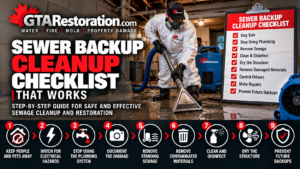
If you suspect a sewer backup, stop using all water immediately. Do not flush toilets, run faucets, start a dishwasher, or use the washing machine. Every gallon sent into the plumbing system can add to the overflow.
Keep people and pets away from the affected area. Wear protective footwear if you must pass nearby, but do not wade through sewage. Do not use a household vacuum, fans, or a standard mop to remove contaminated water. These actions can spread contamination into unaffected areas and complicate restoration.
If water is close to electrical outlets, appliances, or the electrical panel, avoid the area and arrange for safe assessment. Photograph visible damage from a safe location if you can do so without delaying emergency service. Pictures of the initial conditions, affected belongings, and water levels can support an insurance claim.
When a Plumber Is Enough and When Restoration Is Needed
A plumber can diagnose and clear many blocked drains and sewer lines using drain machines, augers, camera inspections, and hydro jetting where appropriate. Camera work is particularly valuable when a problem keeps returning because it can reveal root intrusion, pipe damage, bellies in the line, or a collapsed section that cleaning alone will not fix.
Restoration is needed when water has escaped the plumbing system and affected floors, walls, insulation, contents, or HVAC components. Sewage backup cleanup is not just a plumbing repair. Porous materials such as carpet padding, drywall, insulation, and particleboard may need to be removed if they are contaminated. The remaining structure must be cleaned, disinfected, and dried with professional equipment before repairs begin.
For property managers and commercial operators, rapid containment protects more than the physical space. It can reduce tenant disruption, prevent odors from spreading, preserve records and inventory, and support a clearer insurance file. A coordinated team that can handle emergency plumbing, water extraction, sanitation, moisture detection, drying, and documentation reduces the number of contractors involved during a stressful event.
Can You Prevent a Sewer Backup?
No property can eliminate every sewer risk, especially during extreme weather or municipal system failures. Prevention still makes a meaningful difference. Keep grease, wipes, paper towels, and hygiene products out of drains. Address recurring slow drains rather than treating them as a minor inconvenience. Schedule camera inspections for older properties, especially if roots or backups have occurred before.
A properly installed and maintained backwater valve can help prevent municipal sewer flow from reversing into a building. It is not a substitute for maintaining private sewer lines, and it should be inspected periodically to ensure the valve can move freely. Properties with frequent basement water issues may also benefit from a broader review of drainage, waterproofing, sump systems, and foundation conditions.
The fastest way to protect a property is to act on the pattern, not just the puddle. One slow sink may be a clog. Several fixtures gurgling, draining poorly, or releasing wastewater from a lower-level drain should be treated as a sewer emergency. Shut off water use, keep the area isolated, and get qualified help before a contained plumbing problem becomes a larger restoration loss.
Related