...

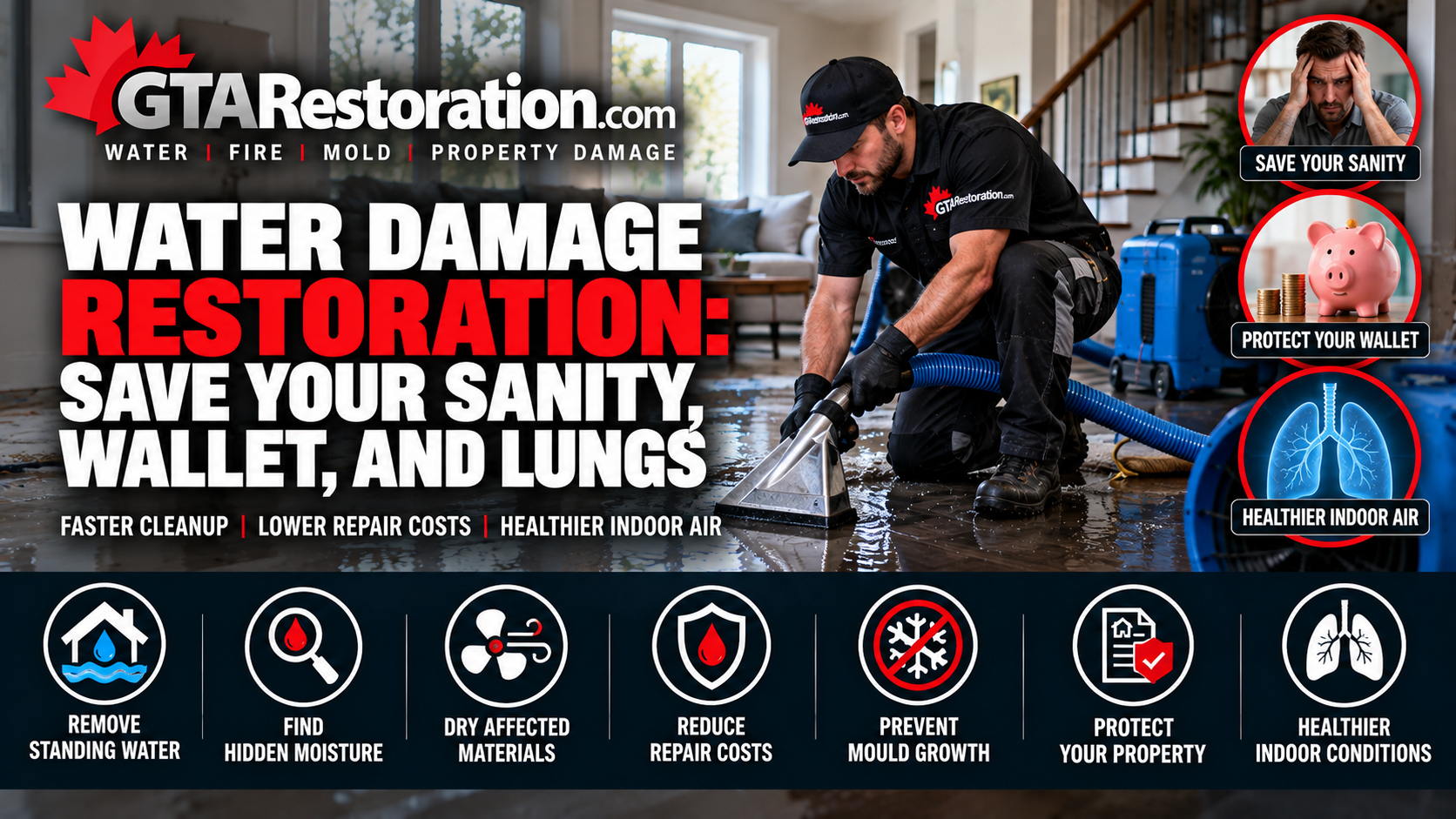
Water damage restoration benefits graphic showing water extraction and steps to dry a home

Water Damage Restoration Benefits: Why Prompt Cleanup Matters

Water damage restoration benefits include less disruption, better control of repair costs and fewer damp areas where mould can grow. A burst pipe or basement flood can feel overwhelming. However, a clear cleanup plan helps you work out what needs attention first and what can wait.

Water can spread under floors and behind walls, even when the puddle looks small. As a result, surface cleanup alone may leave wet materials hidden from view. Finding those areas early gives you a clearer picture of the work ahead.

GTA Restoration provides water cleanup and structural drying in Toronto and the GTA. For help with a current leak or flood, call 416-800-0000.

How Water Damage Restoration Helps Your Home and Budget

Water Cleanup Benefits for Daily Life

First, keep people away from the wet area if you suspect sewage, live wires or a weak ceiling. Shut off the water supply only if you can reach the valve safely. Follow the Electrical Safety Authority’s flood safety guidance. Never walk through floodwater to reach a switch or electrical panel.

Once the area is safe, a crew can assess where the water went. Ask which rooms need work, which items you should move and whether you can use the space during cleanup. These answers help you plan around work, family and daily routines.

Water Damage Restoration Benefits for Repair Costs

Quick action can help limit how far water spreads. For example, a leak under a sink may reach the cabinet base and nearby floor. Removing the water and drying those areas promptly may reduce the need for wider repairs.

However, saving a material depends on its condition and the water source. Sewage-soaked carpet may need removal, while some sound materials can dry in place. A useful quote explains what the crew can keep, what needs replacement and why.

Benefits of Water Cleanup for Mould Prevention

Wet materials give mould a place to grow. Therefore, fixing the leak and drying the building are key parts of recovery. Health Canada’s guide to moisture and mould indoors explains why moisture control matters.

If mould is already present, ask about mould remediation before disturbing it. Cleanup cannot promise a health outcome. If you have symptoms or concerns about exposure, speak with a health care professional.

What Professional Water Cleanup Involves

Find the Source and Map Wet Areas

Drying will not solve a leak that is still active. First, the crew needs to understand where the water came from. If the cause is unclear, leak detection can help guide the next step.

Next, moisture meters help check walls, floors and nearby rooms. Thermal images can highlight areas to investigate, but they do not measure moisture directly. A crew should confirm those findings with moisture readings.

Remove Water and Set Up Drying

Pumps and extractors remove standing water before the drying stage. Air movers then help wet surfaces release moisture, while dehumidifiers draw it from the air. The setup depends on the room, the materials and the amount of water.

Some damaged materials may need removal to reach wet layers beneath them. For this reason, ask how the crew will protect nearby rooms and handle waste. Sewage or other contaminated water calls for added controls.

Check Progress Before Repairs

A wall can look dry while it still holds moisture. Therefore, crews should use readings to track progress and adjust the equipment. Ask what drying goals they use and how they decide when repairs can begin.

The ANSI/IICRC S500 Standard covers professional water restoration, including inspection, drying and project records. Clear records help explain the work and support decisions as conditions change.

Getting Lasting Value from Water Damage Restoration

Keep a Record of the Loss

Take photos when it is safe, then keep quotes, invoices and drying records together. Also, ask whether the estimate includes repairs or only cleanup and drying. This helps you compare the scope of work and avoid budget surprises.

Contact your insurer or broker if you may make a claim. Your insurer decides coverage under your policy. A contractor can document the damage and work, but cannot promise approval.

Reduce the Chance of Another Leak

After cleanup, address the cause before closing walls or replacing finishes. Check appliance hoses, keep gutters clear and maintain your sump pump where fitted. In addition, consider leak sensors near appliances or other spots with a history of leaks.

If stains, swelling or musty smells return, arrange another check. The lasting benefits of water damage restoration come from finding the cause, drying wet areas and making sound repair choices. Together, these steps help protect your home and make recovery easier to manage.


Get Help with Water Damage

Talk to GTA Restoration about water removal, moisture checks and a drying plan for your Toronto or GTA property.

Call 416-800-0000

Learn More

Property Restoration Explained | What to Do After a Basement Flood
Share this... Spread the word!


Water damage restoration benefits depend on more than removing a puddle. A clear plan should cover the source, hidden moisture and the steps needed before repairs. These points can help you discuss the work with your cleanup crew.

Start with Safe Access

Keep out of flooded rooms if electrical hazards, sewage or weak ceilings may be present. First, arrange help to assess the risks. Move belongings only when the area is safe.

Stop the Water Source

A drying plan cannot fix an active leak. Therefore, deal with the source first. If you cannot find it, ask about an inspection before covering stains or replacing finishes.

Benefits of Prompt Water Cleanup

Crews use pumps or extractors to remove liquid water. This reduces the moisture left for drying. However, the water source also affects how they clean and handle wet materials.

Look Beyond the Surface

Water can move under floors and behind walls. Moisture readings help map that spread. As a result, the work can address damp layers that a quick visual check might miss.

Choose a Drying Plan

Air movers and dehumidifiers work together to dry wet areas. Their placement should suit the space and materials. Ask the crew how the setup meets your property’s needs.

Track Moisture Readings

A dry-looking wall may still hold moisture. For this reason, crews check progress with readings and adjust the equipment. Repairs should follow the drying checks, rather than a fixed deadline.

Water Restoration Benefits for Repair Planning

Some wet materials can dry in place; others need removal. Ask why the crew recommends each step. Also, confirm whether the quote includes new drywall, flooring or paint.

Address Mould Promptly

If mould appears, drying alone may not resolve the problem. Arrange an assessment of the growth and its cause. Avoid disturbing affected materials or blowing fans across visible mould.

Keep Useful Records

Save photos, quotes, invoices and drying logs in one place. These can support a claim review. However, your insurer makes coverage decisions based on the policy and the loss.

Watch for Repeat Leaks

After repairs, watch for new stains, swelling or musty smells. In addition, check hoses and drainage as part of routine upkeep. Early checks can help you catch another leak.


Flood, Leak or Burst Pipe?

Get help planning water cleanup and drying for your home or business in Toronto and the GTA.

Call 416-800-0000


GTA Service Centre


Water Damage Restoration FAQs

What are the main water damage restoration benefits?

Prompt cleanup can limit water spread, find hidden moisture and guide repairs. A clear plan also helps you understand costs and manage the disruption to your home or business.

When should I call for help after a leak?

Arrange help promptly if water reaches walls or floors, affects several rooms or comes from sewage. First, keep people away from unsafe areas and control the source only when safe.

Can household fans dry the whole area?

Fans alone may leave moisture trapped inside floors and walls. Moisture checks help determine the drying needs. Do not blow fans across visible mould or sewage-contaminated materials.

Does every wet wall need removal?

No. Some sound materials can dry in place. However, the water source, damage and trapped moisture may make removal necessary. Ask the crew to explain what it can keep.

Will insurance cover the cleanup?

Coverage depends on your policy and the cause of the loss. Contact your insurer or broker for guidance. Keep photos and invoices, but do not assume every water claim qualifies.


Learn more ↴


Direct Billing & Insurance Claims

Ask your insurer about coverage, deductibles and the records it needs.


Payment options

In-House Financing Available

Financing up to 24 months. No interest. No money down. Ask us about the terms.


Certifications & Insurance

View our firm certification, technician qualifications and insurance documents.

IICRC Certified Firm

GTA Restoration Inc.

Firm number 199912
Valid through

View IICRC certificate (PDF) — opens in a new tab

Business Insurance

GTA Restoration Group Inc.

$5 million general liability per occurrence
$8 million contractors pollution per claim
–

View insurance certificate (PDF) — opens in a new tab

IICRC Technician Qualifications

Richard Mark Provence · Registration 55726
Certificate expires

Water Damage Restoration · Fire & Smoke Restoration · Applied Microbial Remediation · Odor Control · Trauma & Crime Scene

View technician verification (PDF) — opens in a new tab

Insurance is subject to policy terms, conditions and exclusions.


Emergency? Click to Call!