Tags: Burst Pipe, Plumbing Emergency, Water Damage,
For non-emergencies use our contact form

Emergency? 24-Hours
416-800-0000A clear plan helps you decide what to do in a plumbing emergency. Start with people and safe access. Then, arrange the repair and check the water damage that remains.
Find the main water valve before a leak starts. Keep the route clear and show responsible occupants where it is. If the valve is stiff or leaking, ask a plumber to check it.
A sink or toilet may have its own supply valve. Closing it can isolate that fixture when access is safe. However, do not force a damaged valve or assume it controls a drain backup.
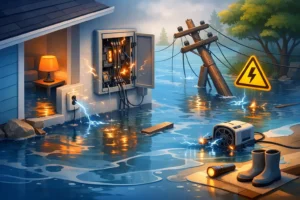
Do not walk through water to reach a panel or unplug equipment. Instead, keep people out and seek qualified help. A wet electrical system needs assessment before anyone uses it again.
Give the full address and explain where you see water. Also, mention whether it still flows and whether a valve is closed. These details help the team understand the call.
In a condo, water may spread into nearby units and shared rooms. Therefore, alert management as well as the repair team. Ask staff to coordinate access and shared building systems.
Stop using fixtures that send water into a backed-up drain. Keep people and pets clear of waste. Tell the crew about the backup so they can plan suitable cleanup and access.
Move small belongings only from areas you can reach safely. Do not stand under a bulging ceiling or carry heavy furniture over a wet floor. Your safety comes before the contents.
Take clear photos from a safe position and note when you first saw water. Then, keep copies of the repair scope, bills and work notes. These records help explain the loss.
Once the flow stops, review the floors, walls and nearby rooms. Moisture may remain below the surface. As a result, cleanup can include drying checks and repairs beyond the failed pipe.
Ask what caused the failure and whether nearby parts need attention. Update your contacts and shutoff notes. In addition, arrange follow-up checks if stains or damp smells return.
Tell GTA Restoration what happened and where the water has spread.
Service Areas Across Canada
GTA Restoration serves communities across Canada, including Toronto and the GTA. U.S. locations are opening. Browse our Canadian service areas below, and contact us to confirm services and availability for your address.
Search
Keep people away from hazards. If safe, close the main water valve, then call for plumbing help.
It is often near the water meter where the pipe enters the home. In a condo, ask building staff about the correct valve.
Do not enter water near electrical equipment. Keep clear and call the electric utility if power needs to be disconnected.
Tell building management and the repair team. Water may affect other units, so staff may need to coordinate access.
Not always. Ask whether the scope includes water removal, moisture checks and drying, or whether these need separate work.
Direct Billing & Insurance Claims
Ask your insurer about coverage, deductibles and the records it needs.

In-House Financing Available
Financing up to 24 months. No interest. No money down. Ask us about the terms.
Learn more ↴ 
RELATED ARTICLES





Call Us 416-800-0000
Emergency? 24/7 Restoration Help
We cover all GTA 24/7.
Head Office:
250 Consumers Rd,
#10
Toronto, ON
M2J 4V6,
Open 24 hours
Downtown Office:
1 Toronto St,
#10
Toronto, ON
M5W 1A1,
Open 24 hours
For non-emergencies use our contact form
Not sure what you need?
Call us today to find the best product for your situation.
Head Office:
101 Lebovic Ave,
Unit #10
Scarborough,
ON, M1L 4T7
Hours
24-Hours Open
Downtown Office:
250 Yonge Street,
Unit #1A
Toronto,
ON, M5B 2L7
Hours
24-Hours Open
What to do in a Plumbing Emergency
Get a quote today