Water Leak Detection GTA services help property owners investigate hidden water leaks and unexplained moisture. Across the Greater Toronto Area, GTA Restoration provides inspections for homes, condos, rental properties, businesses, and managed buildings.
During each moisture inspection, our technicians follow water patterns and check affected materials. In addition, professional inspection tools can help narrow down the likely source before unnecessary repairs begin.
How GTA Leak Detection Works
Some leaks create obvious dripping or standing water. However, hidden plumbing leaks may remain concealed behind walls, below flooring, above ceilings, or inside cabinets.
Instead of relying on the first visible stain, technicians review nearby plumbing, building materials, and moisture patterns. As a result, the investigation can focus on areas that are more likely to contain the source.
Moisture Meter Testing for Hidden Leaks
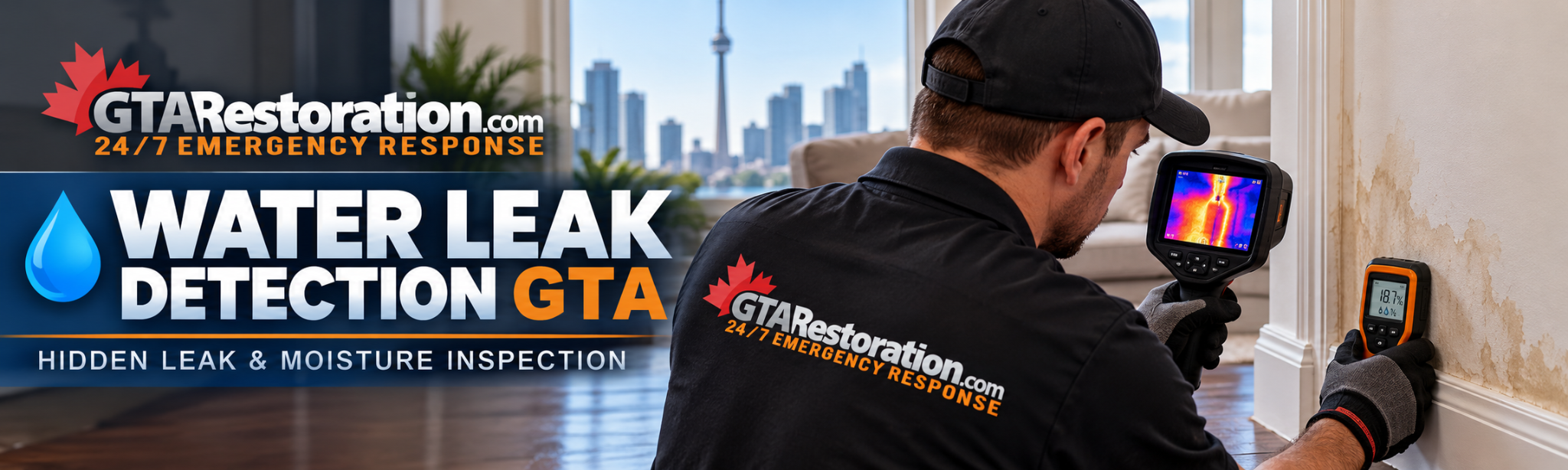
Moisture meter testing helps compare damp materials with nearby dry areas. For example, technicians may check drywall, flooring, wood, ceilings, cabinets, and other accessible surfaces.
Readings can also show how far water may have travelled. Therefore, the results can guide additional inspection, drying, or restoration.
Thermal Imaging for GTA Leak Detection
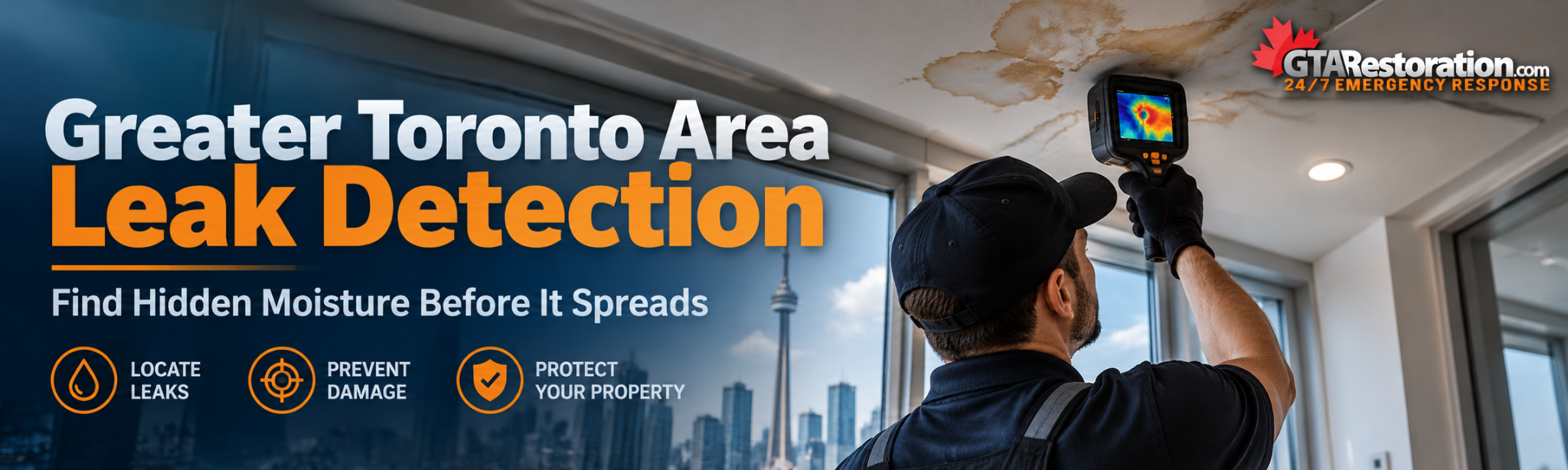
Thermal imaging for leak detection can reveal unusual temperature patterns across walls, ceilings, and floors. In some cases, those patterns direct technicians toward areas that need a closer look.
However, thermal cameras do not see through walls or directly display water. For this reason, technicians confirm suspicious areas with moisture readings, visual evidence, and surrounding conditions.
Checking for Unusual Water Use
An unexpected increase in water consumption can sometimes indicate a hidden plumbing leak. For instance, property owners can turn off indoor and outdoor water use and then check the water meter.
A hidden water leak behind a wall may first appear as staining, bubbling paint, soft drywall, or recurring dampness. Because water can move along pipes and framing, visible damage may appear away from the actual source.
Consequently, focused water leak detection can help narrow the affected area before walls or ceilings are opened.
Bathroom and Kitchen Leak Inspection
Bathrooms and kitchens contain several possible leak sources, including toilets, faucets, showers, tubs, drains, sinks, dishwashers, refrigerators, and supply lines. Since cabinets and flooring can conceal moisture, nearby walls and ceilings may also require inspection.
Additional moisture readings can then help determine whether water has spread into adjoining rooms or materials.
Roof and Exterior Moisture
Not every water problem begins with plumbing. For example, rain can enter through roofing, windows, flashing, foundation cracks, or other exterior openings.
Recent weather, drainage, and exterior defects can provide useful clues. Therefore, a complete leak and moisture inspection may need to consider building-envelope conditions as well as plumbing.
GTA Leak Detection for Condos and Businesses
Condo Water Leak Detection GTA
Condo Water Leak Detection GTA may involve tracing moisture through walls, ceilings, plumbing openings, shafts, and shared building assemblies. Consequently, finding the source can require access to more than one suite or common area.
Coordinating residents, property managers, plumbers, and restoration crews can make the investigation more efficient. Better access also helps technicians follow moisture toward the likely source.
Commercial Leak Detection GTA
Commercial Leak Detection GTA services can help investigate water problems around washrooms, kitchens, mechanical rooms, plumbing systems, fixtures, and water-connected equipment. Meanwhile, business hours, tenants, inventory, and equipment can affect how an inspection is completed.
Early investigation can help reduce disruption. As a result, repairs can remain focused on the areas that need attention.
What Happens After a Leak Is Found?
Repairing the source stops new water from entering the property. However, wet building materials may continue holding moisture after the repair.
Depending on the loss, drywall, insulation, flooring, framing, cabinets, and ceilings may need further assessment. Therefore, technicians often check moisture levels again after repairs are complete.
Structural Drying After Leak Repair
Once the source is repaired, restoration technicians can inspect affected materials. If excess moisture remains, structural drying may involve dehumidifiers, air movers, and ongoing moisture monitoring.
For more difficult projects, review our Specialty Drying services.
Mold After a Hidden Leak
Slow leaks can keep building materials damp for extended periods. Over time, persistent hidden moisture may create conditions that support mold growth behind walls, below flooring, or inside other concealed spaces.
If mold is visible or suspected, visit our Mold Removal and Remediation page. In addition, correcting the moisture source can help reduce the chance of the problem returning.
Water Damage Restoration
Larger leaks may require more than plumbing repair. Depending on the damage, water damage restoration can include extraction, material removal, cleaning, structural drying, and repairs.
GTA Restoration provides Water Leak Detection GTA support for damp walls, ceiling stains, flooring damage, unexplained moisture, and other suspected water problems. During the inspection, our team can document hidden moisture and affected materials.
Afterward, we can help determine the next practical step for repair, drying, or restoration.
Need Water Leak Detection in Toronto or the GTA?
If you notice unexplained moisture, staining or signs of a hidden leak, GTA Restoration can inspect the affected area and help determine the next step.
Hidden Moisture and Leak Inspection Across the GTA
Property owners can use Water Leak Detection GTA services to investigate hidden moisture and plumbing leaks before they cause additional damage. Throughout the Greater Toronto Area, GTA Restoration works with homeowners, condo owners, landlords, property managers, and businesses.
Leaks can affect drywall, flooring, cabinets, ceilings, insulation, and other building materials. Because moisture often travels away from its source, the first visible stain may not show where the problem began.
GTA Hidden Leak Warning Signs
Common hidden water leak signs include staining, peeling paint, soft drywall, warped flooring, swollen baseboards, musty odours, and damp cabinets. Sometimes, a concealed leak remains unnoticed until nearby materials begin to change.
For this reason, technicians follow moisture patterns and inspect surrounding areas before deciding where the source may be located.
Water Use and Plumbing Leaks
Sudden increases in water consumption may point to a plumbing leak. For example, continued meter movement while fixtures remain off can suggest that water is still flowing somewhere in the system.
Moisture Meter Leak Detection
Moisture meter testing helps compare damp materials with nearby dry surfaces. In addition, readings can indicate whether water has spread through drywall, flooring, wood, cabinets, or ceilings.
As a result, further inspection can focus on the areas most likely to contain moisture.
Thermal Imaging for Hidden Leaks
Thermal imaging can reveal unusual surface-temperature patterns during an inspection. However, temperature differences may also result from insulation, airflow, sunlight, or other building conditions.
Therefore, technicians confirm suspicious areas with moisture readings and visual evidence.
Plumbing Leak Detection GTA
Plumbing Leak Detection GTA may involve checking pipes, drains, valves, fixtures, and appliance connections. When an inspection points to a plumbing failure, a qualified plumber may need to repair the source first.
Afterward, restoration technicians can check surrounding materials for remaining moisture.
Roof and Exterior Leak Checks
Rainwater can enter through roofing, windows, flashing, foundation cracks, and other exterior openings. Consequently, a water leak investigation may also need to review weather conditions, drainage, and exterior defects.
Condo Water Leak Detection GTA
Condo Water Leak Detection GTA can involve moisture that travels through walls, ceilings, shafts, plumbing openings, and shared assemblies. In some cases, access to neighbouring suites or common areas may be necessary.
Coordinated access can also reduce unnecessary opening of walls or ceilings.
Commercial Leak Detection GTA
Commercial Leak Detection GTA can help investigate hidden water problems around washrooms, kitchens, mechanical rooms, plumbing systems, and equipment. Early investigation can help reduce disruption.
As a result, repair work can stay focused on the correct area.
Drying After Leak Repair
Fixing the source prevents additional water from entering, but damp materials may still need attention. Even after repairs, drywall, flooring, insulation, wood, cabinets, and ceilings can continue holding moisture.
Depending on the conditions, structural drying and moisture monitoring may therefore be required.
Reducing Secondary Water Damage
Quick water leak detection can limit how much of the property becomes affected. In addition, prompt drying may reduce further deterioration and ongoing moisture problems.
Professional GTA Leak Investigation
Our restoration team can inspect hidden moisture, document affected areas, and explain the next steps for repair and drying. Ultimately, the work required depends on the source, materials involved, and amount of moisture found.
Hidden Water Leak in the Greater Toronto Area?
Contact GTA Restoration for moisture inspection, structural drying, and water damage restoration support.
GTA Restoration serves communities across Canada, including Toronto and the GTA. U.S. locations are opening. Browse our Canadian service areas below, and contact us to confirm services and availability for your address.
Quick answers about Water Leak Detection GTA, moisture testing, thermal imaging, condo leaks, and structural drying.
What signs can indicate a hidden water leak?
Hidden water leak signs can include stains, damp drywall, peeling paint, warped flooring, musty odours, wet cabinets, and higher water use. In addition, recurring moisture may justify further investigation.
Can thermal imaging help locate moisture?
Thermal imaging for leak detection can reveal temperature patterns that guide an inspection. However, moisture readings and visual evidence should confirm whether a suspicious area is wet.
How does a moisture meter help?
Moisture meter testing can identify damp building materials and show how far water may have travelled. Therefore, the readings can help technicians decide where additional checks are needed.
Will technicians always need to open a wall?
No. In many situations, non-invasive leak detection can narrow down the problem first. However, limited access may still be necessary to confirm or repair the source.
What should happen after a leak is repaired?
Nearby materials should be checked for remaining moisture. Depending on the findings, structural drying may be needed for drywall, flooring, insulation, wood, or other affected materials.
Are condo and commercial properties included?
Yes. GTA Restoration provides condo and commercial leak detection for residential, rental, office, and commercial properties throughout the Greater Toronto Area.
Direct Billing & Insurance Claims
Ask your insurer about coverage, deductibles and the records it needs.
In-House Financing Available
Financing up to 24 months. No interest. No money down. Ask us about the terms.




 Facebook
  Instagram
  LinkedIn
  X / Twitter
  YouTube

