


For non-emergencies use our contact form
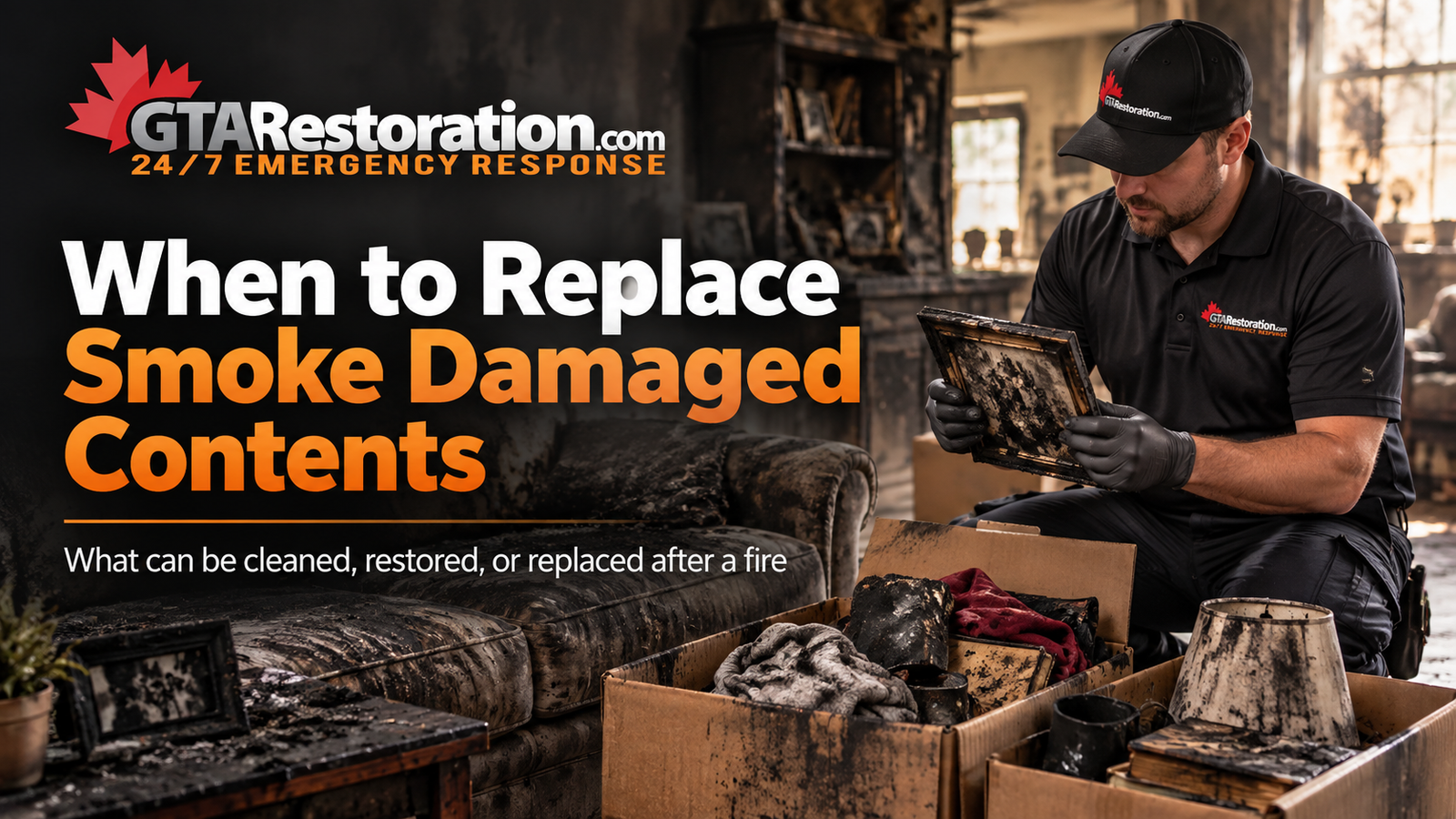
When to Replace Smoke Damaged Contents After a Fire
Knowing when to replace smoke damaged contents can help prevent soot, smoke odour and damaged belongings from returning to a clean property. Smoke can travel well beyond the room where a fire started. As a result, furniture, clothing, electronics, cabinets and personal belongings may collect residue even when they do not show direct burn damage.
However, do not throw everything away immediately. First, document the loss and separate items that appear restorable from belongings that may need replacement. A professional fire and smoke restoration assessment can also help identify which contents have a reasonable chance of recovery.
Look at the Material, Not Just the Appearance
The decision depends on the material, amount of soot, heat exposure, water damage, odour and cleaning cost. For example, smooth glass or metal may clean well, while foam, unfinished wood and other porous materials can hold smoke deep below the surface.
Therefore, appearance alone does not tell the full story. An item may look clean but still carry smoke odour, residue or damage inside.
Food, Medicine and Personal Care Products
Food exposed to smoke, soot or heat should not return to normal use. The same caution may apply to medicine, vitamins, cosmetics and personal care products when heat, smoke or firefighting water affects them.
The Canadian Red Cross home fire guidance recommends discarding food that may have been exposed to heat, smoke or soot. It also advises homeowners to keep an inventory of ruined belongings for insurance purposes.
Mattresses, Pillows and Upholstered Furniture
Mattresses, pillows, foam cushions and upholstered furniture contain absorbent layers. Consequently, smoke and odour can move into padding that surface cleaning cannot easily reach.
Replacement often makes sense when heavy soot reaches the inner material or a strong smoke smell returns after proper cleaning. In contrast, furniture with mainly surface residue may still respond well to professional cleaning.
Electronics and Appliances
Smoke can enter televisions, computers, appliances and control panels through vents and openings. Fine soot may settle on internal parts and can contribute to corrosion or electrical problems.
For this reason, avoid turning heavily affected electronics on simply to test them. Instead, arrange a qualified inspection when an item has enough value to justify assessment. Heat, water or heavy internal residue may make replacement more practical.
Books, Photos and Important Documents
Paper absorbs smoke and odour quickly. Even so, specialty restoration can sometimes recover photographs, books, business files, artwork and important records.
Before disposal, photograph valuable items and consider their legal, financial, business or sentimental value. In addition, keep any records your insurer may want to review.
What Smoke Damaged Items Can Often Be Cleaned?
Hard and Non-Porous Contents
Glass, metal, ceramic, sealed stone and many hard plastic surfaces often respond well to correct cleaning when flames or high heat have not damaged them. Finished wood may also have a good chance of recovery when smoke remains near the surface.
Still, soot type matters. Aggressive household cleaners can smear residue or damage finishes. Therefore, test delicate surfaces carefully or allow a restoration professional to select the cleaning method.
Clothing, Curtains and Rugs
Some clothing, curtains, rugs and washable fabrics can recover through specialty laundering or dry cleaning. Results depend on the fibre, dye, soot type and level of exposure.
Meanwhile, avoid placing heavily smoke-damaged fabrics directly into a normal washing machine. The wrong process can leave odour behind or make some stains harder to remove.
Furniture, Artwork and Valuable Belongings
Furniture may be worth restoring when soot remains on finished surfaces and has not moved deep into padding or unfinished wood. Likewise, antiques, artwork, collectibles and custom belongings may justify specialty treatment even when standard household cleaning will not work.
Compare Cleaning Cost With Replacement Cost
Learning when to replace smoke damaged contents also requires a practical cost comparison. A low-value item may cost more to pack, transport, clean, deodorize, store and return than to replace.
On the other hand, a unique or high-value item may justify extra restoration work. Therefore, consider safety, cleaning cost, replacement cost, condition and personal or business value together.
How to Decide What to Keep or Replace
Document Everything Before Disposal
Before removing major contents, take clear photos and videos. Start with each affected room, then photograph individual belongings. Also record model numbers, serial numbers, approximate age and purchase information when available.
This step can become important during an insurance claim. Our guide on how to document insurance damage explains how to create a clearer record before cleanup or disposal begins.
Create Three Simple Contents Groups
Separate belongings into three groups: items that appear restorable, items that need specialist review and items that clearly require replacement. This simple system makes the contents process easier to track.
In addition, keep clean belongings away from soot-covered items. Moving contaminated contents through unaffected rooms can spread residue into areas that did not need cleaning.
Check for Smoke Odour After Cleaning
Odour provides another useful clue. If a strong smoke smell remains after the correct cleaning process, residue may still sit inside the material. Professional odour removal can address smoke smells in buildings and suitable contents.
Consider Other Types of Damage
A fire may also expose contents to firefighting water, chemicals, heat or other contamination. When several forms of damage affect the same porous item, restoration can become more difficult.
For example, water-soaked upholstery with heavy soot may present a different restoration decision than a metal item with light surface residue. Therefore, evaluate the entire loss instead of focusing only on smoke.
A Simple Rule for Replacement
When deciding when to replace smoke damaged contents, ask four questions: Can the item become clean, safe, functional and free of strong smoke odour? If proper restoration still cannot achieve those goals, replacement often becomes the practical choice.
However, document valuable belongings before disposal and check your insurer’s requirements first. Early assessment can help save items that respond well to cleaning while identifying contents that should not return to the property.
For additional guidance, review our article on contents cleaning after fire and our guide on whether to repair or replace smoke damaged drywall.
Need Help With Smoke and Fire Damaged Contents?
GTA Restoration provides fire and smoke cleanup, contents assessment, soot removal, odour control, and damage documentation throughout Toronto and the GTA.
Emergency fire or smoke damage? Call our 24/7 restoration team.
Learn More
How to Protect Contents After a Flood Quickly | Repair or Replace Smoke Damaged Drywall? | Toronto Fire Restoration | Contents Cleaning After Fire Can Save More | The Transformation: What Happens Before and After Fire Restoration | Restoration Services for Water, Fire, Mold & Property Damage










You must be logged in to post a comment.