
For non-emergencies use our contact form
Contents Cleaning After Fire: What Can You Save?
Contents cleaning after fire helps property owners identify belongings that professional cleaners can restore, deodorize and return. Smoke, soot, heat and firefighting water can affect furniture, clothing, electronics, documents and personal items even when flames never touch them. Therefore, a careful assessment should come before anyone throws away damaged belongings or uses household cleaning products.
Fire residue affects each material differently. For example, soot may sit on a hard surface but travel deep into fabrics, unfinished wood or paper. In addition, water from sprinklers or fire hoses can damage contents when items remain wet. A controlled cleaning process helps technicians separate recoverable belongings from items with severe or unsafe damage.
Make Sure the Property Is Safe First
Wait until emergency officials confirm that you can safely enter a fire-damaged property. Electrical hazards, weakened ceilings, sharp debris and contaminated water may remain after firefighters leave.
Once officials allow entry, avoid moving everything immediately. First, photograph each affected room and the belongings inside it. Take wider room photos along with close-up images of valuable items, labels, model numbers and visible damage.
Document Belongings Before Moving Them
A clear inventory can help organize the restoration process and insurance discussions. Record each item, its original location and its condition after the fire. Also, keep receipts, purchase records or appraisals when you have them.
The Canadian Red Cross home fire guidance recommends documenting damaged belongings and keeping receipts related to repairs and recovery. The organization also explains that household items may need repeated cleaning to remove soot, smoke stains and odours.
What Items May Respond Well to Restoration?
Many belongings deserve a closer look before anyone decides to replace them. Depending on their condition, professional cleaners may restore:
- Wood, metal and some upholstered furniture
- Clothing, linens, curtains and washable fabrics
- Dishes, cookware, glassware and other hard-surface items
- Books, photographs and important documents
- Tools and equipment
- Electronics after a qualified specialist checks them
- Decorative items and some sentimental belongings
However, severe heat, charring or deep contamination can make some belongings unsuitable for restoration. Property owners should also use caution with food, medication and personal care products after exposure to smoke, heat or contaminated water.
How Professional Contents Cleaning After Fire Works
Inventory and Pack-Out
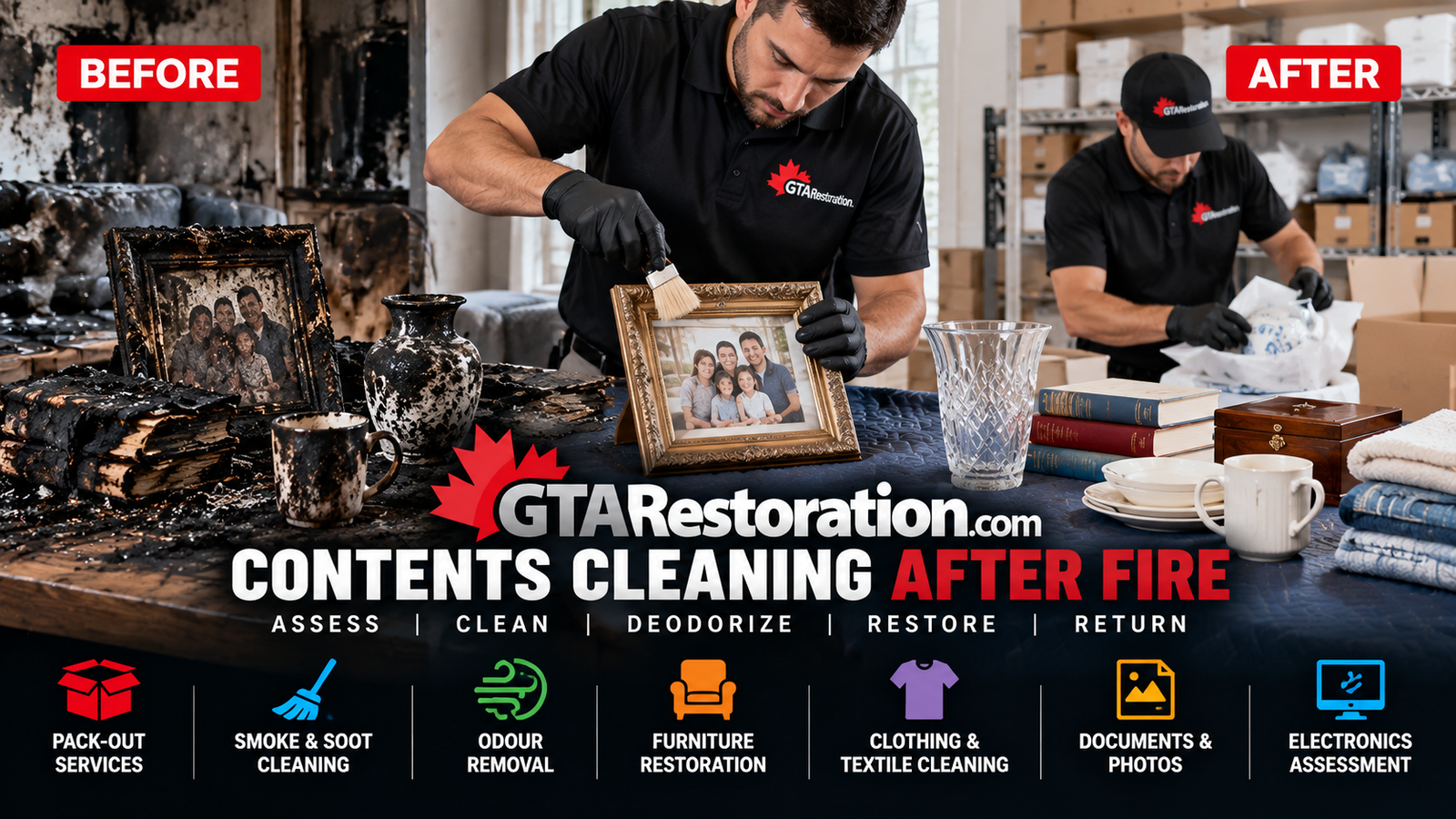
Professional contents cleaning after fire usually starts with a detailed inventory. Technicians photograph, label and organize items according to their condition and the cleaning method they may need.
If structural cleanup or repairs need open working space, the restoration team may remove recoverable belongings from the property. Restoration professionals commonly call this process a pack-out. Organized tracking helps everyone know whether each item awaits cleaning, storage, specialty assessment or return.
Cleaning Methods Depend on the Material
No single cleaning method works for every fire-damaged item. Instead, technicians select a process based on the type of soot, material, contamination level and sensitivity of the surface.
For example, technicians may use controlled dry or wet cleaning on suitable hard surfaces. Meanwhile, clothing and fabrics may need professional laundering or specialty textile cleaning. Wood furniture often requires detailed hand cleaning, while photographs, books and documents may need careful drying and specialist treatment.
Clean Smoke and Soot Carefully
The wrong cleaning method can spread soot or drive residue deeper into a surface. For this reason, household vacuums and general-purpose cleaners may cause problems on certain smoke-damaged items.
Smoke can also travel far beyond visible burn damage. Our fire restoration Toronto service addresses smoke, soot and fire damage involving building materials and contents.
Treat Smoke Odour After Cleaning
Removing visible soot does not always eliminate smoke odour. Odour-producing residue can remain inside fabrics, wood, paper and other porous materials. Therefore, technicians should remove or clean the source before starting deodorization.
Depending on the conditions, professionals may use air filtration and other controlled deodorization methods. Our odour removal service explains additional options for persistent smoke smells.
Dry Wet Contents Quickly
Firefighting water can soak furniture, boxes, textiles, books and nearby building materials. Consequently, contents restoration often needs to happen alongside structural drying.
Quick assessment also matters because prolonged moisture can cause swelling, staining and further damage. When firefighting water affects the structure, our water damage restoration team can address extraction, moisture checks and structural drying.
Have a Specialist Check Electronics
Do not turn on electronics after exposure to heat, soot or water. Residue and moisture may remain inside the equipment even when the outside looks normal. A qualified technician should inspect the equipment and determine whether cleaning or repair makes sense before anyone powers it on.
Insurance, Storage and Returning Cleaned Contents
Do Not Throw Away Valuable Items Too Quickly
Before discarding damaged belongings, document them and speak with your insurer when possible. Professional restoration may save some items that initially look badly damaged. On the other hand, belongings that look clean may still contain smoke residue, odours or internal damage.
Our insurance claims information explains how photos, inventories, estimates and work records can support a property claim. However, your insurance company determines coverage according to the terms of your individual policy.
Keep Clean Contents Away From Active Restoration Work
Do not return cleaned belongings while technicians still perform demolition, structural cleaning, soot removal or drying. Otherwise, dust, residue and odours may contaminate the contents again.
Once the restoration team finishes the affected rooms, cleaned belongings can return to the property in an organized way.
Contents Cleaning for Homes and Businesses
Residential fire losses may involve clothing, furniture, photographs, electronics and personal items. Commercial losses can also include computers, documents, tools, stock and business equipment. As a result, each property needs an inventory and recovery plan that matches the type and amount of contents involved.
Ultimately, contents cleaning after fire requires careful decisions rather than one cleaning method for everything. Proper documentation, material-specific cleaning and organized storage can help protect belongings that might otherwise require unnecessary replacement.
If smoke damage also forms part of your insurance claim, read our guide explaining whether smoke damage is covered by insurance.
Need Contents Cleaning After a Fire?
GTA Restoration provides fire-damaged contents assessment, smoke and soot cleanup, odour treatment, pack-out support and fire restoration throughout Toronto and the GTA.
Fire, smoke or soot damage? Protect recoverable belongings before residue causes further damage.
Learn More
When to Replace Smoke Damaged Contents | How to Protect Contents After a Flood Quickly | Toronto Fire Restoration | The Transformation: What Happens Before and After Fire Restoration 

 Facebook
  Instagram
  LinkedIn
  X / Twitter
  YouTube