...
Mold Removal and Mould Remediation Toronto - GTA Restoration

Emergency? 24-Hrs

416.800.0000
  • Home Restore
  • Emergency Services
    • Emergency Plumbers 24/7
    • Water Damage Restoration
    • Flooded Basement
    • Mold Remediation Toronto
    • Sewer Backup Remediation
    • Fire & Smoke Restoration
    • Odour Removal Toronto
    • Biohazard Cleanup
    • Emergency Roofing Repair
    • Water Leak and Detection
    • Condominium Restoration
    • Basement WaterProofing
    • Property Inspection Toronto
    • Sanitizing and Disinfection
    • Insurance Claim Appraisers
    • Equipment for Rent Toronto
    • Privacy Policy & Service Terms
  • Commercial Restoration
  • Blog
  • Our Team
  • Contact
22 September 2026 - Categories:

Repair or Replace Smoke Damaged Drywall?


Disaster Restoration Emergency Plumbing Service Blog Icon

A wall can look intact after a fire and still hold the evidence of it. Smoke particles, soot, odors, and moisture from firefighting efforts can settle into drywall seams, paper facing, insulation, and wall cavities. The decision to repair or replace smoke damaged drywall is not just cosmetic. It affects indoor air quality, odor control, insurance documentation, and how safely the property can be returned to use.

For homeowners, condo owners, landlords, and property managers, the right answer depends on what burned, how long the smoke circulated, whether the drywall got wet, and how deeply the contamination traveled. A prompt professional assessment prevents a manageable fire loss from becoming a long-term odor or health concern.

What Smoke Damage Does to Drywall

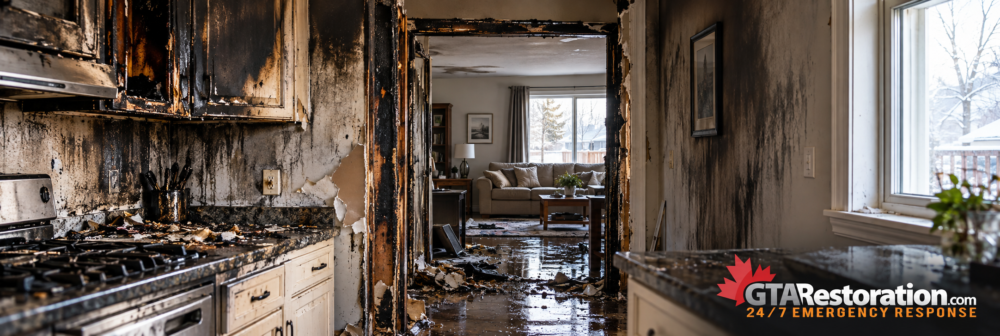
Drywall is made of a gypsum core covered with porous paper. That paper surface can absorb smoke residues quickly, especially after a slow, smoky fire. Fine particles may not be visible across the entire wall, but they can remain in pores, around fasteners, behind baseboards, and at joints.

Different fires leave different residues. A dry fire, often caused by wood or paper, can leave a powdery soot that may respond well to specialized cleaning. A protein fire from burnt food can create a nearly invisible residue with a strong, lingering odor. A fuel oil or synthetic-material fire can produce sticky, oily soot that bonds aggressively to painted surfaces and may contain more difficult contaminants.

Heat matters as much as soot. When drywall has been exposed to high temperatures, its paper facing can discolor, blister, loosen, or become brittle. If water from sprinklers, hoses, or firefighting operations also soaked the wall, the gypsum board may swell, sag, soften, or support mold growth. In that situation, cleaning the surface alone does not solve the problem.

When Smoke Damaged Drywall Can Be Repaired

Repair is often possible when smoke exposure is limited, the drywall remains dry and structurally sound, and contamination has not moved deeply into the wall system. This is more common after a small, contained fire where smoke was addressed quickly.

A restoration team begins with inspection, not paint. Technicians assess visible soot patterns, odor intensity, moisture levels, heat damage, and the condition of nearby materials. They may remove outlet covers, inspect behind trim, and check connected rooms because smoke travels through openings and HVAC pathways.

When the drywall is stable, the restoration process generally involves controlled dry cleaning or HEPA vacuuming before wet cleaning. Wiping soot with the wrong method can smear particles into the paper facing and make staining worse. Professional-grade cleaners are selected for the specific residue, while containment and air filtration help prevent particles from spreading to unaffected areas.

After cleaning and drying, odor treatment may be needed. This can include hydroxyl treatment, thermal fogging, or other professional deodorization methods chosen for the source and extent of the odor. A stain-blocking, odor-sealing primer may be appropriate before repainting, but primer is the final protective step – not a substitute for removing soot and contamination first.

Minor repairs can then address blistered paint, shallow surface damage, nail pops, or small areas where the paper facing needs patching. This approach can save time and reduce reconstruction costs when the wall system is genuinely clean and stable.

When to Replace Smoke Damaged Drywall

Replacement is the safer choice when drywall is wet, soft, warped, extensively heat damaged, or carrying odor that persists after proper cleaning. It is also often necessary when soot has entered the wall cavity, contaminated insulation, or affected framing and mechanical components behind the wall.

Drywall should not be retained simply because it still looks flat. Signs that removal may be needed include staining that bleeds back through cleaned surfaces, crumbling or detached paper, blistering across large areas, swollen seams, dampness, and a strong smoke smell concentrated at outlets, baseboards, or wall penetrations.

Replacement becomes especially likely after a fire involving plastics, electronics, insulation, fuels, or other synthetic materials. These fires can create sticky residues that are difficult to remove from porous building materials. If occupants have respiratory sensitivities, young children, older adults, or other health vulnerabilities in the property, a more conservative removal decision may be warranted.

For a condo or multi-unit building, replacement decisions also need to account for shared walls, shafts, corridors, and HVAC routes. Smoke can move far beyond the unit where the fire started. Property managers need clear documentation of affected areas so repair scopes, insurer communication, and resident safety plans are based on evidence rather than assumptions.

Repair or Replace Smoke Damaged Drywall: The Key Factors

The best decision is based on the whole wall assembly, not the appearance of one painted surface. A professional assessment considers several connected issues:

  • Type of fire residue: Dry soot is generally easier to remove than oily, protein-based, or synthetic smoke residues.
  • Extent of heat exposure: High heat can damage drywall paper and compromise its ability to hold paint, compound, and fasteners.
  • Water exposure: Fire suppression water can turn a smoke issue into a moisture and mold risk within days.
  • Odor source location: Odor that remains inside wall cavities or insulation usually requires targeted removal, not another coat of paint.
  • Material condition: Cracked, swollen, soft, delaminated, or heavily stained drywall is rarely a good candidate for restoration.
  • Cost and access: Selective removal can be more efficient than repeated cleaning attempts, particularly when electrical, insulation, or framing must be inspected.

There is no one-size-fits-all threshold. A small kitchen fire may allow localized cleaning and repainting. A bedroom fire with heavy soot, suppressed by water, may require drywall removal well beyond the burn area. The goal is to restore a clean, dry, odor-controlled interior – not just make the walls look better for a short time.

Why Painting Over Smoke Damage Fails

Painting over smoke stains is one of the most common post-fire mistakes. Standard latex paint does not remove soot, neutralize odors, or correct moisture damage. It can trap residue beneath the coating, and stains or odors may return when humidity and temperature change.

Even stain-blocking primer has limits. It works best after source removal, detailed cleaning, and drying. If porous drywall paper has absorbed significant smoke contamination, sealing the surface can leave contaminants and odor-producing residues in place. The result may be recurring odor complaints, especially when HVAC systems run or the building is closed up during winter.

Improper cleaning can cause damage as well. Household vacuums can exhaust fine particles back into the room. Excess water can drive residue deeper into drywall or activate hidden moisture problems. Abrasive scrubbing may tear the paper facing, creating a larger repair than the original stain.

The Value of a Coordinated Fire Restoration Response

After a fire, drywall is only one part of the loss. Soot may affect ceilings, insulation, flooring, contents, ductwork, electrical fixtures, and plumbing components. Water used to control the fire may be moving through floors and walls at the same time. Coordinating cleaning, drying, odor control, selective demolition, and reconstruction through one restoration team reduces gaps between trades and helps keep the project moving.

For insurance claims, documentation is equally important. Photos, moisture readings, material conditions, cleaning records, and a clear scope of work help show why certain drywall areas can be restored while others need removal. This is particularly valuable for landlords, commercial operators, and condominium managers responsible for multiple affected spaces.

GTA Restoration provides 24/7 fire and smoke restoration support across the Greater Toronto Area, with trained technicians who can assess contamination, control the spread of soot, dry affected materials, and document the recovery process for insurers. Fast action matters because soot becomes harder to remove as it settles and bonds to surfaces.

Do not make a replacement decision based only on a dark stain or a temporary lack of odor. Have the walls, cavities, moisture conditions, and surrounding materials assessed together. A careful decision at the start protects the property from lingering smoke problems and gives occupants a safer path back to normal.

Share this... Spread the word!


Tags:

☛ ☛ Related Restoration Articles You May Also Like!

Emergency? Immediate response 24/7

416.800.0000 416.800.0000

For non-emergencies use our contact form

We Specialize in FAST Restoration Services!


Need Fast Restoration Service? Let our experienced team help. Your satisfaction is our priority.


We Service the GTA with a Fast 45-Minute Response Time!


“FREE VISUAL Estimate”


Restoration & Remediation

Do you need water removal services for your home or business? Are your floors, walls, furniture, or other areas affected by flooding or water damage? GTA Restoration provides professional water removal, drying, cleanup, and restoration services. Acting quickly can help reduce permanent property damage and lower the risk of mold growth. The longer water remains untreated, the greater the potential for additional damage.


Commercial & Residential Property Inspection

GTA Restoration uses professional moisture-detection technology, restoration equipment, and years of industry experience to identify water damage and locate hidden moisture. Specialized equipment allows our technicians to inspect many affected areas without unnecessary demolition, helping determine the extent of the damage before restoration work begins.


Helping You Every Step of the Way!


We understand that situations involving biohazard contamination in your home or business can be difficult and require professional attention. GTA Restoration provides dependable and experienced biohazard cleanup and remediation services for residential and commercial properties. For information about disaster restoration and recovery, visit the disaster restoration resource. For immediate assistance, contact GTA Restoration at (800) 506-6048.


Nationwide, Local Pricing

GTA Restoration offers local flood & water damage repair, mold removal/remediation, asbestos removal/abatement, fire/smoke damage repair services and much more.

Search

  • Ajax Asbestos Removal
  • Ajax Mold Removal
  • Ajax Water Damage
  • Anjou Mold Removal
  • Aurora Mold Removal
  • Aurora Water Damage
  • Beaconsfield Asbestos Removal
  • Beaconsfield Mold Removal
  • Boucherville Mold Removal
  • Brampton Asbestos Removal
  • Brampton Asbestos Removal
  • Brampton Mold Removal
  • Brampton Water Damage
  • Brossard Mold Removal
  • Burlington Asbestos Removal
  • Burlington Mold Removal
  • Burlington Water Damage
  • Burnaby Mold Removal
  • Burst Frozen Pipe Edmonton
  • Caledon Mold Removal
  • Caledon Water Damage
  • Calgary Asbestos Removal
  • Calgary Mold Removal
  • Calgary Water Damage
  • Cambridge Mold Removal
  • Cambridge Water Damage
  • Chambly Mold Removal
  • Chateauguay Mold Removal
  • Chomedey Mold Removal
  • Clarington Mold Removal
  • Concord Mold Removal
  • Concord Water Damage
  • Mississauga Mold Removal
  • Coquitlam Mold Removal
  • Cumberland Mold Removal
  • Dollard-des-Ormeaux Mold Removal
  • Dorval Mold Removal
  • Edmonton Asbestos Removal
  • Edmonton Mold Removal
  • Edmonton Water Damage
  • Etobicoke Asbestos Removal
  • Etobicoke Mold Removal
  • Etobicoke Water Damage
  • McMurray Fire Damage Services
  • Saskatchewan Asbestos Removal
  • Saskatchewan Mold Removal
  • Frozen Burst Pipe Repair Montreal
  • Frozen Burst Pipe Repair Ottawa
  • Gloucester Asbestos Removal
  • Gloucester Mold Removal
  • Hamilton Asbestos Removal
  • Hamilton Asbestos Testing
  • Hamilton Mold Removal
  • Hamilton Water Damage
  • Hampstead Mold Removal
  • Hampstead Water & Flood Damage
  • L'île-Bizard Mold Removal
  • Kahnawake Mold Removal
  • Kanata Asbestos Removal
  • Kanata Mold Removal
  • Kanata Water Damage
  • Kirkland Mold Removal
  • Kitchener Asbestos Removal
  • Kitchener Mold Removal
  • Kitchener Water Damage
  • Lasalle Mold Removal
  • Laval Asbestos Removal
  • Laval Mold Removal
  • Laval Water Damage
  • London Mold Removal
  • London Water Damage
  • Longueuil Mold Removal
  • Longueuil Water Damage
  • Markham Asbestos Removal
  • Markham Mold Removal
  • Markham Water Damage
  • Mississauga Asbestos Testing
  • Mississauga Mold Removal
  • Mississauga Water Damage
  • Montreal Air Duct Cleaning
  • Montreal Asbestos Removal
  • Montreal Asbestos Testing
  • Montreal East Mold Removal
  • Montreal Mold Removal
  • Montreal Water Damage
  • Mount-Royal Mold Removal
  • Nepean Asbestos Removal
  • Nepean Mold Removal
  • Nepean Water Damage
  • New Market Water Damage
  • New Westminster Mold Removal
  • Newmarket Mold Removal
  • North York Mold Removal
  • Oakville Mold Removal
  • Oakville Water Damage
  • Orleans Asbestos Removal
  • Orleans Mold Removal
  • Orleans Water Damage
  • Osgoode Mold Removal
  • Oshawa Mold Removal
  • Oshawa Water Damage
  • Ottawa Air Duct Cleaning
  • Ottawa Asbestos Removal
  • Ottawa Mold Removal
  • Ottawa Vermiculite Removal
  • Ottawa Water Damage
  • Pickering Mold Removal
  • Pickering Water Damage
  • Red Deer Mold Removal
  • Red Deer Water Damage
  • Richmond Hill Mold Removal
  • Richmond Hill Water Damage
  • Richmond Mold Removal
  • Rideau Lakes Mold Removal
  • Rockcliffe Park Mold Removal
  • Roxboro Mold Removal
  • Saint Laurent Mold Removal
  • Saint-Hubert Mold Removal
  • Scarborough Asbestos Removal
  • Scarborough Mold removal
  • Scarborough Water Damage
  • Sewer Backup Edmonton
  • Sewer Backup Montreal
  • Sewer Backup Ottawa
  • Sherwood Park Asbestos Removal
  • Sherwood Park Mold Removal
  • Spruce Grove Asbestos Removal
  • Spruce Grove Mold Removal
  • St. Albert Asbestos Removal
  • St. Albert Mold Removal
  • Ste.Dorothee Mold Removal
  • Surrey Mold Removal
  • Thornhill Mold Removal
  • Toronto & GTA Asbestos Removal
  • Toronto & GTA Mold Removal
  • Toronto Air Duct Cleaning
  • Toronto Water Damage
  • Unionville Mold Removal
  • Unionville Water Damage
  • Vancouver Asbestos Removal
  • Vancouver Mold Removal
  • Vancouver Water Damage
  • Vanier Mold Removal
  • Vaughan Mold Removal
  • Vaughan Water Damage
  • Westmount Mold Removal
  • Whitby Water Damage
  • Woodbridge Asbestos Removal
  • Woodbridge Mold Removal
  • Woodbridge Water Damage
  • Waterproofing
  • Kitchen & Bath Pro
  • Condo Restoration

Main Head Office


For Tips on Water Damage and Emergency Plumbing


We Work Direct with All Insurance Companies

Wᴇ ᴀʀᴇ ᴄᴏᴍᴍɪᴛᴛᴇᴅ ᴏɴ ᴡᴏʀᴋɪɴɢ ᴡɪᴛʜ ᴇᴠᴇʀʏ ɪɴsᴜʀᴀɴᴄᴇ ᴄᴏᴍᴘᴀɴʏ ᴀᴄʀᴏss Cᴀɴᴀᴅᴀ & USA.


In House Financing Available

In House Financing Available

FREE Financing Up To 24 Months NO INTEREST NO MONEY DOWN


Contact Us

Learn more ↴ GTA Restoration Tips

RELATED ARTICLES

  • How To Avoid Sprinkler Water Damage?
  • How To Deal With Floods & Water Damage?
  • Signs of Mould Growth In Your Property?
  • Avoid Mould Damage from Melting Snow
  • How to Prevent Water Damage In Summer
  • Avoid Mold Growth With Proper Air Flow
  • Prevent House Floods from Spring Rains
  • Prevent Frozen Burst Pipes in Winter
  • What To Do on Your Flooded Basement?


follow us on  LinkedIn Instagram Twitter Facebook YouTube


Our Clients

Our Vendor Clients


Affiliates

fully certified


GTA Restoration Toronto

Copyright © 2009 - 2026 All Rights Reserved. Sitemap/Links

LinkedInInstagram Twitter Facebook YouTube

Call Us 416-800-0000

Emergency? Immediate response 24/7

416.800.0000

416.800.0000

We cover all GTA 24/7.

Head Office:
250 Consumers Rd,
#10
Toronto, ON
M2J 4V6,
Open 24 hours

Downtown Office:
1 Toronto St,
#10
Toronto, ON
M5W 1A1,
Open 24 hours

For non-emergencies use our contact form


    Not sure what you need?

    Call us today to find the best product for your situation.

    416-800-0000 416-800-0000

    Head Office:
    101 Lebovic Ave,
    Unit #10
    Scarborough,
    ON, M1L 4T7
    Hours
    24-Hours Open

    Downtown Office:
    250 Yonge Street,
    Unit #1A
    Toronto,
    ON, M5B 2L7
    Hours
    24-Hours Open

    Repair or Replace Smoke Damaged Drywall?

    Get a quote today


      GTA Restoration Assistant 24/7 Emergency Restoration Help
      Hi! I'm GTA Restoration's virtual assistant. How can I help with your property damage today?
      Emergency? Call 416-800-0000