The fire may be out, but the damage is still moving. Smoke keeps spreading, water from firefighting efforts keeps soaking materials, and exposed openings can turn a bad situation into a bigger one within hours. If you are searching for how to protect property after fire, the first priority is not cleanup. It is stabilization – making the building safer, limiting secondary damage, and preserving what can still be saved.
That matters whether you own a house, manage a condo unit, oversee a rental property, or are responsible for a commercial building. The first 24 to 48 hours shape the total cost of the loss, the speed of recovery, and in many cases, the success of the insurance claim.
How to protect property after fire in the first hours
Start with safety, not salvage. Do not re-enter the property until the fire department or other authorities confirm it is safe to do so. A structure can look stable and still have compromised framing, damaged electrical systems, wet ceilings, or hidden hot spots. Soot and smoke residue can also present respiratory risks, especially in enclosed areas.
Once access is cleared, secure the building immediately. Broken windows, damaged doors, roof openings, and compromised walls leave the property exposed to weather, theft, vandalism, and animal intrusion. Emergency board-up and roof tarping are often the first practical steps because they stop the loss from expanding. If rain gets into an already damaged structure, the fire loss quickly becomes a water and mold problem too.
Utilities should be handled carefully. Electricity, gas, and water may need to remain shut off until qualified technicians inspect the systems. Turning services back on too early can create another emergency. In mixed-loss situations, especially when sprinklers burst or firefighting water has flooded lower levels, plumbing and electrical coordination matters as much as the fire restoration itself.
Stop secondary damage before it spreads
One of the most common mistakes after a fire is assuming the visible burn area is the only damage zone. In reality, smoke, soot, and acidic residues travel well beyond the room where the fire started. HVAC systems can carry contamination into surrounding spaces. Water can migrate into wall cavities, flooring systems, insulation, and lower levels.
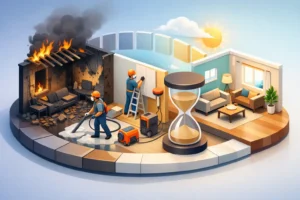
This is where timing makes a real difference. Soot left on metal surfaces can cause corrosion. Smoke residues can permanently stain finishes. Wet materials can begin supporting microbial growth quickly, especially in warm, enclosed spaces. Protecting the property means addressing all three threats at once: structural exposure, contamination, and moisture.
Ventilation is not always the simple answer people assume it is. Opening every window may help in some cases, but it can also spread soot, affect odor control, and complicate drying strategy depending on weather and building layout. The right approach depends on the severity of the fire, the type of materials affected, and whether the building has active HVAC contamination. Controlled drying and air filtration are usually more effective than improvised airing out.
Document everything before cleanup begins
If you want to know how to protect property after fire from both a restoration and insurance standpoint, documentation is essential. Before moving debris or discarding damaged contents, photograph and video every affected area. Capture wide shots of rooms, close-ups of damaged finishes, equipment, contents, and any visible structural issues.
Make a written record of what happened, when the fire occurred, and what emergency actions were taken. If the fire department, utility providers, or other responders were on site, note that as well. Keep receipts for temporary repairs, emergency lodging, protective materials, and any immediate mitigation services.
This step protects more than the claim. It also creates a baseline for restoration planning. In larger residential losses, multi-unit buildings, and commercial properties, clear documentation helps owners, managers, adjusters, and contractors stay aligned on scope, urgency, and next steps.
Protect contents that can still be saved
Not everything in a fire-damaged property is a total loss. In many cases, furniture, documents, electronics, inventory, and personal belongings can be stabilized or restored if they are handled quickly and correctly. The key is to avoid well-meaning damage.
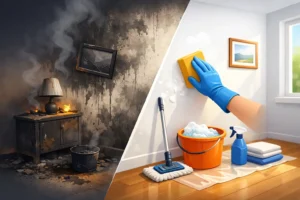
Do not start wiping soot off surfaces with household cleaners. Different types of soot react differently, and the wrong method can grind residue deeper into materials or permanently smear finishes. Electronics should not be powered on if they were exposed to smoke, heat, or moisture. Soft goods and paper items can deteriorate fast if they remain in a damp, contaminated space.
Pack-out and content separation often help. That means moving salvageable items out of the affected environment, inventorying them, and placing them into controlled cleaning or storage conditions. For landlords, condo managers, and commercial operators, this can also reduce downtime by clearing the way for structural restoration while preserving high-value contents.
Control water damage after firefighting efforts
A large percentage of fire losses involve major water intrusion. Hoses, sprinklers, and suppression systems can leave floors saturated, ceilings collapsing, and hidden cavities wet for days if the response is delayed. That is why protecting fire-damaged property often requires the same urgency as a flood response.
Water extraction should begin as soon as the structure is safe to enter. After that, drying, dehumidification, and moisture mapping are critical. Surface dryness is not enough. Moisture trapped behind walls, under flooring, or above ceilings can quietly drive rot, odor, and mold.
There is a trade-off here. Some fire-damaged materials need to stay in place temporarily for investigation or insurance review, while wet materials also need rapid mitigation. A qualified restoration team knows how to balance evidence preservation with loss control, which is especially important in commercial buildings and larger insured losses.
Know when the property needs professional stabilization
Small, localized incidents may seem manageable, but fire damage is rarely just cosmetic. Even a kitchen fire with limited flames can leave widespread smoke contamination, odor issues, and hidden moisture. The bigger the loss, the more important it is to have a coordinated response that covers emergency protection, environmental cleanup, drying, demolition, and rebuild planning.
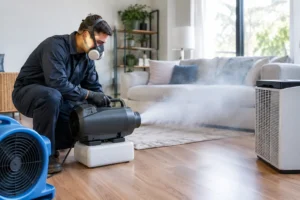
Professional stabilization usually includes board-up, tarping, water extraction, dehumidification, soot assessment, HEPA air filtration, odor control, debris removal, and detailed documentation. In more complex properties, it may also require emergency plumbing, roof repair, hazardous material handling, or coordination across multiple units.
For property managers and commercial operators, speed is tied directly to occupancy and business continuity. Delays can affect tenants, staff access, code compliance, and revenue. A one-call response model is often more efficient than trying to coordinate separate trades after the fact.
Common mistakes that make fire damage worse
The biggest mistake is waiting. Every hour the property sits unsecured, wet, and contaminated raises the cost and complexity of recovery. Another mistake is allowing unqualified cleanup crews or general labor to begin work without a restoration plan. Fire losses involve structural, environmental, and insurance considerations that need more than basic debris removal.
People also underestimate odor damage. Smoke odor is not solved with air fresheners or surface cleaning. If smoke particles remain in porous materials, ducts, insulation, or cavities, the smell usually returns. Effective odor removal requires source removal, deep cleaning, and the right treatment methods for the building materials involved.
Finally, many owners throw away damaged items too soon. Some contents should be discarded for safety reasons, but others may be restorable or needed for claim verification. When in doubt, document first and get professional guidance before disposal.
A practical recovery plan for owners and managers
The most effective response is simple in principle: secure, document, mitigate, and restore. Secure the site so the damage does not spread. Document the full condition before major cleanup. Mitigate smoke, soot, and water quickly with proper equipment and trained crews. Then move into repair and reconstruction with a clear scope.
That process is rarely identical from one property to the next. A detached home, a condo unit, a rental building, and a commercial space all come with different access issues, liability concerns, and restoration priorities. In a multi-unit environment, one fire can affect neighboring suites, shared systems, corridors, and common areas even when the burn area seems limited.
When the response is organized early, recovery becomes more controlled. That means fewer surprises, less preventable damage, and a better chance of saving materials, contents, and time. For owners and managers under pressure, that control is what matters most.
After a fire, the goal is not just to clean up what happened. It is to protect what is still standing, preserve what can be recovered, and make the next decision from a position of stability rather than panic.