

Do Retail Businesses Need a Water Damage Preparedness Plan?
Last Updated: November 1, 2026
Quick Summary
Yes, a retail business needs a water damage preparedness plan, and most stores do not have one. It is a written set of steps covering shutoffs, contacts, stock protection, and who calls whom. Water damage preparedness keeps the first hour organized, when a small leak can spread before anyone acts.
- Water damage in a store usually comes from a burst pipe, failed hot water tank, overflowing toilet, blocked drain, or roof leak.
- Label the main water valve, electrical panel, and gas valve clearly, and show every manager where they are.
- Keep the response plan to one page, print it, and post it where staff can find it.
- Raise bottom shelves off the floor and use plastic totes instead of cardboard for overflow stock.
- Mold can start growing on wet materials within a day or two, so drying should begin right away.
Table of Contents
- Why Every Retail Business Needs a Water Damage Preparedness Plan
- Your Retail Store Flood Preparedness Checklist
- Building a Business Water Damage Response Plan
- Restoration Support
- Frequently Asked Questions
Why Every Retail Business Needs a Water Damage Preparedness Plan
Yes, a retail business needs a water damage preparedness plan, and most stores do not have one.
Water damage in a store often spreads before anyone acts. The leak starts small, and nobody knows where the shutoff is.
That gap is what a plan closes. For the full restoration playbook, from first-hour response to reopening, see this guide to water damage restoration for retail stores.
Water damage in a retail store rarely comes from a flood.
research on small-business preparedness and recovery planning shows that planning is a skill small-business owners build, not a form they fill once.
Your Retail Store Flood Preparedness Checklist
A retail store flood preparedness checklist turns good intentions into repeatable actions. Work through it once, then review it each season and whenever your layout changes.
Start with hazard identification. Walk the store and note every water source:
Next, confirm your utility shutoff locations. Label the main water valve, electrical panel, and gas valve clearly, and show every manager where they are.
Leak detection deserves its own line item. Simple sensors near tanks and under sinks can alert you before a small drip becomes a soaked sales floor. To compare sensor types and shutoff valves, read this buyer’s guide to commercial leak detection systems.
Finally, write down insurance documentation steps. Photograph the store as it normally looks and store those photos off-site for claim support.
Building a Business Water Damage Response Plan
A business water damage response plan answers one question fast: who does what in the first hour? Keep it to one page, print it, and post it where staff can find it.
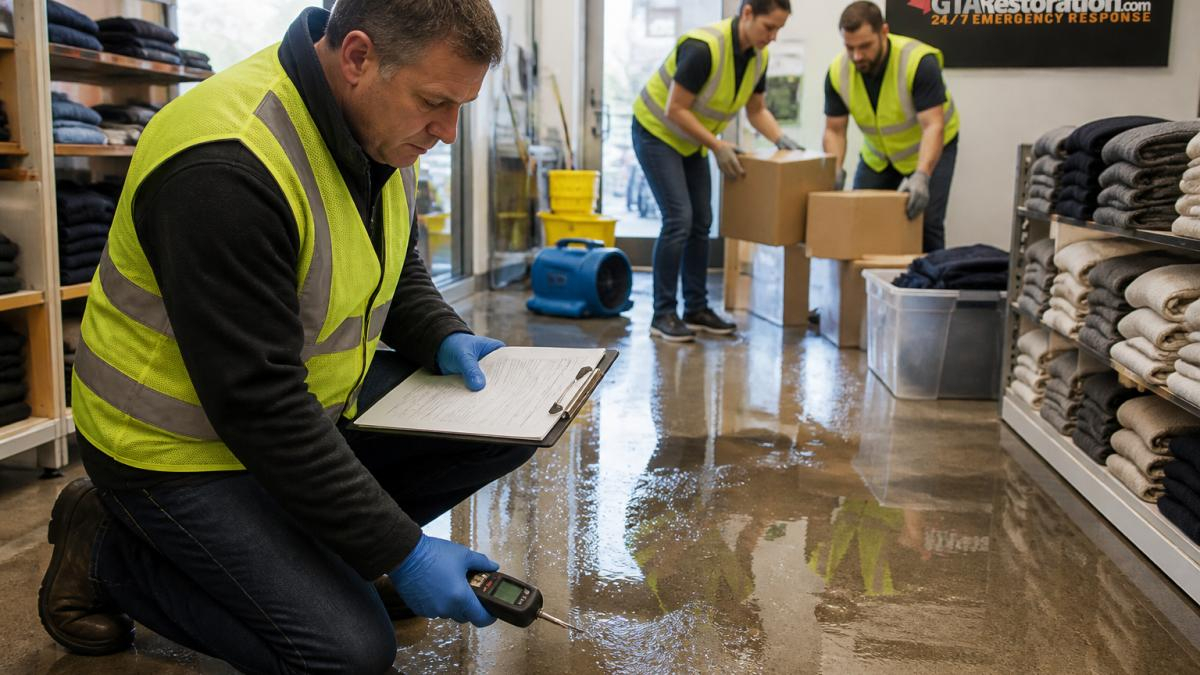
- Make people safe. Move customers and staff away from the wet area. Do not walk through standing water near outlets or panels.
- Stop the water. Shut the valve if it is safe to reach. Call the landlord if the source is outside your unit.
- Call for help. Contact a restoration team and your insurer early. Before you sign, review these questions to ask a commercial water damage contractor.
- Protect the stock. Lift boxes off the floor and move goods to dry shelving.
- Document everything. Photos, video, and a written timeline.
- Start drying. Air movers and dehumidifiers limit secondary damage and mold risk.
Watch out: never let staff touch a wet electrical panel or pull a plug standing in water. Learn when to keep out and who to call in this article on electrical hazards after flooding.
Protecting Retail Inventory From Water Damage
Protecting retail inventory from water damage starts before the water arrives. Raise bottom shelves off the floor and use plastic totes instead of cardboard for overflow stock.
When water hits, triage fast: save electronics, paper records, and high-margin goods first; dry hard goods next; discard porous items that stayed wet, food, and anything with visible mold.
Cardboard soaks through in minutes. If a box is soft, assume the contents are wet.
Retail Business Continuity Plan Basics
A retail business continuity plan keeps sales moving while repairs happen. Name your mission-critical operations: the till, the card terminal, the ordering system, and the back-office computer.
Mold can start growing on wet materials within a day or two, so drying should begin right away. These steps to stop mold growth after water damage cover fast drying and when to call a professional.
study of small-business disaster preparedness after a major storm looked at whether living through a disaster pushed owners to prepare. The takeaway for any store owner is simple: experience is a costly teacher.
The first hour follows a fixed order of steps.
| Step | What to do |
|---|---|
| 1 | Make people safe; move away from wet area |
| 2 | Stop the water; shut the valve if safe |
| 3 | Call a restoration team and your insurer |
| 4 | Protect stock; lift boxes onto dry shelving |
| 5 | Document with photos, video, written timeline |
| 6 | Start drying with air movers and dehumidifiers |
Restoration Support
A retail water plan only works when someone can act on it. These eight steps keep your store ready.
Know Your Water Sources
List every pipe, tank, drain, and roof point that could leak. Update the list after any renovation.
Label the Shutoffs
Mark the main water valve and electrical panel. Show every manager how to use them safely.
Stock a Small Emergency Kit
Keep mops, tarps, gloves, boots, and waterproof bins on site. Check the kit each season.
Protect Stock Early
Raise low shelving and switch overflow storage from cardboard to plastic totes.
Write the First-Hour Steps
Post a one-page response sheet with clear roles and phone numbers.
Photograph the Store Now
Take dated photos of your normal layout. Store them off-site for claim support.
Train Staff Twice a Year
Run a short walkthrough so new hires know the shutoffs and the exit routes.
Review After Every Near Miss
A small leak is free training. Fix the gap before the next one.
Water damage moves faster than most stores can react. A written plan buys you time, and time protects stock and sales. When water wins the race, call us at Fire, Water Damage Restoration Toronto for 24/7 emergency response and help with your insurance claim.
Frequently Asked Questions
How do retail businesses prepare for water damage?
Start with a risk assessment that maps flood zones, roof leaks, plumbing, and sprinkler lines. Then write a water damage preparedness plan with evacuation routes, utility shutoff steps, an emergency kit, staff roles, and a contact list. Review it yearly and after any near miss.
What should a retail store include in an emergency preparedness plan?
Include evacuation procedures, a meeting point, staff accountability, emergency contacts, utility shutoff instructions, and a communication plan. Add an inventory protection strategy, insurance documentation steps, and a business water damage response plan with clear first-hour actions.
How can a store protect inventory from water damage?
Raise stock on pallets or shelving off the floor, keep absorbent goods away from exterior walls, and store critical records in waterproof containers. In a flood, triage high-value and non-porous items first. A retail store flood preparedness checklist should name salvage priorities before water arrives.

For non-emergencies use our contact form
Restoration Support for Properties Across Canada
Property damage can affect a home, business or shared building. GTA Restoration serves communities across Canada, including Toronto and the GTA. We are opening locations in the United States. Contact us to confirm current services and availability for your address.
Emergency Restoration Help
Call for 24/7 restoration help. Describe any active leak, standing water or visible damage. Access, site conditions and crew availability affect the response.
Water Removal
Standing water needs a plan suited to its source and the affected materials. Share details about the depth, location and any known contamination.
Moisture Checks
Visible marks may not show the full extent of a leak. Moisture readings help identify areas that need closer inspection and follow-up.
Mold Concerns
Report visible mold, musty smells and past leaks. Addressing the moisture source is an important part of planning cleanup and repairs.
Fire and Smoke Damage
Smoke, soot and firefighting water can affect different parts of a building. Discuss the affected areas before moving belongings or starting cleanup.
Contaminated Areas
Sewage and other contamination need a site-specific approach. Keep people and pets away from affected areas while arranging an assessment.
Commercial Properties
Building access, tenants and operating hours matter. Our commercial restoration services help owners and managers plan work around site needs.
Equipment Rental
Explore restoration equipment rental and confirm the unit, power requirements, rental dates and operating instructions before booking.
Need emergency help?
Call GTA Restoration to discuss the fault, access.
Service Areas Across Canada
GTA Restoration serves communities across Canada, including Toronto and the GTA. U.S. locations are opening. Browse our Canadian service areas below, and contact us to confirm services and availability for your address.
Search
- Air Duct Cleaning Montreal
- Ajax Asbestos Removal
- Ajax Mold Removal
- Ajax Water Damage
- Asbestos Removal Calgary
- Asbestos Removal Edmonton
- Asbestos Removal Fort Saskatchewan
- Asbestos Removal Gloucester
- Asbestos Removal Grimsby
- Asbestos Removal Hamilton
- Asbestos Removal Kanata
- Asbestos Removal Kitchener
- Asbestos Removal Laval
- Asbestos Removal Lincoln
- Asbestos Removal Montreal
- Asbestos Removal Nepean
- Asbestos Removal Niagara Falls
- Asbestos Removal Orleans
- Asbestos Removal Ottawa
- Asbestos Removal Sherwood Park
- Asbestos Removal Spruce Grove
- Asbestos Removal St Catharines
- Asbestos Removal St-Albert
- Asbestos Removal Thorold
- Asbestos Testing Hamilton
- Asbestos Testing Montreal
- Asbestos Testing Petersburg
- Aurora Mold Removal
- Aurora Water Damage
- Beaconsfield Asbestos Removal
- Brampton Asbestos Removal
- Brampton Mold Removal
- Brampton Water Damage
- Burlington Asbestos Removal
- Burlington Mold Removal
- Burlington Water Damage
- Burst Pipe Montreal Frozen Pipe
- Burst Pipe Repair Edmonton
- Burst Pipe Repair Ottawa
- Caledon Mold Removal
- Caledon Water Damage
- Calgary Mold Removal
- Calgary Water Damage
- Cambridge Mold Removal
- Cambridge Water Damage
- Clarington Mold Removal
- Concord Mold Removal
- Concord Water Damage
- Cooksville Mold Removal
- Edmonton Water Damage
- Emergency Roofing Vancouver
- Etobicoke Asbestos Removal
- Etobicoke Mold Removal
- Etobicoke Water Damage
- Fire Damage Grimsby
- Fire Damage Lincoln
- Fire Damage Niagara Falls
- Fire Restoration Fort McMurray
- Fire Damage Restoration Thorold
- Fire Damage St Catharines
- Flood Cleanup Grimsby
- Flood Cleanup Lincoln
- Flood Cleanup Niagara Falls
- Flood Cleanup St Catharines
- Flood Cleanup Thorold
- London Mold Removal
- London Water Damage
- Markham Asbestos Removal
- Markham Mold Removal
- Markham Water Damage
- Mississauga Asbestos Testing
- Mississauga Mold Removal
- Mississauga Water Damage
- Mold Inspection Removal Kitchener
- Mold Remediation Montreal
- Mold Removal & Inspection LaSalle
- Mold Removal Anjou
- Mold Removal Boucherville
- Mold Removal Brossard
- Mold Removal Burnaby
- Mold Removal Chambly
- Mold Removal Chateauguay
- Mold Removal Chomedey
- Mold Removal Coquitlam
- Mold Removal Dollard Des Ormeaux
- Mold Removal Dorval
- Mold Removal Edmonton
- Mold Removal Fort Saskatchewan
- Mold Removal Gloucester
- Mold Removal Grimsby
- Mold Removal Hamilton Inspection
- Mold Removal Ile Bizard
- Mold Removal in Osgoode
- Mold Removal Beaconsfield
- Mold Removal Kahnawake
- Mold Removal Kanata
- Mold Removal Kirkland
- Mold Removal Laval
- Mold Removal Lincoln
- Mold Removal Longueuil
- Mold Removal Montreal East
- Mold Removal Mount Royal
- Mold Removal Nepean
- Mold Removal New Westminster
- Mold Removal Niagara Falls
- Mold Removal Orleans
- Mold Removal Ottawa
- Mold Removal Cumberland
- Mold Remediation Hampstead
- Mold Removal Remediation Roxboro
- Mold Removal Richmond BC
- Mold Removal Rideau Lakes
- Mold Removal Rockcliffe Park
- Mold Removal Saint Hubert
- Mold Removal Saint Laurent
- Mold Removal Sherwood Park
- Mold Removal Spruce Grove
- Mold Removal St Catharines
- Mold Removal Ste Dorothee
- Mold Removal St۔ Albert
- Mold Removal Surrey
- Mold Removal Thorold
- Mold Removal Vancouver
- Mold Removal Vanier
- Mold Removal Westmount
- Montreal Biohazard Cleanup
- Montreal Emergency Plumber
- Montreal Fire Restoration
- Montreal Flood Cleanup
- Montreal Odor Removal
- Montreal Roofing Emergency
- Montreal Sewer Backup Cleanup
- Montreal Water Leak Detection
- Montréal Asbestos Removal
- Montréal Emergency Plumbing
- Montréal Mold Removal
- Montréal Pipe Burst Emergency
- Montréal Water Damage
- Newmarket Mold Removal
- Newmarket Water Damage
- North York Mold Removal
- Oakville Mold Removal
- Oakville Water Damage
- Oshawa Mold Removal
- Oshawa Water Damage
- Ottawa Air Duct Cleaning
- Pickering Mold Removal
- Pickering Water Damage
- Red Deer Water Damage
- RedDeer Mold Removal
- Richmond Hill Mold Removal
- Richmond Hill Water Damage
- Roof Repair Lincoln
- Roof Repair Niagara Falls
- Roof Repair St Catharines
- Scarborough Asbestos Removal
- Scarborough Mold Removal
- Scarborough Water Damage
- Sewage Cleanup Edmonton
- Sewer Backup Lincoln
- Sewer Backup Niagara Falls
- Sewer Backup Ottawa
- Sewer Backup St Catharines
- Thornhill Mold Removal
- Toronto & GTA Asbestos Removal
- Toronto & GTA Mold Removal
- Toronto Air Duct Cleaning
- Toronto Water Damage
- Unionville Mold Removal
- Unionville Water Damage
- Vancouver Asbestos Removal
- Vancouver Biohazard Cleanup
- Vancouver Emergency Plumber
- Vancouver Emergency Plumbing
- Vancouver Fire Restoration
- Vancouver Flood Cleanup
- Vancouver Mold Removal
- Vancouver Odor Removal
- Vancouver Pipe Burst Emergency
- Vancouver Sewer Backup Cleanup
- Vancouver Water Damage
- Vancouver Water Leak Detection
- Vaughan Mold Removal
- Vaughan Water Damage
- Vermiculite Removal Ottawa
- Water Damage Grimsby
- Water Damage Kanata
- Water Damage Kitchener
- Water Damage Lincoln
- Water Damage Longueuil
- Water Damage Nepean
- Water Damage Niagara Falls
- Water Damage Orleans
- Water Damage Ottawa
- Water Damage Repair Montreal
- Water Damage Laval Montreal
- Water Damage Restoration Thorold
- Sewage Backup Cleanup Montreal
- Water Damage St Catharines
- Water Damage Vancouver
- Water Flood Damage Repair Hamilton
- Flood Damage Repair Hampstead
- Whitby Water Damage
- Woodbridge Asbestos Removal
- Woodbridge Mold Removal
- Woodbridge Water Damage
- Restoration Equipment Rental
Restoration Questions
Where are your services available?
GTA Restoration serves communities across Canada, including Toronto and the GTA. U.S. locations are opening. Tell us the property address so we can discuss the work needed and confirm current availability.
What should I tell the team first?
Describe what happened, when you noticed it and which rooms are affected. Mention any active leak or access restrictions. These details help us discuss the next step and confirm availability.
How is the drying plan decided?
The water source, affected materials and moisture readings help guide the plan. Equipment needs can change as work progresses. Ask how the team will check conditions before repairs cover the affected area.
Can restoration work be covered by insurance?
Coverage depends on your policy and the cause of the damage. Your insurer decides the claim. Keep photos, dates and receipts, and ask which records are needed before agreeing to the work.
Who can I call about urgent damage?
Call the phone number shown on this page for 24/7 restoration help. Explain the problem and ask about availability. If there is immediate danger, contact emergency services and follow their directions.
Learn more ↴ 
Latest Blog
Latest Articles
Direct Billing & Insurance Claims
Ask your insurer about coverage, deductibles and the records it needs.

In-House Financing Available
Financing up to 24 months. No interest. No money down. Ask us about the terms.
Certifications & Insurance
View our firm certification, technician qualifications and insurance documents.

IICRC Certified Firm
GTA Restoration Inc.
Firm number 199912
Valid through
Business Insurance
GTA Restoration Group Inc.
$5 million general liability per occurrence
$8 million contractors pollution per claim
–
IICRC Technician Qualifications
Richard Mark Provence · Registration 55726
Certificate expires
Water Damage Restoration · Fire & Smoke Restoration · Applied Microbial Remediation · Odor Control · Trauma & Crime Scene
View technician verification (PDF) — opens in a new tabInsurance is subject to policy terms, conditions and exclusions.
 Facebook
 Instagram
 LinkedIn
 X / Twitter
 YouTube


