
Tags: Building Parking Garage Cleaning, Commercial Cleaning Service, Commercial Sanitation, Disinfection and Sanitization Services, Sewer Backup Cleaning,
For non-emergencies use our contact form


Emergency? 24-Hours
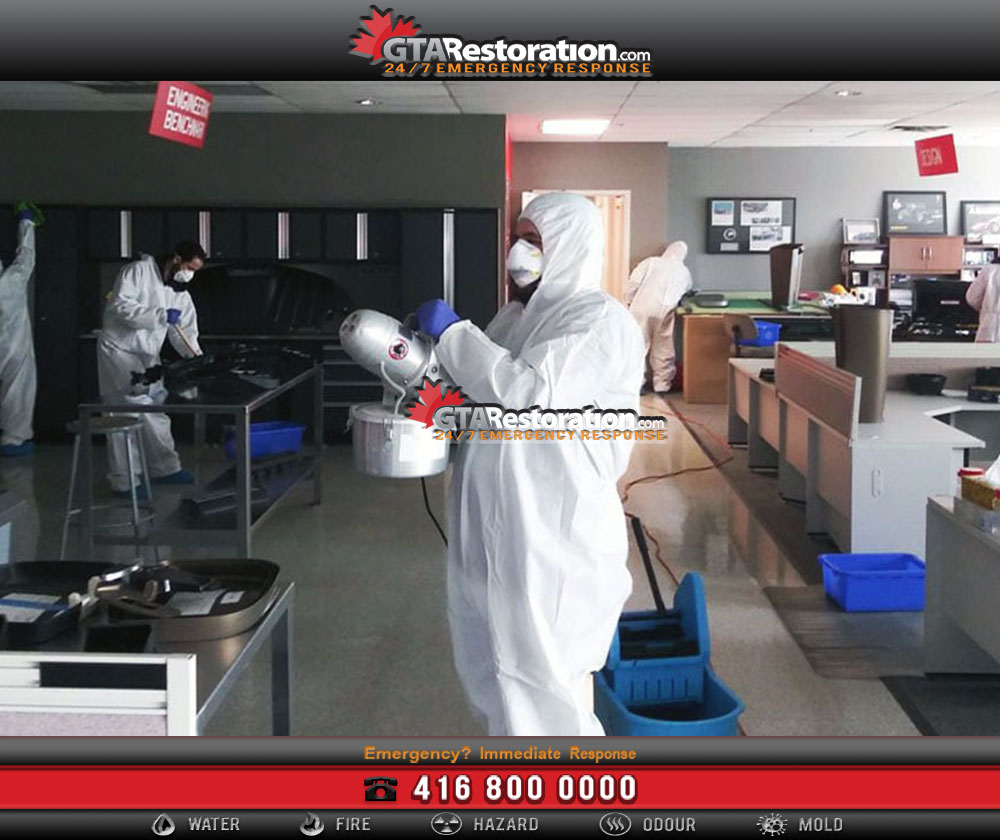
416-800-0000A short written plan helps staff follow the same steps. Keep tasks, contacts and records clear.
First, choose who will review updates and answer questions. Also, name a backup contact for days when that person is away.
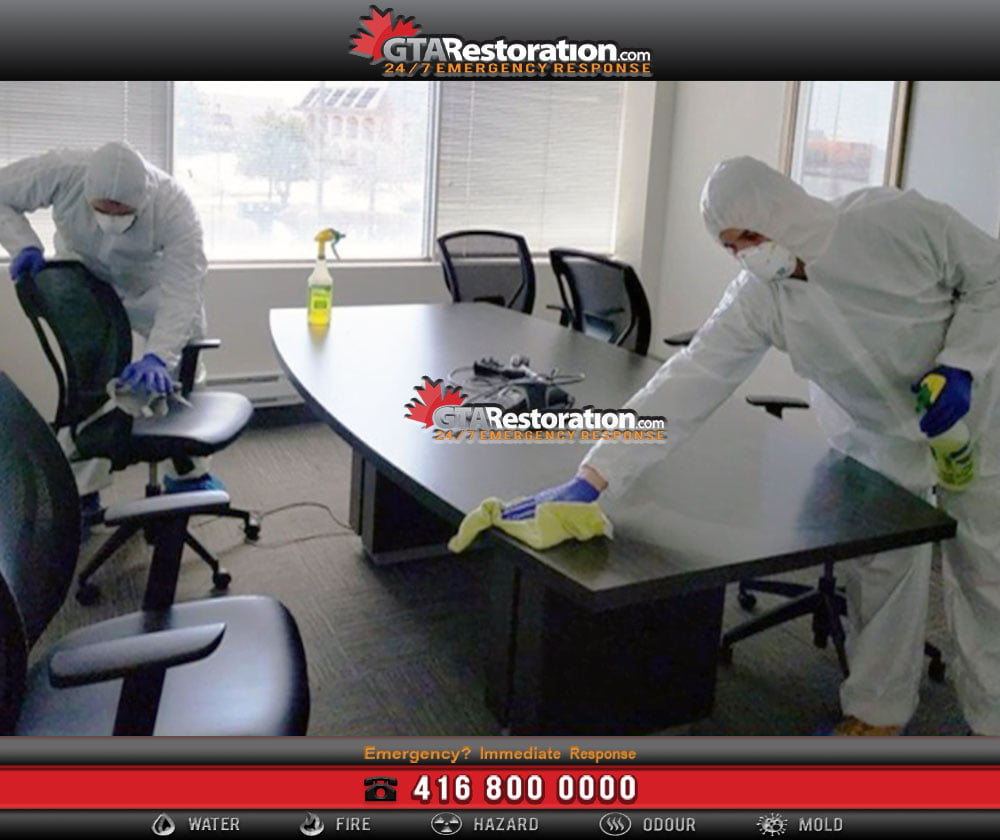
List lobbies, lifts, washrooms and meeting rooms. Then, identify frequently touched surfaces that need attention in each area.
Keep service dates and filter details together. Also, report blocked vents or equipment faults to the person responsible for maintenance.
Record the products in use. Then, check labels, expiry dates and stock levels before staff start their work.
Show staff how to follow the plan. Also, explain who to contact when supplies run low or an illness concern arises.
Tell occupants which areas need temporary limits. Confirm safe access and re-entry steps before the cleaning visit begins.
Log dates, areas cleaned and follow-up tasks. Then, review missed work or problems with the team so they can improve.
Finally, check current local advice and changes in building use. Update instructions and staff training when the plan changes.
Need help with shared-space cleaning?
Call GTA Restoration to discuss your building and the work required.
Service Areas Across Canada
GTA Restoration serves communities across Canada, including Toronto and the GTA. U.S. locations are opening. Browse our Canadian service areas below, and contact us to confirm services and availability for your address.
Search
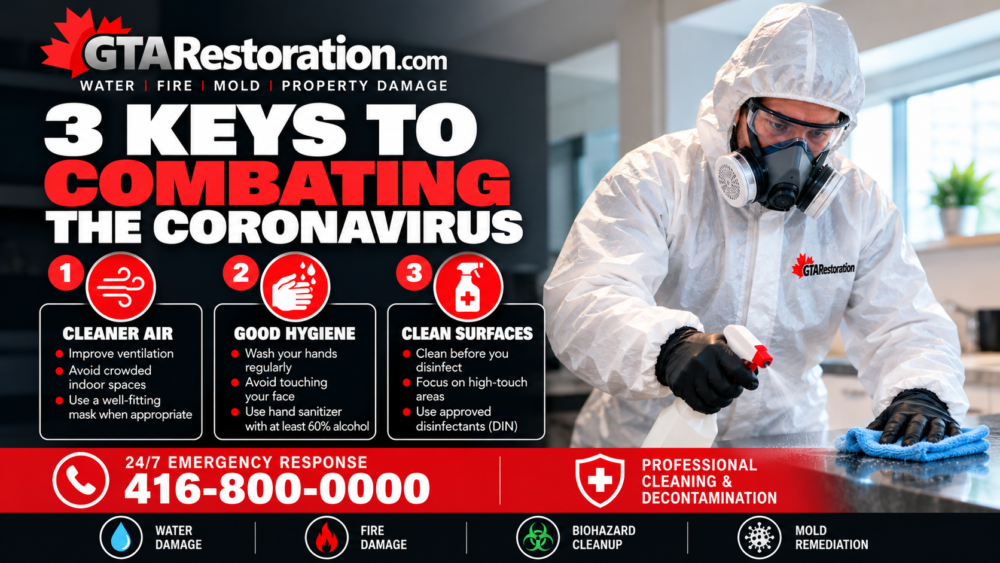
No. COVID-19 can spread through shared air. Therefore, include ventilation and filtration, plus illness precautions, in the plan.
Use soap and water for at least 20 seconds. Also, keep soap and drying supplies stocked.
First, follow the setting's guidance and use patterns. Clean visible dirt promptly, and give frequently touched surfaces more attention.
No. Use a method only when the product label permits it and the site plan supports it.
Follow current local advice and applicable requirements. Also, account for cleaning work and the needs of the setting.
No. Cleaning addresses the agreed surfaces. However, ongoing air, hygiene and illness measures still matter.
Direct Billing & Insurance Claims
Ask your insurer about coverage, deductibles and the records it needs.

In-House Financing Available
Financing up to 24 months. No interest. No money down. Ask us about the terms.
Learn more ↴ 
RELATED ARTICLES





Call Us 416-800-0000
Emergency? 24/7 Restoration Help
We cover all GTA 24/7.
Head Office:
250 Consumers Rd,
#10
Toronto, ON
M2J 4V6,
Open 24 hours
Downtown Office:
1 Toronto St,
#10
Toronto, ON
M5W 1A1,
Open 24 hours
For non-emergencies use our contact form
Not sure what you need?
Call us today to find the best product for your situation.
Head Office:
101 Lebovic Ave,
Unit #10
Scarborough,
ON, M1L 4T7
Hours
24-Hours Open
Downtown Office:
250 Yonge Street,
Unit #1A
Toronto,
ON, M5B 2L7
Hours
24-Hours Open
COVID-19 Building Guidance for Commercial and Residential Properties
Get a quote today


