



For non-emergencies use our contact form
Crime and Safety in Toronto
Crime and Safety in Toronto is an important topic for residents, property owners, businesses, and visitors. Toronto is a large city, so crime levels can vary by neighbourhood, time of day, and type of offence. For that reason, current police data gives a better picture than older rankings or general claims about whether an area is simply “safe” or “unsafe.”
The latest completed-year figures show that several measures of police-reported crime declined in 2025. However, personal safety still requires awareness, secure property practices, and knowing where to find reliable local information.
Latest Crime and Safety in Toronto Data
Statistics Canada reported a Crime Severity Index of 55.0 for the Toronto census metropolitan area in 2025. That represented a 7% decrease from 2024. The police-reported crime rate was 3,950 incidents per 100,000 people, which was 5% lower than the previous year.
Understanding Toronto Crime Statistics
No single number explains public safety across an entire city. The Crime Severity Index, crime rate, police-reported incidents, and individual crime categories measure different things.
In addition, police statistics reflect incidents reported to or discovered by police. They do not show every event that occurs. For this reason, trends should be considered alongside location, time period, and the specific type of offence being reviewed.
Property Crime in Toronto
Property crime can include auto theft, break and enter, theft from vehicles, and other forms of theft. Although several major property crime categories declined in Toronto during 2025, property owners should continue using basic security measures.
Locking doors and windows, keeping valuables out of sight, using exterior lighting, and securing vehicles can reduce opportunities for theft.
Violent Crime and Personal Safety
Violent incidents receive significant public attention, but the risk is not distributed evenly throughout Toronto. Conditions can differ by neighbourhood, street, event, and time of day.
Rather than relying on broad neighbourhood labels, residents can use current police maps and data to understand incidents reported near a specific area.
Fraud and Online Crime
Public safety also includes fraud, identity theft, scams, and other offences that may not involve a physical crime scene. Scammers may impersonate police, financial institutions, government agencies, or businesses.
Before providing personal or financial information, verify who is contacting you through an official source. Likewise, avoid sending money because of an unexpected call, email, or text message that creates unusual pressure or urgency.
Crime and Safety by Toronto Neighbourhood
Neighbourhood crime levels can change over time. Therefore, a permanent list of Toronto’s “safest” or “most dangerous” areas can quickly become inaccurate and may oversimplify local conditions.
A better approach is to check recent data for the specific community you live in, visit, or plan to move to. Toronto Police provides interactive maps and dashboards for assault, robbery, auto theft, break and enter, shootings, bicycle theft, and other incidents.
When comparing areas, review several months or years of data rather than judging a neighbourhood from one isolated incident.
How to Improve Personal and Property Safety
Stay Aware in Public Areas
Pay attention to your surroundings, especially at night or in unfamiliar locations. Well-used and well-lit routes may provide better visibility when travelling on foot.
Secure Your Home or Business
Keep exterior doors and accessible windows locked. In addition, good lighting, working locks, alarms, cameras, and controlled access can improve property security.
Protect Vehicles and Valuables
Avoid leaving keys or valuable property visible inside a vehicle. Where practical, use secure parking and additional anti-theft measures.
Use Reliable Public Safety Information
Crime information changes throughout the year. As a result, official police dashboards and government statistics provide a stronger basis for decisions than social-media rumours or outdated crime lists.
What to Do When Crime Affects a Property
If an incident creates an immediate danger, contact emergency services first. Do not enter an unsafe crime scene or disturb areas that police may still need to examine.
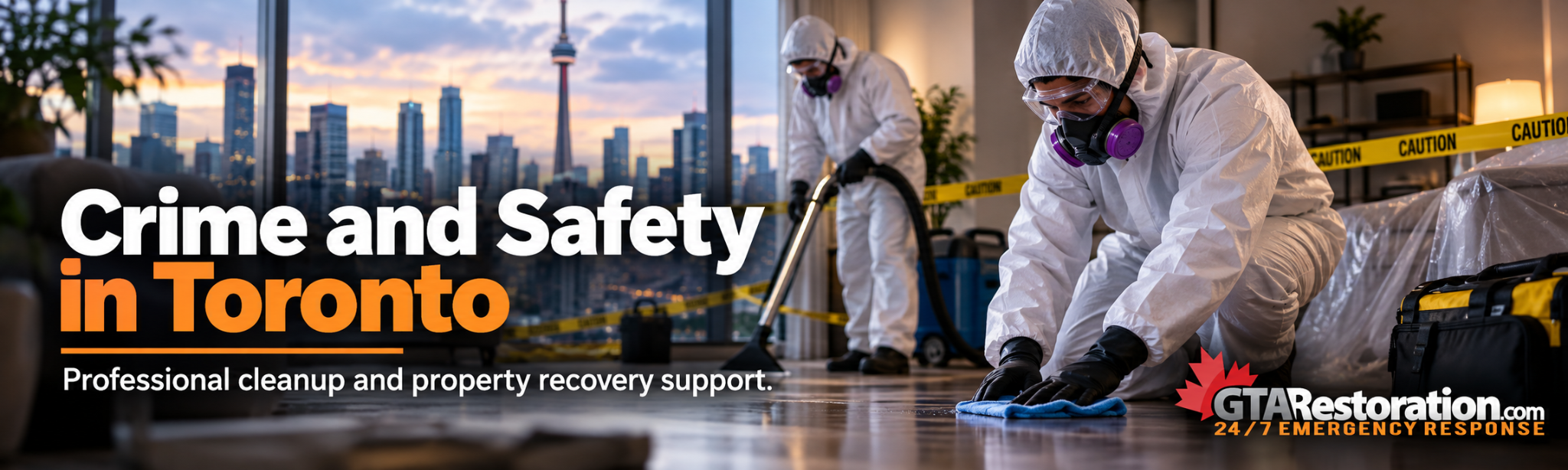
Once authorities release the property, professional cleanup may be required when blood, bodily fluids, hazardous waste, broken glass, vandalism, or other contamination remains.
GTA Restoration provides biohazard and crime scene cleanup for homes, businesses, rental properties, and managed buildings. We also provide vandalism cleanup and remediation when property damage requires professional cleaning or restoration.
Using Current Toronto Public Safety Information
The latest official figures provide useful context for Crime and Safety in Toronto, but conditions can change. Statistics Canada provides annual national and metropolitan crime information, while Toronto Police offers more detailed city-level dashboards.
For this reason, property owners and residents should use current official data when checking a particular neighbourhood or type of crime.
Crime Scene or Biohazard Cleanup in Toronto?
GTA Restoration provides professional cleanup after crime scenes, biohazard incidents, vandalism, trauma, and other property emergencies.
Wait until police or other authorities release the affected area before cleanup begins.
Learn More
Biohazard & Crime Scene Cleanup | Vandalism Cleanup | Odor Removal | Insurance Claims | Vancouver Biohazard Cleanup | Sanitization & Decontamination Service in Toronto | Asbestos Removal Calgary | The Process of Biohazard Cleanup and Remediation | Toronto Biohazard Cleanup & Remediation Services


 Facebook
 Instagram
 LinkedIn
 X / Twitter
 YouTube



You must be logged in to post a comment.