
Tags: Drying, Specialty Drying,
For non-emergencies use our contact form


Emergency? 24-Hours
416-800-0000Wet insulation does not always require immediate replacement. However, the right decision depends on the insulation type, water source, exposure time and condition of the surrounding materials. GTA Restoration assesses wet insulation and water-damaged building assemblies throughout Toronto and the GTA. Most importantly, our team looks for the source of moisture before recommending drying, removal or replacement.
Some insulation can dry when clean water causes limited exposure and technicians respond quickly. However, simply waiting for insulation to dry may trap moisture inside walls, ceilings or attic assemblies. Therefore, proper moisture assessment helps determine whether the insulation and surrounding materials can dry effectively.
Fiberglass itself does not absorb water in the same way as some natural materials. Still, water can collect between the fibres and affect paper facings, dust and surrounding building materials. In addition, heavily saturated or compressed fiberglass may lose performance. Technicians should evaluate its condition before deciding whether drying or replacement makes sense.
Cellulose insulation can absorb significant amounts of moisture. As a result, saturation may cause settling, compaction and reduced insulating performance. Drying can also become difficult when moisture remains trapped within the material. Depending on the extent of water exposure, removal and replacement may provide the more practical solution.
Different insulation products respond differently to water. For example, mineral wool generally resists water differently than cellulose, while spray foam performance depends partly on the foam type and surrounding assembly. Therefore, technicians should inspect the complete building system rather than making a decision based only on the insulation material.
The source of water plays an important role in determining whether insulation is salvageable. A small clean-water leak presents different conditions than sewage, groundwater or other contaminated water. When contamination affects porous materials, restoration professionals must consider both moisture and sanitary conditions before deciding what can remain.
Removal may become necessary when insulation remains saturated, loses its shape, compresses, develops persistent odours or prevents the surrounding assembly from drying. In addition, extensive contamination can change the restoration approach. A professional assessment can help identify these conditions before hidden moisture causes additional damage.
Moisture can create conditions that support microbial growth on dust, paper facings, wood and other organic materials around insulation. However, a musty smell or wet insulation alone does not identify a specific type of mould. For this reason, controlling moisture and thoroughly assessing affected materials remain important after water damage.
Insulation can appear dry at the surface while moisture remains elsewhere in the building assembly. Therefore, restoration technicians may use moisture meters, thermal imaging and other inspection methods to investigate affected areas. These tools help identify moisture patterns and guide further inspection and drying decisions.
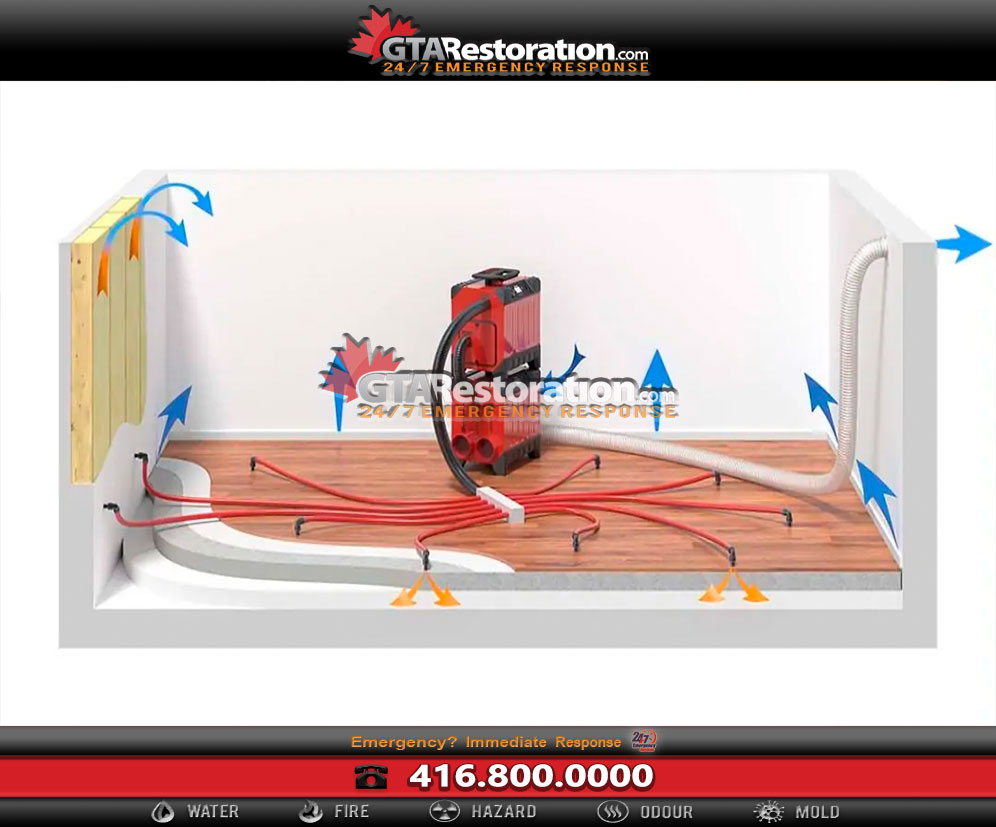
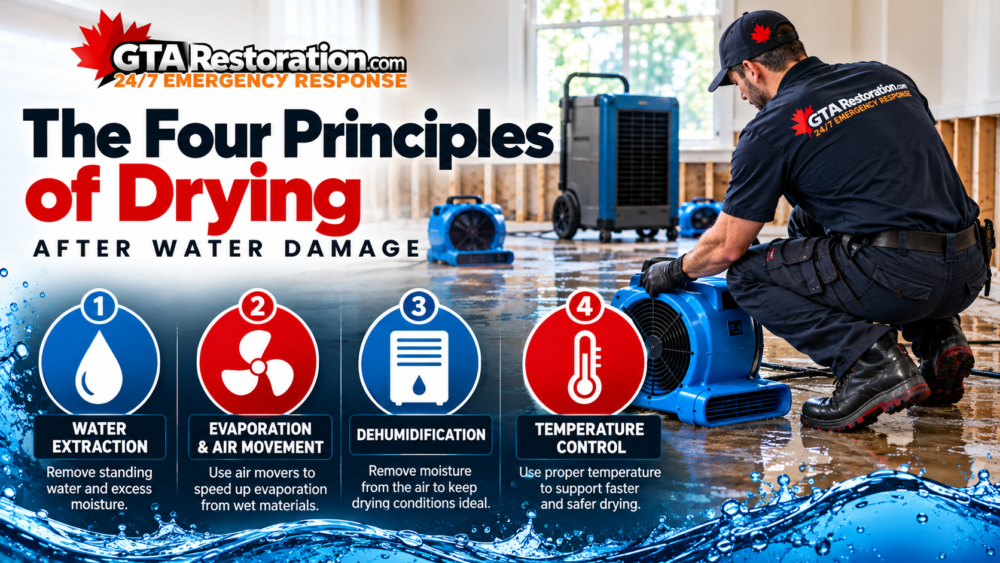
When conditions allow materials to remain in place, professional drying may involve air movement, dehumidification and controlled access to affected cavities. Technicians can then monitor moisture conditions during the drying process. This approach helps determine whether the building materials are progressing toward an appropriate dry condition.
If a roof leak, plumbing failure, appliance leak or flood has affected your insulation, addressing the water source should come first. GTA Restoration can inspect the affected area, identify moisture conditions and determine the appropriate restoration approach. Acting early can also help limit the spread of moisture into nearby ceilings, walls, flooring and structural materials.
Have wet insulation after a leak or water damage?
Discuss the affected area, moisture conditions and restoration options with GTA Restoration.
Service Areas Across Canada
GTA Restoration serves communities across Canada, including Toronto and the GTA. U.S. locations are opening. Browse our Canadian service areas below, and contact us to confirm services and availability for your address.
Search
Sometimes. The answer depends on the insulation type, water source, amount of saturation, exposure time and condition of the surrounding building materials.
In some clean-water situations, fiberglass insulation may dry successfully. However, heavy saturation, compression, contamination or damaged facing can make replacement necessary.
Wet cellulose can absorb moisture, settle and lose performance. Therefore, heavily saturated cellulose often requires removal, although the specific conditions should determine the final decision.
Persistent moisture can support microbial growth on nearby organic materials such as wood, paper facing and accumulated dust. Prompt moisture control helps reduce this risk.
Restoration technicians can use moisture meters, thermal imaging and physical inspection to investigate moisture in insulation and surrounding building materials.
Learn more ↴ 
Latest Articles
Direct Billing & Insurance Claims
Ask your insurer about coverage, deductibles and the records it needs.

In-House Financing Available
Financing up to 24 months. No interest. No money down. Ask us about the terms.
Certifications & Insurance
View our firm certification, technician qualifications and insurance documents.
IICRC Certified Firm
GTA Restoration Inc.
Firm number 199912
Valid through
Business Insurance
GTA Restoration Group Inc.
$5 million general liability per occurrence
$8 million contractors pollution per claim
–
IICRC Technician Qualifications
Tony Sokol T. Lleshi · Registration 214520
Valid through
Water Damage Restoration · Fire & Smoke Damage Restoration · Applied Microbial Remediation · Odor Control · Trauma & Crime Scene
View technician verification (PDF) — opens in a new tabInsurance is subject to policy terms, conditions and exclusions.





Call Us 416-800-0000