
Tags: Hidden Leaks, Leak Detection,
For non-emergencies use our contact form


Emergency? 24-Hours
416-800-0000Small changes in walls, floors or water use can reveal a hidden problem. GTA Restoration helps Toronto and GTA property owners assess these clues and plan the next steps.
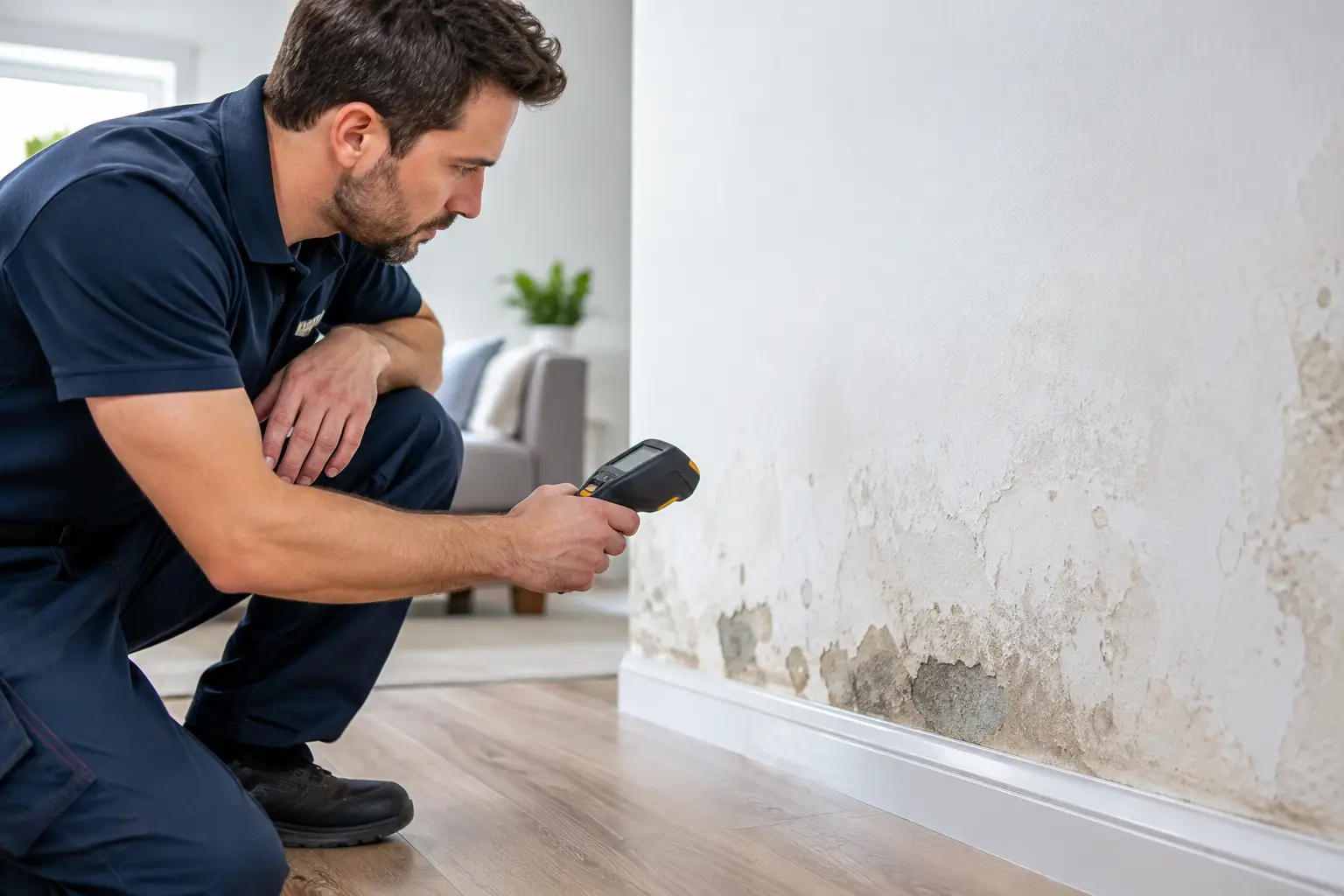
Note where the mark appears and whether it spreads. Also record recent rain, plumbing use or appliance cycles. These details can help narrow the search for the source.
A smell that returns deserves a closer look, even without a puddle. Hidden moisture may remain behind finishes. However, an odour alone cannot identify the leak or confirm mould.
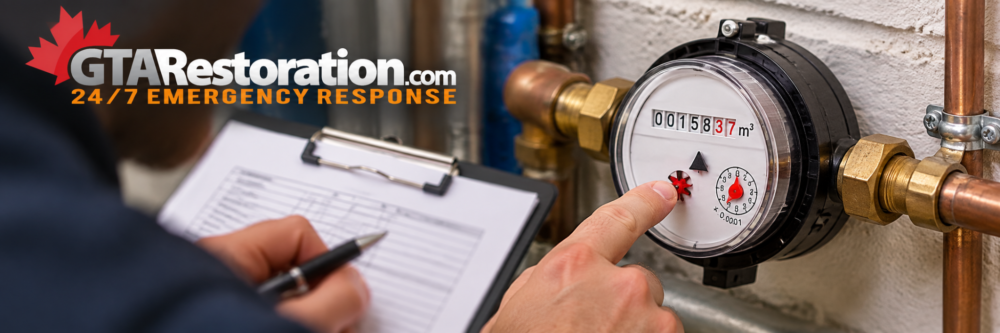
An unexplained increase can be a useful clue. Compare household habits before assuming a pipe has failed. Then, share any unusual pattern with the person investigating the leak.
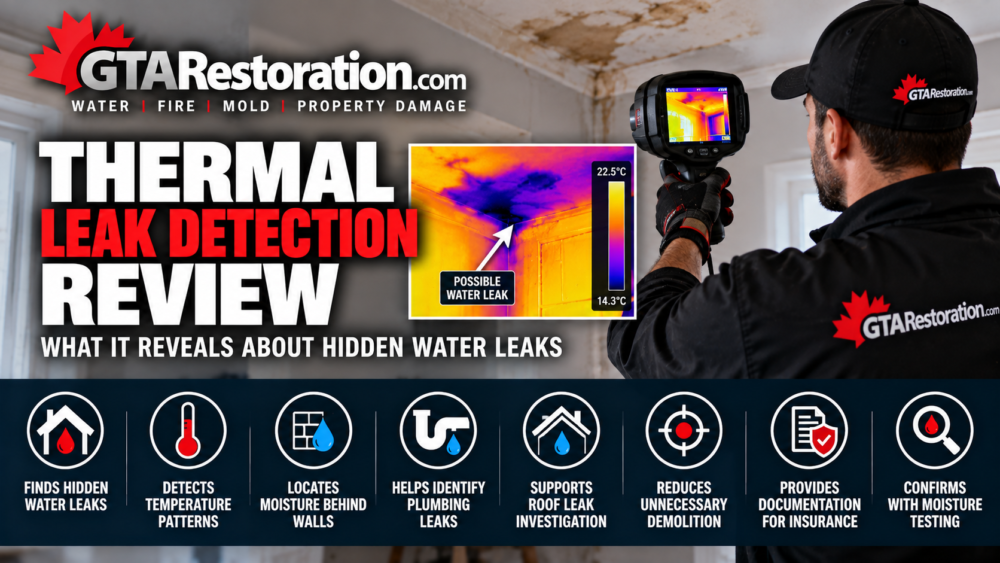
Thermal images show surface temperature differences. They do not see through walls. Therefore, technicians check suspicious areas with moisture readings and other evidence before recommending further access.
Readings from several points help show how far dampness extends. The wall or floor material also matters. As a result, one reading alone rarely explains the whole problem.
A supply pipe, drain, roof leak or condensation may cause similar marks. First, the investigation considers the pattern. Then, the appropriate trade can address the likely source.
Notify building management when water affects a suite or shared area. Access to neighbouring units or common pipework may be necessary. Early coordination helps the investigation move forward.
Ask what testing includes and whether openings, repairs or drying cost extra. A written scope should explain the findings and any questions that still need further investigation.
Stopping the source does not remove water from building materials. Therefore, assess wet walls, floors and concealed spaces before closing them up. Moisture readings help guide the drying plan.
Watch repaired areas for fresh stains or returning smells. If the signs return, arrange another assessment. Painting or sealing a surface cannot resolve an ongoing moisture source.
Discuss your concerns with GTA Restoration. Call 416-800-0000 for help in Toronto and the GTA.
Leak Investigation | Structural Drying
Service Areas Across Canada
GTA Restoration serves communities across Canada, including Toronto and the GTA. U.S. locations are opening. Browse our Canadian service areas below, and contact us to confirm services and availability for your address.
Search
Growing stains, damp cabinets, peeling paint and musty smells can be clues. However, several problems cause these signs. An assessment helps distinguish a plumbing leak from other moisture sources.
No. It shows surface temperature patterns that may suggest moisture. Technicians then use readings and other checks to investigate the cause. A thermal image alone does not prove a leak.
Some checks leave finishes intact, while others need access to confirm or repair the source. The building and leak location determine the approach. Ask about access and finish repairs before work starts.
Contact building management promptly and report which rooms are affected. They can coordinate access to shared areas or other units. If water is still spreading, explain that when you call.
No. Hidden leak detection and repair address the source. Wet materials may still need drying or removal. Moisture checks guide the next steps before you close the wall.
Learn more ↴ 
Latest Blog
Latest Articles
Direct Billing & Insurance Claims
Ask your insurer about coverage, deductibles and the records it needs.

In-House Financing Available
Financing up to 24 months. No interest. No money down. Ask us about the terms.
Certifications & Insurance
View our firm certification, technician qualifications and insurance documents.

IICRC Certified Firm
GTA Restoration Inc.
Firm number 199912
Valid through
Business Insurance
GTA Restoration Group Inc.
$5 million general liability per occurrence
$8 million contractors pollution per claim
–
IICRC Technician Qualifications
Richard Mark Provence · Registration 55726
Certificate expires
Water Damage Restoration · Fire & Smoke Restoration · Applied Microbial Remediation · Odor Control · Trauma & Crime Scene
View technician verification (PDF) — opens in a new tabInsurance is subject to policy terms, conditions and exclusions.





Call Us 416-800-0000