





For non-emergencies use our contact form
Preventing Melting Snow Water Damage at Home
Melting snow water damage can start with a slow leak or a wet basement corner. As temperatures rise, water may collect near your home or back up behind roof ice. First, check for signs of water entry before the next thaw.
GTA Restoration helps homeowners across Toronto and the GTA assess leaks, dry wet materials and address mold. However, prevention starts with finding the cause. Clear drainage routes and timely repairs can help reduce the risk of spring water damage.
Check for Snowmelt Water Damage
Look for fresh stains, damp trim and peeling paint after a warm spell. Also, check basement corners and the walls below windows. A musty smell calls for a closer look, but it does not prove mold is present.
Next, note when the signs appear. For example, a leak that follows a thaw may differ from one linked to plumbing use. Our leak detection guide explains why finding the source matters.
Reduce Water Damage Near the Foundation
When footing is safe, move snow away from foundation walls. Place it where meltwater can drain away from the house. Also, keep window wells and ground-level drainage routes clear of buildup.
Check downspout outlets for blockages. Water should flow away from your home without reaching nearby properties or forming ice on paths. The City of Toronto’s flood prevention advice covers drainage and basement protection.
Watch for Roof Leaks During the Thaw
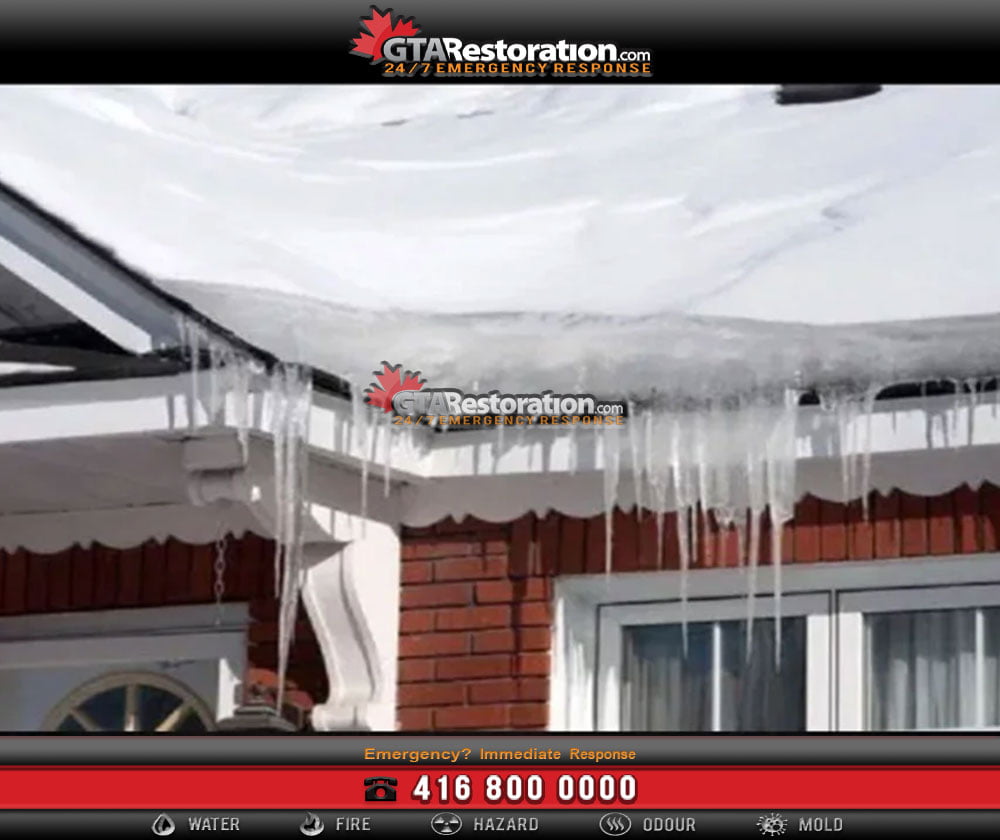
Roof snow can melt and then freeze near colder eaves. As a result, an ice dam may hold water behind it. That water can back up under shingles and leak indoors.
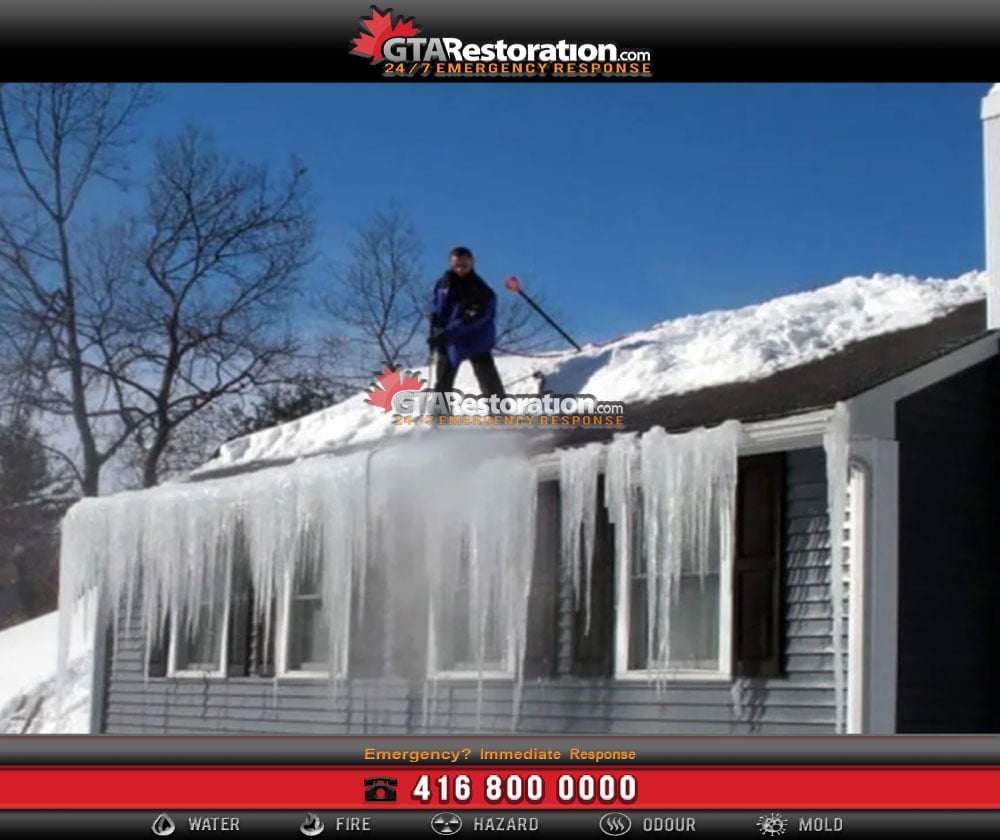
Stay off icy roofs and away from falling ice. Instead, arrange a roof assessment and safe removal where needed. Do not chip roof ice with sharp tools. Repeated ice dams may need checks of attic air leaks, insulation and ventilation.
Review Pumps and Basement Drainage
If your home has a sump pump, follow its testing and care instructions. Before a thaw, check that its discharge route is clear. A plumber can review recurring drainage issues and discuss backup options.
Meanwhile, keep stored items off damp floors. This makes new leaks easier to spot and helps protect belongings. Do not assume a pump can solve every source of water entry.
Dry Materials After Melting Snow Water Damage
If water reaches electrical equipment, stay out of the affected area and contact your electric utility. Never cross floodwater to reach a breaker panel. Also, keep children and pets away from wet rooms.
Once the area is safe, arrange water removal and drying. Wet drywall, wood and floor layers may hold moisture after the surface looks dry. Therefore, crews should check moisture readings before repairs cover those areas.
Air movers and dehumidifiers may form part of the drying plan. However, the method depends on the water source and materials. Our restoration team can assess the work required.
Reduce Mold Risk After a Spring Leak
Mold can grow when materials stay damp. Start drying promptly rather than waiting for visible spots. The EPA’s moisture guide recommends drying wet areas within 24–48 hours where possible. This is a prevention goal, not a fixed mold-growth deadline.
Finally, repair the moisture source as well as the damage. Large areas of growth, repeat mold or hidden wet materials may need professional assessment. Follow-up checks help show whether the repairs have stopped the leak.
Concerned About Melting Snow Water Damage?
Ask GTA Restoration about leak checks, drying and mold cleanup for your property.
Learn more ↴
Leak Detection | Ice Dam Repairs | Mold Remediation 

 Facebook
  Instagram
  LinkedIn
  X / Twitter
  YouTube

