A wet ceiling, flooded basement, or roof leak can soak insulation long before the damage becomes obvious. Knowing when to replace wet insulation helps protect the building, reduce mold risk, and avoid closing up damp materials behind walls, ceilings, or floors.
The answer depends on three things: the insulation type, the water source, and how long moisture remained. Some materials can be dried after a clean-water event if technicians reach them quickly. Others lose their shape, hold contamination, or remain damp where drying equipment cannot reach. In those cases, removal is usually the safer repair step.
Start With Safety and Stop the Water
Do not enter a flooded area if water may contact electrical outlets, panels, or appliances. Avoid handling soaked insulation after a sewer backup, toilet overflow with contaminated water, or floodwater intrusion. These sources can carry bacteria and other hazards that change a simple drying job into a controlled cleanup.
If it is safe, stop the active source. Shut off the water supply for a plumbing leak, place a container under a small roof drip, or move dry belongings away from the affected area. Do not open ceilings or remove insulation yourself if you suspect electrical hazards, asbestos-containing materials, or widespread contamination.
A restoration assessment should identify the source, map affected materials, and check moisture in nearby framing and finishes. Surface dryness does not prove the cavity is dry. Water can travel along joists, wall plates, wiring openings, and ducts before it appears somewhere else.
Which Wet Insulation Can Be Dried?
Closed-cell spray foam generally resists water better than fibrous insulation. If it remains bonded to the surface and the water was clean, drying and monitoring may be possible. The surrounding drywall, wood, or flooring may still require attention.
Rigid foam board also absorbs less water than many other insulation types. Technicians can assess whether it stayed clean, intact, and dry enough to remain. Seams, edges, adhesive, and the materials behind the board still need inspection.
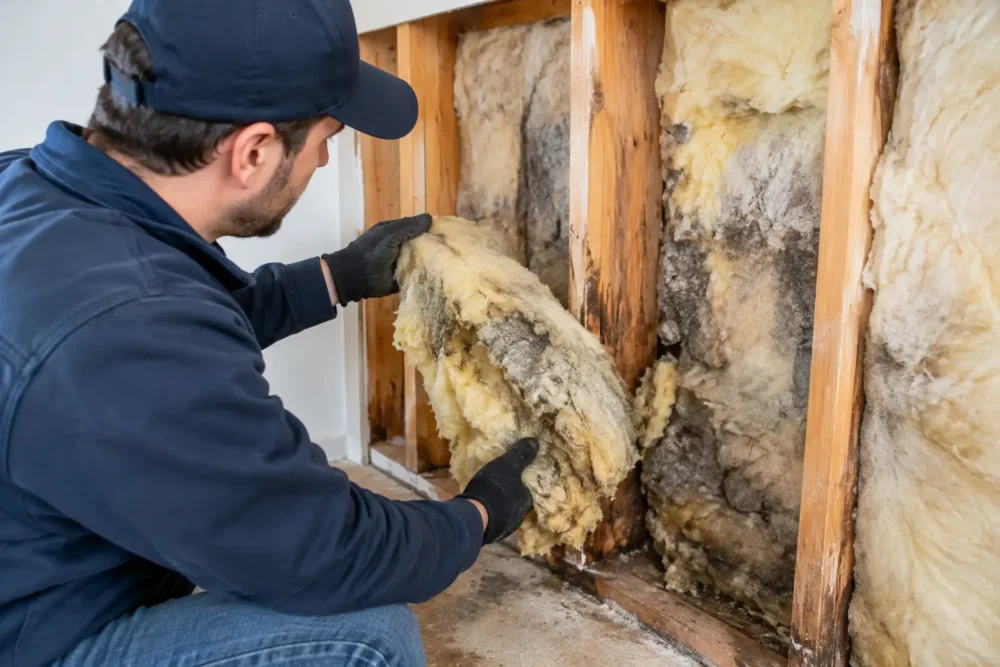
Fiberglass batts may sometimes be dried after a small clean-water leak caught early. However, batts can slump, compress, or trap moisture against wood framing. Once fiberglass loses its loft, it provides less thermal resistance even after it feels dry. Wet faced batts can also develop damaged paper backing that supports mold growth.
Blown-in fiberglass and cellulose are much harder to save. Loose material shifts after getting wet, and moisture levels can vary across the same cavity. Cellulose absorbs a large amount of water and may compact into a dense mass. It often requires removal after significant wetting.
When to Replace Wet Insulation Instead of Drying It
Replacement is commonly the better choice when insulation was exposed to contaminated water, stayed wet for an unknown period, has visible mold growth, or no longer holds its original form. Odor also matters. A persistent musty smell after drying may signal remaining moisture or microbial growth inside the assembly.
Remove and replace insulation when it has any of these conditions:
It was affected by sewage, outdoor floodwater, or another contaminated source.
It is cellulose, loose-fill material, or fiberglass that has settled or compressed.
It has staining, mold growth, strong odor, or wet paper facing.
The wall or ceiling cavity cannot be opened enough to verify complete drying.
Water category matters because clean water can become contaminated if it sits for too long or moves through dirty building materials. A supply-line leak is different from a sewer backup, but both need prompt assessment. Do not rely on the original source alone if water has spread through several rooms or levels.
Why Wet Insulation Creates Ongoing Problems
Insulation is meant to hold air and slow heat transfer. When it absorbs water or collapses, it may no longer insulate as designed. This can contribute to cold rooms, condensation, higher heating or cooling demand, and recurring moisture at exterior walls or attic surfaces.
More urgently, wet insulation can keep adjacent framing damp. Wood, drywall paper, and dust inside a cavity can support mold growth when moisture persists. Mold is not always visible from the room side. A stained baseboard, bubbling paint, or a ceiling spot may be the only early warning.
Leaving questionable insulation in place may seem less disruptive, especially in a finished basement, condo unit, or occupied commercial space. The trade-off is that hidden moisture can make later repairs larger and more expensive. Selective removal allows drying equipment and inspections to reach the materials that matter.
What a Professional Assessment Looks For
A proper inspection begins with the source and path of water. The team checks visible damage, takes moisture readings from affected materials, and looks beyond the obvious wet spot. Depending on the location, this can include baseboards, wall cavities, ceiling voids, attic areas, insulation, subfloors, and structural framing.
The goal is not to remove every material automatically. It is to separate materials that can reasonably dry from materials that are contaminated, deteriorated, or inaccessible. Controlled demolition may be needed to expose wet insulation and allow air movement through the assembly.
After removal, drying equipment can target exposed framing and other wet structural materials. Follow-up readings help show whether the area is moving toward a dry condition. Repairs should begin only after the affected structure is assessed and drying progress supports that next step.
Save Records Before Cleanup Changes the Scene
Take clear photos and short videos before moving items, if safe to do so. Capture the water source, wet insulation locations, damaged finishes, belongings, and any visible staining. Record the date you found the problem and note when the water was stopped.
Keep invoices, moisture records, removal notes, and repair estimates together. GTA Restoration can provide photos, readings, estimates, and work records for the restoration work. Your insurer decides what the policy covers, so report the loss promptly and ask what documentation they need.
For tenants and condo residents, notify the landlord, property manager, or condo management according to your building’s reporting process. Water can move between units and shared building systems. Quick communication may help coordinate access and limit further damage, but it does not replace an inspection of your own affected space.
Do Not Seal Damp Materials Back In
New drywall, flooring, trim, or insulation should not cover damp framing or a wet cavity. Doing so can hide moisture, lock in odor, and create conditions that are harder to correct later. If the leak came from a roof, plumbing line, foundation, or appliance, address that cause before rebuilding.
When insulation has been wet, the practical decision is rarely based on appearance alone. Water source, material type, contamination, accessibility, and measured moisture all matter. Acting early gives you more options and a clearer record of what happened.
Wet insulation can hide moisture behind finished surfaces. Prompt assessment helps identify what can dry, what needs removal, and what records may help your claim.
Water Source Assessment
We trace the water path and identify whether the source is clean, contaminated, ongoing, or likely to affect concealed building materials.
Wet Insulation Inspection
Moisture checks help assess batts, loose-fill insulation, framing, drywall, and nearby finishes beyond the visible water damage area.
Contaminated Material Removal
Sewage-affected or flood-affected insulation may require controlled removal to reduce exposure and allow cleaning of accessible structural surfaces.
Structural Drying
After removal where needed, drying equipment targets wet framing and cavities. Readings help guide adjustments before repair work begins.
Mold Risk Review
Musty odor, staining, or prolonged moisture can require further inspection. Hidden areas may need opening to evaluate conditions accurately.
Flooded Basement Cleanup
Basement water often reaches wall insulation and finished floors. We can assess affected assemblies and coordinate cleanup and drying steps.
Condo Water Damage Support
Condo leaks can affect shared systems and nearby units. Documenting conditions supports communication with management, owners, and insurers.
Damage Documentation
Photos, moisture readings, estimates, and work records can document restoration conditions. Insurance coverage and claim decisions remain with the insurer.
For urgent water damage or wet insulation concerns in Toronto and the GTA, contact GTA Restoration for practical restoration support.
GTA Restoration serves communities across Canada, including Toronto and the GTA. U.S. locations are opening. Browse our Canadian service areas below, and contact us to confirm services and availability for your address.
Should I replace fiberglass insulation after a leak?
Replace it if it is compressed, moldy, contaminated, or cannot dry completely. Clean-water exposure caught quickly may allow professional drying and reassessment.
Can wet cellulose insulation be dried?
Cellulose absorbs water and compacts easily. Significant wetting usually calls for removal because consistent drying and original performance are difficult to verify.
How do I know insulation behind a wall is wet?
Staining, odor, bubbling paint, or damp baseboards can indicate hidden moisture. Moisture readings and selective openings provide a clearer answer.
Does insurance cover replacing wet insulation?
Coverage depends on your policy, water source, exclusions, and claim review. Provide prompt notice and keep photos, estimates, and restoration records.
What happens if damp insulation stays in place?
It can lose insulating value and keep nearby materials wet. Hidden moisture may contribute to odor, mold growth, and more extensive future repairs.