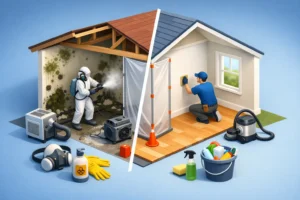
A musty odor near a mechanical room, water staining above ceiling tiles, or recurring tenant complaints can signal a larger moisture problem behind finished surfaces. A commercial mold inspection gives building operators the facts needed to act before a localized issue becomes a health concern, an insurance claim, or a disruption to normal business operations.
For offices, retail spaces, warehouses, condominium common areas, schools, clinics, and multi-unit properties, mold is rarely just a cleaning issue. It is usually evidence that water is entering, remaining, or condensing where it should not. The priority is to identify the moisture source, understand the extent of affected materials, and create a controlled plan for correction and remediation.
Why Commercial Mold Problems Escalate Quickly
Commercial buildings have more systems, more occupants, and more hidden cavities than a typical home. A slow plumbing leak above a suspended ceiling can affect insulation, drywall, electrical pathways, and several tenant suites before anyone sees visible growth. Roof leaks, failed window seals, foundation moisture, sewer backups, HVAC condensation, and flooding can create the same conditions.
Mold needs moisture and a material it can use as a food source, such as paper-faced drywall, wood, dust, carpet backing, or ceiling tile. Once materials stay damp, growth can begin quickly. The exact timeline depends on temperature, humidity, airflow, and the material involved, but waiting for visible mold is not a reliable strategy.
The operational consequences can be significant. A property manager may face complaints about odors or air quality. A business owner may need to close a work area. A condominium board may need to determine whether the source is within a unit, a common element, or a building system. In each case, accurate findings protect people, support sound decisions, and limit unnecessary demolition.
What a Commercial Mold Inspection Should Accomplish
A proper inspection is more than a visual walk-through with a flashlight. It is a structured investigation focused on moisture, building conditions, affected materials, and the likely path of water intrusion.
The process generally starts with a discussion of the property history. That includes recent floods, plumbing repairs, roof leaks, sewer events, recurring condensation, occupant concerns, prior remediation, and changes in HVAC performance. This information helps direct the inspection toward likely sources instead of treating every stain or odor as an isolated issue.
Inspectors then assess accessible areas for visible growth, discoloration, warped finishes, deteriorated drywall, damp insulation, rust, elevated humidity, and odor patterns. Moisture meters, thermal imaging, hygrometers, and other detection tools can help locate hidden dampness in walls, ceilings, floors, and around plumbing or mechanical systems.
In some situations, limited exploratory openings may be recommended. This is especially common when readings indicate moisture behind intact finishes or when a leak has affected enclosed cavities. The goal is not to open walls without reason. It is to confirm conditions and define the scope before the problem spreads or remediation begins.
Sampling may also be appropriate, but it is not automatically required in every case. When visible mold and an obvious moisture source are present, the priority is usually correcting the water issue and safely removing affected materials. Sampling can be useful when conditions are unclear, when there are odor complaints without visible growth, when a sensitive occupancy is involved, or when independent documentation is needed. Results should always be interpreted alongside the building inspection, not treated as a stand-alone answer.
The Inspection Report Matters
Commercial clients need documentation they can use. A useful report identifies observed conditions, likely moisture sources, affected locations, recommended next steps, and any immediate safety or containment measures. Photographs, moisture readings, and clear descriptions can also support communication with owners, insurers, tenants, maintenance teams, and restoration contractors.
The report should distinguish between what is confirmed and what requires further investigation. That distinction matters. A ceiling stain may point to a roof issue, a plumbing line, or HVAC condensation. Guessing can lead to wasted repairs and repeat damage.
Common Warning Signs in Commercial Properties
Visible mold is one warning sign, but many commercial moisture problems appear first as building-performance issues. Persistent musty odors, bubbling paint, peeling wall covering, soft drywall, stained ceiling tiles, warped baseboards, or repeated condensation on windows deserve attention.
Other warning signs include a recurring leak after rainfall, damp carpet that does not dry properly, humidity problems in lower levels, condensation near supply vents, or a sudden increase in tenant complaints in one section of the building. After a water event, even a minor one, inspection is especially valuable if materials remained wet for more than a short period.
Certain locations carry higher risk: basements, crawl spaces, roof-adjacent ceilings, utility rooms, kitchens, washrooms, janitor closets, loading areas, exterior walls, and spaces around HVAC equipment. In condominiums and mixed-use buildings, water can travel well beyond the original source. The affected area may not be directly below the leak.
Inspection Is Only the First Step
Finding mold without correcting the moisture source creates a cycle of repeated damage. If a failed drain line, roof penetration, foundation leak, or HVAC issue remains active, cleaning or removing visible growth will not solve the underlying problem.
That is why commercial response works best when inspection, emergency plumbing, water extraction, structural drying, containment, remediation, and repair can be coordinated as one recovery plan. The right sequence depends on the property. An active leak requires immediate control. Flooded materials may require extraction and drying before final scope decisions. Containment may be necessary before removal work begins in occupied areas.
For large or occupied buildings, scheduling is also part of the solution. Work may need to happen after hours, in phases, or with temporary barriers and negative-air controls to reduce disruption. A warehouse may need loading operations maintained. An office may require access to critical server rooms. A retail location may need safe customer pathways. The scope should address health and safety without creating avoidable downtime.
Choosing a Commercial Mold Inspection Provider
Commercial properties need more than a general maintenance assessment. Choose a provider with restoration experience, moisture-detection capability, clear safety procedures, and the capacity to respond if the inspection reveals an active emergency.
Ask how the inspection identifies hidden moisture, whether the team can trace plumbing and building-envelope sources, what documentation will be provided, and how remediation recommendations are developed. For property managers, it is also practical to ask about after-hours availability, tenant coordination, insurance documentation, and the ability to manage repairs after remediation.
Credentials and equipment matter, but communication matters too. Building owners and facility teams need direct answers: What was found? How urgent is it? What needs to be protected now? Which areas can remain occupied? What is the next action? A dependable provider explains the facts without overstating the risk or minimizing a problem that needs prompt attention.
When to Request an Inspection Immediately
Do not wait for a routine maintenance cycle if mold follows a sewage backup, major water intrusion, a burst pipe, roof damage, or flooding. These events can affect concealed building materials rapidly, and delaying assessment can increase the remediation area.
Immediate inspection is also appropriate when occupants report persistent odors, respiratory irritation associated with a particular area, or recurring moisture after prior repairs. While symptoms alone cannot diagnose a mold condition, they are a reason to investigate the building environment carefully.
GTA Restoration provides rapid commercial assessments and end-to-end property recovery for Toronto and GTA building operators dealing with water intrusion, suspected mold, plumbing failures, and contamination events. Fast action helps preserve materials, protect occupants, and keep the recovery process organized from the first inspection through final repair.
A commercial building does not need to look severely damaged to have a meaningful moisture issue. If water, odor, staining, or humidity keeps returning, treat it as a building signal and get clear answers while the problem is still manageable.