A wall can look intact after a small kitchen fire, fireplace puff-back, or electrical incident, yet still hold a layer of acidic soot that continues to stain, smell, and damage paint. Cleaning too aggressively can push that residue deeper into drywall or leave permanent streaks. Knowing how to clean smoke damaged walls starts with protecting the space, identifying the surface, and using the least aggressive method that will safely remove the contamination.
If the fire affected multiple rooms, involved synthetic materials, left oily residue, or caused visible charring, treat the property as a restoration project rather than a household cleaning job. Smoke can travel through HVAC systems, behind trim, into insulation, and into neighboring condo units long after the visible debris is gone.
Start With Safety and Documentation
Do not begin cleaning until the fire department or other appropriate authority has confirmed that the property is safe to enter. A fire can weaken ceiling materials, expose electrical hazards, create slip risks from firefighting water, and leave behind contaminants from burned plastics, wiring, insulation, or household chemicals.
Before moving furniture or wiping walls, document the damage. Take clear photos and video of every affected room, including ceilings, vents, doors, contents, and visible soot patterns. Record damaged belongings before disposal whenever possible. This documentation can support an insurance claim and helps a restoration professional determine how far smoke traveled.
Open windows only when outdoor conditions allow and the property has been cleared for ventilation. Turn off the HVAC system if it may have circulated smoke through the building. Running the system before its components and filters are assessed can spread soot and odor to previously unaffected areas.
Wear nitrile gloves, safety glasses, long sleeves, and an N95 or better respirator while handling soot. For extensive damage, a properly fitted respirator and professional containment are often necessary. Never dry sweep soot or use a standard household vacuum. Both actions can send fine particles back into the air.
How to Clean Smoke Damaged Walls Without Smearing Soot
The correct method depends on the wall finish and the type of smoke residue. Dry, powdery soot from a wood fire behaves differently from greasy, sticky residue caused by burning food, oil, plastics, or synthetic fabrics. Painted drywall, wallpaper, plaster, brick, and wood paneling also need different treatment.
Begin with dry cleaning. Use a chemical dry-cleaning sponge, often called a soot sponge, and wipe in straight, overlapping strokes from the top of the wall downward. Do not scrub in circles. Circular motion grinds soot into the surface and creates dark smears that are difficult to remove.
Use each clean section of the sponge only until it becomes dirty, then trim or replace it according to the product instructions. Do not rinse a dry-cleaning sponge with water. Its purpose is to lift loose particles before any liquid touches the wall.
Once loose soot has been removed, inspect the wall in good lighting. If staining remains, test a cleaning solution in an inconspicuous area first. A mild degreasing cleaner mixed according to its label may work on washable paint. Use a lightly damp microfiber cloth or cellulose sponge, not a soaking wet rag. Wring it out thoroughly, clean in small sections, and change the water or cloth frequently.
Work carefully around outlets, switches, damaged light fixtures, and baseboards. Do not apply liquid to electrical components or walls that may still be wet from firefighting efforts. If drywall feels soft, bubbled, warped, or damp, cleaning alone will not solve the problem. The material may need controlled drying, removal, and replacement.
Avoid These Common Cleaning Mistakes
Household shortcuts often make smoke damage more visible or more expensive to repair. Do not start with soap and water on a heavily sooted wall. Moisture can turn dry soot into a greasy black paste and drive stains into porous paint or drywall.
Avoid bleach as a soot cleaner. Bleach does not remove the carbon-based residue effectively, can discolor finishes, and may create irritating fumes when used in a poorly ventilated area. Strong abrasive pads, magic-eraser-style products, and stiff brushes can also burnish paint or remove its protective finish.
Do not paint over soot before the surface is properly cleaned and dried. Standard paint may temporarily hide the stain but usually will not seal smoke odor or prevent bleed-through. Smoke stains can reappear through fresh paint, especially after temperature or humidity changes.
Treat Ceilings, Trim, and Porous Materials Separately
Ceilings frequently hold the heaviest soot load because heat and smoke rise. Use the same dry-cleaning approach, but avoid overreaching from unstable furniture or ladders. If soot covers a large ceiling area, professional equipment and containment are safer than attempting the work overhead.
Washable trim, doors, and cabinets can often be cleaned after dry soot removal with an appropriate degreasing solution. Test first, particularly on stained wood or specialty finishes. Smoke can strip or dull varnish, and excessive moisture may swell wood fiber or damage laminate edges.
Porous materials require more caution. Unsealed drywall, textured ceilings, wallpaper, fabric wall coverings, acoustic panels, insulation, and unfinished wood can absorb smoke particles and odor below the surface. If these materials remain odorous after careful cleaning, they may require specialized deodorization, sealing, or removal. Wallpaper that has absorbed oily smoke often cannot be restored to a clean, stable condition.
Brick and masonry may appear durable, but their pores can retain soot. Start dry, then use a cleaner suited to masonry and a soft brush only after testing a small area. Harsh acids and aggressive pressure washing can damage mortar, force water into the wall assembly, or spread contaminated runoff.
Remove Smoke Odor Before Repainting
A clean-looking wall is not necessarily a clean wall. Smoke odor means odor-causing particles may still be present in the surface, HVAC system, contents, or concealed building cavities. Air fresheners only mask the smell. They do not remove contamination.
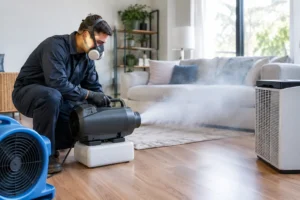
After surfaces are cleaned, the property needs thorough drying and controlled ventilation. HEPA air filtration can capture fine airborne particles, while professional deodorization methods may be needed for stubborn odor. Depending on the fire and materials involved, restoration teams may use hydroxyl treatment, thermal fogging, ozone under controlled conditions, or other methods selected for the occupied space and exposure risk.
Only repaint after the wall is clean, dry, and free of loose residue. Apply a high-quality stain-blocking, odor-sealing primer designed for smoke damage, then repaint with compatible finish paint. This sequence matters. Paint applied over residue can peel, discolor, or allow odor to return.
When to Call a Fire and Smoke Restoration Professional
Small areas of light soot on washable painted walls may be manageable with the right supplies and patience. The decision changes when there is widespread staining, greasy smoke, strong odor, water damage, damaged drywall, HVAC contamination, or affected insulation and contents.
Professional restoration is especially appropriate for condo buildings, rental properties, offices, restaurants, and multi-unit structures. Smoke can cross shared corridors, shafts, and ventilation pathways, creating a larger liability and indoor air quality concern than one room may suggest. A qualified team can assess the full impact, establish containment, clean structural surfaces, document damage for insurance, and coordinate necessary repairs.
Call for immediate help if the fire involved electrical equipment, batteries, chemicals, sewage exposure, asbestos-containing materials, or suspected lead-based paint. These conditions require more than surface cleaning and should not be handled with household products.
For property owners facing fire, smoke, water, and odor damage at the same time, GTA Restoration can coordinate emergency stabilization, smoke remediation, drying, cleaning, and claim documentation through one response team. Acting early limits secondary staining, corrosion, odor migration, and disruption to your home or business.
The safest next step is not always the fastest-looking cleanup. Remove loose soot correctly, keep moisture controlled, and stop before a cleaning attempt turns a repairable wall into a replacement project.