

...
Mold Removal and Mould Remediation Toronto - GTA Restoration

Emergency? 24-Hrs

416.800.0000
  • Home Restore
  • Emergency Services
    • Emergency Plumbers 24/7
    • Water Damage Restoration
    • Flooded Basement Cleanup
    • Mold Remediation Toronto
    • Sewer Backup Remediation
    • Fire & Smoke Restoration
    • Odour Removal Toronto
    • Biohazard & Crime Scene Cleanup
    • Emergency Roofing Repair
    • Water Leak and Detection
    • Condominium Restoration
    • Basement WaterProofing
    • Property Inspection Toronto
    • Sanitizing and Disinfection
    • Insurance Claim Appraisers
    • Equipment for Rent Toronto
    • Privacy Policy & Service Terms
  • Commercial Restoration
  • Blog
    • All Blog Articles
    • Video Library
  • Our Team
  • Contact
10 September 2026 - Categories:

Can Smoke Damage Affect Health in Your Home?


Disaster Restoration Emergency Plumbing Service Blog Icon

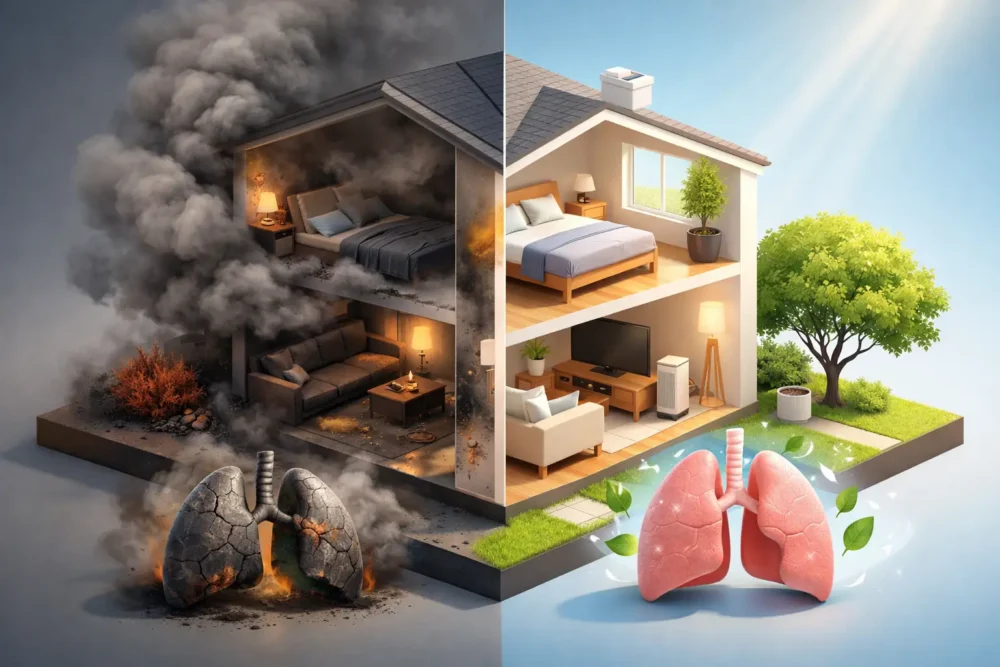
A fire can be out, the visible haze can be gone, and the building can still be unsafe to occupy. Can smoke damage affect health after the flames are extinguished? Yes. Smoke residue, soot particles, and fire-related odors can remain in air systems, wall cavities, furniture, textiles, and other surfaces long after the emergency. For homeowners, condo managers, landlords, and business operators, fast assessment and proper cleanup are part of protecting the people who use the property.

Can Smoke Damage Affect Health After a Fire?

Smoke is a complex mix of gases, ultrafine particles, and chemicals created when materials burn. What is in that mix depends on the fire. A small kitchen fire involving cooking oil creates a different residue than a structural fire involving plastics, insulation, electronics, upholstery, or treated wood. That is why a room that looks lightly affected may still need professional evaluation.

The smallest smoke particles are a major concern. They can be inhaled deep into the lungs and may irritate the eyes, nose, throat, and airways. Soot can also settle on frequently touched surfaces, then transfer to hands, clothing, food-preparation areas, toys, and other belongings. In a commercial setting, residue left inside HVAC equipment can continue circulating through occupied areas when the system is restarted.

Short-term exposure may cause coughing, a scratchy throat, headaches, watery eyes, chest tightness, nausea, or shortness of breath. Symptoms vary widely based on the amount of exposure, the type of material burned, ventilation conditions, and a person’s underlying health. Smoke exposure can be especially serious for children, older adults, pregnant people, and individuals with asthma, COPD, heart disease, or other respiratory conditions.

A strong smoke odor should not be treated as a cosmetic inconvenience. Odor often indicates that smoke compounds remain in porous materials or concealed building areas. Covering that odor with fragrance products does not remove the contamination source.

Why Smoke Residue Can Remain a Health Concern

Smoke damage is not limited to black marks on ceilings and walls. Fine particles can travel well beyond the room where the fire began. They may settle in curtains, carpeting, mattresses, upholstered furniture, insulation, ductwork, cabinets, and electrical components. In multi-unit properties, smoke can migrate through corridors, shared ventilation, utility penetrations, and gaps around plumbing or wiring.

Residue may become airborne again when occupants walk on contaminated carpeting, move soft furnishings, open cabinets, run heating or cooling equipment, or begin do-it-yourself cleanup. Dry wiping, sweeping, and using a household vacuum can spread fine soot instead of containing it. Some residues are oily or acidic, which can also stain surfaces and contribute to ongoing material damage.

The health risk is not identical in every property. A brief, contained smoke event with no significant spread may require less extensive work than a prolonged fire affecting multiple rooms. However, the scope should be based on inspection findings, not just what is immediately visible. Hidden smoke migration is common, particularly in condos, basements, commercial suites, and buildings with forced-air HVAC systems.

People Who Need Added Protection

Everyone should avoid unnecessary exposure after a fire, but certain occupants should be particularly cautious. Young children spend more time close to floors and may touch contaminated surfaces more often. Older adults and people with existing lung or heart conditions may have a lower tolerance for airborne irritants. Employees, tenants, or residents reporting breathing difficulties, persistent headaches, or eye and throat irritation should not be expected to remain in an affected space while cleanup decisions are delayed.

Anyone experiencing severe trouble breathing, chest pain, confusion, fainting, or worsening symptoms should seek urgent medical care. Property restoration addresses environmental conditions in the building, but it is not a substitute for medical assessment.

Warning Signs That a Property Needs Smoke Cleanup

Visible soot is an obvious warning sign, but it is not the only one. Persistent smoky, burnt-plastic, or chemical odors can indicate residue in porous finishes, insulation, or ventilation components. Gray or black film around air vents, window frames, light fixtures, cabinet interiors, and electronics may also point to smoke migration.

Other signs include staining that reappears after surface cleaning, unusual irritation when entering a particular room, or odor that becomes stronger when the furnace or air conditioner runs. In a condo or commercial building, reports from neighboring units or adjacent suites matter. Smoke may have traveled farther than the original fire area, especially through shared building systems.

Do not assume that opening windows for a few hours has solved the problem. Fresh air can reduce odor temporarily, but it does not remove settled soot or neutralize contamination embedded in materials.

What Professional Smoke Damage Restoration Involves

Effective smoke restoration begins with identifying the source, type, and spread of contamination. A qualified restoration team inspects affected rooms, contents, concealed spaces, and HVAC pathways as needed. The goal is to define a cleanup plan that protects occupants while limiting unnecessary demolition or replacement.

Containment is often the first priority. This prevents particles from moving into clean areas during restoration. Technicians may use controlled air filtration, specialized vacuums designed for fine particulate capture, and cleaning methods selected for the affected material. Hard surfaces, finished wood, drywall, textiles, electronics, and HVAC components cannot all be cleaned the same way.

Porous materials require careful judgment. Some items can be restored through detailed cleaning and odor treatment. Others may retain contamination or odor too deeply to be reliably cleaned and may need removal. The right decision depends on the severity of damage, the material involved, the fire source, and whether the item can be returned to a safe, usable condition.

Odor removal should happen after source removal and detailed cleaning, not before. Professional treatments can address odor molecules in affected materials and air spaces, but they work best as part of a complete restoration process. Simply painting over stains or applying scented sprays can trap or mask the problem rather than resolve it.

For properties with insurance claims, thorough documentation also matters. Photos, moisture and contamination observations where applicable, cleaning records, item inventories, and restoration estimates can help establish the scope of loss. This is particularly valuable for property managers and commercial operators responsible for multiple tenants, business interruption, or common-area damage.

What to Do Before Help Arrives

After fire officials have confirmed that it is safe to enter, limit time in visibly smoky areas and keep children, pets, and vulnerable occupants away from the space. If possible, avoid running the HVAC system until it has been assessed, especially when smoke may have entered return vents or ducts.

Do not dry sweep soot, use standard household vacuum equipment, or attempt aggressive scrubbing on walls and ceilings. These actions can spread particles, grind residue into materials, and create additional staining. Avoid washing smoke-damaged clothing with unaffected laundry, since odors and residue can transfer.

If belongings must be removed from the affected area, handle them carefully and keep them separated from clean contents. Take clear photos and notes for your insurer before disposal or major cleanup begins, unless emergency conditions require immediate action. When water was used to extinguish the fire, the response must also address moisture. Delayed drying can create a separate mold risk while smoke restoration is underway.

Fast Action Protects People and Property

The first 24 to 48 hours after a fire can shape the recovery process. Smoke residue can settle deeper, odors can become more difficult to remove, and water used in firefighting can continue damaging structural materials and contents. Quick professional response helps contain these problems before they affect additional rooms, units, or business operations.

GTA Restoration provides 24/7 emergency fire and smoke restoration support for property owners and managers who need a clear plan after a fire. A proper response focuses on occupant safety first, then contamination control, detailed cleanup, odor removal, documentation, and coordinated recovery work.

When smoke has entered your property, do not wait for the odor to fade on its own. Keep the affected area isolated, document what you see, and arrange a professional inspection so the building can move toward a clean, safe return to normal use.

Share this... Spread the word!


Tags:

☛ ☛ Related Restoration Articles You May Also Like!

Emergency? Immediate response 24/7

416.800.0000 416.800.0000

For non-emergencies use our contact form
We Specialize in FAST Restoration Services!


Need Fast Restoration Service? Let our experienced team help. Your satisfaction is our priority.


We Service the GTA with a Fast 45-Minute Response Time!


“FREE VISUAL Estimate”


Restoration & Remediation

Do you need water removal services for your home or business? Are your floors, walls, furniture, or other areas affected by flooding or water damage? GTA Restoration provides professional water removal, drying, cleanup, and restoration services. Acting quickly can help reduce permanent property damage and lower the risk of mold growth. The longer water remains untreated, the greater the potential for additional damage.


Commercial & Residential Property Inspection

GTA Restoration uses professional moisture-detection technology, restoration equipment, and years of industry experience to identify water damage and locate hidden moisture. Specialized equipment allows our technicians to inspect many affected areas without unnecessary demolition, helping determine the extent of the damage before restoration work begins.


Helping You Every Step of the Way!


We understand that situations involving biohazard contamination in your home or business can be difficult and require professional attention. GTA Restoration provides dependable and experienced biohazard cleanup and remediation services for residential and commercial properties. For information about disaster restoration and recovery, visit the disaster restoration resource. For immediate assistance, contact GTA Restoration at (800) 506-6048.


Nationwide, Local Pricing

GTA Restoration offers local flood & water damage repair, mold removal/remediation, asbestos removal/abatement, fire/smoke damage repair services and much more.

Search

  • Ajax Asbestos Removal
  • Ajax Mold Removal
  • Ajax Water Damage
  • Anjou Mold Removal
  • Aurora Mold Removal
  • Aurora Water Damage
  • Beaconsfield Asbestos Removal
  • Beaconsfield Mold Removal
  • Boucherville Mold Removal
  • Brampton Asbestos Removal
  • Brampton Asbestos Removal
  • Brampton Mold Removal
  • Brampton Water Damage
  • Brossard Mold Removal
  • Burlington Asbestos Removal
  • Burlington Mold Removal
  • Burlington Water Damage
  • Burnaby Mold Removal
  • Burst Frozen Pipe Edmonton
  • Caledon Mold Removal
  • Caledon Water Damage
  • Calgary Asbestos Removal
  • Calgary Mold Removal
  • Calgary Water Damage
  • Cambridge Mold Removal
  • Cambridge Water Damage
  • Chambly Mold Removal
  • Chateauguay Mold Removal
  • Chomedey Mold Removal
  • Clarington Mold Removal
  • Concord Mold Removal
  • Concord Water Damage
  • Mississauga Mold Removal
  • Coquitlam Mold Removal
  • Cumberland Mold Removal
  • Dollard-des-Ormeaux Mold Removal
  • Dorval Mold Removal
  • Edmonton Asbestos Removal
  • Edmonton Mold Removal
  • Edmonton Water Damage
  • Etobicoke Asbestos Removal
  • Etobicoke Mold Removal
  • Etobicoke Water Damage
  • McMurray Fire Damage Services
  • Saskatchewan Asbestos Removal
  • Saskatchewan Mold Removal
  • Frozen Burst Pipe Repair Montreal
  • Frozen Burst Pipe Repair Ottawa
  • Gloucester Asbestos Removal
  • Gloucester Mold Removal
  • Hamilton Asbestos Removal
  • Hamilton Asbestos Testing
  • Hamilton Mold Removal
  • Hamilton Water Damage
  • Hampstead Mold Removal
  • Hampstead Water & Flood Damage
  • L'île-Bizard Mold Removal
  • Kahnawake Mold Removal
  • Kanata Asbestos Removal
  • Kanata Mold Removal
  • Kanata Water Damage
  • Kirkland Mold Removal
  • Kitchener Asbestos Removal
  • Kitchener Mold Removal
  • Kitchener Water Damage
  • Lasalle Mold Removal
  • Laval Asbestos Removal
  • Laval Mold Removal
  • Laval Water Damage
  • London Mold Removal
  • London Water Damage
  • Longueuil Mold Removal
  • Longueuil Water Damage
  • Markham Asbestos Removal
  • Markham Mold Removal
  • Markham Water Damage
  • Mississauga Asbestos Testing
  • Mississauga Mold Removal
  • Mississauga Water Damage
  • Montreal Air Duct Cleaning
  • Montreal Asbestos Removal
  • Montreal Asbestos Testing
  • Montreal East Mold Removal
  • Montreal Mold Removal
  • Montreal Water Damage
  • Mount-Royal Mold Removal
  • Nepean Asbestos Removal
  • Nepean Mold Removal
  • Nepean Water Damage
  • New Market Water Damage
  • New Westminster Mold Removal
  • Newmarket Mold Removal
  • North York Mold Removal
  • Oakville Mold Removal
  • Oakville Water Damage
  • Orleans Asbestos Removal
  • Orleans Mold Removal
  • Orleans Water Damage
  • Osgoode Mold Removal
  • Oshawa Mold Removal
  • Oshawa Water Damage
  • Ottawa Air Duct Cleaning
  • Ottawa Asbestos Removal
  • Ottawa Mold Removal
  • Ottawa Vermiculite Removal
  • Ottawa Water Damage
  • Pickering Mold Removal
  • Pickering Water Damage
  • Red Deer Mold Removal
  • Red Deer Water Damage
  • Richmond Hill Mold Removal
  • Richmond Hill Water Damage
  • Richmond Mold Removal
  • Rideau Lakes Mold Removal
  • Rockcliffe Park Mold Removal
  • Roxboro Mold Removal
  • Saint Laurent Mold Removal
  • Saint-Hubert Mold Removal
  • Scarborough Asbestos Removal
  • Scarborough Mold removal
  • Scarborough Water Damage
  • Sewer Backup Edmonton
  • Sewer Backup Montreal
  • Sewer Backup Ottawa
  • Sherwood Park Asbestos Removal
  • Sherwood Park Mold Removal
  • Spruce Grove Asbestos Removal
  • Spruce Grove Mold Removal
  • St. Albert Asbestos Removal
  • St. Albert Mold Removal
  • Ste.Dorothee Mold Removal
  • Surrey Mold Removal
  • Thornhill Mold Removal
  • Toronto & GTA Asbestos Removal
  • Toronto & GTA Mold Removal
  • Toronto Air Duct Cleaning
  • Toronto Water Damage
  • Unionville Mold Removal
  • Unionville Water Damage
  • Vancouver Asbestos Removal
  • Vancouver Mold Removal
  • Vancouver Water Damage
  • Vanier Mold Removal
  • Vaughan Mold Removal
  • Vaughan Water Damage
  • Westmount Mold Removal
  • Whitby Water Damage
  • Woodbridge Asbestos Removal
  • Woodbridge Mold Removal
  • Woodbridge Water Damage
  • Waterproofing
  • Kitchen & Bath Pro
  • Condo Restoration

Main Head Office


For Tips on Water Damage and Emergency Plumbing


We Work Direct with All Insurance Companies

Wᴇ ᴀʀᴇ ᴄᴏᴍᴍɪᴛᴛᴇᴅ ᴏɴ ᴡᴏʀᴋɪɴɢ ᴡɪᴛʜ ᴇᴠᴇʀʏ ɪɴsᴜʀᴀɴᴄᴇ ᴄᴏᴍᴘᴀɴʏ ᴀᴄʀᴏss Cᴀɴᴀᴅᴀ & USA.


In House Financing Available

In House Financing Available

FREE Financing Up To 24 Months NO INTEREST NO MONEY DOWN


Contact Us

Learn more ↴ GTA Restoration Tips

RELATED ARTICLES

  • How To Avoid Sprinkler Water Damage?
  • How To Deal With Floods & Water Damage?
  • Signs of Mould Growth In Your Property?
  • Avoid Mould Damage from Melting Snow
  • How to Prevent Water Damage In Summer
  • Avoid Mold Growth With Proper Air Flow
  • Prevent House Floods from Spring Rains
  • Prevent Frozen Burst Pipes in Winter
  • What To Do on Your Flooded Basement?


follow us on  LinkedIn Instagram Twitter Facebook YouTube


Our Clients

Our Vendor Clients


Affiliates

fully certified


GTA Restoration Toronto

Copyright © 2009 - 2026 All Rights Reserved. Sitemap/Links

LinkedInInstagram Twitter Facebook YouTube

Call Us 416-800-0000

Emergency? Immediate response 24/7

416.800.0000

416.800.0000

We cover all GTA 24/7.

Head Office:
250 Consumers Rd,
#10
Toronto, ON
M2J 4V6,
Open 24 hours

Downtown Office:
1 Toronto St,
#10
Toronto, ON
M5W 1A1,
Open 24 hours

For non-emergencies use our contact form


    Not sure what you need?

    Call us today to find the best product for your situation.

    416-800-0000 416-800-0000

    Head Office:
    101 Lebovic Ave,
    Unit #10
    Scarborough,
    ON, M1L 4T7
    Hours
    24-Hours Open

    Downtown Office:
    250 Yonge Street,
    Unit #1A
    Toronto,
    ON, M5B 2L7
    Hours
    24-Hours Open

    Can Smoke Damage Affect Health in Your Home?

    Get a quote today


      GTA Restoration Assistant 24/7 Emergency Restoration Help
      Hi! I'm GTA Restoration's virtual assistant. How can I help with your property damage today?
      Emergency? Call 416-800-0000