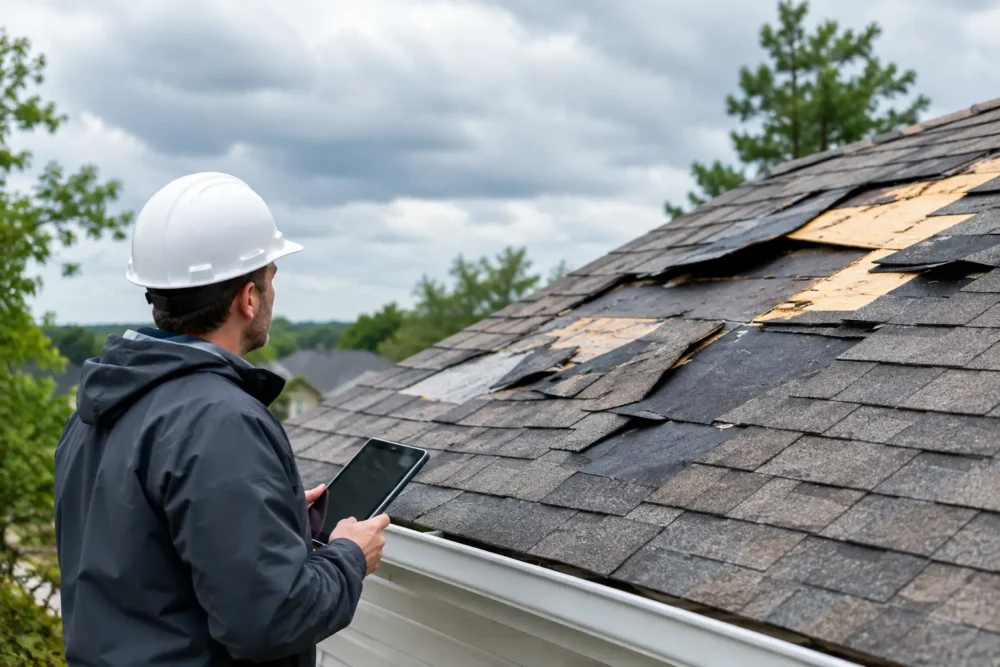
A roof can look mostly intact from the ground while wind-driven rain is already entering the attic, insulation, walls, or electrical areas. Knowing how to secure a storm-damaged roof safely can limit additional damage, but safety comes before a quick patch. Avoid climbing onto a wet, steep, icy, or visibly weakened roof.
Storm damage is not always dramatic. Missing shingles, lifted flashing, torn membrane, broken vents, fallen branches, and hail strikes can all create openings. A small leak may travel along framing before it appears on a ceiling, so the visible stain is not always the source.
Start With Safety and Access Control
Keep people away from the damaged area outside and inside the building. Falling branches, loose roof materials, and unstable soffits can drop without warning. If a tree has contacted power equipment or a line is down, stay clear and contact the utility or emergency services as appropriate.
Inside, move furniture, electronics, inventory, and documents away from active leaks if it is safe to do so. Place containers below dripping water and protect floors with towels or plastic sheeting. Do not stand beneath a ceiling that is sagging, bulging, or cracking. Water can add substantial weight and may cause the ceiling material to fail.
For tenants and condo residents, notify the landlord, property manager, or condo management promptly. They may need to arrange roof access, notify other occupants, or address common-element responsibilities. Keep a written record of whom you contacted and when.
Inspect From the Ground First
A ground-level review is the safest starting point. Use binoculars or a phone camera with zoom rather than a ladder if you can. Look for exposed roof deck, displaced shingles, loose metal flashing, damaged gutters, punctured skylights, debris impact, and branches resting on the roof.
Also inspect the interior. Check the attic only if it is safe to enter and has stable flooring. Look for damp insulation, wet framing, daylight through the roof deck, water trails, and darkened wood. In living spaces, note ceiling stains, peeling paint, wet drywall, or musty odors.
Take wide photos to show the overall area, then closer photos of specific damage. Include debris, damaged belongings, and any protective steps you take. Photos are useful, but do not put yourself at risk to get a better angle.
Reduce Water Entry Without Creating New Hazards
Temporary protection may help when the weather allows and the work can be completed safely. From inside, a bucket, absorbent towels, and a protected floor can manage a minor active drip. If water is entering near electrical fixtures, outlets, or a breaker panel, keep clear and seek qualified electrical guidance before touching affected equipment.
Exterior tarping can be effective, but it is not a casual task. A tarp needs to extend beyond the damaged section, shed water in the correct direction, and be secured without making unsafe roof penetrations or allowing wind to lift it. Wet surfaces, loose shingles, high winds, and damaged decking turn a simple cover into a fall risk.
A qualified restoration or roofing team can assess whether a temporary cover is appropriate, identify the likely entry point, and document conditions before repairs begin. The right approach depends on roof type, slope, wind conditions, the extent of structural damage, and whether water has entered the building.
Manage Indoor Water Quickly
Roof leaks often become water-damage problems before the roof work is complete. Water can soak insulation, drywall, carpet, wood flooring, and stored materials. Leaving these materials wet raises the risk of swelling, staining, material breakdown, and mold growth.
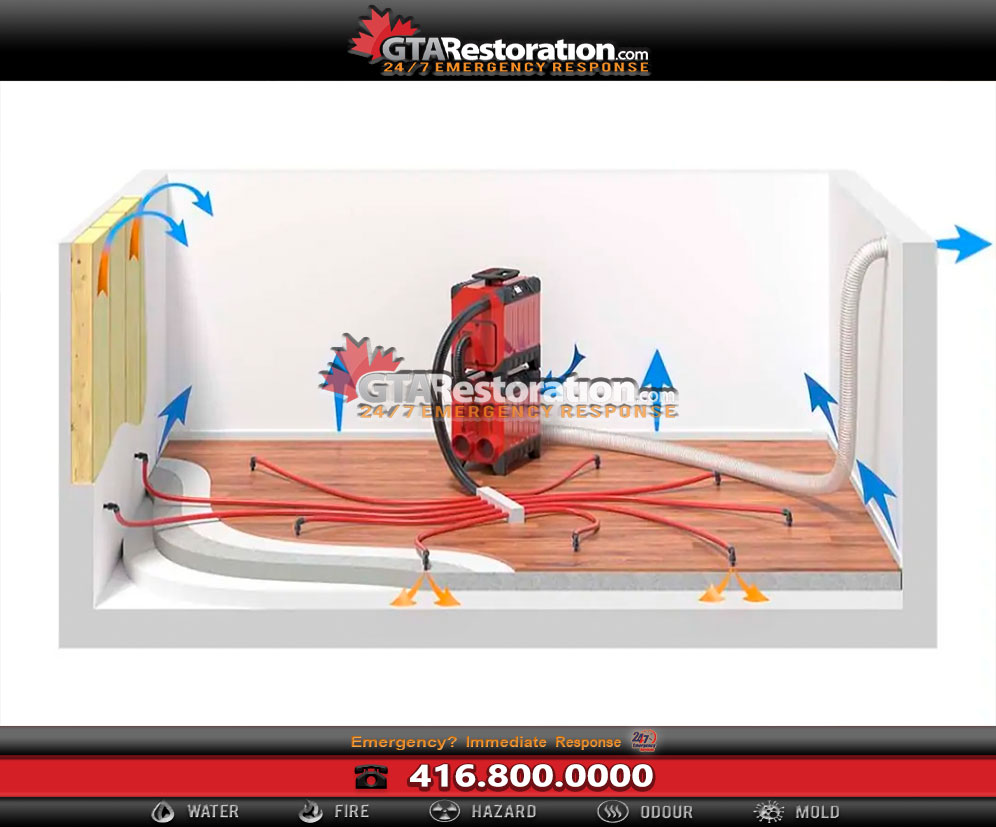
Start by stopping or containing the incoming water where safe. Then remove wet contents from affected areas when possible and improve airflow only when the roof opening has been protected. Running fans into an active leak may spread moisture rather than solve the problem.
Professional assessment can include moisture readings in ceilings, walls, and floors. These readings help show where water traveled and guide drying decisions. Some materials can be dried in place; others may need removal if they remain wet, lose structural integrity, or cannot be cleaned effectively.
Record Damage Before Major Work Begins
Clear records can help you communicate with a property manager, contractor, or insurer. Create a simple timeline beginning with the storm, including when you first noticed damage, when water entered, and what protective actions you took.
Keep photos, videos, receipts for emergency supplies, invoices, moisture records, estimates, and written communications. If a contractor removes wet materials or installs a temporary cover, ask for work records that state what was found and what was done.
Insurance coverage depends on the policy, cause of loss, deductibles, exclusions, maintenance history, and the insurer’s review. A restoration company can provide photos, readings, estimates, and work documentation, but it cannot decide coverage or promise claim approval.
Know When a Roof Needs Immediate Professional Help
Seek qualified help quickly when you see exposed decking, a puncture, widespread missing materials, a damaged skylight, a fallen tree, active interior water flow, or a sagging ceiling. These conditions can worsen with the next rain or wind event.
Commercial buildings need added attention because leaks can affect electrical rooms, tenant spaces, stock, ceiling systems, and operations. Facilities teams should isolate affected areas, record conditions, and coordinate safe access before anyone enters roof zones.
For older roofs, the visible storm damage may reveal prior wear. That does not mean the storm was unimportant, but it can affect the repair plan. An assessment should separate fresh impact damage, active openings, hidden moisture, and maintenance concerns where possible.
Plan the Repair and Drying Work Together
Roof repair and interior drying should be coordinated. Fixing the exterior opening without checking the building materials below it can leave trapped moisture behind. On the other hand, removing interior materials before the roof is protected may expose the property to more weather.
A practical plan usually starts with site safety, temporary protection if needed, and a moisture assessment. Next comes controlled cleanup, drying of salvageable materials, removal of unsalvageable wet materials, and permanent roof repair. The exact sequence depends on weather, access, building construction, and the damage found.
If you are unsure whether a leak is active or old, treat it as active until assessed. A calm, documented response protects people first and gives the repair team a clearer picture of what the storm changed.
GTA Restoration serves communities across Canada, including Toronto and the GTA. U.S. locations are opening. Browse our Canadian service areas below, and contact us to confirm services and availability for your address.
Only tarp the roof if conditions are safe and you have suitable access. Wet surfaces, wind, steep slopes, and loose materials require professional help.
What should I photograph after roof storm damage?
Photograph roof damage from safe locations, indoor leaks, wet belongings, debris, temporary protection, and the overall affected area before cleanup.
Can a small roof leak cause hidden damage?
Yes. Water can move through insulation, framing, and wall cavities before becoming visible. Moisture assessment helps locate affected materials.
Will insurance pay for storm roof damage?
Coverage depends on your policy and the insurer's review. Keep records, but do not assume emergency repairs or all damage will be covered.
When is a leaking ceiling an emergency?
Treat it as urgent when it bulges, sags, cracks, affects electrical fixtures, or releases steady water. Keep people clear and seek help promptly.