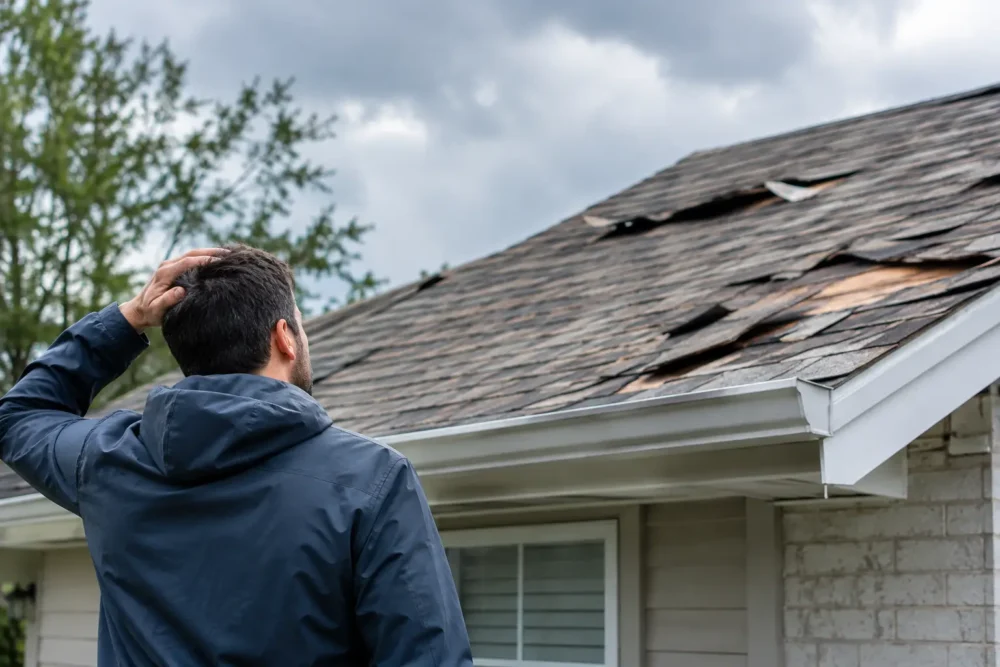
A lifted shingle may be easy to spot after high winds. The leak it creates can be much harder to find. Storm roof repair should begin with safety, careful documentation, and a plan to stop water from reaching insulation, ceilings, and electrical systems.
Do not climb onto a wet, icy, or visibly damaged roof. Downed power lines, loose metal, broken branches, and unstable materials can turn a property problem into an emergency. Stay clear of the area, keep others away, and contact emergency services if there is an immediate safety risk.
Start with a safe damage check
Once the weather has passed, inspect the property from the ground. Look for missing or curled shingles, displaced flashing around chimneys or vents, bent gutters, damaged soffits, fallen branches, and debris near roof drains. Inside, check the attic, top-floor ceilings, exterior walls, and window frames for staining, drips, damp insulation, or a musty odor.
Photograph what you can see before moving debris or making non-emergency changes. Take wide photos that show the affected area in context, then close-up images of damaged materials, ceiling stains, and personal property. Note the date, time, weather conditions, and rooms affected. These records can help a contractor understand the event and may support an insurance claim, though the insurer decides what a policy covers.
If water is entering the building, move furniture, electronics, and stored items away from the area when it is safe. Place containers under active drips and use towels only for small, manageable amounts of water. Avoid using a vacuum near standing water or touching wet electrical fixtures. Turn off power to the affected area only if you can do so safely from a dry location.
A small loss of granules does not always mean the roof has failed. Missing shingles, punctures, damaged flashing, or a ceiling leak deserve faster attention because wind-driven rain can travel beneath the roofing surface. Water may appear several feet from the actual roof opening.
Seek qualified help promptly when water is entering, a ceiling is bulging, roofing materials have come loose, or a tree limb has damaged the structure. Commercial and multi-unit properties also need quick action when a leak affects common areas, electrical rooms, tenant spaces, or multiple floors.
Temporary protection can reduce further exposure, but it is not a substitute for proper repair. A professional may use a secured tarp or other temporary measure after assessing whether the roof structure is safe to access. Do not nail a tarp through damaged roof areas yourself if conditions are unsafe or if you cannot secure it without creating more openings.
Condo and rental property access
Condo owners should report suspected roof leaks to property management right away. The roof may be part of the building’s common elements, while interior finishes and belongings may fall under different responsibilities. Tenants should notify their landlord or building manager promptly and document affected belongings without discarding them too soon.
Property managers and facilities teams should record unit numbers, access needs, leak locations, and the time each issue was reported. Clear access to the attic, roof hatch, affected suites, and mechanical areas helps the assessment move forward safely.
What a professional assessment involves
Storm damage is not always obvious from the ground or from a single interior stain. An assessment can examine roof coverings, flashing, penetrations, drainage paths, attic conditions, and signs of water migration. The goal is to identify likely entry points and determine whether water has reached materials below the roof deck.
Moisture readings can help locate damp drywall, insulation, framing, and flooring. This matters because materials may remain wet even after dripping stops. Wet insulation can lose effectiveness, and trapped moisture can contribute to odors, staining, or mold growth if it remains unresolved.
A repair plan may include temporary protection, removal of wet materials when needed, controlled drying, roof repairs, and interior restoration. The right scope depends on the roof type, the extent of water travel, building occupancy, and whether the materials can be dried safely. A flat commercial roof, for example, may require a different inspection approach than an asphalt-shingle home roof.
Cleanup and drying after a roof leak
The visible leak is only one part of the job. Water may run along rafters, wiring paths, ductwork, or wall cavities before it appears indoors. Cleanup begins by removing water where possible and protecting unaffected areas from cross-contamination or further damage.
Drying equipment may be used to reduce moisture in affected structural materials. Air movement, dehumidification, and monitoring work together, but equipment should be matched to the space and conditions. Opening windows is not always helpful, especially when outside air is humid or rainy.
Porous materials such as wet insulation, ceiling tiles, and some drywall may need removal if they cannot be dried or have deteriorated. Materials should not be removed blindly. Controlled removal helps preserve unaffected areas and provides a clearer view of concealed damage.
If you notice a musty smell or visible growth after a leak, avoid disturbing the area. Mold assessment and removal may be appropriate when moisture has remained in building materials. Addressing the water source remains essential, or the problem can return after surface cleaning.
Keep records without delaying protection
Good records make a stressful situation easier to explain. Keep photos and videos, a list of damaged items, weather notes, invoices, estimates, moisture readings, and communication records. If you make temporary purchases such as bins or protective covers, retain receipts.
Report the damage to your insurer according to your policy requirements. Ask what information they need, but do not wait for a coverage decision before taking reasonable steps to prevent additional damage. Coverage, deductibles, limits, and claim decisions remain with the insurer.
GTA Restoration can provide property damage photos, moisture readings, estimates, and work records for roof-related water damage. These documents describe observed conditions and work completed. They do not determine insurance coverage.
Avoid common storm damage mistakes
It is tempting to focus only on what looks damaged from outside. That can miss wet attic insulation or moisture behind a ceiling. It is also risky to paint over water stains before confirming the area is dry, because the stain may return and hidden moisture may remain.
Avoid throwing out damaged materials or belongings before photographing them, unless they create a health or safety concern. Do not use space heaters to dry wet building materials, and do not puncture a bulging ceiling unless you understand the electrical and structural risks. A bulging ceiling can hold a surprising amount of water and may fail without warning.
A roof can look mostly intact after a storm while water works quietly below it. Acting carefully now gives repairs, drying, and your damage records a stronger starting point.
GTA Restoration serves communities across Canada, including Toronto and the GTA. U.S. locations are opening. Browse our Canadian service areas below, and contact us to confirm services and availability for your address.
Only if conditions are safe and you can secure it without climbing onto a hazardous roof. Professional temporary protection is often safer.
How can I tell whether rain entered my attic?
Look for damp insulation, darkened wood, water trails, drips, or musty odors. Moisture readings can identify hidden dampness.
Does a roof leak always show directly below the damage?
No. Water can travel along roof decking, rafters, wiring, or ducts before appearing on a ceiling or wall.
What records should I keep for an insurance claim?
Keep dated photos, videos, weather notes, damaged-item lists, receipts, estimates, and work records. Insurers decide policy coverage and claim outcomes.
When should wet ceiling drywall be removed?
Removal may be needed when drywall is swollen, weakened, contaminated, or cannot be dried safely. Assessment helps determine the appropriate scope.