





For non-emergencies use our contact form
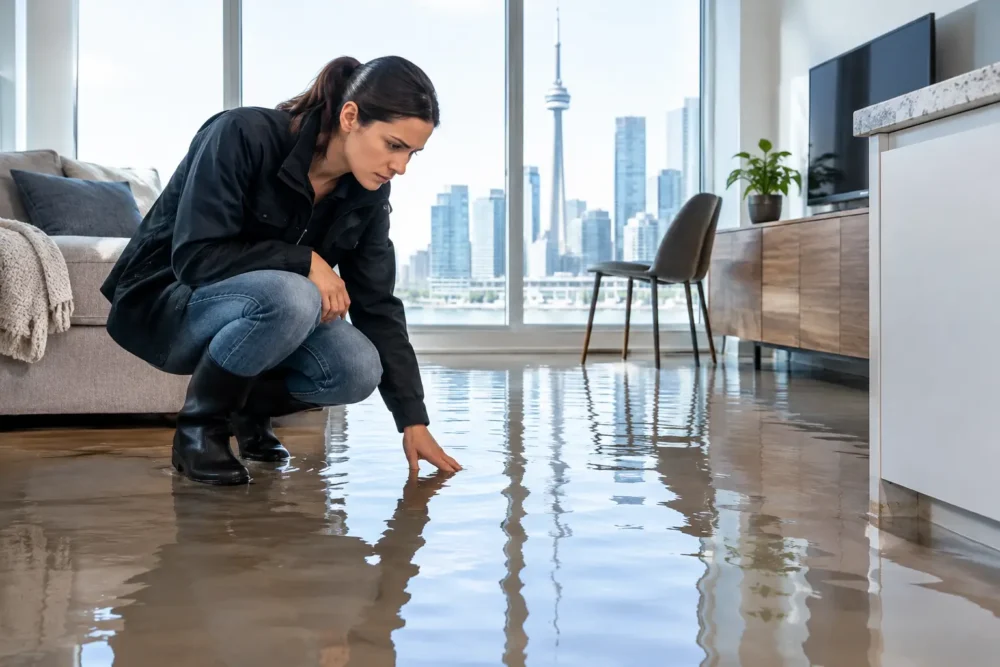
Toronto condominium flood response starts with keeping people safe and telling building staff what has happened. Water from one suite can reach the unit below or shared halls. A small leak may also leave wet walls or floors out of sight. First, keep clear of hazards. Then report the leak and arrange safe access for the people who can trace it.
Toronto Condominium Flood Response: First Actions
Stay out of water near wiring, outlets or electrical equipment. Do not enter a flooded room to switch off power. Keep children and pets away. If there is an immediate threat to life, call 911. Leave unsafe areas and follow the building’s emergency plan.
If a fixture valve is easy to reach from a dry, safe place, shutting it off may stop the flow. Otherwise, leave it to building staff or a qualified trade. Do not open a wall or stand beneath a wet, sagging ceiling to find the leak.
Tell Your Condo Manager What Happened
Next, call management or the superintendent. Give your suite number, the affected rooms and the time you first saw water. Say whether it is still flowing. Also mention water in the hall or signs that another suite may be involved. Tenants should tell their landlord as well.
For example, a new ceiling stain may help staff trace the route of a leak. Take a photo from a safe spot. However, the stain alone does not prove where the water began.
Check Condo Water Damage Before Repairs
Once access is safe, the team can check the source and wet materials. Dry-looking paint can hide damp plaster or insulation. Moisture readings help define the work and track changes. The team should also check whether the water contains sewage or other waste.
Do not run fans across dirty water or try to clean sewage yourself. Instead, keep the area clear until the crew has a safe cleanup plan. The source and condition of the water guide the work. Some materials can dry in place; others may need removal.
How Condo Flood Cleanup Progresses
Water removal is one part of condo flood cleanup. The crew may protect dry rooms, check hidden areas and set up drying equipment. They then review readings and adjust the work as needed. Keep access routes clear and ask before moving or turning off equipment.
In a Toronto high-rise, tell management about lift bookings, loading access and rules for work hours. Also arrange entry to the suite if you will be away. These details help the crew plan work without blocking shared routes.
Keep Records of the Flood Response
Take wide photos of each room and closer views of wet materials when safe. Next, record who you called and what action they took. Keep emails, estimates, receipts and drying records together. Photograph damaged items before disposal when it is safe to do so.
Repair duties can depend on the building’s governing documents and the parts that were damaged. Read the Condominium Authority of Ontario’s guide to condo repairs and access for context. Ask management and your insurer about your own case. Your insurer decides coverage; a cleanup estimate does not promise payment.
Plan the Next Step After Condo Water Damage
Finally, agree on repairs after the source is under control and the team has checked the wet materials. Covering a damp wall too soon can hide a problem. Ask what the readings show and what still needs work.
GTA Restoration can help with Toronto condominium flood response through water removal, drying, cleanup and damage records. Call 416-800-0000 to discuss the affected areas, building access and the support you need.


 Facebook
  Instagram
  LinkedIn
  X / Twitter
  YouTube

